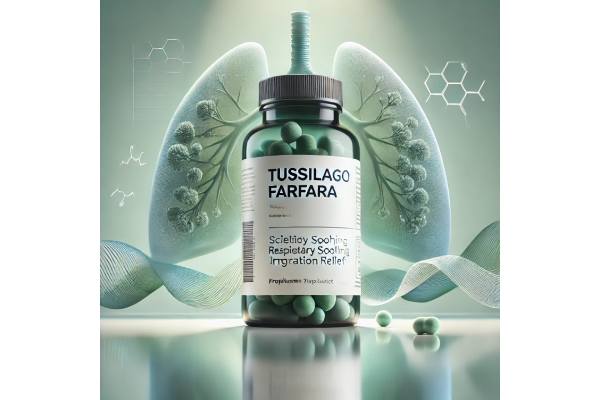
Tussilago farfara (commonly called coltsfoot) is a spring-flowering herb with a long history in European and Asian herbal traditions for coughs, “tight” chests, and irritated throats. The plant is best known for its soothing, coating feel in the mouth and throat—an effect linked to its mucilage-rich preparations—and for plant compounds that appear to influence inflammation pathways in lab studies. Those are real advantages when you are comparing it to harsher, drying remedies.
At the same time, coltsfoot is also a modern cautionary tale. Many coltsfoot products naturally contain pyrrolizidine alkaloids (PAs), a group of plant toxins associated with liver injury and long-term risk when exposure is repeated. That single issue changes how you should think about “dosage,” how long to use it, and who should avoid it entirely. This guide focuses on practical use, realistic expectations, and safety-first decision making.
Essential Insights for Tussilago farfara
- May temporarily soothe an irritated throat and calm a dry, tickly cough by coating mucous membranes.
- Pyrrolizidine alkaloids can harm the liver; repeated or high exposure is a serious safety concern.
- Traditional oral use has been reported as 5 mL extract (about 6 g crude-drug equivalent) up to 3 times daily for up to 7 days.
- Avoid if pregnant or breastfeeding, if you have liver disease, or if you use hepatotoxic medicines or heavy alcohol.
Table of Contents
- What is Tussilago farfara and how is it used?
- What are coltsfoot active compounds?
- Does coltsfoot work for cough?
- Other benefits people look for
- How to take coltsfoot: tea, syrup, topical
- Dosage and duration: what is reasonable?
- Side effects, interactions, and who should avoid
What is Tussilago farfara and how is it used?
Tussilago farfara is a perennial plant in the daisy family (Asteraceae). It has a distinctive growth pattern: yellow, dandelion-like flower heads often appear before the large, hoof-shaped leaves. That “flowers first” habit is one of the easiest ways to identify it in the wild.
People have used different parts of the plant—most often the leaves and flower buds—as herbal preparations intended to support the airways. Traditional use centers on three main goals:
- Soothing irritation in the throat and upper airways, especially when coughing is dry, scratchy, or triggered by talking and cold air
- Helping with mucus management, meaning “loosening” sticky phlegm and making coughing more productive
- Comfort during inflamed airways, where a calmer cough reflex can make rest and hydration easier
You will see coltsfoot described in many older herbals as a “demulcent” and “expectorant.” In plain terms, demulcent herbs can coat tissues and reduce the feeling of rawness; expectorants can help the body move mucus. Coltsfoot often appears in blends alongside marshmallow root, thyme, licorice, or mullein—plants chosen for complementary effects like coating, mild antimicrobial activity, or bronchial relaxation.
A key modern reality: coltsfoot is not just “an herb for cough.” It is also an herb with a well-known quality and safety challenge—pyrrolizidine alkaloids—so the conversation about use is incomplete unless it includes sourcing, processing, and who should not use it.
What are coltsfoot active compounds?
Coltsfoot contains a mix of plant chemicals, and different parts of the plant can emphasize different groups. Understanding these compounds helps explain why coltsfoot can feel soothing—and why it can also carry risk.
1) Mucilage (soothing polysaccharides)
Mucilage is a gel-like fiber that swells in water. When you drink a mucilage-rich preparation, it can coat the throat and upper airway tissues. This is one of the most “felt” effects of coltsfoot: it can reduce the sensation that sparks repeated throat-clearing or a tickle-cough cycle. The practical advantage is that coating actions can be helpful even when the root cause is viral irritation, post-nasal drip, or dry indoor air.
2) Flavonoids and phenolic acids (antioxidant and anti-inflammatory signals)
Coltsfoot contains plant polyphenols (such as flavonoids) that may influence oxidative stress and inflammatory signaling. These compounds are not unique to coltsfoot, but they help explain why researchers keep testing it in models of inflammation.
3) Sesquiterpenes (including tussilagone and related compounds)
A well-studied compound from coltsfoot is tussilagone, often explored for anti-inflammatory actions in lab and animal studies. This is one reason you will see coltsfoot discussed beyond cough, including in research on immune pathways. The important nuance: promising mechanisms are not the same thing as proven clinical benefit in humans.
4) Pyrrolizidine alkaloids (the main safety issue)
Pyrrolizidine alkaloids (PAs) are naturally produced by many plants as a defense mechanism. In humans, certain PAs can be metabolized into reactive compounds that damage liver tissue and blood vessels in the liver. This risk is not theoretical; it is central to how many health authorities and clinicians evaluate PA-containing herbs.
Because PA content can vary with geography, plant part, harvest timing, and processing, “coltsfoot” is not a uniform ingredient. Two products that look similar on a label can differ dramatically in PA exposure. That is why quality control and product selection matter more here than with many other “cough herbs.”
Does coltsfoot work for cough?
Coltsfoot’s reputation comes from tradition and from a type of relief that is easy to notice: a smoother, less scratchy throat and fewer “false alarm” coughs triggered by irritation. That does not automatically mean it treats the underlying cause of cough, but symptom relief still has value—especially for short-lived colds where time, hydration, and rest are doing most of the healing.
Where coltsfoot can make practical sense (symptom patterns):
- Dry, tickly cough where the throat feels raw, especially in heated indoor air
- Post-viral cough irritation where mucus is minimal but the cough reflex stays hypersensitive
- Voice-triggered cough (talking, laughing) where coating the throat can reduce the urge to cough
These are situations where a demulcent effect can help you break a cycle: irritation → cough → more irritation. In that sense, the “advantage” of coltsfoot is similar to other coating agents: it is not sedating, and it can be paired with simple measures like warm fluids, honey (if appropriate), and humidification.
Where expectations should be modest:
- Deep chest congestion with thick mucus: coltsfoot is sometimes described as an expectorant, but the strength of evidence for meaningful mucus clearance in humans is limited.
- Wheezing, asthma, or shortness of breath: these require medical evaluation. Relying on an herb instead of proper treatment can be risky.
- Bacterial pneumonia, high fever, or coughing blood: these are red flags, not “herbal territory.”
A realistic way to think about it:
Coltsfoot is best viewed as a comfort measure—a throat-soothing tool that may make coughing less frequent and less harsh. It is not a proven stand-alone treatment for respiratory disease, and because of PA-related safety concerns, many people will be better served by safer demulcents with fewer quality-control headaches.
Other benefits people look for
Beyond cough support, coltsfoot is often marketed for a wide range of “inflammation” goals. Some of these ideas are driven by lab research on specific compounds (like tussilagone) and by the broader trend of repurposing traditional herbs for modern wellness categories. It is worth separating what is plausible from what is proven.
1) Inflammation modulation (the most common extension claim)
Researchers have explored coltsfoot extracts and isolated compounds in experimental models related to inflammatory signaling pathways. Mechanistically, that can look impressive. Practically, it means only this: certain constituents may influence pathways involved in inflammation. It does not guarantee that a typical tea or over-the-counter herbal product will meaningfully change inflammation in a person.
2) Oxidative stress and “antioxidant support”
Coltsfoot contains polyphenols, which can show antioxidant activity in lab tests. The limitation is common across many herbs: antioxidant activity in a test tube does not directly translate into clinical outcomes. If a label leans heavily on antioxidant claims, treat it as general plant chemistry, not as a specific health promise.
3) Skin comfort and topical tradition
Traditional use sometimes includes topical application for minor skin irritation, often as compresses or in ointment-like preparations. If you are considering topical use, the key question is still safety and quality. With a plant known for PA issues, “natural” is not automatically “low risk,” especially if used repeatedly or on compromised skin.
4) “Immune support” marketing
Many respiratory herbs get bundled into immune marketing. For coltsfoot, that messaging often outpaces evidence. The more responsible claim is narrower: soothing irritated mucosa and possibly supporting comfort during self-limited respiratory infections.
A practical filter for decision making:
If a coltsfoot claim sounds like it is treating a chronic disease (autoimmune issues, chronic inflammatory disorders, long-term lung disease), you should assume the evidence is not strong enough to rely on, and the safety trade-off is not worth it. Coltsfoot’s best-case role remains short-term symptom comfort—if it is used at all.
How to take coltsfoot: tea, syrup, topical
Coltsfoot appears in several forms, and the form changes both the experience and the risk profile. If you decide to use it, treat product choice as the main “how-to” step.
Common forms you will encounter
- Tea or infusion (leaf or flower preparations)
- Syrups and lozenges (often blended with other soothing herbs)
- Liquid extracts (alcohol-based or glycerites)
- Topical preparations (less common today, sometimes in folk use)
How to choose a product responsibly
- Prioritize PA control. Coltsfoot is not the place to gamble on unknown sourcing. If a product cannot clearly state how it addresses pyrrolizidine alkaloids (testing, removal processes, or PA-free sourcing), it is reasonable to skip it.
- Avoid long-term “daily wellness” positioning. Coltsfoot is sometimes marketed like a general tonic. That framing conflicts with the reality that repeated PA exposure is the main concern.
- Treat blends differently than single-herb products. In a blend, coltsfoot may be present at low amounts, but you still cannot assume the PA exposure is trivial without testing.
- Be cautious with home wildcrafting. Identification mistakes are common, and quality control is absent. Even correctly identified coltsfoot can vary widely in PA content.
Practical use tips (symptom-focused)
- Pair with warm fluids, humidification, and rest, since these can reduce airway irritation on their own.
- If a cough is worse at night, focus on the basics first: hydration earlier in the evening, nasal saline if post-nasal drip is present, and sleeping with a slightly elevated head position.
- If you need a “coating” effect but want a safer profile, consider discussing alternatives with a clinician or pharmacist, especially for children or during pregnancy.
When to stop and reassess
- No improvement within a few days
- Worsening cough, wheezing, shortness of breath, chest pain, or high fever
- Any sign of allergic reaction (itching, swelling, rash, throat tightness)
Dosage and duration: what is reasonable?
With coltsfoot, “dosage” has two layers: the amount taken and the total PA exposure implied by that amount. Because PA content varies, there is no universal dose that can be called “safe” for every product. For that reason, the most responsible dosage guidance emphasizes short duration, lowest effective amount, and tested products.
Reported traditional dosing (an example you may see cited)
Traditional sources describe oral use of an alcohol extract taken as 5 mL per dose, described as roughly equivalent to 6 g of crude herb, taken 3 times daily for about 1 week. This gives a sense of how coltsfoot has been used historically in some settings, but it should not be interpreted as a modern safety endorsement.
A safety-first framework for adults (if used at all)
- Duration: keep use short (for example, a few days up to about a week) rather than repeated courses.
- Dose selection: follow the product label precisely, and avoid “doubling up” for faster relief.
- Exposure stacking: remember that PA exposure can also come from teas, herbal infusions, supplements, and contaminated plant products. If coltsfoot is added on top, the total matters.
Why “more” is not better here
Coltsfoot’s noticeable throat-soothing effect is often achievable with modest use because mucilage works locally. Once your throat is coated and irritation settles, increasing the dose may add little benefit while increasing the downside risk. That is a practical reason to avoid aggressive dosing even before you consider PAs.
Special populations and dosing
- Children: avoid self-dosing with coltsfoot. The safety margin is not reassuring.
- Pregnancy and breastfeeding: avoid entirely due to PA concerns and limited safety data.
- Liver disease or past liver injury: avoid.
- People using multiple herbal products: be cautious about cumulative exposure.
A simple decision rule
If you cannot confirm PA controls and you cannot clearly justify why coltsfoot is preferable to safer demulcents, the most reasonable “dose” is none. If you can confirm PA controls and are using it for short-term throat comfort, use the minimum label-directed dose for the shortest period needed, and stop once symptoms ease.
Side effects, interactions, and who should avoid
Coltsfoot’s side effects range from mild and predictable (like plant-family allergies) to serious and potentially life-altering (liver injury related to pyrrolizidine alkaloids). This is the section that should drive your final decision.
Potential side effects
- Allergic reactions: Coltsfoot is in the Asteraceae family. If you react to ragweed, daisies, chamomile, or related plants, coltsfoot may trigger itching, rash, or throat irritation.
- Stomach upset: Some people experience nausea or digestive discomfort from herbal teas or extracts.
- Headache or dizziness: Non-specific and uncommon, but possible with many botanical extracts.
The major safety concern: liver toxicity risk from pyrrolizidine alkaloids
Certain PAs can be metabolically activated into reactive compounds that damage the liver and the small blood vessels inside it. One severe pattern linked to PA exposure is hepatic sinusoidal obstruction syndrome (sometimes called veno-occlusive disease), which can present with abdominal pain, fluid retention, and abnormal liver tests. The risk depends on PA type, dose, duration, and individual susceptibility—yet the key point is that repeated exposure is not something to treat casually.
Who should avoid coltsfoot
- Pregnant or breastfeeding people
- Children and adolescents
- Anyone with liver disease, past hepatitis, cirrhosis, fatty liver disease, or unexplained elevated liver enzymes
- People who drink heavy alcohol or use other hepatotoxic substances
- Anyone with significant medication complexity where liver metabolism is already under strain
Medication and supplement cautions
- If you use medicines known to stress the liver, adding a PA-containing herb is an avoidable risk.
- If you use multiple teas, herbal infusions, or botanical supplements, cumulative PA exposure becomes harder to track.
What the evidence says in one honest snapshot
Most of coltsfoot’s “benefit” reputation comes from traditional use and mechanistic research rather than large, modern clinical trials. The soothing effect is plausible and often noticeable, but the safety trade-off is unusually prominent compared with other throat-coating herbs. In practice, many people get similar comfort from alternatives with fewer safety uncertainties, reserving coltsfoot—if at all—for short-term use with verified PA controls.
References
- A review of the ethnobotanical value, phytochemistry, pharmacology, toxicity and quality control of Tussilago farfara L. (coltsfoot) – PMC 2020 (Review)
- Metabolic Toxification of 1,2-Unsaturated Pyrrolizidine Alkaloids Causes Human Hepatic Sinusoidal Obstruction Syndrome: The Update – PMC 2021 (Review)
- Risk Assessment of (Herbal) Teas Containing Pyrrolizidine Alkaloids (PAs) Based on Margin of Exposure Approach and Relative Potency (REP) Factors – PMC 2022 (Risk Assessment)
- Pyrrolizidine Alkaloids in Foods, Herbal Drugs, and Food Supplements: Chemistry, Metabolism, Toxicological Significance, Analytical Methods, Occurrence, and Challenges for Future – PMC 2024 (Review)
- Updated risk assessment on levels of 1,2-unsaturated pyrrolizidine alkaloids (PAs) in foods – BfR Opinion 026/2020 issued 17 June 2020 2020 (Government Risk Assessment)
Disclaimer
This article is for educational purposes and does not replace medical advice, diagnosis, or treatment. Herbal products can vary widely in identity, potency, and contaminants. Tussilago farfara (coltsfoot) may contain pyrrolizidine alkaloids associated with serious liver harm; do not use it during pregnancy or breastfeeding, in children, or if you have liver disease. If you have persistent cough, shortness of breath, chest pain, high fever, coughing blood, or symptoms lasting more than 2–3 weeks, seek medical evaluation promptly. Always consult a qualified clinician or pharmacist before combining herbs with prescription medicines or if you have chronic conditions.
If you found this guide helpful, please consider sharing it on Facebook, X (formerly Twitter), or any platform you prefer, and follow us on social media. Your support through sharing helps our team keep producing clear, research-informed health content.