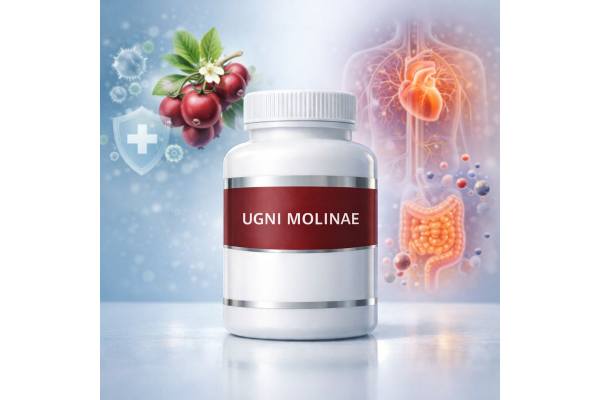
Ugni molinae—often called murta, murtilla, or Chilean guava—is a South American berry shrub whose fruits and leaves are used as both food and traditional herbal preparations. Interest in ugni molinae has grown because it contains a dense mix of polyphenols (including anthocyanins, flavonoids, and tannins) that may support antioxidant defenses and healthy inflammatory signaling. People most often explore it for seasonal wellness, digestive comfort, and as a “functional food” berry—while researchers are also studying leaf and fruit extracts for antimicrobial activity and other preclinical effects. The practical challenge is that products vary widely (leaf vs berry, whole powder vs extract), and human dosing guidance is limited. This guide helps you understand what ugni molinae is, what benefits are realistic, how to use it, and how to stay on the safe side.
Core Points for Ugni molinae
- Polyphenol-rich leaves and berries may support antioxidant status and inflammatory balance, but most evidence is preclinical.
- A studied traditional-style leaf infusion used a 1% brew twice daily (about 2–4 g dried leaf/day, depending on cup size).
- Tannin-rich preparations can cause stomach upset or constipation, especially at higher intakes.
- Avoid during pregnancy and breastfeeding, and use caution with blood thinners and blood pressure or diabetes medications.
- Benefits and tolerability can differ sharply between leaf products and berry products—check the label carefully.
Table of Contents
- What is Ugni molinae?
- What makes it biologically active?
- Benefits you might notice and what is hype
- How do you use leaves, berries, and extracts?
- How much Ugni molinae should you take?
- Side effects, interactions, and who should avoid
- What the evidence actually says
What is Ugni molinae?
Ugni molinae is an evergreen shrub in the Myrtaceae family (the same broader plant family as guava and eucalyptus). It’s native to southern regions of Chile and parts of Argentina and produces small, aromatic berries that people describe as a mix of strawberry-like sweetness with a lightly spicy, guava-like note. Depending on region and context, you’ll see it called murta, murtilla, myrtle berry, or Chilean guava.
When people talk about ugni molinae as a supplement, they usually mean one of three things:
- The berries as a food: eaten fresh, dried, or as jam, juice, or a powder added to foods.
- Leaf preparations: commonly used as an herbal infusion (tea) or as dried leaf powder.
- Extracts: concentrated preparations made from berry or leaf material, often standardized (sometimes loosely) to polyphenols.
The key point for consumers is that leaf and berry products are not interchangeable. Leaves tend to be more astringent and tannin-rich, which can change both the “feel” in the body (for example, digestive effects) and the likelihood of side effects. Berry products are often more food-like and easier to tolerate but can still vary by processing method (freeze-dried vs heat-dried, whole berry powder vs extracted polyphenols).
It also helps to set expectations: ugni molinae is not a vitamin with a defined deficiency state. It’s better understood as a polyphenol-containing plant food (or herb) that may support certain aspects of wellness—especially oxidative balance and inflammation-related pathways—while the science is still developing for specific disease outcomes.
What makes it biologically active?
Ugni molinae’s “activity” is largely explained by its phytochemicals—natural plant compounds that can interact with cell signaling, microbial growth, and oxidative reactions. The most discussed groups are:
Polyphenols (the main headline)
Polyphenols are a broad category that includes flavonoids, phenolic acids, anthocyanins (the pigments common in berries), and tannins. In practical terms, polyphenols can:
- Help neutralize reactive molecules produced during normal metabolism and stress
- Influence inflammatory signaling (often by modulating enzymes and transcription factors involved in cellular “alarm” responses)
- Interact with gut microbes—sometimes acting like selective growth factors for certain species
Anthocyanins (berry pigments)
These are the compounds behind red, purple, and blue berry colors. Anthocyanins are widely studied across many berries because they’re linked to vascular and metabolic signaling pathways in preclinical and human nutrition research. Ugni molinae berries contain anthocyanins, though exact amounts can vary by genotype, ripeness, and processing.
Tannins and ellagitannins (often higher in leaves)
Tannins are astringent compounds that can bind proteins—this is why some leaf teas “tighten” the mouthfeel. That same binding behavior is also why tannin-rich herbs are often used traditionally for digestive complaints (for example, watery stools). The tradeoff is that tannins can irritate sensitive stomachs and may worsen constipation in some people.
Triterpenoids (not just “antioxidants”)
Ugni molinae leaves have been described as a source of triterpene acids (a different class of plant compounds than polyphenols). These are frequently researched for anti-inflammatory mechanisms in preclinical models. They also help explain why leaf extracts can behave differently than berry powders.
Volatile compounds (aroma and appetite cues)
The berry aroma comes from volatile compounds. While these are not the main reason people supplement ugni molinae, aroma can influence appetite, palatability, and the “food-like” experience—important if you are using it as a long-term dietary addition rather than a short, high-dose intervention.
A useful way to think about it: berries deliver a polyphenol profile closer to a functional food, while leaves behave more like an herb—more concentrated, more astringent, and more likely to produce noticeable digestive effects (good or bad) depending on the person.
Benefits you might notice and what is hype
Ugni molinae sits in that middle ground between “healthy berry” and “traditional herb.” Many of its proposed benefits come from antioxidant and anti-inflammatory research patterns seen across polyphenol-rich plants. The most realistic, consumer-relevant benefits tend to fall into a few categories.
1) Antioxidant support and recovery from everyday stress
If you use ugni molinae regularly (especially as a food-like berry powder or tea), the most plausible benefit is improved dietary antioxidant capacity—not as a shield that blocks all oxidation (your body needs some oxidative signaling), but as nutritional support that can help keep oxidative stress within a healthy range. People often describe this as “feeling less run down,” though that effect is nonspecific and depends on sleep, training load, and overall diet.
2) Inflammatory balance (especially from leaf preparations)
Leaf extracts and concentrated leaf powders are often discussed for anti-inflammatory potential in preclinical models. In real life, this might show up as subtle improvements in how your body responds to irritants (heavy meals, seasonal changes, high training volume). The more concentrated and astringent the product, the more likely you are to notice something—again, not always positive if your gut is sensitive.
3) Digestive comfort (a double-edged benefit)
Traditional herbal practice often uses tannin-containing plants for digestive complaints, especially when stools are loose. A mild leaf infusion may feel “settling” for some people. The caution: if your baseline tends toward constipation, the same astringent chemistry can push you in the wrong direction.
4) Oral and throat comfort, and “seasonal wellness”
Leaf infusions are often used traditionally for throat or urinary comfort. From a modern perspective, this category overlaps with antimicrobial and anti-inflammatory properties observed in laboratory settings. Still, it’s best framed as comfort support rather than treatment.
5) Skin-support narratives (where hype grows fast)
Because ugni molinae has antioxidants and some research interest in enzyme-related pathways, you may see marketing that implies dramatic skin-lightening, acne cures, or anti-aging transformations. A more grounded view: polyphenols can support skin health indirectly (oxidative balance, inflammation), but results from oral use are usually modest and require consistent habits—sun protection, adequate protein, and overall micronutrient intake.
Bottom line: if you approach ugni molinae as a polyphenol-rich food or gentle herb, you’re more likely to be satisfied than if you expect it to perform like a drug.
How do you use leaves, berries, and extracts?
How you use ugni molinae should match your goal and your tolerance for astringency.
Option A: Berries as a food (most beginner-friendly)
If your primary goal is general antioxidant and “functional food” support, start with berry forms:
- Fresh or dried berries (when available): easiest to integrate, typically gentler on digestion.
- Freeze-dried berry powder: often preserves more delicate compounds than high-heat drying.
- Berry juice or fermented products: can be convenient, but watch added sugars and serving size.
Practical tip: berry powders work well in yogurt, smoothies, and oatmeal. If taste is strong, start with a small amount and build slowly.
Option B: Leaf infusion (tea) for targeted, gentler herbal use
A leaf infusion is a traditional-style approach and can be a good middle step before capsules.
How to brew for comfort and consistency:
- Use hot (not aggressively boiling) water.
- Steep long enough to extract polyphenols, but not so long that bitterness becomes unpleasant.
- Drink with food if you are prone to nausea from tannin-rich herbs.
If the tea feels too drying, reduce steep time, use fewer leaves, or limit it to once daily.
Option C: Capsules, powders, and extracts (strongest variability)
Supplement products can differ dramatically. When comparing labels, focus on:
- Plant part: leaf, berry, or mixed.
- Form: whole powder vs extract.
- Extraction solvent (if stated): water extracts tend to differ from hydroalcoholic extracts in which compounds are emphasized.
- Standardization: if it claims “polyphenols X%,” look for a number and serving size that makes sense.
A practical “quality filter”:
- Avoid products that hide behind proprietary blends without stating the amount of ugni molinae.
- Prefer products that specify Ugni molinae clearly (not just “murta complex”).
- If you are sensitive, avoid stacking it immediately with multiple other tannin-rich botanicals.
When to take it
- With meals: often improves tolerance for leaf products and concentrated extracts.
- Earlier in the day: helpful if you’re testing your response and want to observe effects (digestive changes, energy, sleep).
If you’re using ugni molinae for wellness support, think in weeks, not days. Most food-based polyphenol effects show up with consistency rather than immediate “kick.”
How much Ugni molinae should you take?
There is no single, universally accepted dose for ugni molinae because products differ (leaf vs berry, powder vs extract), and strong human dosing research is limited. The safest approach is to choose one form, start low, and keep the dose stable long enough to judge tolerance.
A practical, evidence-linked starting point: leaf infusion
A small human study design referenced in the literature used a 1% leaf infusion taken twice daily for a short period. In everyday kitchen terms, “1%” is commonly interpreted as 1 g dried leaf per 100 mL water (weight/volume).
That translates to a reasonable home range such as:
- 1–2 g dried leaf per cup (100–200 mL)
- 1–2 cups per day, which is roughly 2–4 g dried leaf/day depending on cup size and how strong you brew it
If you’re new to tannin-rich herbs, begin at the low end (for example, one smaller cup daily) and increase only if you tolerate it well.
Berry powders and foods: aim for consistency over intensity
Because berry products are closer to food, dosing often follows “functional food logic”:
- Choose an amount you can take most days of the week.
- If you notice digestive sensitivity, reduce the serving rather than pushing through.
If you are switching between fresh berries, dried berries, and powders, remember that drying concentrates compounds by removing water—so “a spoonful” can vary a lot by product.
Capsules and extracts: let the label drive, but apply a dosing method
For extracts, the label matters because concentration differs. Use a simple method:
- Start at the lowest labeled serving for 3–7 days.
- Track only a few outcomes (stool pattern, stomach comfort, sleep quality, and any unusual bruising if you’re on anticoagulants).
- Increase only once, and only if you have a clear reason.
If a product combines ugni molinae with many other polyphenol herbs, it becomes harder to interpret effects and side effects. In that case, lower dosing is usually the smarter choice.
How long to try it
For general wellness, many people evaluate polyphenol-rich foods and herbs over 2–6 weeks. If nothing changes and you’ve been consistent, it may simply not be a good match—or the product may not be potent or well-specified.
Side effects, interactions, and who should avoid
Ugni molinae is often used as a food and traditional herb, but “natural” still deserves a safety plan—especially with leaf extracts that concentrate tannins and other compounds.
Common side effects (more likely with leaf products)
- Stomach discomfort, nausea, or reflux, especially on an empty stomach
- Constipation or a “drying” effect, consistent with tannin-rich herbs
- Bitter taste and throat dryness, which can be reduced by brewing weaker tea or shortening steep time
If you experience constipation, treat it as a stop-or-reduce signal rather than something to “push through.”
Allergy and sensitivity considerations
If you have a history of reactions to plants in the Myrtaceae family (less common, but possible), start with very small amounts. Any signs of hives, swelling, wheezing, or throat tightness require urgent medical attention.
Medication cautions (use extra care)
Because ugni molinae is polyphenol-rich and has research interest in metabolic and vascular pathways, take extra caution if you use:
- Blood thinners or antiplatelet drugs (increased bruising risk is something to watch for with many polyphenol-heavy supplements)
- Blood pressure medications (if you trend low, monitor dizziness and lightheadedness)
- Diabetes medications (monitor glucose trends if you add multiple plant extracts with possible enzyme effects)
This does not mean ugni molinae will definitely cause interactions—it means the combination can be harder to predict, and monitoring is wise.
Who should avoid Ugni molinae (or use only with clinician guidance)
- Pregnant or breastfeeding individuals (insufficient safety evidence for concentrated extracts)
- Children, unless a pediatric clinician advises otherwise
- People preparing for surgery or with bleeding disorders, unless cleared by their care team
- Anyone with chronic digestive conditions who flares with tannins (some people with IBS patterns find astringent herbs aggravating)
A practical safety rule
If you can’t clearly answer “leaf or berry?” and “powder or extract?” from the label, you don’t have enough information to dose confidently. Choose a better-specified product.
What the evidence actually says
Ugni molinae research is promising, but it’s uneven—stronger in chemistry and lab testing, lighter in large, well-controlled human trials. Understanding that landscape helps you use it intelligently.
1) Chemistry and bioactive profiling: solid foundation
Multiple research teams have characterized ugni molinae berries and leaves as meaningful sources of polyphenols and other compounds. This is the most reliable layer of evidence: the plant contains plausible molecules, and processing methods (drying, extraction type) can change what ends up in your cup or capsule.
Practical implication: two products can both say “Ugni molinae” and still be functionally different. If you want food-like support, berry powders make sense. If you want an herb-like effect, leaf preparations are more likely to feel “active.”
2) Antioxidant and antimicrobial findings: consistent in lab settings
Leaf materials, in particular, show antimicrobial activity in laboratory contexts, and both berry and leaf preparations often score well in antioxidant assays. These findings help explain traditional interest and potential applications, but lab potency does not automatically translate to human outcomes at realistic doses.
Practical implication: treat antimicrobial claims as supportive, not as a substitute for medical treatment.
3) Anti-inflammatory and metabolic pathways: suggestive, not settled
Research includes preclinical models and mechanistic work that point toward anti-inflammatory signaling and enzyme-related effects (including pathways relevant to carbohydrate digestion in some product types). This is a common pattern across polyphenol-rich plants: promising mechanisms, followed by a need for carefully designed human trials.
Practical implication: if you are using ugni molinae for metabolic goals, it should sit behind fundamentals—fiber intake, protein adequacy, sleep, and movement.
4) Neuroprotective research: early-stage but interesting
A newer research direction has explored ugni molinae fruit extracts in preclinical neurodegeneration models, including work suggesting effects on protein aggregation pathways and inflammation-related signaling in experimental systems. This is not proof of clinical benefit, but it is enough to justify scientific curiosity.
Practical implication: be skeptical of marketing that claims ugni molinae “treats” neurological disease. At this stage, it’s best framed as a polyphenol-rich plant under investigation.
5) What is missing
- Large, long-duration human trials with standardized products
- Clear comparisons of leaf vs berry dosing in humans
- Standard safety guidance for concentrated extracts in higher-risk groups
Until those gaps are filled, ugni molinae is best used as a well-chosen, well-labeled food or gentle herbal support, not as a primary intervention.
References
- Phytochemicals and Traditional Use of Two Southernmost Chilean Berry Fruits: Murta (Ugni molinae Turcz) and Calafate (Berberis buxifolia Lam.) – PubMed 2020 (Review)
- Ugni molinae Fruit as a Source of Bioactive Compounds with Good Quality Traits – PubMed 2021 (Review)
- A phenolic-rich extract from Ugni molinae berries reduces abnormal protein aggregation in a cellular model of Huntington’s disease – PubMed 2021 (Preclinical Study)
- Evaluation of the antioxidant, anti-inflammatory, and anti-tumoral properties of bioactive compounds extracted from murta berries (Ugni molinae T.) dried by different methods – PubMed 2023 (Preclinical Study)
- Evaluation of Antioxidant and Antimicrobial Properties of Murtilla Leaves (Ugni molinae Turcz.) in Beef Patties: Effects on Quality Parameters and Shelf Life – PubMed 2024 (Preclinical Study)
Disclaimer
This article is for educational purposes only and does not provide medical advice, diagnosis, or treatment. Supplements and herbal products can act differently depending on the plant part used (leaf vs berry), extraction method, dose, and your health conditions or medications. If you are pregnant, breastfeeding, have a chronic condition, take prescription drugs (especially anticoagulants, blood pressure medications, or diabetes medications), or are preparing for surgery, consult a licensed clinician before using ugni molinae. Stop use and seek medical help if you develop signs of an allergic reaction or any concerning symptoms.
If you found this guide useful, please consider sharing it on Facebook, X (formerly Twitter), or any platform you prefer, and follow us on social media. Your support through sharing helps our team continue producing practical, high-quality health content.