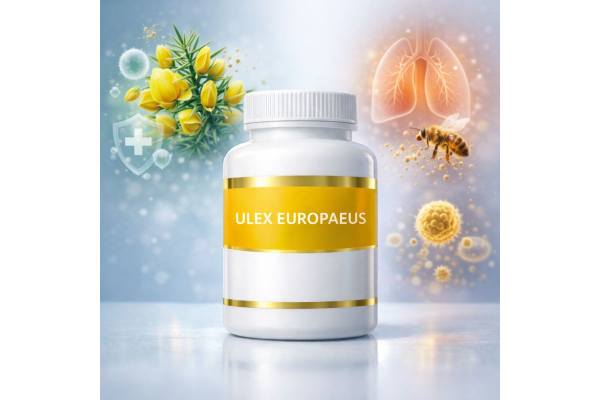
Ulex europaeus (commonly called gorse) is a bright-yellow flowering shrub from the legume family. In some regions it has a long folk history as a seasonal tea, topical wash, or traditional “cleansing” plant, while in modern research it is mostly discussed for its bioactive chemistry and its role as a highly invasive species. What makes gorse interesting is also what makes it complicated: it contains potent quinolizidine alkaloids (including cytisine-like compounds) plus polyphenols and aromatic volatiles. Those families of compounds are often linked with antioxidant or antimicrobial activity in laboratory work, but they also raise real safety questions when people try to use the plant internally.
This guide focuses on what Ulex europaeus is, which benefits are plausible, how it is used, how dosing is approached when products exist, and how to reduce risk—especially if you are taking medications, pregnant, or sensitive to alkaloid-containing botanicals.
Essential Insights for Ulex europaeus
- Preclinical research suggests antioxidant and antimicrobial potential, but human evidence is limited.
- Avoid DIY internal use of wild-harvested gorse due to alkaloid variability and poisoning risk.
- If using a commercial product, common labeled serving sizes are often in the 250–500 mg range per day, but follow the label and stop if symptoms occur.
- People who are pregnant, breastfeeding, under 18, or taking heart, blood pressure, or smoking-cessation medications should avoid unsupervised use.
- Seek urgent help for nausea, vomiting, tremor, fast heartbeat, dizziness, or confusion after exposure.
Table of Contents
- What is Ulex europaeus?
- Benefits and uses people look for
- What compounds drive its effects?
- How people actually use it
- Dosage and timing: what to consider
- Side effects, interactions, and who should avoid
- What the evidence really says
What is Ulex europaeus?
Ulex europaeus is an evergreen, thorny shrub with vivid yellow flowers. You may see it described as gorse, common gorse, or sometimes furze. It is native to parts of Western Europe but has been introduced widely—often first as an ornamental hedge plant—then spread aggressively in many climates. That global spread matters for health discussions because most “gorse” people encounter is not grown under supplement-grade conditions. Wild stands can differ in age, soil, climate stress, and chemistry, which can change the plant’s concentration of active compounds.
From a wellness perspective, Ulex europaeus is sometimes mentioned alongside other traditional bitter or aromatic plants, but it is not a mainstream dietary supplement. When it shows up in modern products, it is usually positioned as one of the following:
- A botanical extract (often “flower” or “aerial parts”) in capsules or tinctures
- A topical preparation (wash, compress, cosmetic ingredient, or fragrance-adjacent use)
- A traditional herbal infusion in folk contexts (least predictable for dosing and safety)
Why people confuse gorse with other “broom” plants
Gorse shares a family resemblance with plants like Scotch broom and other Fabaceae shrubs. That similarity can lead to mislabeling or casual substitution in herbal circles. It also matters because related plants can share alkaloid families, and those alkaloids can have meaningful effects on the nervous system and heart rhythm.
Bottom line definition
Think of Ulex europaeus as a chemically active shrub with a mix of polyphenols (often associated with antioxidant behavior in lab tests) and alkaloids (often associated with stronger pharmacology and stronger risk). That combination is the main reason gorse is more “caution-first” than many popular herbal supplements.
Benefits and uses people look for
When people search for “Ulex europaeus benefits,” they are usually looking for one of three things: (1) general wellness support, (2) topical or cosmetic relevance, or (3) a connection to cytisine-like compounds and smoking-related interest. It helps to separate what is plausible from what is proven.
1) Antioxidant support (plausible, but not a treatment claim)
Gorse contains phenolic compounds and other plant metabolites that can show antioxidant activity in laboratory assays. In practical terms, “antioxidant” does not mean the plant will treat a disease; it means some constituents can neutralize reactive molecules under test conditions. If you are seeking antioxidant support, gorse is not the usual first choice because many safer, better-studied polyphenol sources exist.
2) Skin-facing and topical uses (more realistic than internal use)
Traditional plant use often starts with the skin because topical exposure can be easier to control. People look for gorse in contexts like:
- Short-contact washes (odor, feel, or “freshening” traditions)
- Cosmetic exploration of plant extracts for sensory properties
- Interest in aromatic fractions and volatile compounds
Topical use is not automatically safe, but it is often easier to stop and reassess if irritation occurs.
3) Antimicrobial or anti-inflammatory interest (mostly preclinical)
Some gorse-related constituents, including certain alkaloids and polyphenols, have shown antimicrobial or anti-inflammatory signals in laboratory research. That is not the same as a clinical result in humans. A reasonable way to frame this is: gorse contains compound families that are biologically active, but translating that into reliable human benefit is still uncertain.
4) Smoking-cessation curiosity (often better answered with regulated options)
A major reason gorse appears online is that cytisine—a plant alkaloid used in smoking-cessation in some countries—is associated with legumes. People may assume that consuming gorse is a “natural cytisine.” This is a risky leap: cytisine dosing in clinical contexts is standardized, while gorse plant material is not.
In short, the “advantages” people want from Ulex europaeus are usually the advantages of its compound families. The safest way to pursue those advantages is typically through better-studied plants or regulated products—not DIY gorse ingestion.
What compounds drive its effects?
Ulex europaeus stands out because it is not driven by a single famous molecule. Instead, it carries several classes of compounds that can pull in different directions—some are relatively gentle (polyphenols), and some can be pharmacologically strong (alkaloids).
Quinolizidine alkaloids: powerful and risk-relevant
One of the most important chemical facts about gorse is that it contains quinolizidine alkaloids, including cytisine-type and other related alkaloids. In broad terms, alkaloids are nitrogen-containing plant compounds that often interact with receptors in the nervous system and cardiovascular system. That is why alkaloid-containing plants can have noticeable effects—and why they can cause side effects at unexpectedly low exposures.
Practical implications of alkaloids in gorse:
- Effects may be stimulating, nauseating, or neurologically “off” in sensitive individuals.
- Dose consistency is hard when plant material is not standardized.
- Interactions are more plausible than with many mild herbal teas.
Polyphenols and flavonoids: the “antioxidant” story
Gorse also contains polyphenols such as flavonoids (for example, quercetin- and kaempferol-type compounds are often discussed across plants in this family). Polyphenols commonly show:
- Antioxidant behavior in vitro
- Potential for membrane and enzyme interactions
- A role in plant defense, which can overlap with antimicrobial interest
For supplement users, the key point is that polyphenols are rarely unique to gorse. Many dietary sources provide polyphenols with much better human data.
Volatile compounds and aromatic fractions
Gorse can emit or contain volatile compounds (including monoterpene-type aromas in certain contexts). These compounds may contribute to scent, sensory experience, and plant defense. They are also a reason topical users should patch test—volatile mixtures can irritate some skin types.
Why the same plant can feel “mild” or “harsh”
Two people can react very differently to the same botanical when:
- One product is a low-alkaloid extract and another is alkaloid-rich
- Harvest timing changes the plant’s chemistry
- A tincture concentrates compounds that a tea might not
If you remember only one thing from the chemistry: gorse is not a uniform ingredient, and that unpredictability is central to both effectiveness and safety.
How people actually use it
Because Ulex europaeus is not a standardized, mainstream supplement, real-world use tends to fall into a few patterns. The safest approach is usually to choose the pattern that gives you the most control over identity, dose, and exposure time.
1) Commercial extracts (most controllable)
If someone uses gorse today, the most defensible option is a commercial product that clearly states:
- Plant part (flower, aerial parts, or whole plant)
- Extraction type (water, alcohol, hydroalcoholic, or other)
- Serving size in mg and number of servings per day
- Quality signals like batch information and contaminant testing (when available)
Even with labeling, gorse remains a “caution” herb. But compared with wild harvesting, a labeled product reduces uncertainty.
2) Topical exposure (wash, compress, cosmetic ingredient)
People often explore botanicals topically because the exposure can be limited and localized. If you try any topical gorse product:
- Patch test a small area for 24 hours.
- Avoid broken skin, eyes, lips, and mucous membranes.
- Stop immediately if burning, swelling, hives, or worsening redness occurs.
Topical use is still not risk-free, especially for people with fragrance sensitivity, eczema, or contact dermatitis.
3) DIY tea or infusion (highest variability, highest risk)
Herbal infusions are where the biggest safety problems occur, because “a cup of tea” does not describe the alkaloid dose. The same-looking handful of plant material can differ widely in strength. If you are considering internal use, treat these as red flags:
- You cannot confirm the plant identity with confidence.
- The plant was harvested from roadsides, sprayed areas, or unknown land.
- You are pregnant, breastfeeding, older, under 18, or on medications.
- You are using it for a medical condition instead of general wellness.
4) The “smoking cessation shortcut” misconception
If your true goal is smoking cessation, using gorse as a substitute for standardized cytisine is not a good strategy. Evidence-based approaches depend on known dosing and predictable exposure, which is the opposite of DIY gorse ingestion.
A practical takeaway: gorse “uses” are real in folk history, but modern best practice is to prioritize controlled, labeled forms—or to choose safer, better-studied alternatives when your goal is antioxidant or general wellness support.
Dosage and timing: what to consider
Dosage is the hardest part of any gorse discussion because there is no universally accepted, clinically established dosing standard for Ulex europaeus as a dietary supplement. When a plant contains pharmacologically active alkaloids, “more” is not automatically “better,” and variability becomes a real safety issue.
Start with the safest question: do you need internal use?
If your goal is antioxidant support, you can usually meet that goal with food-based polyphenols or better-studied supplements. In that situation, the most reasonable “dose” of gorse is often none.
If you still choose to use a product, the safest approach is to treat gorse like a short-term trial:
- Use one product at a time (no stacking).
- Start low and assess for 48–72 hours.
- Stop at the first sign of intolerance.
Label-based dosing for commercial products
When gorse products exist on the market, they commonly present serving sizes in the hundreds of milligrams per day rather than grams. If your label lists a serving size, use it as your ceiling, not your target, especially in week one. Avoid “mega-dose” thinking with alkaloid-containing botanicals.
Timing considerations many people overlook:
- Taking it on an empty stomach may increase nausea for some people.
- Night-time dosing can be a problem if it feels stimulating or uncomfortable.
- Combining it with caffeine, nicotine products, or stimulants can amplify side effects.
Where cytisine fits, and why it is not the same as gorse
Some people encounter gorse because of cytisine interest. Cytisine is a pharmacologically active alkaloid used in structured smoking-cessation regimens in certain settings. Those regimens use standardized tablets and defined schedules. That is fundamentally different from consuming gorse, where alkaloid content is unknown. If a clinician recommends a regulated cytisine regimen, follow that regimen exactly rather than trying to approximate it with plant material.
When to stop
Stop gorse immediately if you notice:
- Persistent nausea, vomiting, sweating, tremor, or agitation
- Fast or irregular heartbeat
- Dizziness, confusion, severe headache, or fainting
- New rash, swelling, or breathing symptoms
Gorse is a plant where “push through” is not a smart strategy. If you react poorly, the correct move is to stop and reassess with a clinician—especially if you take prescription medications or have cardiovascular risk factors.
Side effects, interactions, and who should avoid
This is the most important section for Ulex europaeus. Even when people discuss gorse for “benefits,” the presence of quinolizidine alkaloids means safety deserves equal weight.
Common side effects people report with alkaloid-containing botanicals
Not everyone experiences side effects, but the pattern to watch for often includes:
- Gastrointestinal upset (nausea, stomach cramps, vomiting)
- Nervous system symptoms (jitteriness, tremor, headache, restlessness)
- Cardiovascular symptoms (palpitations, fast heartbeat, feeling lightheaded)
- Skin reactions (irritation or rash, especially with topical exposure)
Side effects are more likely when the product is concentrated, when dosing escalates quickly, or when combined with other stimulants.
Potential interactions to take seriously
Because cytisine-type alkaloids can interact with nicotinic acetylcholine receptors, interactions are a reasonable concern with:
- Smoking-cessation therapies (including prescription and nonprescription approaches)
- Nicotine products (patches, gum, pouches, vaping)
- Stimulants (high caffeine intake, pre-workouts, certain ADHD meds)
- Medications affecting heart rhythm or blood pressure (risk varies by person)
This does not mean every interaction will occur, but it does mean gorse is not a casual add-on supplement.
Who should avoid Ulex europaeus unless a clinician directs otherwise
Avoid unsupervised use if you are:
- Pregnant, trying to conceive, or breastfeeding
- Under 18
- Managing heart rhythm issues, uncontrolled blood pressure, or fainting episodes
- Taking psychiatric medications, stimulants, or smoking-cessation therapies
- Living with significant liver or kidney disease
- Prone to allergic skin reactions or fragrance sensitivity (for topical products)
When to seek urgent help
Seek urgent medical support if symptoms escalate quickly or include chest pain, fainting, severe confusion, repeated vomiting, or breathing difficulty. If you can, bring the product label (or a photo) so clinicians can assess ingredients and dosing.
For most people, the best “risk management” decision is simple: choose better-studied alternatives for wellness goals and reserve gorse for specialist-guided contexts, if at all.
What the evidence really says
Ulex europaeus sits in an unusual evidence position: it is chemically interesting, widely distributed, and studied in ecological and phytochemical contexts, yet it has limited direct clinical research as a human supplement. That gap is exactly why marketing claims can outpace reality.
What research supports with more confidence
The strongest, most repeatable “evidence” themes are about what the plant contains and what those compound families tend to do in controlled settings:
- Gorse contains quinolizidine alkaloids (including cytisine-type compounds) that are biologically active and can be toxic at the wrong dose.
- It contains polyphenols and other metabolites that can show antioxidant or antimicrobial signals in laboratory studies.
- It contains volatile compounds that contribute to aroma and plant defense chemistry.
These points support a cautious conclusion: gorse can have real bioactivity, but bioactivity is not automatically a safe or effective supplement benefit.
Where evidence is still weak
For common consumer goals—fatigue, inflammation, cholesterol, mood, immunity—there is not strong, consistent human trial evidence that gorse reliably helps. The reasons are practical:
- Plant material varies in alkaloid content and extraction profile.
- Dosing is not standardized across products or traditions.
- Human studies that would establish risk-benefit are limited.
How to interpret “promising” signals
If you see claims like “anti-inflammatory” or “antimicrobial,” treat them as hypotheses unless they are tied to human outcomes. A useful mental filter is:
- Lab assay signal → interesting, not decisive
- Animal signal → still not decisive
- Human randomized trials → meaningful for decisions
Best-practice conclusion for readers
If you are curious about Ulex europaeus, the evidence supports curiosity about its chemistry more than confidence in its supplement utility. In most cases, the practical advantage is not “gorse itself,” but what it teaches researchers about alkaloids, polyphenols, and plant defense compounds.
If your aim is wellness support, prioritize options with clearer dosing and stronger human evidence. If your aim is smoking cessation, rely on regulated, clinically guided approaches rather than trying to approximate pharmacology through unpredictable plant material.
References
- A mini-review on the impact of common gorse in its introduced ranges – PubMed 2023 (Review)
- Quinolizidine-Type Alkaloids: Chemodiversity, Occurrence, and Bioactivity – PubMed 2023 (Review)
- Cytisine: State of the art in pharmacological activities and pharmacokinetics – PubMed 2024 (Review)
- The Impact of Life History Traits and Defensive Abilities on the Invasiveness of Ulex europaeus L. | MDPI 2025 (Review)
- Physicochemical Analysis and Essential Oils Extraction of the Gorse (Ulex europaeus) and French Broom (Genista monspessulana), Two Highly Invasive Species in the Colombian Andes 2020 (Research Article)
Disclaimer
This article is for educational purposes only and does not provide medical advice, diagnosis, or treatment. Botanical products can vary widely in composition and strength, and Ulex europaeus may contain alkaloids that can cause adverse effects or interact with medications. Talk with a qualified healthcare professional before using Ulex europaeus—especially if you are pregnant or breastfeeding, have a medical condition, or take prescription medicines. If you experience severe symptoms (such as chest pain, fainting, trouble breathing, repeated vomiting, or confusion), seek urgent medical care.
If you found this guide helpful, please consider sharing it on Facebook, X (formerly Twitter), or any platform you prefer, and follow us on social media. Your support through sharing helps our team continue producing high-quality, trustworthy content.