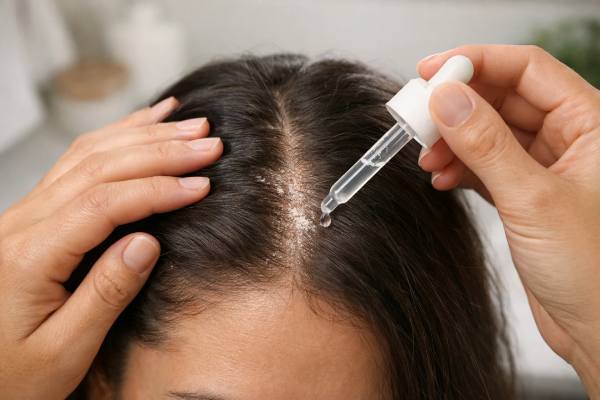
A dry, scaly scalp can be surprisingly hard to treat well. Some products strip too much oil and leave the scalp tighter than before. Others soften flakes for a day or two but never address the buildup that keeps returning. That is where urea becomes interesting. It is not a trend ingredient, and it does not promise dramatic overnight results. Instead, it works in a quieter, more practical way: it helps the scalp hold water, softens rough scale, and can make stubborn buildup easier to loosen without the aggressive feel of harsher exfoliation.
That said, urea is not a universal answer for every flaky scalp. The right strength, frequency, and product type matter, and the cause of the scaling matters even more. A scalp that is simply dry needs a different plan from one with seborrheic dermatitis, psoriasis, or irritation from hair products.
This guide explains what urea does, who tends to benefit most, where it falls short, and how to use it without making an already sensitive scalp angrier.
Key Facts
- Urea can improve scalp hydration and soften stubborn scale at the same time.
- Lower strengths are usually better for dryness and maintenance, while higher strengths are more useful for thicker buildup.
- Urea works best as an adjunct when scalp flakes are tied to psoriasis or seborrheic dermatitis rather than as a stand-alone cure.
- High-strength formulas can sting or over-exfoliate irritated, cracked, or inflamed scalp skin.
- Start with a small amount on a limited area 2 to 3 times weekly, then increase only if the scalp tolerates it well.
Table of Contents
- What Urea Actually Does on the Scalp
- When Urea Helps Most
- When Urea Is Not the Right Tool
- Best Strengths and Product Types
- How to Use Urea Without Overdoing It
- Risks, Side Effects, and When to Get Help
What Urea Actually Does on the Scalp
Urea is one of those ingredients that sounds more complicated than it really is. In skincare and scalp care, its value comes from two main actions: it helps attract and hold water in the outer skin layer, and it helps loosen excess scale. That combination is exactly why it can be useful on a dry, scaly scalp. Many scalp products do one of those jobs but not both. Urea can sit in the middle, acting as both a humectant and a keratolytic depending on the concentration.
At lower strengths, urea behaves mostly as a moisturizer. It helps the outer scalp layer stay more flexible and less brittle, which can reduce that tight, papery feeling many people describe after washing. When the scalp barrier is dry, scale often becomes more noticeable because the surface sheds in an uneven, flaky way. By increasing hydration, urea can make that process less dramatic and more comfortable.
At moderate and higher strengths, urea also softens and loosens built-up keratin. That matters when flakes are not just fine dust but thicker, clingier patches that seem stuck to the scalp. Instead of forcing those scales off with scrubbing, urea helps break their grip more gently. In practice, that often means scale lifts more easily during washing and brushing, with less pulling and less temptation to scratch.
That is why urea is especially interesting for the scalp. The scalp is hairy, oily, and sensitive all at once. Many strong exfoliants feel too harsh there, especially if the skin is already irritated. Urea can be a more balanced option because it supports hydration while helping with desquamation. It may also make other topical treatments work better when thick scale is blocking access to the skin underneath.
Still, the ingredient should be understood realistically. Urea is not primarily an antifungal, and it is not a substitute for every medicated scalp treatment. It is best viewed as a smart support ingredient. It improves the scalp environment, softens adherent scale, and makes dry, rough scalp skin more manageable. If your main issue is plain dryness and tightness, that may be enough. If your scalp is flaky because of seborrheic dermatitis or psoriasis, urea often helps most as part of a broader routine.
A helpful way to think about it is this: urea does not “fix flakes” by force. It makes the scalp less dry, less rigid, and less likely to hold onto thick scale. For people with chronic dryness, that can be a meaningful shift. For people with inflammatory scalp disease, it can be the difference between a treatment reaching the scalp and sitting uselessly on top of buildup. If scalp barrier support is part of your goal, a guide to scalp barrier dryness and ceramides can help place urea in the bigger picture.
When Urea Helps Most
Urea tends to work best when the scalp problem includes dryness plus scale rather than oil alone. That distinction matters. Some flaky scalps are truly dry, with tightness, fine white flaking, and increased sensitivity after shampooing. Others are driven more by seborrheic dermatitis, with oilier flakes, redness, itch, and recurrent flares. Urea can help in both settings, but it usually plays a different role in each one.
For a dry, rough scalp with fine scaling, urea can be useful as a leave-on support product. In that setting, the goal is not aggressive exfoliation. It is softer scale, better hydration, and a calmer scalp surface between washes. People often notice that the scalp feels less tight and looks less ashy or flaky after a few consistent uses. That is the simple version of urea at its best.
It can also help when scale is thicker and more adherent. This includes areas where flakes sit in clusters, catch under the nails, or resist gentle washing. In those cases, urea works less like a standard moisturizer and more like a scale-softening pretreatment. It can help loosen buildup so that shampoo or a prescribed anti-inflammatory product can reach the scalp more effectively.
The ingredient is especially sensible in a few common situations:
- dry scalp with visible flaking but little oil
- seborrheic dermatitis with stubborn scale on top of otherwise treated inflammation
- scalp psoriasis with thick, fixed scale
- winter flares when the scalp feels tight, rough, and more reactive than usual
- over-washed or barrier-impaired scalps that are flaky but not heavily greasy
Where urea often shines is in the overlap between dryness and mild hyperkeratosis. Many people do not have just one clean diagnosis. They have a scalp that runs dry in winter, gets irritated by harsh shampoos, and then starts holding onto scale more than usual. In that in-between zone, urea can be more useful than a purely antifungal shampoo and more comfortable than a stronger acid-based exfoliant.
It can also be a practical bridge ingredient for scalp conditions that already have a treatment plan. Someone using an antifungal shampoo for seborrheic dermatitis may still have dry, clingy scale at the hairline or crown. Someone with scalp psoriasis may need help softening plaques before a steroid solution penetrates properly. In both cases, urea is not replacing the main treatment. It is making the main treatment easier to use and often more effective.
The key is matching it to the right kind of flaking. If your flakes are fine, dry, and worsen after washing, urea may help directly. If they are thick, adherent, and sit on top of inflamed skin, it may help indirectly by softening the barrier between the skin and the treatment. Readers unsure which pattern they have may find a comparison of dry scalp and dandruff differences useful before deciding where urea fits.
When Urea Is Not the Right Tool
Urea is helpful, but it is easy to overestimate what it can do. The biggest mistake is treating it like a universal cure for flakes. It is not. A flaky scalp can come from several very different causes, and urea only addresses some parts of that picture well.
For example, urea is not the main answer for active seborrheic dermatitis when the scalp is greasy, itchy, and inflamed. In that setting, antifungal shampoos usually matter more because the problem is not just dry scale. It is inflammation linked to scalp oil and Malassezia activity. Urea can soften adherent flakes in that setting, but it does not replace ketoconazole, selenium sulfide, ciclopirox, or other targeted treatments when those are needed.
It also is not the first thing to reach for when the scalp is red, burning, cracked, or raw. Because urea can sting on compromised skin, a sensitized scalp may react badly even to a product that is otherwise well chosen. If the scalp barrier is severely disrupted, the initial priority is often calming inflammation and removing obvious irritants rather than adding a keratolytic. That is especially true after hair dye reactions, harsh exfoliation, or overuse of essential oils and “detox” products.
There are other cases where urea can miss the diagnosis entirely:
- fungal scalp infection
- allergic or irritant contact dermatitis
- pustular scalp folliculitis
- significant scalp psoriasis flare needing prescription care
- scarring alopecia or painful inflammatory scalp disease
In those situations, scale may be present, but scale is not the main story. If you treat only what you see on the surface, the underlying problem can continue. That is one reason persistent flakes deserve a second look when they come with pain, pus, tenderness, or obvious hair loss.
Urea is also not ideal when someone wants a fast cosmetic fix for oily buildup caused by heavy products. In that case, a clarifying wash or a better scalp-cleansing routine may help more than a leave-on humectant-keratolytic product. Urea is better suited to actual dryness and retained scale than to simple residue. If product film is the main issue, a guide to gentle scalp exfoliation without irritation may be more relevant.
Another limitation is evidence. Urea is well established in dermatology more broadly, but scalp-specific studies are much thinner than many people assume. That does not mean it is ineffective. It means some of its scalp use is guided by mechanism, clinical experience, and related skin-condition evidence rather than by a large stack of scalp-only trials. For thick scale, that is reasonable. For severe scalp disease, it is a reminder not to let an ingredient become a substitute for diagnosis.
The practical rule is simple: urea is a support ingredient, not an all-purpose scalp diagnosis. It works best when dryness and scale are genuinely part of the problem. It works less well when infection, high inflammation, allergy, or pronounced oil-driven dandruff are doing most of the work.
Best Strengths and Product Types
The right urea product depends less on branding and more on concentration, texture, and use case. This is where many people go wrong. A scalp that needs hydration and a scalp that needs plaque-softening do not usually need the same strength.
A useful way to think about urea is by concentration range.
- Low strength, about 2% to 10%: best for hydration, barrier support, and mild flaking.
- Mid strength, about 10% to 20%: more active for softening scale while still offering moisturization.
- Higher strength, above 20%: stronger keratolytic action, better reserved for localized thick scale and more cautious use.
For most dry, flaky scalps, low to mid strengths are the most practical. They are easier to tolerate, easier to spread through hair, and less likely to sting. On the scalp, cosmetic acceptability matters. A product that technically works but leaves roots heavy, sticky, or greasy is hard to keep using. That is why lotions, foams, light creams, and scalp serums usually make more sense than heavy ointments for diffuse scalp use.
Here is a workable match by situation:
Mild dry scalp
- look for a leave-on lotion, tonic, or serum with lower-strength urea
- best when the scalp feels tight, rough, and lightly flaky
Dry scalp with stubborn scale
- consider a mid-strength product used as a targeted pretreatment
- useful for hairline patches, crown buildup, or nape scaling
Thick plaques or very adherent scale
- stronger formulas may help, but these are often better used under clinician guidance
- more appropriate for localized problem areas than for all-over frequent use
The vehicle matters almost as much as the percentage. A foam can spread well through dense hair. A lotion may suit wider use on the scalp. A cream can work around the hairline or on exposed scalp areas but may be too heavy for oily roots. Ointment-based products are potent for thick scale but can be messy and less realistic for routine use.
Another overlooked point is overlap with other actives. If a scalp product already contains salicylic acid, lactic acid, or fragrance, adding urea changes the feel and the irritation potential. That is not automatically bad, but it makes it more important to introduce one product at a time. For people considering whether urea or another keratolytic makes more sense, a comparison guide to salicylic acid for scalp flakes can help clarify the difference.
A good starting principle is restraint. Most people do not need the highest percentage available. On the scalp, a moderate formula used consistently is often smarter than a very strong formula used once, hated, and abandoned. The best urea product is usually the one that fits both the scalp condition and the reality of hair care: easy to apply, easy to rinse when needed, and gentle enough to keep using.
How to Use Urea Without Overdoing It
Using urea well is less about finding the perfect formula and more about matching the routine to the scalp. Most problems come from one of two extremes: using too little to see any benefit, or layering it too aggressively on an already irritated scalp.
A sensible starting routine is simple:
- Choose a product strength that matches the problem.
- Apply to a small test area first.
- Use it 2 to 3 times weekly at the start.
- Increase only if the scalp feels calmer, not angrier.
- Reassess after 2 to 4 weeks instead of after one use.
For a mildly dry scalp, a low-strength leave-on product can be applied after washing, once the scalp is dry or slightly damp depending on the label. Use a small amount and part the hair in sections so the product actually reaches the skin instead of coating the hair. Overapplying does not improve results. It usually just makes the roots feel coated.
For more adherent scale, urea is often better used as a pretreatment. Apply it to the flaky areas, leave it on for the recommended time, then wash with a gentle shampoo. This approach works because the goal is to soften scale first, not trap it under more product. If the scale is thick, softening it before shampooing is often more effective than hoping a shampoo alone will lift it.
A few technique points matter:
- use fingertips, not nails
- do not forcibly scrape loosened scale
- avoid combining a new urea product with multiple acids on the same day
- keep strong leave-on products away from broken skin
- wash scalp brushes regularly if you are lifting scale more often
If you also use medicated shampoos, keep the routine organized. Urea can complement them well, but not when the whole plan becomes a crowded experiment. A common approach is to use a urea pretreatment on one or two wash days a week and keep the other wash days simpler. If the scalp is flaky because of seborrheic dermatitis, an antifungal shampoo may still be the anchor treatment, with urea added only where scale is preventing access. A separate guide to seborrheic dermatitis triggers and shampoos can help if that pattern sounds familiar.
Timing matters too. If the scalp stings for more than a brief moment, becomes redder, or feels increasingly tender over the next day, that is usually a sign to back off rather than push through. With urea, mild transient tingling can happen, especially at higher strengths. Ongoing irritation is different.
The best mindset is “steady, not forceful.” Urea works by changing the scalp surface gradually. It is not supposed to make flakes vanish overnight. When used well, the scalp becomes less rough, scale becomes easier to lift, and the need to scratch drops. Those are the signs to watch for, not just how much scale comes off after one wash.
Risks, Side Effects, and When to Get Help
Urea is generally well tolerated, but “well tolerated” does not mean irritation-proof. On the scalp, the most common problems are stinging, redness, tenderness, and over-softening of skin that was already compromised. The risk rises with higher concentrations, damaged skin, and routines that combine too many exfoliating or fragranced products at once.
The most likely side effects include:
- brief stinging after application
- increased sensitivity at the hairline or crown
- redness or irritation with overuse
- a greasy or coated feel if the formula is too heavy
- worsening discomfort when applied to fissured, scratched, or inflamed skin
This is why the condition underneath the scale matters so much. A dry scalp may tolerate urea very well. A scalp with active eczema, irritated psoriasis, or contact dermatitis may not. The same formula that softens flakes beautifully in one person can burn in another if the barrier is open or highly inflamed.
Higher-strength products deserve extra caution. They can be very useful for localized thick scale, but they are not automatically “better” for daily all-over scalp care. On the scalp, more strength often means more sting, more residue, and more chance of overshooting from helpful keratolysis into irritation. That is especially true when someone is already using salicylic acid, glycolic acid, retinoids, or strong medicated shampoos.
A dermatologist visit becomes more important when:
- flakes are thick, greasy, or keep returning despite treatment
- the scalp is painful, burning, or bleeding
- there are pustules, crusts, or a bad odor
- scaling is accompanied by noticeable hair thinning or breakage
- you suspect psoriasis, seborrheic dermatitis, or an allergic reaction
- a urea product makes the scalp consistently worse
This last point matters. Failure does not always mean the ingredient is wrong. Sometimes it means the diagnosis is. A person may believe they have a dry scalp when they actually have scalp psoriasis, seborrheic dermatitis, or product allergy. In those cases, a reasonable amount of urea will not solve the main problem. It may only reveal that something more targeted is needed.
It is also worth remembering that itch and scale can overlap with hair loss concerns. Scratching, inflammation, and chronic scalp disease can all make shedding feel worse. If symptoms include persistent itch or visible thinning, a guide to when an itchy scalp needs more attention can help you judge whether self-care is still enough.
Used thoughtfully, urea is a useful tool for dry, scaly scalp care. Used indiscriminately, especially on raw or misdiagnosed scalp conditions, it can become one more irritant in a routine that already has too many. The goal is not to exfoliate the scalp into submission. It is to restore a calmer, softer, less scale-prone surface without provoking the skin in the process.
References
- Urea in Dermatology: A Review of its Emollient, Moisturizing, Keratolytic, Skin Barrier Enhancing and Antimicrobial Properties 2021 (Review)
- Effect of topical treatment with urea in ichthyosis, atopic dermatitis, psoriasis, and other skin conditions—a systematic review 2025 (Systematic Review)
- Scalp Seborrheic Dermatitis: What We Know So Far 2023 (Review)
- Child and Adult Seborrheic Dermatitis: A Narrative Review of the Current Treatment Landscape 2025 (Review)
- Scalp Psoriasis: A Literature Review of Effective Therapies and Updated Recommendations for Practical Management 2021 (Review)
Disclaimer
This article is for educational purposes only and is not a substitute for medical advice, diagnosis, or treatment. A dry, scaly scalp can reflect simple barrier dryness, but it can also be caused by seborrheic dermatitis, psoriasis, eczema, fungal infection, or allergic reactions. Seek care from a qualified clinician if scaling is painful, persistent, worsening, associated with hair loss, or not improving with appropriate over-the-counter care.
If this article helped, please share it on Facebook, X, or another platform you trust so more readers can understand when urea is useful, when it is not, and how to use it more safely on a dry, scaly scalp.