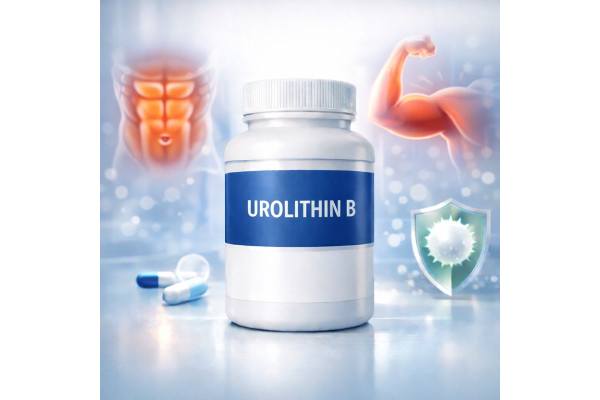
Urolithin B is not a typical “herb” supplement. It is a compound your gut microbes can make when you eat ellagitannin-rich foods like pomegranate, walnuts, and some berries. That origin story matters: two people can eat the same food and produce very different amounts of urolithin B, depending on their microbiome. Interest in urolithin B has grown because early research suggests it may influence pathways linked to muscle maintenance, inflammation control, and metabolic health. At the same time, the human evidence for direct urolithin B supplementation is still limited compared with better-studied relatives like urolithin A.
This guide breaks down what urolithin B is, what benefits are plausible, what is still speculative, and how to approach food-based and supplement-based use with a safety-first mindset.
Essential Insights
- May support muscle maintenance and recovery signals, but human outcomes data are limited.
- Benefits depend on your gut microbiome and ellagitannin intake, so results vary widely.
- If supplementing, a common label range is 150–300 mg per day (follow the product label).
- Stop and reassess if you get persistent stomach upset, headache, or unusual fatigue.
- Avoid if pregnant, breastfeeding, immunosuppressed, or using anticoagulants unless your clinician agrees.
Table of Contents
- What is urolithin B?
- How urolithin B works in the body
- Benefits and advantages people look for
- Can urolithin B support muscle and recovery?
- How to use urolithin B in real life
- Dosage, side effects, and who should avoid
What is urolithin B?
Urolithin B is a small polyphenol-derived molecule produced by certain gut bacteria. You do not typically consume meaningful amounts of urolithin B directly from food. Instead, you consume precursor compounds—mainly ellagitannins and ellagic acid—found in foods such as pomegranate arils and juice, walnuts, and some berry varieties. Once those precursors reach the colon, specific microbes transform them through a series of steps into urolithins, including urolithin A, urolithin B, and related intermediates.
A practical way to think about urolithin B is as a “microbiome output.” That has three major implications for supplement users:
- Not everyone produces it. Researchers often describe “urolithin metabotypes,” meaning some people naturally produce higher levels of certain urolithins while others produce little or none.
- The same diet can yield different results. Two people can eat identical servings of pomegranate and show very different urolithin profiles in blood or urine.
- Gut health changes the equation. Antibiotic use, very low fiber intake, and major shifts in diet can affect the microbes responsible for conversion.
You will also see urolithin B discussed under broader categories like “postbiotic metabolites” (beneficial compounds created by microbes), “ellagitannin metabolites,” or “urolithins.” If you’re shopping, make sure you are not confusing urolithin B with urolithin A, because their research base, typical positioning, and human trial depth are not the same.
How urolithin B works in the body
Urolithin B is studied mainly for how it influences cellular signaling rather than for a single “vitamin-like” function. After formation in the gut, it is typically processed by the body into conjugated forms (for example, glucuronides or sulfates). These forms circulate and can be excreted in urine. This matters because many lab studies use the free form in cell culture at concentrations that may not perfectly mirror what human tissues experience after digestion and metabolism.
Mechanistically, urolithin B is often linked to three broad themes:
- Inflammation signaling modulation
Early research suggests urolithin B may influence inflammatory pathways (such as signaling that affects cytokine production). If inflammation is chronically elevated—due to poor sleep, excess visceral fat, or high training load—anything that gently “turns down the volume” can be appealing. The key question is not whether the pathway moves in a petri dish, but whether the effect is meaningful in people. - Oxidative balance and cellular stress response
Polyphenol metabolites are frequently studied for antioxidant-related effects. In practice, the more realistic benefit is often better described as supporting the body’s own stress-response systems rather than acting as a direct “free radical sponge.” - Muscle protein balance cues
Urolithin B has been explored for its potential to influence muscle protein synthesis and reduce breakdown signaling in some preclinical models. This is why it sometimes appears in strength and physique supplement discussions, even though robust human performance trials are still scarce.
A useful mental model: urolithin B is unlikely to act like a stimulant you “feel.” If it helps, the effects would more likely show up as small shifts over time—recovery quality, training consistency, or body composition trends—rather than an immediate boost.
Benefits and advantages people look for
People usually search for urolithin B because they want one of four outcomes: healthier aging, better metabolic markers, improved recovery, or general inflammation support. Here is what is plausible, what is promising-but-early, and what is still a stretch.
Potential benefits (most plausible, but still not guaranteed):
- Supports a “healthier signal environment” during stress. If urolithin B helps moderate inflammatory signaling, the practical benefit could be better resilience during high-stress blocks (busy work periods, poor sleep weeks, heavy training phases). That does not mean it treats inflammatory disease.
- May complement gut-forward nutrition. Because it is tied to ellagitannin foods, urolithin B use often nudges people toward more fiber, polyphenols, and overall diet quality—sometimes the biggest benefit is the dietary pattern that comes with it.
Promising areas (largely preclinical, needs stronger human confirmation):
- Metabolic support. Animal and cellular models suggest potential effects on lipid handling and glucose-related pathways. This is interesting for people focused on cardiometabolic health, but it should not replace fundamentals like weight management, resistance training, and clinician-directed care.
- Cardiovascular and brain-adjacent signaling. Some studies explore endothelial and neuroprotective angles, but translating that into clear outcomes in humans is still a work in progress.
Advantages compared with “just eating pomegranate”:
- Targeting the metabolite directly could reduce variability—if the product contains true urolithin B, you are not relying entirely on your microbiome to create it.
- Dose consistency is easier with capsules than with varying food quality and serving sizes.
Limitations to keep front-of-mind:
- Human evidence for urolithin B is thinner than for many mainstream supplements.
- Benefits likely depend on baseline status (diet quality, training age, inflammation load, sleep debt).
- If your goal is muscle function in older age, you should compare it with higher-evidence basics: protein adequacy, creatine monohydrate, progressive resistance training, and sufficient vitamin D when indicated.
Can urolithin B support muscle and recovery?
Urolithin B’s “muscle buzz” comes from preclinical work suggesting it may influence muscle protein balance—potentially nudging synthesis upward and/or slowing breakdown under certain conditions. That is a compelling idea because muscle outcomes are often limited by recovery capacity, not motivation. Still, it helps to separate what people want from what the current evidence can honestly support.
Where urolithin B may fit (best-case logic):
- During heavy training blocks when soreness, sleep strain, and schedule stress pile up.
- During dieting phases when calorie restriction can increase muscle loss risk.
- In older adults where maintaining muscle is harder due to “anabolic resistance” (a reduced muscle-building response to protein and training).
What you should expect if it helps:
Think in terms of subtle improvements: slightly better training consistency, less “beat up” feeling, or improved ability to keep performance stable during a cut. Expecting dramatic lean mass changes without matching protein and training is unrealistic.
How to stack it intelligently (without overcomplicating):
- Protein: Aim for a consistent daily intake, spread across meals. Many people do well with 25–40 g protein per meal, adjusted for body size and goals.
- Creatine monohydrate: One of the most validated supports for strength and lean mass over time.
- Carbohydrates around training: Often underrated for recovery, especially if you train hard.
- Sleep and deloads: If these are missing, most supplements underperform.
Practical tracking for 6–8 weeks:
If you try urolithin B, track outcomes that matter:
- Training performance (reps at a given load, weekly volume tolerance)
- Recovery markers (delayed onset muscle soreness severity, readiness scores if you use them)
- Body composition trend (waist, scale trend, photos—not daily noise)
- Subjective fatigue and sleep quality
If none of those move at all after a consistent trial, your microbiome, dose, product quality, or baseline needs may simply not align with the supplement.
How to use urolithin B in real life
There are two broad ways to “use” urolithin B: support your body’s natural production from food, or take a supplement that claims to provide urolithin B directly. Many people do best by starting with the food pathway first, then deciding whether supplementation adds anything.
Option 1: Food-first approach (microbiome-dependent)
Build a steady intake of ellagitannin-containing foods, then support conversion by feeding the microbes that do the work.
- Common ellagitannin sources:
- Pomegranate (arils, juice, extract products)
- Walnuts
- Some berries (varies by type and serving)
- Microbiome-supportive habits that may improve consistency:
- Daily fiber intake from legumes, oats, vegetables, and seeds
- Fermented foods if tolerated (yogurt, kefir, kimchi, sauerkraut)
- Avoiding “all-or-nothing” dieting patterns that reduce plant diversity
A useful approach is consistency over intensity: smaller servings most days tend to outperform occasional large intakes for predictable gut outputs.
Option 2: Supplement approach (dose-consistent, evidence-limited)
Urolithin B supplements are less common than urolithin A products, but they exist. Labels vary. One widely circulated capsule format lists 150 mg urolithin B per capsule, taken once or twice daily, which equals 150–300 mg per day.
How to take it, practically:
- Take with a meal to reduce stomach upset risk.
- If dosing twice daily, split AM and PM for steadier exposure.
- Keep the rest of your routine stable for the first 2–3 weeks so you can actually tell what changed.
Quality checks before you buy:
- Look for third-party testing or a clear certificate of analysis (COA).
- Confirm the label specifies urolithin B (not just “pomegranate extract”).
- Be cautious with “research grade” listings that are not intended for human consumption.
If your main goal is healthy aging and muscle function, it is also worth comparing urolithin B with urolithin A products, because the latter typically has a deeper clinical pipeline.
Dosage, side effects, and who should avoid
Dosage: what’s reasonable right now
There is no universally established clinical dosage for urolithin B as a standalone supplement. The best you can do is combine label reality with a conservative risk approach.
A practical, cautious framework:
- Start low: 150 mg per day for 7–14 days (if that matches a single capsule on your product label).
- If well tolerated: consider 300 mg per day (often 150 mg twice daily) for a full trial period.
- Trial length: 6–8 weeks is a fair window for slow-moving outcomes like recovery patterns and body composition trends.
- Avoid aggressive “more is better” thinking: higher doses are not automatically better, especially when long-term human safety data are limited.
Timing tips
- With food: breakfast or lunch tends to improve tolerance.
- Around training: you can take it at any time; consistency matters more than timing.
- If you notice sleep disruption (uncommon, but possible with many supplements): move the last dose earlier.
Side effects you might notice
Most side effects, when they happen, are nonspecific and overlap with many polyphenol-related products:
- Mild stomach upset, nausea, or looser stools
- Headache
- Unusual fatigue or “off” feeling (often a signal to stop and reassess)
Stop and seek medical advice if you develop allergic symptoms (rash, swelling, breathing difficulty) or persistent symptoms that do not resolve after discontinuation.
Who should avoid (or only use with clinician approval)
- Pregnant or breastfeeding people (insufficient safety data)
- Children and teens (not studied for supplementation)
- People on immunosuppressant therapy or with organ transplants (play it safe)
- People on anticoagulants or antiplatelet drugs (interaction uncertainty)
- People with significant liver or kidney disease (metabolism and clearance concerns)
What the evidence supports and what it does not
It’s fair to say urolithin B is biologically active and promising. It is not fair to claim it is a proven treatment for muscle loss, metabolic disease, or inflammation-driven conditions. The strongest claims usually come from preclinical research. For consumers, that translates to one responsible takeaway: urolithin B may be a supportive add-on for a solid routine, but it should not replace high-evidence basics (training, sleep, protein, and clinician-guided care).
References
- Recent Advances and Perspectives on the Health Benefits of Urolithin B: A Bioactive Natural Product Derived From Ellagitannins 2022
- Urolithins: a Comprehensive Update on their Metabolism, Bioactivity, and Associated Gut Microbiota 2022
- The Therapeutic Relevance of Urolithins, Intestinal Metabolites of Ellagitannin-Rich Food: A Systematic Review of In Vivo Studies 2022 (Systematic Review)
- Development of a liquid chromatography-tandem mass spectrometry (LC-MS/MS) method for characterizing pomegranate extract pharmacokinetics in humans 2023
Disclaimer
This article is for educational purposes only and does not provide medical advice. Urolithin B supplements are not intended to diagnose, treat, cure, or prevent any disease, and human evidence for specific outcomes may be limited. If you are pregnant, breastfeeding, have a medical condition, or take prescription medications (especially anticoagulants, antiplatelets, or immunosuppressants), speak with a licensed clinician before using urolithin B or related supplements. Stop use and seek medical care if you develop concerning symptoms or an allergic reaction.
If you found this guide useful, please consider sharing it on Facebook, X (formerly Twitter), or any platform you prefer, and follow us on social media. Your support through sharing helps our team keep producing reliable, practical health content.