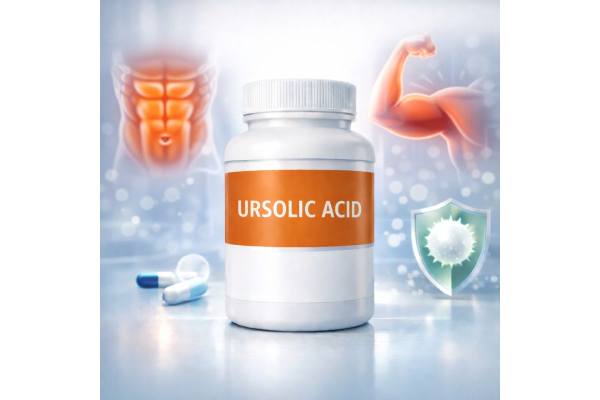
Ursolic acid is a plant compound found in the waxy “skin” of many fruits and herbs—especially apple peels and aromatic leaves like rosemary and oregano. In supplement form, it’s usually sold as a concentrated triterpenoid extract, promoted for metabolic support, inflammation balance, body composition, and even “exercise-mimicking” effects. The science is real—but uneven: most of the strongest findings come from lab and animal studies, while human trials are fewer and sometimes show mixed results. That makes ursolic acid best viewed as a supportive tool, not a shortcut.
If you’re considering it, the practical questions matter most: what it can realistically do, who it may help, what dose ranges have actually been tested, how to take it to improve absorption, and what side effects or medication interactions to watch for. This guide walks through those decisions clearly and carefully.
Essential Insights
- May support inflammation and metabolic markers in some people, but human results are mixed and not guaranteed.
- Typical studied supplemental range is about 150–450 mg per day, taken with food.
- Stomach upset can occur; stop if symptoms are persistent or severe.
- Avoid during pregnancy or breastfeeding, and use extra caution with significant liver or kidney disease.
- Use caution if you take diabetes or blood-pressure medications due to possible additive effects.
Table of Contents
- What is ursolic acid and where is it found?
- What benefits does ursolic acid have in humans?
- How does ursolic acid work in the body?
- How much ursolic acid should you take?
- Best ways to use ursolic acid for goals
- How to choose a quality ursolic acid supplement
- Side effects, interactions, and who should avoid it
What is ursolic acid and where is it found?
Ursolic acid is a naturally occurring pentacyclic triterpenoid—a plant-made molecule that helps protect leaves and fruit skins from environmental stress. In plain terms, it’s part of the protective “outer layer chemistry” that plants use to resist dehydration, pests, and oxidation. You’ll often see it described as 3β-hydroxy-urs-12-en-28-oic acid in technical contexts, but you do not need the chemical name to make practical choices.
Common natural sources include:
- Apple peels (a classic dietary source because it concentrates in the skin)
- Rosemary, oregano, thyme, basil, and sage (ursolic acid is one reason these herbs show strong antioxidant and anti-inflammatory activity in lab settings)
- Cranberries and other berries (amounts vary widely by variety and processing)
- Prunes and some other fruit skins (again, variable)
A key point: food sources provide small, inconsistent amounts, while supplements provide standardized, higher doses. That difference explains why many “promising” mechanisms don’t translate directly from diet studies to supplement outcomes—and why supplement claims can get exaggerated.
Ursolic acid is also related to other triterpenoids you may see on labels:
- Oleanolic acid (structurally similar and often present in the same plant extracts)
- Maslinic acid and corosolic acid (different but sometimes marketed for similar goals)
In supplements, ursolic acid typically appears as:
- Standardized extracts (often from rosemary or other herbs), listing a percent (for example, “25% ursolic acid”)
- High-purity ursolic acid (sometimes labeled 90–98% ursolic acid)
- Blends in “fat burner” or “recomposition” formulas (where it can be hard to know your true dose)
Because ursolic acid is poorly water-soluble, formulation matters. The same number of milligrams can behave differently depending on whether it’s a plain powder, taken with a fatty meal, or delivered in a more advanced form (like a lipid-based capsule). This absorption challenge is one of the biggest reasons real-world results vary.
What benefits does ursolic acid have in humans?
Most interest in ursolic acid comes from its broad “systems” effects: inflammation balance, oxidative stress control, metabolic signaling, and muscle-related pathways. In humans, though, the story is more cautious: there are some promising signals, but results are not consistent across studies, and benefits—when present—tend to be modest.
Metabolic and cardiometabolic support
Ursolic acid is commonly marketed for blood sugar, insulin sensitivity, waistline, and lipid support. Human research includes trials in adults with metabolic risk, as well as broader analyses pooling multiple studies. Here’s a practical way to interpret that mix:
- Best-case scenario: People with clear metabolic strain (higher waist circumference, higher fasting glucose, or inflammatory markers) may see improvements, especially when ursolic acid is paired with diet and movement changes.
- Typical scenario: Many adults will see little to no measurable change in weight, BMI, or standard labs over 8–12 weeks if lifestyle stays the same.
If your goal is metabolic health, think of ursolic acid as a supporting lever, not the main driver. Nutrition, sleep, training, and medication adherence (if prescribed) dominate the outcome.
Body composition and muscle-related outcomes
Ursolic acid became popular in fitness circles because early mechanistic research suggested it might support muscle protein pathways and reduce fat gain signals. In real-world human training settings, results can be underwhelming:
- Some people report better “recomposition” outcomes (waist reduction with stable weight), but this is hard to separate from training quality, protein intake, and sleep.
- Controlled training trials have shown that adding ursolic acid on top of resistance training and a high-protein diet may not provide additional gains beyond what training already delivers.
A realistic takeaway: if you already train well and eat enough protein, ursolic acid is unlikely to be a dramatic difference-maker. If your routine is inconsistent, it won’t compensate.
Inflammation and recovery
Ursolic acid’s anti-inflammatory and antioxidant reputation is stronger in preclinical research than in human outcomes, but some users pursue it for soreness, joint comfort, or general “systemic inflammation” support. The most reasonable expectation is subtle improvements in perceived recovery, not a painkiller-like effect.
Skin and topical uses
Ursolic acid also appears in cosmetic and dermatology-focused products aimed at:
- improving the look of firmness and elasticity
- supporting the skin barrier
- calming visible irritation
Topical use can be a separate pathway from oral supplements and may be preferable if your primary target is skin appearance rather than internal metabolic markers.
Bottom line: ursolic acid is a plausible, multi-target compound with human evidence that ranges from encouraging to neutral. It’s most worth considering when you have a clear goal, track measurable outcomes, and treat it as an add-on to fundamentals.
How does ursolic acid work in the body?
Ursolic acid is often described as “multi-pathway,” which can sound like marketing—yet it’s partly true. It interacts with several signaling routes involved in metabolism, inflammation, and cellular stress response. The important nuance is that many mechanisms are best supported in cell and animal studies, while human confirmation is still developing.
Inflammation signaling
One of the most cited actions is downshifting inflammatory messengers. In simplified terms, ursolic acid may help calm “alarm” pathways that ramp up inflammatory cytokines. Researchers often focus on:
- reduced activation of pro-inflammatory transcription signals
- lower production of inflammatory mediators
- support for antioxidant defenses that indirectly reduce inflammatory load
For a user, this translates to a hypothesis: less inflammatory signaling could support recovery, vascular function, and metabolic resilience—but the size of this effect in humans can be small.
Oxidative stress and antioxidant defenses
Ursolic acid may support endogenous antioxidant systems, meaning it can help your body regulate oxidative stress rather than acting as a direct “antioxidant sponge.” This distinction matters. Direct antioxidants can sometimes blunt training adaptations if taken at high doses; regulatory support is less likely to do that, though the evidence is still incomplete.
Metabolic pathways and “fuel handling”
Ursolic acid is studied for its influence on:
- glucose uptake and insulin signaling sensitivity
- fat oxidation and lipid handling
- energy-sensing pathways that respond to cellular fuel status
This is where “exercise mimetic” language comes from: some pathways overlap with what gets activated during training. The safer framing is: ursolic acid may nudge certain metabolic signals in a favorable direction, but it does not replicate the full-body benefits of actual exercise (cardiorespiratory improvement, neuromuscular adaptation, and psychological effects).
Muscle-related pathways
Mechanistic work suggests potential influence on:
- muscle protein turnover (balance between synthesis and breakdown)
- growth-related signaling cascades
- factors involved in muscle atrophy under stress conditions
In humans who already lift weights and eat adequate protein, these pathways may already be strongly activated, leaving little room for a supplement to add value. In states of low activity, aging-related decline, or catabolic stress, the theoretical value could be higher—but that’s exactly where more clinical research is needed.
Why absorption matters so much
Ursolic acid is lipophilic (fat-loving), poorly soluble in water, and can have low oral bioavailability. That means:
- two people can take the same labeled dose and absorb very different amounts
- taking it with food—especially a meal containing fat—can make a practical difference
- advanced delivery systems might matter more than the raw milligrams
Mechanism talk is useful, but your outcomes will hinge on basics: your baseline health, your routine, your dose, your formulation, and your consistency.
How much ursolic acid should you take?
There is no universally established daily requirement for ursolic acid, and supplement dosing is based on what has been used in clinical trials, plus practical tolerability in the real world. A sensible approach is to anchor your plan to human-studied ranges and then personalize based on goal, body size, and side effects.
Common studied oral dose range
Most supplemental research clusters in the neighborhood of:
- 150–450 mg per day (total ursolic acid), typically used for 8–12 weeks
- Some training-focused protocols use around 400 mg per day
Because absorption varies, a higher number is not automatically better. Start where you can assess tolerance.
A practical dosing ladder
If you are new to ursolic acid:
- Start low: 150 mg per day with a meal for 7–10 days.
- Assess: energy, digestion, sleep, and any headaches or skin reactions.
- Increase if needed: move to 300 mg per day (either once daily with food or split as 150 mg twice daily).
- Upper end: consider 400–450 mg per day only if you tolerate it well and have a clear reason to test the higher range.
Timing: when to take it
- With food is usually best, especially with a meal that includes some fat (olive oil, eggs, yogurt, nuts, salmon).
- If you split doses, take morning and evening with meals to reduce stomach upset and smooth exposure.
- If you are using it for training support, timing “around workouts” is less important than daily consistency.
Form matters more than people think
Look closely at labels:
- If a product says “rosemary extract 500 mg,” that is not the same as “ursolic acid 500 mg.” You need the actual ursolic acid amount or a standardization percent that lets you calculate it.
- A “25% ursolic acid” extract means 500 mg provides about 125 mg of ursolic acid.
- High-purity products (90–98%) make dosing simpler, but still do not guarantee absorption.
How long to try it before judging
Give it enough time to show a signal:
- 8 weeks for training/recovery goals (paired with stable training)
- 12 weeks for metabolic markers (paired with stable diet and consistent steps/training)
Track something measurable (waist, fasting glucose trend, gym logs, blood pressure, or inflammation markers if your clinician is monitoring them). If nothing changes and you’re consistent, ursolic acid may simply be a poor match for your physiology or goal.
Best ways to use ursolic acid for goals
Ursolic acid works best when you treat it like a small, targeted upgrade to a plan that already makes sense. Below are goal-specific ways to use it that tend to be realistic, trackable, and lower-risk.
For metabolic support (waist, glucose, triglycerides)
If your goal is cardiometabolic improvement, the biggest mistake is expecting ursolic acid to outrun your daily habits. A better strategy:
- Pair ursolic acid with protein-forward meals and fiber (legumes, vegetables, oats, berries).
- Aim for consistent movement: at least 7,000–10,000 steps most days, plus 2–4 resistance sessions weekly.
- Use a dose you can stick to: 150–300 mg per day with food is a reasonable starting zone.
- Track waist circumference weekly and fasting glucose trends (if you already measure it).
This goal is also where medication interactions can matter most (especially diabetes drugs). If you’re medicated, coordinate with your clinician before you change anything.
For training and recovery
If you lift weights and want to test ursolic acid for recovery or body composition, set up the trial so it can actually be judged:
- Keep your program stable for at least 8 weeks (same exercises, similar volume).
- Keep protein stable (a consistent daily target matters more than timing).
- Use 300–400 mg per day with meals, unless you’re sensitive.
- Track: performance (reps at a set load), soreness ratings, and waist measurement.
If your training, sleep, or protein intake is inconsistent, ursolic acid will not “save” the plan. It’s most likely to show any effect when the basics are already controlled.
For skin appearance and barrier support
If your primary goal is skin, you may prefer topical use:
- Patch test first (inner forearm, then 24 hours).
- Use consistently for several weeks before judging changes in texture or firmness.
- If you combine oral and topical, introduce one at a time so you can identify what’s helping—or causing irritation.
For inflammation balance and general wellness
This is the hardest outcome to quantify, so keep expectations modest and safety high:
- Start low (150 mg/day), assess digestion and sleep.
- Treat it as a complement to anti-inflammatory basics: movement, adequate sleep, and a diet rich in plants, fish, and olive oil.
A simple rule: if you cannot name the metric you’ll use to judge success, it’s easy to spend money for an effect you can’t confirm. Make the experiment measurable, time-bound, and reversible.
How to choose a quality ursolic acid supplement
Ursolic acid supplements range from well-made and transparent to vague and under-dosed. Choosing wisely protects both your wallet and your health—especially because ursolic acid is frequently included in multi-ingredient “metabolism” blends that hide the real dose.
Label checks that actually matter
Use this quick checklist:
- Does the label state the amount of ursolic acid in mg?
If it only lists an herb extract without standardization, you cannot know your dose. - Is the extract standardized (for example, “25% ursolic acid”) and is the math clear?
A product can look “high dose” while delivering only a small amount of actual ursolic acid. - Is it a single-ingredient product or a proprietary blend?
Proprietary blends make it hard to assess both effectiveness and interaction risk. - Is there any third-party testing?
Look for credible quality signals such as GMP manufacturing, published certificates of analysis, and reputable third-party verification (especially important for athletes).
Formulation and absorption considerations
Because ursolic acid is lipophilic:
- A capsule taken on an empty stomach may deliver less than expected.
- Products that use lipid-based delivery or otherwise claim enhanced absorption may help, but don’t assume “fancy delivery” guarantees better results. If the company cannot explain the dose and form clearly, treat claims cautiously.
Common mistakes
Most disappointments with ursolic acid come from predictable errors:
- Expecting fast fat loss without changing diet, sleep, or activity.
- Under-dosing by choosing a low-standardization herb extract.
- Changing multiple supplements at once, making it impossible to identify what worked or caused side effects.
- Ignoring tolerance signals (persistent nausea, reflux, or headaches).
- Buying “kitchen sink” formulas that include stimulants or other compounds that drive the perceived effect, not the ursolic acid.
A safer buying approach
If you want the cleanest experiment:
- Choose a single-ingredient ursolic acid supplement with clear mg dosing.
- Start at 150 mg/day with food.
- Keep everything else stable for 8–12 weeks.
- Judge results using 1–3 metrics you track consistently.
That approach is less exciting than a flashy blend, but it’s the best way to learn whether ursolic acid is personally useful for you.
Side effects, interactions, and who should avoid it
Most people who try ursolic acid tolerate it, but “natural” does not mean risk-free. The most responsible way to use it is to assume you could be the person who reacts—and to plan around that possibility.
Common side effects
Reported side effects tend to be mild and often dose-related:
- Stomach upset, nausea, reflux, or diarrhea (more likely on an empty stomach)
- Headache or a “wired/tired” feeling in sensitive users
- Skin reactions (more common with topical use—itching, redness, or rash)
If side effects appear, reduce the dose, take it with food, or stop. Persistent symptoms are a clear signal to discontinue and reassess.
Medication interactions to consider
Because ursolic acid may influence glucose and blood pressure regulation in some contexts, be careful if you use:
- Diabetes medications (risk of additive glucose lowering)
- Blood pressure medications (risk of additive lowering, dizziness)
- Anticoagulants or antiplatelet drugs (interaction risk is not fully established, but caution is sensible with anything that might influence inflammation and vascular signaling)
Also consider caution if you use multiple supplements with overlapping effects (berberine, high-dose fish oil, concentrated polyphenols, stimulant fat burners). Overlap increases the chance of side effects and makes troubleshooting difficult.
Who should avoid ursolic acid unless a clinician agrees
Avoid or seek medical clearance if you are:
- Pregnant or breastfeeding
- Under 18
- Managing significant liver or kidney disease
- Preparing for surgery or a procedure where bleeding risk matters
- Living with a condition where small changes in glucose or blood pressure could be dangerous without supervision
When to stop immediately
Stop and seek medical advice promptly if you develop:
- severe or persistent abdominal pain, vomiting, or dehydration
- signs of an allergic reaction (swelling, hives, breathing difficulty)
- fainting, severe dizziness, or unusual weakness
- unexplained yellowing of skin/eyes, dark urine, or intense fatigue (rare, but important to take seriously)
A special note for athletes
Ursolic acid itself is not typically the main concern—supplement contamination is. If you are drug-tested, prioritize products with credible third-party certification and avoid multi-ingredient blends with unclear sourcing.
Used thoughtfully, ursolic acid can be a reasonable short-term trial for some goals. Used carelessly, it can create side effects, muddy your routine, or complicate medication management.
References
- The effects of ursolic acid on cardiometabolic risk factors: a systematic review and meta-analysis – PMC 2024 (Systematic Review and Meta-Analysis)
- Ursolic acid has no additional effect on muscle strength and mass in active men undergoing a high-protein diet and resistance training: A double-blind and placebo-controlled trial – PubMed 2021 (RCT)
- Ursolic acid: A systematic review of its pharmacology, toxicity and rethink on its pharmacokinetics based on PK-PD model – PubMed 2020 (Systematic Review)
- Recent developments on ursolic acid and its potential biological applications – PMC 2025 (Review)
- Effect of Ursolic Acid on Metabolic Syndrome, Insulin Sensitivity, and Inflammation – PubMed 2017 (RCT)
Disclaimer
This article is for educational purposes only and does not provide medical advice, diagnosis, or treatment. Supplements like ursolic acid can affect people differently and may interact with medications or medical conditions. If you are pregnant, breastfeeding, under 18, managing a chronic condition, or taking prescription medications (especially for blood sugar, blood pressure, or blood clotting), talk with a qualified healthcare professional before using ursolic acid. Stop use and seek medical attention if you develop severe or persistent side effects or signs of an allergic reaction.
If you found this guide useful, please consider sharing it on Facebook, X (formerly Twitter), or any platform you prefer, and follow us on social media. Your support helps our team keep producing clear, trustworthy health content.