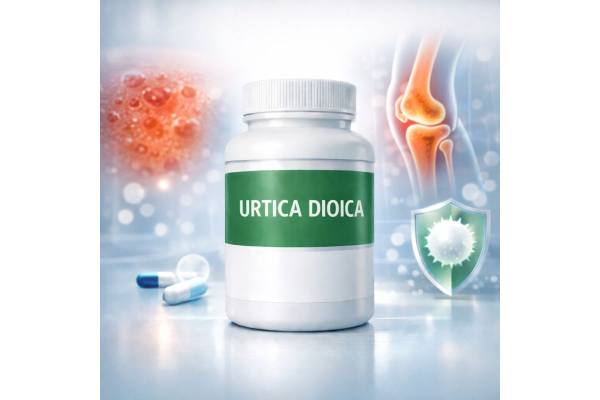
Urtica dioica—better known as stinging nettle—is one of those plants that’s both ordinary and surprisingly useful. It grows widely, yet it has a long track record in herbal practice for urinary comfort, seasonal allergies, joint aches, and general “tonic” support. Modern supplements usually focus on either the leaf (often for inflammation, allergies, and metabolic markers) or the root (most often for urinary symptoms linked to benign prostatic hyperplasia). That distinction matters because leaf and root contain different mixes of active compounds and are studied for different outcomes.
Nettle isn’t a miracle cure, and the strongest human evidence tends to be condition-specific. But when you match the right part of the plant to the right goal—and use a practical dose and timeline—it can be a reasonable option for people who want a plant-based complement to standard lifestyle care.
Quick Overview
- Nettle root may modestly improve urinary symptoms in benign prostatic hyperplasia in some men.
- Nettle leaf may support glycemic and inflammation markers in some people with metabolic risk.
- Typical supplement range is about 300–600 mg per day for root extract or 500–1,000 mg per day for leaf extract, taken with food.
- Stomach upset and increased urination can occur; use extra caution with diabetes or blood-pressure medications.
- Avoid during pregnancy or breastfeeding, and avoid self-treating serious urinary symptoms without medical evaluation.
Table of Contents
- What is Urtica dioica and what parts are used?
- What benefits are most supported by evidence?
- How stinging nettle works and what it contains
- How much Urtica dioica should you take?
- How to use nettle for common health goals
- Side effects, interactions, and who should avoid nettle
- Evidence quality and realistic expectations
What is Urtica dioica and what parts are used?
Urtica dioica is a perennial plant covered in tiny hollow hairs that act like needles. When touched, those hairs can inject irritating compounds into the skin—hence the familiar sting. But once the plant is dried, cooked, or processed into an extract, the sting largely disappears, and the remaining plant chemistry is what people use for health purposes.
The most important practical detail is that different parts of nettle are used for different goals:
- Leaf (herb): Often used for seasonal allergy support, joint comfort, and general anti-inflammatory and antioxidant support. Leaf preparations also show up in metabolic-support formulas because they contain polyphenols and other compounds studied for glycemic markers.
- Root (radix): Most commonly used for urinary symptoms associated with benign prostatic hyperplasia (BPH). Root extracts are typically the form discussed in urinary-health supplements marketed to men.
- Seeds and aerial parts: Used more traditionally and less consistently in modern clinical research. You’ll see them in some regional products, but standardization is less common.
You’ll also find nettle sold in multiple delivery formats, each with pros and cons:
- Tea or dried herb: Gentle, inexpensive, but less standardized. Useful if your goal is mild support and you tolerate herbs well.
- Capsules or tablets of extract: More consistent dosing. Better if you want a measured trial for a specific outcome.
- Tinctures and syrups: Convenient for some people, but dosing can be vague unless the product is tightly standardized.
- Combination formulas: Common for urinary health (for example, nettle plus saw palmetto). These can be effective, but they make it harder to know what is driving the result.
Finally, nettle products vary in naming. If you see “stinging nettle,” “nettle leaf,” “nettle root,” or the Latin name Urtica dioica, they are often referring to the same plant—yet the part used can make the experience and evidence base very different.
What benefits are most supported by evidence?
Stinging nettle is used for a wide range of reasons, but the most credible benefits are tied to a few common intents: urinary symptoms, metabolic markers, and inflammation-related discomfort. Here’s the most helpful way to think about what nettle can and cannot do.
Urinary symptoms linked to benign prostatic hyperplasia
Nettle root is the best-studied part for urinary symptoms in men with BPH, such as weak stream, frequent nighttime urination, hesitancy, and incomplete emptying. Clinical trials suggest that nettle root may improve symptom scores in some men over several months. The practical takeaway is not that nettle “shrinks the prostate overnight,” but that it may help reduce symptom burden for certain people—especially when used consistently and when symptoms are mild to moderate.
A key safety note: urinary symptoms can have multiple causes. New or rapidly worsening urinary issues deserve medical evaluation, particularly if there is blood in urine, fever, pelvic pain, or inability to urinate.
Glycemic and cardiometabolic markers
Nettle leaf is more commonly studied for metabolic outcomes. Systematic reviews and meta-analyses of clinical trials suggest nettle supplementation may improve some markers—often fasting blood sugar, HbA1c, inflammation markers, triglycerides, or systolic blood pressure—in certain groups, particularly people already living with type 2 diabetes or metabolic strain. At the same time, not every marker changes, and results depend heavily on the product, dose, and study design. Think of nettle as a “supportive nudge,” not a replacement for diet, movement, sleep, and prescribed care.
Inflammation and joint comfort
Nettle leaf has a long reputation for helping with “aches and stiffness,” and it contains compounds that make this plausible. People use it for osteoarthritis discomfort, general inflammatory aches, and recovery support. Human evidence varies by formulation and outcome measured, so expectations should stay grounded: some people feel noticeably better, others do not.
Seasonal allergies and nasal symptoms
Nettle leaf is widely used for allergic rhinitis, but evidence is mixed and often older or limited in size. It may help some people feel less congested or itchy, but it should be viewed as an adjunct—especially if you have asthma, severe allergy symptoms, or persistent sinus issues.
Overall, nettle’s “best case” benefits show up when you match leaf or root to a specific goal, use a dose that is realistic, and judge results with measurable symptoms or lab markers.
How stinging nettle works and what it contains
Stinging nettle is not a single-chemical supplement. It’s a plant with a broad set of constituents, and those constituents differ between leaf and root. That complexity is one reason nettle can feel helpful for multiple systems—and also why results can be inconsistent between products.
Key constituents in nettle leaf
Nettle leaf is commonly described as nutrient-dense and phytochemical-rich. Depending on processing and harvest timing, it may provide:
- Polyphenols (including flavonoids) that support antioxidant defenses
- Caffeic acid derivatives and other phenolic compounds associated with inflammation balance
- Minerals and micronutrients (more relevant in food-like preparations than in highly refined extracts)
- Plant sterols and pigments that can influence cellular signaling
Mechanistically, leaf extracts are studied for effects on inflammatory pathways and oxidative stress. A practical way to translate this: nettle leaf may help reduce the “background noise” of inflammatory signaling, which can influence perceived stiffness, recovery, and sometimes metabolic markers.
Key constituents in nettle root
Nettle root is studied more often for urinary symptoms. Root preparations contain different compounds than leaf, including:
- Phytosterols and lignans that may interact with hormone-related pathways
- Lectins and polysaccharides that may influence inflammatory signaling and tissue response
- Other constituents that may affect enzymes involved in androgen metabolism
This does not mean nettle root “changes your testosterone” in a dramatic or predictable way. The more realistic interpretation is that root extracts may influence pathways relevant to prostate tissue behavior and urinary function, leading to symptom improvement in some users.
Why product differences matter
Two nettle supplements can share the same plant name but behave very differently because of:
- Leaf vs root (the biggest divider)
- Extraction method (water, alcohol, hydroalcoholic, standardized extracts)
- Standardization (some products list mg of extract without clarifying active content)
- Combination formulas (useful for synergy, but harder to evaluate)
If you’ve tried nettle and felt nothing, it does not automatically mean nettle “doesn’t work.” It may mean you used the wrong plant part, an under-dosed product, or a form that does not match your goal.
How much Urtica dioica should you take?
There is no official daily requirement for nettle. Dosing is based on traditional use, typical supplement practices, and ranges tested in clinical research. Because nettle is sold as leaf, root, and teas, it helps to choose a dosing plan that matches the format you actually use.
Typical supplement ranges people use
These ranges reflect common real-world practice and trial dosing patterns:
- Nettle root extract (for urinary symptoms): often 300–600 mg per day, commonly split into two doses with meals.
- Nettle leaf extract (for inflammation, allergies, or metabolic markers): often 500–1,000 mg per day, taken with food.
- Dried leaf tea: commonly 2–4 g of dried leaf steeped in hot water, once or twice daily. This can be a gentle entry point, but it is less standardized than capsules.
Labels can be confusing, so do the math:
- If the label says “nettle leaf 500 mg,” that might mean 500 mg of dried leaf powder.
- If it says “nettle leaf extract 500 mg,” it could be stronger—or not—depending on extraction ratio and standardization.
- If it lists a percentage (for example, “10:1 extract”), you still need to know what the company uses as a marker of consistency.
A practical dosing ladder for first-time users
If you want a careful trial without overdoing it:
- Start with a low, once-daily dose for 7–10 days (for example, 300 mg root extract or 500 mg leaf extract with food).
- If tolerated, increase to a split dose (for example, root extract 300 mg twice daily).
- Run the trial for a realistic timeline:
- 4–8 weeks for urinary symptoms (symptom scores often shift gradually)
- 8–12 weeks for metabolic markers (especially if you plan to check labs)
When to take it
Most people do best taking nettle:
- With meals to reduce stomach upset
- Earlier in the day if it increases urination for you
- Split doses for steadier coverage and better tolerance
If you are using nettle alongside prescription medications, especially for blood sugar or blood pressure, it’s wise to start at the lower end and monitor for additive effects like dizziness, shakiness, or unexpected glucose changes.
How to use nettle for common health goals
The most effective way to use nettle is to treat it like a targeted tool with a clear goal, not a vague “wellness booster.” That means choosing the correct plant part, pairing it with supportive habits, and tracking outcomes you can actually observe.
For urinary comfort and nighttime frequency
- Choose nettle root, not leaf, unless your product is explicitly designed for urinary symptoms.
- Use a consistent daily routine (often split dosing with meals).
- Track a simple symptom score weekly: nighttime bathroom trips, urgency episodes, and strength of stream.
- Combine with “low-friction” lifestyle supports: limit fluids right before bed, moderate alcohol, and address constipation (constipation can worsen urinary symptoms).
If you have severe symptoms, pain, fever, blood in urine, or sudden retention, treat that as a medical issue—not a supplement problem.
For metabolic support
Nettle leaf fits best as a complement to structured basics:
- Pair leaf extract with meals that emphasize protein and fiber to reduce post-meal glucose spikes.
- Keep movement consistent. Even a daily 20–30 minute walk can make it easier to detect whether nettle adds anything.
- Track one or two markers for 8–12 weeks: waist circumference, fasting glucose trends (if you already measure them), or clinician-ordered HbA1c.
This is also where medication interactions matter most. If you use glucose-lowering medication, start low and monitor closely.
For joint comfort and inflammatory aches
A practical trial looks like this:
- Choose nettle leaf (tea or extract) and take it daily for 4–8 weeks.
- Track pain and stiffness at the same time each day using a 1–10 scale.
- Keep exercise consistent, but avoid large training changes that could mask the signal.
For seasonal allergy support
If you want to test nettle for rhinitis:
- Start 1–2 weeks before your worst season if you can.
- Use leaf extract daily and judge outcomes by nasal itch, sneezing frequency, or reliance on other products.
- Keep expectations realistic. Nettle may help as an add-on, but it is unlikely to outperform well-established allergy strategies for severe symptoms.
Across goals, the “secret” is not a hack. It’s consistency, correct matching of leaf versus root, and simple tracking so you can decide whether nettle is worth continuing.
Side effects, interactions, and who should avoid nettle
Stinging nettle is often well-tolerated, but it can still cause side effects and interactions—especially when taken in concentrated extract form. Safety is also influenced by the plant part used, the dose, and the quality of the product.
Common side effects
Most side effects are mild and improve with dose reduction or taking nettle with food:
- Stomach upset, nausea, or loose stools
- Increased urination, especially with leaf teas or higher intake
- Headache or a “dry” feeling in some users
- Skin irritation from handling fresh nettle (a separate issue from capsules or tea)
If symptoms are persistent, stop the supplement and reassess. A supplement should not create a daily side-effect burden.
Medication interactions to take seriously
Use extra caution and consider clinician guidance if you take:
- Diabetes medications or insulin (possible additive glucose-lowering effects)
- Blood-pressure medications (possible additive lowering and dizziness in sensitive people)
- Diuretics (nettle can increase urination, which may compound effects)
- Blood thinners or antiplatelet drugs (a cautious approach is reasonable, especially before procedures)
Also be cautious if you stack multiple supplements aimed at the same outcome (for example, multiple glucose-support herbs together). Overlap increases side effects and makes it harder to know what is helping.
Who should avoid nettle unless a clinician approves
Avoid nettle or seek medical clearance if you are:
- Pregnant or breastfeeding
- Under 18
- Living with significant kidney disease, liver disease, or unstable chronic illness
- Preparing for surgery or a procedure where bleeding risk or blood-pressure management is important
- Experiencing unexplained urinary symptoms that have not been evaluated
When to stop immediately
Stop and seek medical help if you experience:
- signs of an allergic reaction (swelling, hives, breathing difficulty)
- severe vomiting, dehydration, or intense abdominal pain
- fainting, severe dizziness, or confusion
- urinary retention, fever, or blood in urine
Finally, remember that “natural” quality varies. If you are drug-tested or have complex medical needs, prioritize reputable manufacturers and avoid vague proprietary blends that hide the true dose and plant part used.
Evidence quality and realistic expectations
Nettle is a good example of how a plant can be both promising and easy to overhype. The evidence base includes traditional use, laboratory studies, animal research, and human trials—but those layers do not carry equal weight.
Where the evidence is strongest
- Urinary symptoms and nettle root: Human trials suggest symptom improvement is possible for some men with BPH-related lower urinary tract symptoms. The strongest takeaway is symptom support, not a guarantee of anatomical change or a replacement for medical evaluation.
- Metabolic markers and nettle leaf: Meta-analyses suggest potential improvements in some markers (such as fasting glucose or inflammation-related measures) in certain populations, but effects are not universal and are strongly influenced by study design and baseline risk.
Where evidence is weaker or more variable
- Allergic rhinitis: Nettle is popular for allergies, yet results are inconsistent and often based on smaller or older trials.
- Joint pain and inflammation conditions: Mechanisms and user reports are common, and some trials exist, but formulations vary widely, and outcomes are not always measured in a way that helps everyday decision-making.
How to run a fair personal trial
If you want a trial that can actually answer “does this help me?”:
- Pick one goal and one form (leaf or root).
- Choose a dose you can tolerate and keep it consistent.
- Run it long enough to matter (4–8 weeks for symptoms, 8–12 weeks for labs).
- Track simple outcomes weekly.
- Stop if side effects appear or if there is no measurable benefit by the end of the trial.
When to involve a clinician
It’s especially smart to talk with a clinician if you:
- take medications for blood sugar, blood pressure, or clotting
- have urinary symptoms that are new, severe, or worsening
- want to use nettle alongside other herbal products for the same condition
The most realistic view is that Urtica dioica can be a useful adjunct for specific goals in specific people. It’s not a cure-all—and it’s most helpful when it sits on top of strong fundamentals, not in place of them.
References
- Effects of Urtica dioica on Metabolic Profiles in Type 2 Diabetes: A Systematic Review and Meta-analysis of Clinical Trials 2022 (Systematic Review and Meta-Analysis)
- Nutritional and pharmacological importance of stinging nettle (Urtica dioica L.): A review 2022 (Review)
- Urtica dioica: Anticancer Properties and Other Systemic Health Benefits from In Vitro to Clinical Trials 2024 (Review)
- Stinging Nettle – LiverTox – NCBI Bookshelf 2023 (Safety Review)
- The efficacy of stinging nettle (urtica dioica) in patients with benign prostatic hyperplasia: a randomized double-blind study in 100 patients 2013 (RCT)
Disclaimer
This article is for educational purposes only and does not provide medical advice, diagnosis, or treatment. Herbal supplements such as Urtica dioica can affect people differently and may interact with medications or medical conditions. If you are pregnant, breastfeeding, under 18, have kidney or liver disease, have significant urinary symptoms, or take prescription medicines (especially for blood sugar, blood pressure, fluid balance, or blood clotting), consult a qualified healthcare professional before using stinging nettle. Stop use and seek medical attention if you develop severe or persistent side effects or signs of an allergic reaction.
If you found this guide helpful, please consider sharing it on Facebook, X (formerly Twitter), or any platform you prefer, and follow us on social media. Your support helps our team continue producing clear, high-quality health content.