Uveitis is inflammation inside the eye, and it can threaten vision when it is missed or treated too late. Since the COVID-19 pandemic began, eye specialists have reported uveitis appearing after SARS-CoV-2 infection in some patients—sometimes as a new diagnosis and sometimes as a flare in people with a prior history. The relationship is complex: timing can be suggestive, but uveitis also occurs for many other reasons, including autoimmune disease, viral reactivation, and systemic infections. What matters most is recognizing symptoms early, getting the right exam, and starting the appropriate treatment while ruling out infections that should not be treated with steroids alone. This article explains the types of uveitis that may show up after COVID-19, the symptom patterns that should prompt urgent evaluation, what testing typically looks like, and how treatment is tailored—from eye drops to systemic medication—so you can navigate care calmly and safely.
Essential Insights
- New-onset uveitis and uveitis flare-ups have been reported within weeks to months after COVID-19, but timing alone does not prove cause.
- Classic warning signs include light sensitivity, eye pain, redness, new floaters, and blurred vision that worsens quickly.
- Treatment often starts with anti-inflammatory therapy such as corticosteroids and pupil-dilating drops, but infections must be ruled out first.
- Seek same-day eye care for sudden floaters, vision loss, severe pain, or light sensitivity—prompt treatment can protect vision.
Table of Contents
- Can COVID-19 trigger uveitis
- Uveitis symptoms after COVID-19
- Diagnosis and tests your doctor may use
- Treatment options and typical timelines
- Recurrence risk and prevention strategies
- When to seek urgent care and FAQs
Can COVID-19 trigger uveitis
Researchers and clinicians have asked two separate questions since 2020: can COVID-19 be followed by new uveitis, and can it trigger a flare in people who have had uveitis before? Evidence has grown for both patterns, but it is important to interpret it carefully.
Large database studies have reported a modest increase in the risk of being diagnosed with uveitis after COVID-19 compared with matched people without COVID-19, with risk signals appearing as early as the first month and persisting over longer follow-up windows in some analyses. Separate studies focusing on people already living with uveitis have suggested that relapse may be more common after infection than during comparable periods without infection. Those findings support a real association in at least some groups, but they do not mean COVID-19 is the only cause, or even the most common cause, of uveitis in the general population.
Why an infection might be followed by eye inflammation
Uveitis is not one disease. It is a final common pathway—immune cells and inflammatory mediators become active inside the eye. After a systemic viral infection, several mechanisms could plausibly increase risk:
- Immune dysregulation after infection: the immune system may remain activated, producing inflammatory “spillover” that affects multiple organs.
- Molecular mimicry: immune responses to viral proteins might cross-react with self-antigens in genetically susceptible individuals.
- Reactivation of latent viruses: illness-related stress and immune shifts can allow herpes-family viruses (such as HSV or VZV) to reactivate, and these can directly cause uveitis.
- Unmasking of a predisposition: COVID-19 may coincide with the first recognized episode of a condition that would have emerged later anyway.
Infection versus vaccination timing
Uveitis has also been reported after COVID-19 vaccination. For a patient, this matters mainly because it shapes the differential diagnosis and timeline discussion. A careful clinician will ask about recent infection, vaccination dates, systemic symptoms, and prior episodes—and then rely on the eye exam and targeted testing rather than assumptions.
The most practical takeaway
Whether COVID-19 “triggered” the inflammation is often less urgent than answering three immediate questions:
- Is the inflammation truly uveitis (and what anatomic type is it)?
- Is there an infectious cause that requires antimicrobials and changes steroid decisions?
- How severe is it, and how quickly must treatment be escalated to protect vision?
If you focus on those steps, you get the safest care even when the exact trigger is uncertain.
Uveitis symptoms after COVID-19
Uveitis symptoms can range from mildly annoying to vision-threatening, and the pattern often depends on where the inflammation sits inside the eye. After COVID-19, symptoms may appear during recovery, in the weeks that follow, or in the context of a flare for someone with a known inflammatory eye condition.
Common symptoms that should raise suspicion
Pay attention to these clusters, especially if they are new or worsening over hours to days:
- Light sensitivity (photophobia): often a key complaint in anterior uveitis.
- Eye pain or deep ache: can be mild to intense; pain with light is a strong clue.
- Redness: frequently more concentrated around the colored part of the eye (a “ciliary flush”).
- Blurred vision: may come from inflammatory cells, corneal swelling, or macular edema.
- New floaters: dark specks or cobwebs can suggest inflammation in the vitreous.
- Reduced contrast or a gray haze: sometimes reported when the posterior segment is involved.
Not all uveitis is painful. Posterior uveitis and panuveitis can present primarily with floaters and blur, which is why people sometimes delay care.
Symptom patterns by uveitis location
- Anterior uveitis (iritis): light sensitivity, redness, pain, and blurred vision are typical.
- Intermediate uveitis: floaters and blurred vision are common; redness and pain may be minimal.
- Posterior uveitis: blur, floaters, and blind spots may dominate; urgent evaluation is important if vision drops quickly.
- Panuveitis: symptoms can combine across all layers, and systemic evaluation is often more involved.
What is normal after COVID and what is not
COVID-19 can cause fatigue, headaches, and sinus symptoms that may make it tempting to dismiss eye discomfort. But certain features are not typical “post-viral” eye strain:
- Pain that escalates rather than fades
- Light sensitivity that interferes with indoor lighting
- Floaters that suddenly appear in large numbers
- Blurred vision that does not clear with blinking or rest
How quickly symptoms can progress
Uveitis can worsen quickly, and certain complications can develop even when pain is modest:
- Posterior synechiae: the iris can stick to the lens without early dramatic symptoms.
- Elevated eye pressure: steroid treatment can raise pressure in susceptible individuals, and inflammation itself can too.
- Macular edema: swelling in the central retina can blur vision and may need additional therapy.
If you recently had COVID-19 and now have any of the symptoms above—especially light sensitivity, pain, new floaters, or vision loss—treat it as a time-sensitive eye problem, not a routine irritation.
Diagnosis and tests your doctor may use
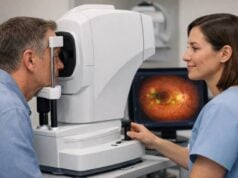
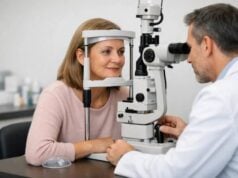
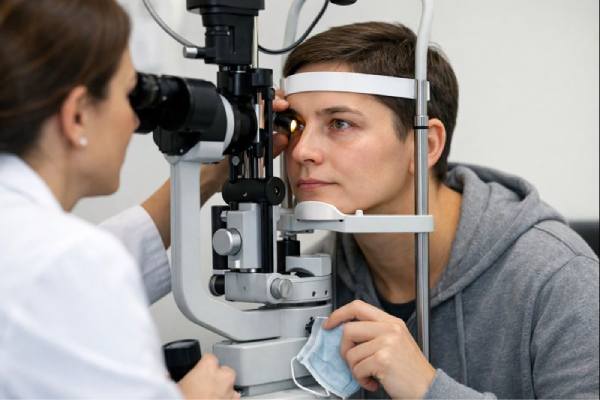
Uveitis is diagnosed by an eye examination, not by symptoms alone. The most important first step is a slit-lamp exam and a dilated retinal exam to confirm inflammation and determine the anatomic type. From there, testing is tailored—because the goal is not to order “everything,” but to identify treatable causes and avoid harmful treatment choices.
What the eye exam looks for
A clinician may document:
- Cells and flare in the anterior chamber: the hallmark of anterior uveitis
- Keratic precipitates: inflammatory deposits on the cornea that can hint at specific causes
- Vitreous haze or cells: suggests intermediate or posterior involvement
- Retinal or choroidal lesions: can indicate infectious, autoimmune, or inflammatory syndromes
- Intraocular pressure: both inflammation and steroid therapy can push pressure up
- Signs of complications: synechiae, cataract changes, macular edema, optic nerve swelling
Imaging that often guides management
Depending on findings, your clinician may order:
- Optical coherence tomography (OCT): to detect macular edema or subtle retinal swelling
- Fluorescein angiography (FA): to assess retinal vasculitis or leakage patterns
- Fundus photography: to document lesions and monitor change over time
- Ultrasound (B-scan): if the view is cloudy due to dense inflammation
These tests are not “extra.” In posterior disease, imaging often determines whether treatment needs to be escalated urgently.
Why lab work is sometimes necessary
Uveitis can be isolated, but it can also be a sign of systemic illness. Lab testing is usually targeted based on your exam and history. Common reasons for systemic work-up include:
- Recurrent or bilateral uveitis
- Posterior segment involvement
- Granulomatous features on exam
- Symptoms suggesting systemic inflammatory disease (joint pain, oral ulcers, skin rashes, bowel symptoms)
- Risk factors for infection
Because steroids can worsen certain infections, clinicians may consider infectious causes such as tuberculosis, syphilis, herpes viruses, or others depending on geography, immune status, and exam features.
What to bring to your appointment
You can make the visit more efficient by preparing:
- Your COVID-19 timeline (positive test date, symptom onset, recovery milestones)
- Recent vaccines and dates
- Any new medications taken during COVID (including steroids, antivirals, or antibiotics)
- Prior uveitis history, if any, including triggers and what worked
- Photos of eye redness patterns, if symptoms fluctuate
A precise timeline is not just paperwork. It helps clinicians judge plausibility, choose tests wisely, and interpret relapse versus new onset with less uncertainty.
Treatment options and typical timelines
Uveitis treatment is not one-size-fits-all. The plan depends on the anatomic type, severity, complications, and whether an infectious cause is suspected. The overarching goals are consistent: quiet the inflammation, prevent complications, protect vision, and reduce relapse risk.
First-line treatment for anterior uveitis
For many cases of non-infectious anterior uveitis, treatment often includes:
- Topical corticosteroid drops: to reduce inflammation
- Cycloplegic or mydriatic drops: to relieve pain from ciliary spasm, reduce light sensitivity, and help prevent synechiae
- Close follow-up: to ensure the eye is improving and pressure remains safe
A key detail patients do not always hear: steroid drops are often started frequently and then tapered gradually. Stopping abruptly can allow rebound inflammation. The taper schedule should match the exam, not only symptoms.
When treatment needs to be stronger
If the inflammation is severe, involves the posterior segment, or threatens vision, clinicians may escalate to:
- Periocular steroid injections or intravitreal steroid implants in selected situations
- Oral corticosteroids for rapid control in more extensive disease
- Steroid-sparing immunomodulatory therapy when the disease is chronic, relapsing, or requires long-term control
- Biologic therapy for specific uveitis syndromes or refractory disease under specialist care
This is where careful diagnosis matters: some infections require antivirals or antibiotics, and steroid-only therapy can be harmful if the underlying driver is infectious.
How quickly you should feel better
Many patients notice improvement in pain and light sensitivity within days once the right therapy is started, but “feeling better” is not the same as “inflammation resolved.” Vision can lag because:
- The cornea may be swollen
- Inflammatory debris can linger
- Macular edema can take time to improve
- The tear film may be unstable from both inflammation and frequent drops
A reasonable expectation is that symptoms improve early, while full stabilization may take weeks, depending on severity and complications.
Monitoring during treatment
Follow-up is essential because treatment itself can create risks:
- Elevated intraocular pressure: some people are steroid responders
- Cataract acceleration: especially with prolonged steroid exposure
- Infection risk: systemic immunosuppression increases susceptibility to infections
Your clinician may schedule visits close together early on. This is not “overcautious.” It is how complications are prevented.
A patient-friendly way to track response
Alongside your prescribed regimen, track four simple metrics:
- Pain (0–10) and light sensitivity (0–10)
- Number and intensity of floaters
- Vision clarity at a consistent time of day
- Drop adherence (especially if dosing is frequent)
That short record can help your clinician adjust taper speed and recognize relapse early.
Recurrence risk and prevention strategies
A common fear after a first episode is, “Will this keep coming back?” The honest answer is: sometimes. Recurrence risk depends less on the trigger (including COVID-19) and more on the underlying uveitis type, your systemic risk factors, and how completely inflammation is controlled during treatment.
Who is at higher risk of recurrence
Recurrence is more likely when:
- You have had uveitis before (especially multiple episodes)
- The disease is linked to an autoimmune condition (such as spondyloarthritis or Behçet disease)
- There is posterior involvement or retinal vasculitis
- Inflammation required prolonged steroids to control
- Tapering was rapid or inconsistent due to side effects or missed doses
Some studies evaluating post-COVID periods in patients with pre-existing uveitis have reported higher relapse rates after infection, and certain factors (such as longer disease duration) may correlate with relapse risk. Even if infection was a trigger, relapse patterns usually reflect the baseline disease biology.
Prevention is mostly about “quiet eye” time
For many uveitis types, the best long-term strategy is to maximize the amount of time the eye remains quiet. That can involve:
- Completing steroid tapers exactly as directed
- Monitoring eye pressure during and after steroid use
- Using steroid-sparing therapy when repeated flares would otherwise require frequent steroid courses
- Treating associated systemic inflammation in coordination with rheumatology or immunology when appropriate
A useful clinical concept is the “steroid budget.” Short courses can be safe, but repeated or prolonged exposure raises the risk of cataract, glaucoma, and systemic side effects. Prevention often means controlling disease with the least steroid burden possible.
Practical habits that protect recovery
While habits cannot replace medication, they can reduce avoidable stressors:
- Protect sleep and hydration during recovery, since systemic stress can worsen inflammation
- Avoid smoking, which can amplify inflammatory pathways
- Use preservative-free lubricants if frequent medicated drops leave the surface irritated
- Follow contact lens restrictions strictly until cleared; contact lenses can complicate healing and infection risk
What to do after a future COVID-19 infection
If you have a uveitis history and get COVID-19 again, consider a proactive plan:
- Notify your eye clinician early, especially if you have had severe posterior disease
- Know your early warning signs (floaters, photophobia, haze)
- Do not self-start leftover steroid drops without guidance; the pattern could be infectious or could need different therapy
- If you are on systemic immunomodulators, follow your prescribing specialist’s advice about illness management and monitoring
The goal is not to live in fear of relapse. It is to have a clear plan so that if symptoms return, treatment starts early—when outcomes are usually best.
When to seek urgent care and FAQs
When uveitis is suspected, timing matters. Many cases respond well to treatment, but delays raise the risk of complications, especially when the posterior segment is involved or when infection is a possibility.
Seek same-day evaluation if you have
- Sudden decrease in vision in one or both eyes
- New floaters that appear abruptly, especially many at once
- Severe light sensitivity that makes indoor light painful
- Moderate to severe eye pain, particularly with redness
- A “curtain” or shadow in vision (urgent because other retinal emergencies can mimic inflammation)
- New symptoms with fever, severe headache, or neurologic signs
If access is limited, urgent care or emergency services can be appropriate—especially if vision is changing quickly.
FAQ: How long after COVID-19 can uveitis appear
Reports vary widely. Some patients develop symptoms within days to a few weeks after infection, while others present later during prolonged recovery. In observational studies, intervals of a few weeks have been commonly described, but there is no single “typical” day that confirms the link. A clinician will look at timing alongside exam findings and competing explanations.
FAQ: Is it contagious
Uveitis itself is not contagious. However, some infectious causes of uveitis (such as certain viral infections) are transmissible through their usual routes. Your clinician’s job is to determine whether inflammation is immune-driven or infection-driven so treatment is safe.
FAQ: Will steroid drops damage my eyes
Steroid drops are often essential for controlling inflammation and protecting vision. The main risks are elevated eye pressure and cataract changes with prolonged use. That is why follow-up and pressure checks are part of responsible treatment, and why tapering is guided by exams rather than comfort alone.
FAQ: Can I keep working and using screens
Many people can work, but symptoms can flare with bright light and prolonged focus. Helpful adjustments include:
- Frequent breaks and intentional blinking
- Lowering screen brightness and increasing font size
- Using preservative-free lubricants if the surface feels dry from frequent medicated drops
- Wearing sunglasses outdoors if photophobia is significant
If vision is blurred or light sensitivity is severe, it may be safer to pause driving until your clinician confirms stability.
FAQ: What should I avoid while healing
Avoid:
- Rubbing the eye (can worsen irritation and complicate inflammation)
- Contact lenses until cleared
- Skipping follow-up visits because symptoms “feel better”
- Using leftover antibiotics or steroids without guidance
If you have any doubt, err on the side of prompt evaluation. In uveitis, the cost of waiting can be higher than the inconvenience of an exam.
References
- Long COVID and the development of new-onset uveitis: a large database study 2025 (Population-Based Study)
- The risk assessment of uveitis after COVID-19 diagnosis: A multicenter population-based study 2023 (Population-Based Study)
- New-onset or relapse of uveitis after rapid spreading of COVID-19 infection in China and risk factor analysis for relapse 2024 (Observational Study)
- Safe Use of Corticosteroids in Non-Infectious Uveitis 2025 (Clinical Review)
- SER recommendations for the treatment of uveitis 2023 (Guideline)
Disclaimer
This content is for general educational purposes and does not provide medical advice, diagnosis, or individualized treatment. Uveitis can be caused by autoimmune disease, infections, medication reactions, or other conditions, and treatment choices depend on an in-person eye examination and, in some cases, targeted laboratory testing and imaging. Do not start or stop corticosteroid eye drops or systemic immunosuppressive medication without medical guidance, because inappropriate treatment can worsen certain infections and uncontrolled inflammation can threaten vision. Seek urgent eye care if you have sudden vision loss, severe pain, intense light sensitivity, or a rapid increase in floaters.
If this article could help someone you know, please share it on Facebook, X (formerly Twitter), or any platform you prefer.