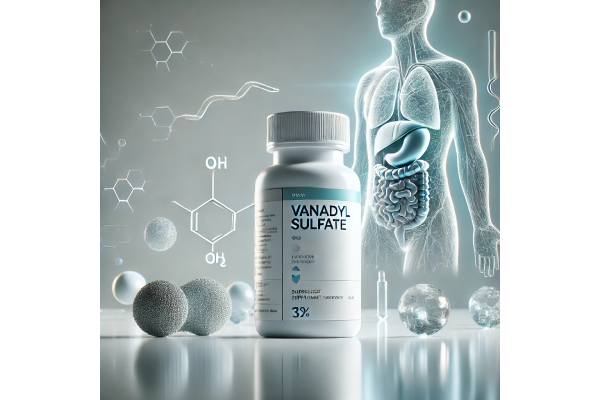
Vanadyl sulfate is the vanadium compound most commonly sold in supplements under “vanadium” labels, especially in products aimed at blood sugar support. Its appeal comes from a real biological property: vanadium compounds can influence insulin-related signaling pathways in cells. That has led to decades of interest in whether vanadyl sulfate might improve insulin sensitivity, post-meal glucose handling, or metabolic markers in people who are insulin resistant.
The tradeoff is that vanadyl sulfate sits closer to the “pharmacology” end of the supplement spectrum. At the doses studied in humans, side effects—especially gastrointestinal—are common, and long-term safety boundaries are not well defined for self-directed use. This guide focuses on what vanadyl sulfate is, what benefits are realistic, how to choose and use it responsibly, and how to think about dosage in a way that matches the evidence and avoids common labeling traps.
Top Highlights for Vanadyl Sulfate
- May affect insulin signaling, but consistent improvements in human glucose control are not guaranteed
- Short-term use is more defensible than long-term daily supplementation
- Studied intake is often 50–125 mg/day vanadyl sulfate for 2–4 weeks
- Gastrointestinal side effects are common and should be treated as a stop signal if persistent
- Avoid if pregnant, trying to conceive, breastfeeding, or using diabetes medication without clinician guidance
Table of Contents
- What is vanadyl sulfate and why do people use it?
- How does vanadyl sulfate work in the body?
- What benefits are realistic for blood sugar and insulin sensitivity?
- Does vanadyl sulfate help bodybuilding or weight loss?
- How to choose and use vanadyl sulfate safely
- How much vanadyl sulfate should you take?
- Side effects, interactions, and who should avoid it
What is vanadyl sulfate and why do people use it?
Vanadyl sulfate is a specific vanadium compound (often written as VOSO4) that appears in many “vanadium” supplements. In practice, it is the form most associated with metabolic claims—especially blood sugar support—because it has been studied in humans and discussed widely in diabetes-related vanadium research.
People use vanadyl sulfate for three main reasons:
- Blood sugar and insulin sensitivity goals, particularly in insulin resistance or prediabetes contexts
- “Nutrient partitioning” claims in bodybuilding (the idea that carbs are driven into muscle rather than stored as fat)
- General metabolic support narratives (energy stability, triglycerides, appetite, or “carb handling”)
The advantage of vanadyl sulfate, from a consumer perspective, is that it is a defined compound and usually comes in measurable, repeatable capsule doses. It is also non-stimulant, so it does not rely on caffeine-like effects. For some people, that makes it feel like a “clean” metabolic tool.
The caution is that vanadyl sulfate is not an essential nutrient supplement in the way magnesium or iodine might be. Vanadium does occur naturally in food and water in trace amounts, but supplement doses can be far higher than typical dietary exposure. That’s one reason tolerability becomes a limiting factor. Another is labeling: some products list the compound dose (mg vanadyl sulfate), while others list elemental vanadium (mg or mcg vanadium). Those numbers are not interchangeable, and confusion here is one of the most common pathways to taking too much.
A responsible way to think about vanadyl sulfate is as a short, trackable experiment rather than a daily “set and forget” wellness habit. If you cannot clearly answer “what form am I taking, how much am I taking, and what outcome am I measuring,” vanadyl sulfate is not a good candidate for casual use.
How does vanadyl sulfate work in the body?
Vanadyl sulfate is interesting because it can influence the same cellular neighborhood as insulin signaling. Researchers often describe some vanadium compounds as “insulin-mimetic” or “insulin-enhancing,” meaning they may nudge pathways involved in glucose uptake and metabolism. That does not mean it replaces insulin or works like a diabetes drug in a predictable, dose-linear way—but it explains why it has attracted attention for decades.
Key properties that drive its effects
Vanadyl sulfate’s biological activity is linked to a few broad properties:
- Redox activity: vanadium can shift between oxidation states, which can influence enzyme activity and signaling cascades.
- Enzyme interaction: vanadium compounds can affect phosphatases and kinases that regulate how strongly insulin signals inside cells.
- Tissue distribution and accumulation tendencies: some research raises concerns that certain vanadium forms may accumulate, which is one reason long-term supplementation is approached cautiously.
What you should expect in real life
Even if a compound influences insulin signaling in a lab model, human outcomes depend on many variables:
- Baseline metabolic status (metabolically healthy vs insulin resistant vs type 2 diabetes)
- Dose and duration (short trials may miss long-term downsides; long use may increase risk)
- Diet composition and weight change (a calorie deficit can overpower supplement effects)
- Product identity and labeling accuracy (form and dose consistency matter)
This is why vanadyl sulfate tends to produce “mixed” real-world reports. One person may see slightly improved fasting glucose; another may see no change and only gastrointestinal upset. It also helps explain why vanadyl sulfate is not considered a mainstream first-line supplement: mechanisms exist, but predictability and tolerability are weaker than most people want.
A useful mental model
Think of vanadyl sulfate as a compound that might shift glucose handling modestly in some users—especially those with impaired glucose regulation—while carrying a meaningful chance of side effects. That makes the best use-case narrow:
- Clear goal (for example, fasting glucose trend over 2–4 weeks)
- Conservative dose
- Stable lifestyle variables
- Strong willingness to stop early if side effects appear
If you want a supplement you can take indefinitely without much thought, vanadyl sulfate is not designed for that role.
What benefits are realistic for blood sugar and insulin sensitivity?
The core reason people buy vanadyl sulfate is the hope that it improves glucose control. The evidence supports a cautious version of that story: vanadium compounds can influence insulin signaling, and some human studies have reported modest improvements in certain glucose-related measures. But the results are not consistent across trials, and side effects often limit dosing or adherence.
What the evidence can reasonably support
A realistic “best case” benefit profile for some users includes:
- Modest reductions in fasting glucose in certain settings
- Improvement in hepatic insulin resistance markers reported in some older clinical work
- Small shifts in insulin-related signaling that may show up as smoother post-meal responses for some people
These are not guaranteed outcomes, and they are unlikely to be dramatic. If someone expects vanadyl sulfate to “normalize” blood sugar without lifestyle change, disappointment is common.
Why outcomes are inconsistent
Human trials have produced mixed findings. For example, one randomized trial in people with impaired glucose tolerance used vanadyl sulfate for 4 weeks and found no improvement in insulin sensitivity, while noting an unfavorable increase in triglycerides. That illustrates a key point: a supplement can be “metabolically active” without being “metabolically beneficial” for every marker in every person.
Variability also comes from:
- Different study populations (prediabetes vs type 2 diabetes vs mixed groups)
- Different endpoints (fasting glucose, clamp-measured sensitivity, triglycerides, weight, etc.)
- Short timelines that may not reflect longer-term risk or sustainability
- Dose limitations because gastrointestinal side effects can appear early
Where vanadyl sulfate fits poorly
Vanadyl sulfate is a poor choice if:
- You want a gentle daily supplement with low side-effect risk
- You cannot monitor glucose or you have a history of dizziness and “low blood sugar” symptoms
- You take glucose-lowering medication and prefer self-experimentation
- You are chasing weight loss as the primary goal (the evidence is not strong enough to justify the risk)
A more useful way to evaluate it
If you try vanadyl sulfate, define success narrowly: “Does a conservative, short trial improve a measurable marker without creating side effects that reduce quality of life?” If the answer is not clearly yes, the most evidence-aligned move is to stop rather than escalate.
Does vanadyl sulfate help bodybuilding or weight loss?
Vanadyl sulfate has a long history in bodybuilding culture, mostly tied to “nutrient partitioning” claims. The idea is straightforward: if vanadium compounds influence insulin signaling, they might increase glycogen storage, enhance muscle pumps, or reduce fat gain during higher-carb phases. The problem is that the leap from mechanism to meaningful physique results is much larger than most marketing admits.
What might be plausible
In theory, if insulin sensitivity improves, you could see:
- Better glycogen replenishment after training
- Less extreme post-meal glucose swings
- Improved energy stability for some users
These effects would be indirect and likely modest, and they depend heavily on diet, training volume, sleep, and body composition. Most metabolically healthy lifters already get strong insulin signaling improvements from resistance training itself.
What tends to be exaggerated
Common overclaims include:
- “Muscle gain” effects independent of training and protein intake
- Reliable fat-loss acceleration
- A dramatic pump or performance boost that persists long-term
In practice, perceived “pump” changes can be driven by carbohydrate timing, hydration, sodium intake, creatine, and training density. If vanadyl sulfate causes nausea, diarrhea, or appetite disruption, it can reduce training quality and calorie consistency—hurting results even if a lab mechanism sounds promising.
Why it’s a risky choice for physique goals
For bodybuilding, vanadyl sulfate’s biggest limitation is the mismatch between risk and payoff:
- The likely benefit is modest or unclear for most healthy athletes
- The likelihood of gastrointestinal side effects is meaningful
- Mis-dosing risk is higher because of label confusion (compound vs elemental)
- The best alternatives (training, sleep, diet periodization, creatine, fiber, weight management) are safer and more predictable
If you still want to try it
A responsible approach for an athlete would look like:
- Use a short trial window (2–4 weeks)
- Keep training and diet stable
- Track objective outcomes (performance markers, body weight trend, waist measurement, recovery, sleep)
- Stop quickly if side effects show up
If your goal is physique improvement, vanadyl sulfate is rarely a “high value” tool. It’s more accurately a niche experiment that only makes sense if you understand the limits and accept that the most common outcome is “not worth it.”
How to choose and use vanadyl sulfate safely
If you choose to use vanadyl sulfate, the safety work starts before you swallow the first capsule. Product identity, dose clarity, and a structured plan matter more here than with many supplements.
Choose a product you can actually dose
Look for labels that clearly state:
- “Vanadyl sulfate” as the compound (not just “vanadium complex”)
- A precise mg amount per capsule
- Ideally, the elemental vanadium content listed separately (mg or mcg)
- Third-party testing for contaminants (metals, microbes, and general purity)
Avoid proprietary blends and vague “mineral complexes.” If the label makes you guess, dosing becomes unsafe by default.
Take it with meals for tolerability
Many users tolerate vanadyl sulfate better with food. A practical starting pattern is taking it with a main meal rather than on an empty stomach. If you are monitoring post-meal glucose, it may be tempting to take it with your highest-carb meal. If you take diabetes medications, do not do this without clinician input because additive glucose-lowering effects can increase risk.
Run a “clean trial”
To get a real answer, keep variables stable:
- Keep calories and carb intake consistent for at least 2–3 weeks
- Avoid adding other glucose-focused supplements during the trial
- Track a small set of outcomes (fasting glucose trend, digestive tolerance, energy, sleep)
This reduces the chance you misattribute results to vanadyl sulfate when they actually came from a new diet routine.
Use a stop rule, not a grind rule
A safe plan includes a clear stop trigger, such as:
- Persistent nausea, cramps, or diarrhea beyond a few days
- Dizziness, shakiness, sweating, confusion, or symptoms consistent with low blood sugar
- Any unusual fatigue that affects daily functioning
If you need to “troubleshoot” side effects with repeated dose changes, that is often a sign the supplement is not a good fit.
Keep it time-limited
A short, conservative trial is more defensible than long-term daily intake. If you cannot identify a measurable benefit by the end of your planned window, the evidence-based move is to stop rather than escalate dose or extend indefinitely.
How much vanadyl sulfate should you take?
Vanadyl sulfate dosing is where most people go wrong, largely because labels can list the compound amount while discussions online may refer to elemental vanadium, or vice versa. The safest approach is to use products that state both. If they do not, choose a different product rather than guessing.
Typical studied ranges and timelines
In human research and clinical discussions summarized in modern reviews, vanadyl sulfate has often been used at:
- 50–125 mg/day vanadyl sulfate for 2–4 weeks
A common trial pattern is 50 mg twice daily for 4 weeks in an impaired glucose tolerance population. That does not mean this is the best dose for everyone; it means that is a known “studied” range. Studied does not equal safe for indefinite use.
Older clinical work in type 2 diabetes contexts also explored similar short-term dosing strategies and reported modest glucose-related effects in some measures. The larger point is that the dosing is not “micro”—it is high enough that tolerability becomes a practical limiter.
A conservative supplement strategy
If you are not under medical supervision, the more responsible approach is:
- Start at the low end of what your product offers
- Hold a steady dose for 7–10 days before judging
- Avoid rapid escalation if you do not “feel” anything
- Use a short window (2–4 weeks), then reassess
This matters because vanadyl sulfate does not reliably produce a clear subjective sensation when it is working. Chasing a feeling can push people into higher doses where side effects rise.
Timing and split dosing
Many users do better with:
- Dosing with meals
- Splitting into two smaller doses rather than one larger dose
If taking it at dinner disrupts sleep (some people find stomach discomfort more noticeable at night), move the second dose earlier or reduce the total.
When dosing should be clinician-led
Do not self-dose vanadyl sulfate without professional guidance if you:
- Use insulin or glucose-lowering medication
- Have a history of hypoglycemia symptoms
- Have kidney or liver disease
- Have multiple chronic conditions or take multiple prescriptions
Vanadyl sulfate is not a supplement where “more is more.” The best dosing plan is the smallest plan that can answer your question safely—and it should include an easy exit if your body does not tolerate it.
Side effects, interactions, and who should avoid it
Vanadyl sulfate is well known for side effects, particularly gastrointestinal symptoms. This is not a minor footnote—it is one of the main reasons vanadyl sulfate has not become a mainstream supplement despite long-standing research interest.
Common side effects
The most frequently reported issues include:
- Nausea, stomach irritation, cramping
- Diarrhea or loose stools
- Reduced appetite or a persistent “unwell” feeling after dosing
These effects often show up early, especially if taken on an empty stomach or at higher doses. If symptoms persist, the safest response is to stop rather than trying to “adapt.”
Interactions to take seriously
Vanadyl sulfate can overlap with medications and conditions in ways that increase risk:
- Diabetes medications and insulin: additive glucose-lowering effects can raise hypoglycemia risk
- Conditions sensitive to dehydration: diarrhea can destabilize electrolytes and blood pressure
- Kidney or liver disease: metals and metal compounds are poor candidates for unsupervised experimentation when clearance pathways may be compromised
If you use prescriptions, spacing doses is not a substitute for an interaction review.
Who should avoid vanadyl sulfate
Avoid vanadyl sulfate unless a qualified clinician specifically recommends it if you are:
- Pregnant
- Trying to conceive (any gender)
- Breastfeeding
- Under 18 years old
- Living with chronic kidney disease, significant liver disease, or complex metabolic illness
Because safety data is stronger for short-term research exposures than for long-term consumer use, “just take it forever” is not a defensible strategy—especially in higher-risk groups.
When to stop immediately
Stop and seek medical guidance if you experience:
- Persistent vomiting, severe diarrhea, or dehydration symptoms
- Fainting, confusion, or symptoms consistent with low blood sugar
- New swelling, reduced urination, or severe fatigue
- Any allergic reaction signs
A final, practical caution: if you must argue yourself into continuing despite side effects, that is usually the answer. Vanadyl sulfate should feel tolerable at a conservative dose; if it doesn’t, the risk-to-benefit equation shifts quickly in the wrong direction.
References
- Effect of vanadium on insulin sensitivity in patients with impaired glucose tolerance – PubMed 2008 (RCT)
- Vanadium Compounds with Antidiabetic Potential – PubMed 2023 (Review)
- Exploring the Biological Effects of Anti-Diabetic Vanadium Compounds in the Liver, Heart and Brain – PubMed 2024 (Review)
- NTP Technical Report on the Toxicity Studies of Sodium Metavanadate (CASRN 13718-26-8) and Vanadyl Sulfate (CASRN 27774-13-6) Administered in Drinking Water to Sprague Dawley (Hsd:Sprague Dawley® SD®) Rats and B6C3F1/N Mice – NCBI Bookshelf 2023 (Toxicology Report)
- Toxicological evaluation of vanadium and derivation of a parenteral tolerable intake value for medical devices – PubMed 2025 (Toxicology and Risk Assessment)
Disclaimer
This article is for educational purposes only and does not provide medical advice, diagnosis, or treatment. Vanadyl sulfate (a vanadium compound) is biologically active and may cause side effects, and it can interact with medications—especially diabetes drugs and insulin—and with medical conditions that affect hydration, kidney function, or liver function. Do not use vanadyl sulfate during pregnancy, while trying to conceive, or while breastfeeding unless a qualified clinician has specifically advised it. If you have a medical condition or take prescription medication, talk with a licensed healthcare professional before use. Stop use and seek medical guidance if you develop severe gastrointestinal symptoms, signs of low blood sugar, allergic reactions, or unusual fatigue.
If you found this guide helpful, please share it on Facebook, X (formerly Twitter), or any platform you prefer, and follow us on social media. Your support through sharing helps our team continue producing clear, trustworthy health content.