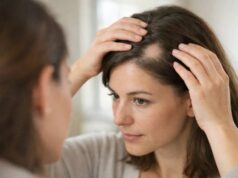
People often notice hair shedding around the same time another habit changes, and vaping is now high on that list. The concern is understandable. Nicotine can affect blood vessels, sleep, stress chemistry, and appetite, all of which matter to hair biology. At the same time, hair loss is common, and timing alone does not prove cause. Pattern hair loss may quietly progress in the background, while vaping becomes the detail that finally gets blamed.
A more useful approach is to ask a sharper question: could vaping be contributing to hair shedding or worsening an existing hair-loss problem, and what else should be checked before drawing that conclusion? The current evidence supports biological plausibility, especially through nicotine exposure, oxidative stress, and lifestyle disruption, but it does not prove that vaping is a stand-alone cause of hair loss in most people. That makes the topic less simple, but more practical. What matters is understanding the likely pathways, the patterns to look for, and the clues that point to something else.
Core Points
- Vaping is more likely to contribute to hair loss indirectly than to act as a single, proven cause on its own.
- Nicotine may affect follicles through vasoconstriction, oxidative stress, sleep disruption, and appetite-related changes.
- Sudden diffuse shedding often reflects telogen effluvium, which usually begins weeks after a trigger rather than overnight.
- Pattern thinning at the temples, part, or crown usually means another process is involved as well.
- If shedding starts after a vaping change, review timing, nicotine dose, stress, sleep, weight loss, medications, and basic lab checks.
Table of Contents
- Is vaping really linked to hair loss
- How nicotine and aerosol may affect follicles
- Stress sleep and appetite can shift the timeline
- The pattern of loss matters more than people think
- What to check before blaming the vape
- When to get medical help and what improvement looks like
Is vaping really linked to hair loss
The most honest answer is that vaping may be linked to hair loss, but the evidence is stronger for contribution than for direct proof. That distinction matters. Hair follicles are sensitive to circulation, inflammation, oxidative stress, hormones, nutrition, and sudden changes in the body’s internal balance. Vaping can plausibly affect several of those systems, especially when the product contains nicotine, but most people who shed hair while vaping are not experiencing a single neat cause-and-effect story.
Research on smoking is more mature than research on vaping, and smoking has been associated with androgenetic alopecia, worse hair thinning, and earlier graying in multiple studies. That does not mean vaping is identical to smoking, but it does tell us something useful: nicotine exposure and inhaled toxicants can plausibly matter to hair health. Vaping usually exposes users to fewer combustion products than cigarettes, yet it still delivers nicotine in many products and may also introduce oxidative and inflammatory stress through aerosol constituents. That is enough to keep the question medically credible.
At the same time, the gaps are real. There is no strong body of clinical trials showing that vaping alone causes a predictable type of alopecia in the way a chemotherapy drug can trigger anagen effluvium. More often, vaping belongs in a cluster of possible contributors. A person may already have genetic pattern thinning, then start vaping more heavily during a stressful period, sleep worse, eat less regularly, and notice more shedding two or three months later. In that case, vaping may be part of the picture without being the entire explanation.
A few practical conclusions follow from that nuance:
- Vaping is not a proven sole cause in most cases.
- Nicotine-containing vapes are more biologically concerning than nicotine-free products.
- Dual use matters. If someone both smokes and vapes, the hair-risk picture is more complicated and likely worse.
- Timing matters. Hair often reacts late to a trigger.
This is why isolated anecdotes can mislead. One person quits vaping and sheds less; another quits and sees no change; a third vapes for years and develops ordinary hereditary thinning. All three stories can be true without canceling one another out.
The best framework is to treat vaping as a possible amplifier rather than an automatic verdict. If hair loss is new, rapid, or emotionally stressful, it helps to read it alongside other known exposure patterns such as smoking and hair effects instead of assuming the word “vape” solves the whole mystery.
How nicotine and aerosol may affect follicles
Hair follicles are tiny, but they are metabolically demanding structures. They cycle constantly, divide quickly, and rely on a steady microenvironment. That makes them vulnerable to small systemic disruptions. Vaping may affect that environment through several overlapping mechanisms, with nicotine at the center of the discussion.
The first mechanism is vasoconstriction. Nicotine can tighten blood vessels and alter vascular tone. Hair follicles do not need dramatic blood-flow failure to suffer; they need consistent support. Repeated narrowing of small vessels may not “kill” follicles, but it can create a less favorable environment for a tissue that depends on regular delivery of oxygen and nutrients. This mechanism is often discussed in smoking-related hair research and remains biologically plausible for nicotine vaping.
The second mechanism is oxidative stress. E-cigarette aerosol is not just harmless water vapor. Depending on device settings, liquid composition, flavorings, metals, and user behavior, it can generate oxidative and inflammatory effects. Oxidative stress matters because follicles and surrounding scalp tissues are vulnerable to reactive oxygen species. This pathway is unlikely to create a unique “vape alopecia” pattern, but it can add friction to hair cycling and scalp health.
The third mechanism is cellular signaling and inflammation. Nicotine interacts with receptors beyond the brain, and aerosol exposure may influence inflammatory pathways. Hair follicles are not passive strands anchored in skin; they are dynamic mini-organs that respond to immune signals, hormones, and stress messengers. When that signaling environment becomes noisier, shedding can become more likely in a predisposed person.
The fourth mechanism is hormonal and metabolic spillover. This is less direct, but still relevant. Nicotine can affect appetite, heart rate, sleep quality, and stress regulation. Those changes do not attack hair in a single linear way. Instead, they increase the number of small pressures on the follicle all at once.
A few clarifications help keep the biology grounded:
- nicotine is probably the strongest hair-relevant concern in most vape users
- nicotine-free vaping is not automatically risk-free, because aerosol ingredients may still promote oxidative stress
- high-dose or frequent vaping is more likely to matter than very occasional use
- switching from cigarettes to vaping may reduce some toxic exposures, but it does not make the scalp environment neutral
This is one reason people can feel confused when they search for a single mechanism. There is no one clean pathway. Vaping is more likely to create a background that is less friendly to hair, especially in someone already prone to shedding or pattern thinning. That kind of effect is subtle, cumulative, and easy to miss until the mirror starts showing it.
Stress sleep and appetite can shift the timeline
For many people, the strongest connection between vaping and hair loss is not only the aerosol itself. It is the lifestyle and physiology that can come with nicotine dependence. This is where the article title’s middle word, stress, becomes especially important.
Nicotine is a stimulant. It can temporarily sharpen alertness, but it can also disturb sleep, increase nighttime awakenings, and feed a cycle of withdrawal, craving, and mental tension. Hair follicles are highly responsive to systemic stress. When the body interprets a period as physiologically difficult, more hairs can shift from the growth phase into the resting phase. Weeks later, those hairs shed. That process is called telogen effluvium, and it often appears 6 to 12 weeks after the trigger rather than on the same day.
Sleep disruption deserves more attention than it usually gets in hair conversations. People who vape late into the evening, wake during the night, or sleep fewer hours may be adding a slow but steady stressor to the hair cycle. Poor sleep also tends to worsen anxiety, recovery, appetite regulation, and overall resilience. In real life, those factors pile up.
Appetite change is another overlooked link. Nicotine can reduce appetite in some users. That may sound minor, but hair is sensitive to under-fueling. If vaping leads to skipped meals, unintentional weight loss, lower protein intake, or a chaotic eating pattern, hair shedding becomes easier to trigger. In that case, the hair loss is not coming from nicotine alone. It is coming from the downstream effect of a body that no longer feels well-supported.
This is why some people notice more shedding during periods like these:
- increased vaping during exams, deadlines, grief, or burnout
- a switch to higher-nicotine products
- sleep loss after late-night use
- dieting or unplanned weight loss
- replacing meals with caffeine and nicotine
- anxiety that improves briefly with vaping but worsens overall
Hair loss caused by systemic strain usually looks diffuse rather than sharply patterned at first. It may show up as more hair in the shower, more hair on a brush, or a ponytail that feels thinner even though the part line has not changed much yet. People often call all of that “hair loss,” but the distinction between excess shedding and miniaturization matters. If you are not sure which one you are seeing, it helps to review stress-related hair loss patterns before deciding that vaping is the only explanation.
The broader lesson is that vaping can matter even when the follicle is not being directly poisoned. A nervous system under strain, a shorter sleep window, and a body running on less nutrition can be enough to shift the hair cycle toward shedding. That is not dramatic, but it is biologically believable and clinically relevant.
The pattern of loss matters more than people think
When people say, “I think vaping is making my hair fall out,” they usually mean one of several very different things. The pattern tells you far more than the fear does. This is one of the most important parts of the evaluation, because different patterns point toward different causes.
Diffuse shedding is the pattern most consistent with a trigger such as stress, illness, under-eating, medication change, or nicotine-related lifestyle disruption. Hair seems to come out from all over the scalp. The shower drain looks fuller. The hairline may still look intact, but the total volume feels reduced. This pattern fits telogen effluvium more than classic genetic balding.
Pattern thinning is different. Men often notice recession at the temples or thinning at the crown. Women more often notice widening of the central part or reduced density over the top of the scalp with the frontal hairline preserved. If this is the dominant picture, vaping may still be a contributor, but androgenetic alopecia is more likely driving the process.
Patchy loss points elsewhere. Smooth circular bare patches suggest alopecia areata. Thick scale, inflammation, or broken hairs may suggest scalp disease or fungal infection. Pain, burning, pustules, or scarring signs require proper assessment, not guesswork.
A useful self-check looks like this:
- Was the shedding sudden? That raises the possibility of telogen effluvium.
- Is it concentrated at the temples, crown, or part? That points more toward pattern hair loss.
- Are the hairs full length, or are they broken short pieces? Breakage is a different problem.
- Did it start weeks after a stressor, fever, medication, or diet shift? Timing matters.
- Is the scalp inflamed, itchy, or painful? That may signal another diagnosis.
The timing point is especially important. If someone starts vaping and notices a few hairs that week, the two events may be emotionally linked but biologically unrelated. Hair cycle shifts usually take time to show up. On the other hand, if vaping escalates during a period of poor sleep, low intake, and high stress, then diffuse shedding begins two months later, the connection becomes more plausible.
This is also where people confuse shedding with loss from miniaturization. A person with hereditary thinning may begin inspecting the scalp more closely after starting vaping, then finally notice a crown pattern that has actually been advancing for a year. In other cases, diffuse shedding can unmask existing pattern hair loss by making a marginally dense scalp look obviously thinner.
That is why it helps to step back and compare what you are seeing with hair shedding versus true hair loss rather than trying to solve the puzzle by anxiety alone. The mirror can tell you a lot, but only if you know what question to ask.
What to check before blaming the vape
If shedding started during a period of vaping, the right move is not to dismiss the concern. It is to widen the frame. Many cases become clearer once you review the surrounding months, not just the device in your hand.
Start with a timing map. Look back 2 to 3 months before the shedding began and ask what changed. Useful questions include:
- Did your vaping frequency or nicotine strength increase?
- Did your sleep get shorter or more broken?
- Were you more anxious, burned out, or under unusual stress?
- Did you lose weight, skip meals, or eat much less protein?
- Did you have a fever, infection, surgery, or major illness?
- Did any medication change around that time?
- Is there a family history of pattern hair loss?
Next, consider the common medical checks that often matter more than people expect in diffuse shedding. A clinician may decide to order some combination of:
- complete blood count
- ferritin or iron studies
- thyroid testing
- vitamin B12 in selected cases
- additional tests based on symptoms, sex, age, and history
These are not automatic for every person, and they are not a substitute for an exam. They are a way of asking whether the shedding reflects iron deficiency, anemia, thyroid dysfunction, nutritional gaps, or another systemic issue. This is especially relevant when hair loss follows appetite changes, fast weight loss, menstrual changes, recent pregnancy, or a restrictive diet.
Medication review matters too. Hair shedding is commonly blamed on the newest visible habit, but other triggers are often closer to the truth. Antidepressants, acne medications, hormonal changes, some blood pressure drugs, major calorie restriction, and illness can all be involved. If vaping increased during a stressful season that also included weight changes or new medication, it may be more of a marker than a sole driver.
A few clues make a more systemic trigger likely:
- shedding is diffuse rather than patterned
- the timeline starts weeks after a body stressor
- nails or energy levels changed too
- there was notable weight change or illness
- the scalp is not particularly itchy or inflamed
This is also where unintentional dieting matters. People sometimes use nicotine to suppress appetite without realizing how quickly the hair cycle can respond to under-fueling. That is why readers who have shed after eating less or losing weight quickly often find a stronger explanation in rapid weight loss and hair shedding than in vaping alone.
The goal is not to excuse vaping. It is to avoid a narrow explanation. Hair is often the final readout of several small pressures happening at once. When you check the basics properly, the pattern becomes more actionable and much less mysterious.
When to get medical help and what improvement looks like
Self-observation is useful, but there is a point where continued guessing only delays treatment. A clinician should be involved sooner rather than later if the hair loss is sudden, patchy, inflamed, or paired with other symptoms. Hair problems are not all cosmetic. Sometimes they are the first visible clue that the scalp or the body is under strain.
Seek medical evaluation if:
- shedding is heavy and lasts beyond about 2 to 3 months
- there is visible widening of the part or rapid temple recession
- hair is coming out in patches
- the scalp burns, hurts, scales heavily, or develops pustules
- you have fatigue, menstrual changes, weight loss, or other systemic symptoms
- a new medication, illness, or hormonal shift may be involved
- you are worried enough to keep checking the mirror daily and spiraling
The emotional piece matters. Hair loss is one of those conditions that can rapidly become self-reinforcing. The more frightening it feels, the more stress it creates, and the more stress can worsen shedding. That does not mean the problem is “just anxiety.” It means the cycle deserves interruption.
If vaping is contributing, what improvement should you expect after reducing or quitting? Usually not immediate regrowth. Hair recovery moves on the follicle’s schedule. If the issue is telogen effluvium, excessive shedding often settles gradually once the trigger is removed or the body re-stabilizes. That may take several weeks to a few months. Visible density can take longer because new hairs must grow enough to be seen. If the main problem is pattern hair loss, stopping vaping may reduce one source of stress on the follicles, but it will not reverse hereditary miniaturization on its own.
A reasonable follow-up plan is simple:
- document the pattern with photos once monthly
- track nicotine changes, sleep, and weight, not just shedding
- avoid crash dieting while trying to “detox”
- see a clinician if the pattern looks progressive or unclear
- do not wait for bald patches before asking for help
People often hope for a single answer. With hair, the answer is often layered. Vaping may be part of the load on the system, especially through nicotine, stress, sleep, and appetite effects, but the job is to identify whether it is the main driver, a secondary amplifier, or mostly a distracting coincidence.
If you are unsure whether your level of shedding is still within a normal range or has crossed into something that deserves medical review, compare your symptoms with when sudden shedding needs a doctor. Clear thresholds reduce panic, and they also reduce delay.
References
- Direct health implications of e-cigarette use: a systematic scoping review with evidence assessment 2024 (Systematic Review)
- A meta-analysis study on the association between smoking and male pattern hair loss 2024 (Meta-analysis)
- Role of Smoking in Androgenetic Alopecia: A Systematic Review 2022 (Systematic Review)
- Exploring the Interplay of Sleep and Nicotine Vaping in Adolescents: An Evidence-Based Narrative Review 2025 (Narrative Review)
- Retrospective Review of 2851 Female Patients With Telogen Effluvium: A Single‐Center Experience 2025
Disclaimer
This article is for educational purposes and does not replace medical advice, diagnosis, or treatment. Hair shedding and thinning can reflect genetic hair loss, telogen effluvium, scalp disease, nutritional deficiency, thyroid problems, medication effects, or other health issues. Vaping may be a contributor in some cases, especially when nicotine, stress, sleep disruption, and reduced intake are involved, but it should not be assumed to be the only cause without a proper assessment. Seek medical care promptly for patchy loss, scalp pain, heavy prolonged shedding, or hair loss with other systemic symptoms.
If this article helped you, please share it on Facebook, X, or another platform you prefer so more people can sort out vaping concerns from the real drivers of hair loss.