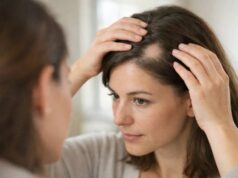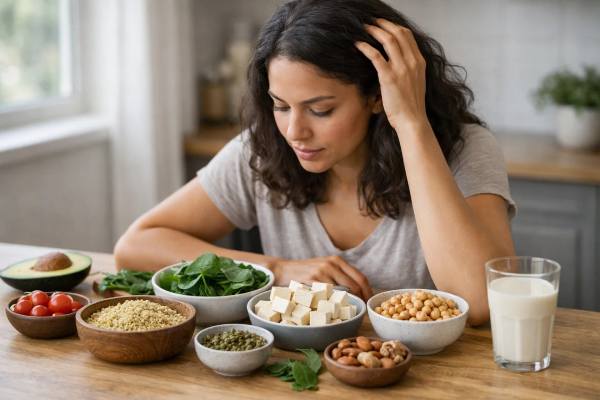
A vegan diet does not automatically cause hair loss, and many people maintain thick, healthy hair for years on a well-planned plant-based diet. The problem usually starts when “vegan” becomes too narrow, too low in calories, or too dependent on convenience foods that look healthy but do not reliably cover protein, iron, vitamin B12, and other nutrients the hair follicle needs every day. Hair is not a priority tissue in a shortage. When energy, protein, or key micronutrients run low, the body quickly starts spending elsewhere.
That is why vegan hair loss is rarely about one dramatic deficiency alone. More often, it is a pattern: lighter meals, missed protein targets, low ferritin, inconsistent B12, or months of eating “clean” without eating enough. The good news is that this is often fixable. When you match the diet to the biology of hair growth, shedding can calm down, regrowth has a better chance, and the diet becomes much easier to sustain without constant second-guessing.
Quick Facts
- A well-planned vegan diet can support healthy hair, but low calorie intake and weak protein distribution can still trigger shedding.
- Iron and vitamin B12 are two of the most common nutritional pressure points in vegan hair-loss concerns.
- Hair usually improves more from correcting true deficiencies than from adding beauty supplements on top of an unbalanced diet.
- Build each main meal around a clear protein source, add vitamin C near iron-rich meals, and use a reliable B12 supplement rather than guessing you are covered.
Table of Contents
- Why hair loss can happen on a vegan diet
- Protein is usually the first bottleneck
- Iron and ferritin are often the hidden issue
- B12 and other nutrients that complete the picture
- Meal ideas that make a vegan hair plan work
- When diet is not the whole explanation
Why hair loss can happen on a vegan diet
The most important thing to understand is that hair loss on a vegan diet is usually not caused by the label “vegan” itself. It is caused by what the diet looks like in practice. A plant-based pattern can be nutritionally solid, but it can also drift into a style of eating that is high in fiber, low in energy density, light on protein, and inconsistent in key nutrients. The hair follicle feels that mismatch quickly.
Hair is metabolically expensive tissue. Growing it requires enough calories, enough protein, and a steady supply of iron, B12, zinc, folate, essential fatty acids, and other nutrients involved in cell turnover and oxygen delivery. When intake falls short, the body prioritizes organs and basic survival over cosmetic output. That is why some people notice more shedding after months of “healthy” vegan eating that is unintentionally too restrictive.
A few patterns show up again and again:
- meals built mostly from fruit, vegetables, soups, and grains with minimal concentrated protein
- long stretches of dieting, fasting, or appetite suppression
- iron-rich foods eaten rarely or without absorption support
- no regular B12 supplement
- relying on powders, gummies, or “hair vitamins” instead of fixing the core diet
Another reason vegan-related hair issues can be confusing is timing. Hair often reacts with a delay. The trigger may have started two or three months earlier, but the shedding becomes obvious later. That delay leads many people to blame the wrong thing. They may focus on the new shampoo, the season, or stress at work when the real issue was a gradual nutritional drift that began well before the shed started. Understanding the difference between shedding and more persistent hair loss patterns can help keep that timeline straight.
It is also worth saying clearly that not every vegan with hair loss has a diet problem. Some have androgenetic alopecia, thyroid disease, postpartum shedding, autoimmune hair loss, scalp inflammation, or medication-related loss that would have happened on any diet. But in plant-based eaters, nutrition deserves closer attention because a few predictable weak points do show up more often: low total energy, low protein, iron depletion, and missing B12.
The most overlooked issue may be calories. People often look only at grams of protein or whether they ate spinach and lentils, but if overall intake is too low, hair can suffer even when the food choices seem “clean.” Many plant-based diets are so filling that a person can undereat without realizing it.
That is why the best question is not “Can veganism cause hair loss?” It is “Is this vegan diet giving the hair follicle enough energy, protein, iron, and B12 consistently enough to keep growing?” When the answer is no, the fix usually starts with structure rather than with another supplement bottle.
Protein is usually the first bottleneck
When a vegan diet starts to affect hair, protein is often the first place to look. Not because plant protein is inherently inferior, but because many people overestimate how much they are eating and underestimate how unevenly they spread it through the day. A smoothie for breakfast, salad for lunch, and pasta for dinner can sound balanced, yet still leave total protein and essential amino acids lower than the hair follicle would prefer.
Hair itself is built mainly from keratin, a protein-rich structure. If the diet chronically undersupplies protein, the body adapts by conserving resources. In real life, that often means increased shedding, slower regrowth, or hair that feels finer and weaker even before density changes become obvious.
For many adults, the problem is not just daily total. It is distribution. Hair tends to do better when each main meal contains a clear, meaningful protein source rather than when nearly all protein arrives at dinner. That is especially true during periods of recovery from shedding, dieting, illness, or heavy training.
Useful vegan protein anchors include:
- tofu and tempeh
- soy milk and soy yogurt
- edamame
- lentils, beans, and chickpeas
- seitan
- higher-protein pastas made from lentils or chickpeas
- fortified plant-based protein powders when meals are falling short
A second nuance is protein quality. Plant-based diets can absolutely meet amino acid needs, but they do it best with variety and enough total intake. Soy foods, legumes, grains, nuts, and seeds work better as a pattern than as isolated “superfoods.” One bowl of oats with almond milk and a few berries is not a high-protein breakfast just because it is wholesome. One bowl of oats made with soy milk, plus soy yogurt, hemp seeds, and a side of edamame or a tofu scramble, is a different story.
This is where many people get tripped up. They think they are eating enough because they are full. But fullness on a fiber-rich diet does not always mean protein adequacy. A stomach can feel pleasantly full while the day is still protein-light. For a deeper breakdown of daily targets and food strategies, a guide to how much protein supports hair growth can help.
A few practical rules make protein easier:
- Put a named protein source in every main meal.
- Aim for breakfast to carry real protein, not just fruit or toast.
- Use soy, legumes, or seitan deliberately rather than occasionally.
- Treat protein powder as a tool, not as the foundation of the diet.
- Increase protein planning during calorie restriction or high activity.
The best vegan hair diet is rarely the most “pure” one. It is the one that makes protein obvious, not accidental. When a person stops nibbling around protein and starts building meals around it, hair shedding often becomes much easier to stabilize. That does not mean protein fixes every case. It means it is the most common weak link, and the easiest one to miss when a diet looks healthy on the surface.
Iron and ferritin are often the hidden issue
If protein is the first bottleneck, iron is often the hidden second one. This is especially true for menstruating women, endurance exercisers, people with heavy periods, those with a history of low ferritin, and anyone eating a vegan diet without much attention to iron absorption. Hair follicles are sensitive to iron status, and low ferritin often shows up in the hair-loss conversation long before anemia becomes dramatic.
This does not mean every vegan with shedding has iron deficiency. It does mean iron deserves respect because plant-based diets rely on non-heme iron, which is absorbed less predictably than the heme iron found in animal foods. The body can adapt to some degree, but absorption still depends heavily on the overall meal.
Good vegan iron sources include:
- lentils
- beans
- tofu and tempeh
- soy foods
- pumpkin seeds
- tahini
- fortified cereals
- dark leafy greens
- blackstrap molasses in selected meal patterns
But the food list alone is not enough. How you eat iron matters. Vitamin C can improve non-heme iron absorption, while tea and coffee taken with meals can reduce it. That is one reason two people can eat similar amounts of lentils and greens and end up with very different iron status over time.
A practical iron-support routine looks like this:
- Include iron-rich plant foods most days, not just once in a while.
- Add a vitamin C source to iron-focused meals, such as citrus, kiwi, berries, bell peppers, tomatoes, or broccoli.
- Avoid taking tea or coffee right with iron-rich meals if ferritin is a concern.
- Do not start high-dose iron blindly without checking labs unless a clinician has already advised it.
This last point matters. Iron supplements can help when true deficiency is present, but more iron is not always better. Hair shedding with normal or high iron stores should not automatically lead to supplementation. That is why ferritin testing is so useful. It tells you whether the hair-loss story might truly be iron-related or whether you are chasing the wrong variable. A more detailed guide to iron deficiency, ferritin, and hair loss can help put lab numbers into context.
There is also a subtle pattern worth noticing: some vegan eaters are not obviously low in iron intake, but they are low in usable iron over time because their meals are small, low in vitamin C, or regularly paired with absorption inhibitors. Others are in a chronic calorie deficit, which reduces overall iron intake even if their food choices are good.
If your hair is shedding and you are vegan, iron is one of the few issues that deserves both dietary attention and lab attention. Food first is wise, but food alone may not be enough once stores are low. Hair often responds best when iron depletion is corrected early, before months of shedding create a longer recovery arc.
B12 and other nutrients that complete the picture
Vitamin B12 is the nutrient that turns a “mostly vegan” hair problem into a true vegan nutrition discussion. Unlike protein and iron, which can be built thoughtfully from plant foods, B12 is different. A fully vegan diet needs a reliable B12 source from fortified foods, supplements, or both. Nutritional yeast can help when it is fortified, but vague reliance on mushrooms, seaweed, or “natural plant B12” is not a dependable strategy.
This matters because B12 supports red blood cell formation, nerve function, and DNA synthesis. A deficiency does not always announce itself early. Fatigue, brain fog, numbness, and low mood may be overlooked, and hair concerns may be one part of a broader deficiency picture. In vegan hair-loss conversations, B12 is often either overhyped as a magic fix or ignored because a person “feels fine.” The smarter approach is steadier: supplement predictably and test when symptoms or risk factors justify it. A separate overview of B12 symptoms and testing can help if the picture is unclear.
Beyond B12, several other nutrients can matter in vegan hair health:
- Zinc: important for cell growth and repair, but not something to megadose casually.
- Vitamin D: common low point in many diets, not just vegan ones.
- Iodine: relevant when intake is very low and thyroid health becomes part of the story.
- Omega-3 fats: more important for overall dietary balance and scalp comfort than for dramatic hair regrowth on their own.
- Folate and other B vitamins: usually easier to obtain on a well-planned vegan diet than B12, but still part of the broader picture.
One useful principle is to avoid turning a food problem into a supplement hobby. If the diet is too low in protein, calories, or iron-rich meals, a stack of hair gummies will not solve it. The same is true for B12. It is not glamorous, but it is one of the few supplements that is truly foundational for long-term vegan health.
At the same time, more is not always better. Hair loss is one area where supplement marketing thrives, and excesses can backfire. High-dose biotin is often unnecessary and can interfere with lab tests. Too much selenium or vitamin A can worsen hair problems rather than help them. A good vegan hair plan is usually built on targeted correction, not a kitchen drawer full of pills.
The most practical way to think about this section is simple. Protein and iron often determine whether the hair has enough raw material. B12 and the rest determine whether the body can keep the system running smoothly over time. When a vegan diet is well planned, these nutrients are manageable. When it is improvised, they become the quiet reasons why the hair starts to change months later.
Meal ideas that make a vegan hair plan work
The best vegan hair plan is not a list of nutrients pinned to the fridge. It is a repeatable set of meals that quietly delivers enough calories, protein, iron support, and B12 coverage week after week. That is where many people finally turn the corner. They stop “trying to eat healthier” and start eating in a way their hair can actually use.
A practical day does not need to be complicated. It needs three things: a real protein source at each meal, regular iron-rich foods, and consistent B12 from fortified foods or a supplement. Once those pieces are in place, the diet usually feels much less fragile.
Here are meal ideas that work well for many people:
- Breakfast: tofu scramble with sourdough and fruit, or oats made with soy milk plus soy yogurt, chia or hemp seeds, and berries.
- Lunch: lentil and quinoa bowl with roasted vegetables, pumpkin seeds, and a lemon-tahini dressing.
- Dinner: tempeh stir-fry with rice, broccoli, peppers, and edamame, or chickpea pasta with tomato sauce and a side salad.
- Snack: fortified soy yogurt, edamame, hummus with peppers, or a smoothie built around soy milk and protein powder.
- Simple fallback meal: beans on toast with citrus on the side is not glamorous, but it is far better than another low-protein salad.
A good meal pattern also uses pairings intelligently. Iron-rich foods work better when vitamin C is nearby, so lentils with tomatoes, tofu with peppers, or beans with citrus salsa are more useful than iron foods eaten in isolation. For breakfast ideas specifically, a roundup of hair-friendly high-protein breakfasts can make mornings easier, which matters because breakfast is the meal most likely to become underpowered on a plant-based diet.
A few weekly habits help even more:
- batch-cook lentils, beans, tofu, or tempeh
- keep fortified soy milk and fortified nutritional yeast in regular rotation
- use frozen edamame as an emergency protein option
- keep one high-protein convenience food available for rushed days
- plan at least two iron-conscious meals each day if ferritin is low
One of the most useful insights is that “whole food” and “adequate” are not always the same thing. Some people trying to avoid processed foods end up eating too little protein because they have not replaced concentrated animal proteins with equally practical plant options. Using soy yogurt, fortified milk, or a simple plant protein powder is not failure. It is often what makes the diet sustainable enough to protect hair.
Meal ideas work when they are boring enough to repeat. Hair does not need novelty. It needs reliability. Once meals become predictable in the right way, people often notice that shedding becomes easier to manage, energy improves, and the sense of being nutritionally “on edge” starts to fade.
When diet is not the whole explanation
It is tempting to blame every episode of hair loss on diet when you are vegan, especially if you already suspect protein, iron, or B12 may be low. But that shortcut can waste time. Some hair loss truly is nutrition-related. Some only looks that way. And some is nutrition plus something else.
This is especially important when the pattern does not fit classic diet-linked shedding. Nutrition-related shedding often looks diffuse: more hair fall across the scalp, more strands in the shower, more hair on the brush, or a thinner ponytail over time. It is less likely to create sharply defined bald patches, inflamed plaques, or very specific recession patterns on its own.
Diet may not be the main answer when you have:
- patchy bald spots
- scalp pain, burning, or thick scale
- sudden eyebrow loss
- clear widening of the part with miniaturized hairs
- major shedding after illness, childbirth, surgery, or medication changes
- persistent hair loss even after months of improved eating
In those situations, the next step is not usually a stronger smoothie or a bigger supplement stack. It is better evaluation. That often includes blood work, and sometimes a scalp exam, especially if you have other symptoms such as fatigue, cold intolerance, irregular periods, heavy periods, acne, or thyroid concerns. A helpful overview of hair-loss blood tests such as ferritin and thyroid labs can show why clinicians often start there.
It is also worth remembering that hair recovery is slow. Even when you correct a low-protein diet or low ferritin, the follicle needs time to cycle back. A person may improve their meals in January and not feel meaningfully reassured until spring or summer. That slow timeline can make a good plan feel ineffective if expectations are too short-term.
Two mistakes are common here. The first is assuming that because a vegan diet can cause shedding, it must be the whole cause. The second is assuming that once protein and supplements improve, the hair should rebound immediately. Real recovery is slower and more layered than that.
The most balanced approach is this: fix the obvious nutritional weak points, but do not let the word “vegan” stop you from considering the rest of the differential. Hair loss can come from stress, thyroid disease, androgenetic alopecia, autoimmune conditions, medications, and scalp disorders in people who also happen to eat plant-based diets.
A well-planned vegan diet can absolutely support healthy hair. But if the shedding is severe, prolonged, patchy, inflamed, or not improving despite smarter eating, the conversation needs to widen. That is not a failure of the diet. It is simply a sign that hair loss deserves the same level of careful thinking as any other medical symptom.
References
- Vegetarian Dietary Patterns for Adults: A Position Paper of the Academy of Nutrition and Dietetics 2025 (Position Paper)
- Exploring Vitamin B12 Supplementation in the Vegan Population: A Scoping Review of the Evidence 2024 (Scoping Review)
- Protein Adequacy, Plant Protein Proportion, and Main Plant Protein Sources Consumed Across Vegan, Vegetarian, Pescovegetarian, and Semivegetarian Diets: A Systematic Review 2024 (Systematic Review)
- Serum Ferritin Levels: A Clinical Guide in Patients With Hair Loss 2023 (Review)
- Evaluation of the Safety and Effectiveness of Nutritional Supplements for Treating Hair Loss: A Systematic Review 2023 (Systematic Review)
Disclaimer
This article is for educational purposes only and is not a diagnosis or a substitute for personalized medical or nutrition care. Hair loss can result from nutrient deficiencies, but it can also be caused by thyroid disease, hormonal shifts, autoimmune conditions, medications, scalp disorders, or genetic hair loss. If you have rapid shedding, patchy loss, scalp inflammation, fatigue, heavy periods, or ongoing hair thinning despite improving your diet, seek evaluation from a qualified clinician.
If this article helped you, please consider sharing it on Facebook, X, or another platform you use so more people can build a vegan diet that supports their hair instead of quietly working against it.