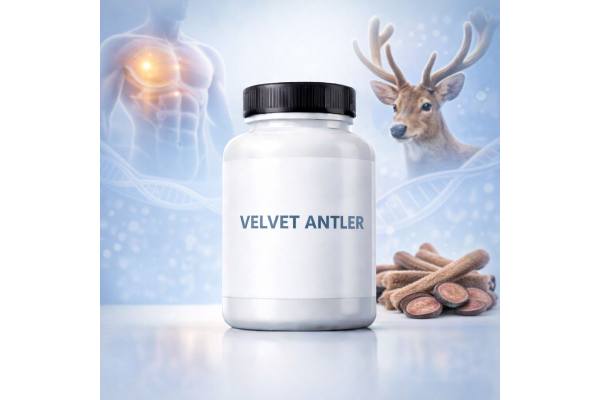
Velvet antler (sometimes called deer antler velvet) is the soft, growing stage of deer or elk antlers, harvested before the antler hardens into bone. In traditional East Asian systems, it has been used as a “tonic” for energy, recovery, and resilience. In modern supplements, it is typically sold as a powder, extract, or capsule and marketed for joint comfort, exercise performance, libido, and general vitality.
Here is the honest bottom line: velvet antler contains proteins, collagen-like compounds, minerals, and small amounts of growth factors, but human research is limited and results are inconsistent. Some people still choose it for subjective benefits like recovery or stiffness, yet the biggest practical issues are safety, product quality, and (for athletes) anti-doping risk. This guide explains what velvet antler is, what benefits are plausible, how to use it carefully, and who should skip it.
Key Insights for Velvet Antler Users
- Evidence does not show reliable improvements in strength, endurance, or aerobic performance in humans.
- Product quality matters because some products have been found adulterated with human IGF-1.
- Typical studied amounts include 300 mg/day (extract) to 1,500 mg/day (powder) for several weeks.
- Avoid if you are pregnant or breastfeeding, have hormone-sensitive conditions, or you are subject to anti-doping testing.
Table of Contents
- What is velvet antler and what is in it?
- What benefits are realistic and what is hype?
- How people use velvet antler in practice
- How much velvet antler should you take?
- Side effects, interactions, and who should avoid it
- Quality, contamination risks, and doping concerns
- What the research says overall
What is velvet antler and what is in it?
Velvet antler refers to the antler during its growth phase, when it is still covered by a fuzzy “velvet” skin and has not fully ossified (hardened into bone). This stage is biologically unusual: antlers are among the fastest-growing tissues in mammals, and that rapid growth is one reason velvet antler is marketed as a recovery, vitality, or “anabolic” support supplement.
From a supplement perspective, velvet antler is not one single ingredient. It is a complex animal tissue that can vary depending on species (deer vs. elk), geography, diet, harvest timing, and processing. What you get in a capsule depends heavily on how it was made.
Common constituents include:
- Proteins and peptides: fragments of proteins (often discussed as deer antler peptides) that may have antioxidant or anti-inflammatory activity in lab studies.
- Collagen-like material and amino acids: supporting the idea of joint or connective-tissue marketing, though “contains collagen” is not the same as “reduces joint pain.”
- Minerals and trace compounds: small amounts of minerals are present, but velvet antler is not a meaningful substitute for an evidence-based nutrient deficiency plan.
- Growth factors: velvet antler may contain growth factors such as IGF-1 (insulin-like growth factor-1). The presence and amount can vary widely, and this category is where quality and safety become most important.
You may also see velvet antler sold under names tied to traditional systems (for example, “cervi cornu” or related terms). Those names can refer to different antler preparations, not always the same “velvet” stage.
A helpful mental model is to treat velvet antler more like a variable biological raw material than a standardized vitamin. If a product does not clearly state the form (powder vs. extract), the amount, and third-party testing, you are essentially guessing what you are taking—and that uncertainty is central to both results and risk.
What benefits are realistic and what is hype?
Velvet antler is promoted for many outcomes, but the strongest “reality check” comes from human trials and safety evaluations rather than tradition or animal data. When you look at the claims, it helps to separate what is plausible, what is unproven, and what is unlikely based on current evidence.
Benefits that are plausible but not proven
These are areas where people commonly report subjective improvements, and where mechanisms (like peptides with anti-inflammatory activity) are discussed, but human proof is limited:
- Recovery and soreness: Some users take velvet antler hoping for better training recovery. Biologically, peptides and proteins could influence inflammation signaling, but the human data are not strong enough to treat this as a reliable effect.
- Joint comfort: Because velvet antler contains collagen-like material and is sometimes framed as “connective tissue support,” some people use it alongside physiotherapy, strength work, and bodyweight management. If it helps, it may be modest and individual.
- General vitality or well-being: Traditional use often overlaps with “tonic” language. In modern terms, this might translate to perceived energy or resilience, which is difficult to measure and can be influenced by sleep, diet, training load, and expectations.
Claims that are not supported for most people
Performance enhancement is where marketing often gets loud, but evidence stays quiet. A key summary in a major NIH fact sheet is that short-term clinical trials show virtually no evidence that deer antler velvet improves aerobic or anaerobic performance, muscular strength, or endurance. The same source notes that safety has not been adequately studied in many trials and highlights adulteration concerns.
Claims that should raise caution
Some marketing implicitly leans on the idea that velvet antler contains growth factors, especially IGF-1, which could “promote muscle growth.” Even if a product did contain measurable IGF-1, that does not automatically mean it is effective or safe as a supplement. It also creates potential anti-doping risk, and it may not be appropriate for people with certain medical histories.
A practical, evidence-aligned stance is:
- Treat velvet antler as a non-essential supplement with uncertain benefit.
- If you try it, evaluate it like an experiment: clear goal, time-limited trial, and careful monitoring.
- Prioritize basics (sleep, protein intake, progressive training, rehab for injuries) because those consistently outperform most supplements.
How people use velvet antler in practice
People usually take velvet antler for one of three reasons: training recovery, joint comfort, or broad “tonic” support. The most useful approach is to match the product form and routine to the goal—and to keep expectations realistic.
Common forms you will see
- Powdered velvet antler: Often mixed into drinks or placed into capsules. Powder can be easier to dose, but flavor and sourcing can vary.
- Extracts: These may be labeled as velvet antler extract or velvet antler velvet extract. Extracts can be more concentrated, but concentration is only meaningful if the product is well standardized.
- Capsules and tablets: The most convenient option, though it can hide details about source material and quality unless the label is transparent.
- Blends: Velvet antler is sometimes combined with herbs, amino acids, or “testosterone support” blends. This makes it harder to know what caused any effect or side effect.
Practical ways users structure a trial
A sensible self-trial looks more like a protocol than a vibe:
- Pick one goal. Examples: “reduce morning stiffness” or “improve perceived recovery between hard sessions.”
- Pick one product and one dose. Do not start multiple new supplements at once.
- Run it for a defined window. Commonly 6–12 weeks, depending on the goal.
- Track simple outcomes.
- Joint goal: morning stiffness minutes, pain scale, ability to climb stairs, training tolerance.
- Recovery goal: soreness rating next day, ability to hit planned sessions, sleep quality.
- Stop if side effects appear. Especially swelling, headaches, unusual fatigue, rash, or signs of low blood sugar.
Where velvet antler fits best if you use it
If you decide to try velvet antler, it generally makes more sense as an adjunct to fundamentals:
- For joints: progressive strength training, mobility, weight management (if relevant), and appropriate medical evaluation come first.
- For training recovery: total calories, protein intake, hydration, sleep, and load management are the high-return levers.
Velvet antler is rarely a “missing piece.” At best, it may be a modest helper for some people—provided the product is clean and the user is a good candidate.
How much velvet antler should you take?
There is no universally agreed “optimal” dose for velvet antler because products differ and human research is limited. Still, you can anchor your decision in studied amounts and a safety-first dosing strategy.
Doses that appear in human research and authoritative summaries
In a set of randomized trials summarized by the NIH Office of Dietary Supplements, participants used either 300 mg/day of a deer-antler-velvet extract or 1.5 g/day of deer-antler-velvet powder during a training program, with no significant ergogenic benefit compared with placebo. That range (hundreds of milligrams to around 1–2 grams daily) is also broadly consistent with how many commercial products are labeled.
Separate clinical research in children (focused on safety rather than performance) used a daily intervention containing 1,586 mg of deer antler extract for 12 weeks under trial conditions, with no serious adverse drug reactions observed in that study setting.
A careful, real-world dosing approach
If you are an adult choosing to try velvet antler, a conservative plan is:
- Start low for 7–14 days: 300–500 mg/day (especially with extracts or concentrated products).
- If tolerated, move to a mid-range dose: 1,000–1,500 mg/day.
- Time-limited trial: 6–12 weeks, then reassess.
If a product suggests much higher dosing, be cautious. Higher is not automatically better, and quality concerns mean higher doses can increase exposure to contaminants or adulterants if the product is not well tested.
Timing and administration tips
- Take with food if you are prone to stomach upset.
- Split dosing (morning and evening) if you notice headaches or digestive discomfort.
- Avoid stacking with many new supplements at the same time; it complicates safety tracking.
Special populations
- Children and adolescents: Do not self-prescribe velvet antler. Even when a trial suggests short-term safety under controlled conditions, real-world supplements are not identical to clinical products.
- Athletes under anti-doping rules: Avoid unless you have extremely strong product verification and professional guidance, because the risk profile is different from the general public.
If you do not notice a clear, meaningful benefit by the end of a structured trial, it is reasonable to stop. With uncertain evidence, “no clear benefit” is useful information.
Side effects, interactions, and who should avoid it
Velvet antler is often described as “natural,” but natural does not automatically mean safe or appropriate for everyone—especially when products vary and safety research is incomplete.
Possible side effects
Many small trials report few side effects, but the broader concern is that safety has not been thoroughly evaluated across different products, doses, and populations. Potential issues include:
- Digestive symptoms: nausea, stomach discomfort, diarrhea, or constipation (often dose-related).
- Headache or dizziness: can occur with various supplements and may be more likely when taken on an empty stomach.
- Swelling or fluid retention: theoretically possible, and any new edema warrants stopping and medical advice.
- Blood sugar effects: IGF-1 as a prescription medication is associated with hypoglycemia; while that is not the same as taking velvet antler, it is a reason to be cautious if you have diabetes or episodes of low blood sugar.
Potential interactions
Because velvet antler products can be inconsistent, interaction risk is harder to predict than with standardized nutrients. Use extra caution if you take:
- Diabetes medications or insulin: because of hypoglycemia risk concerns in the growth-factor category.
- Blood pressure medications: if you are sensitive to dizziness or lightheadedness.
- Hormone-related therapies: due to uncertainty around growth-factor signaling and hormone-sensitive conditions.
Who should avoid velvet antler
Skip velvet antler (or only consider it with clinician guidance) if you fall into one of these groups:
- Pregnant or breastfeeding individuals.
- People with hormone-sensitive cancers or conditions (for example, certain breast, prostate, or endometrial cancers) unless your oncology team explicitly approves.
- Children and adolescents unless under medical supervision with a specific rationale.
- Anyone subject to anti-doping testing (competitive athletes, some military or occupational settings).
- People with uncontrolled diabetes or frequent hypoglycemia.
- Those with unexplained swelling, recurrent headaches, or chronic kidney or liver disease unless cleared by a clinician.
When to stop immediately
Stop and seek medical advice if you develop: facial or leg swelling, severe headache, rash or hives, chest pain, fainting, signs of very low blood sugar (shaking, confusion, sweating), or any new symptom that feels clearly abnormal for you.
The biggest safety lever you control is not the dose. It is choosing a product with credible third-party testing and avoiding velvet antler when your personal risk profile makes uncertainty unacceptable.
Quality, contamination risks, and doping concerns
If you remember only one practical lesson about velvet antler, make it this: product quality is the make-or-break factor. The evidence for benefits is limited, but the evidence for variability and adulteration risk is real.
Why quality is unusually important here
Velvet antler is animal-derived and biologically complex. That increases variability even before processing begins. Then manufacturing choices (drying temperatures, extraction methods, fillers, and blending) can further change what ends up in the bottle.
A major red flag: an evaluation of commercially available deer-antler-velvet supplements found that several products contained no deer IGF-1, while others were adulterated with human IGF-1. That finding matters for two reasons: it shows labels may not reflect contents, and it raises safety and anti-doping implications.
What to look for on a label
You are looking for evidence that the company expects scrutiny:
- Third-party testing (certificate of analysis, lot number, and a real lab name).
- Clear form and dose (powder vs. extract, mg per serving).
- Species and sourcing transparency (deer vs. elk, country of origin).
- Contaminant screening (heavy metals and microbiological testing are especially relevant for animal-derived products).
Anti-doping reality for athletes
The World Anti-Doping Agency prohibits IGF-1 and its analogues. Because velvet antler products have been found adulterated with human IGF-1, athletes who rely on “it is natural” logic are taking a gamble. Even if a product is not intentionally adulterated, supplement supply chains can produce cross-contamination.
If you compete under rules aligned with WADA or similar bodies, the safest approach is simple: avoid velvet antler unless you have expert guidance and robust testing documentation.
Ethical and practical sourcing considerations
Velvet antler harvesting practices and animal welfare standards vary by region. If ethical sourcing matters to you, look for:
- Clear animal welfare standards and farm auditing.
- Transparent harvesting timing and handling methods.
- A company willing to answer sourcing questions with specifics rather than marketing language.
In short, velvet antler is a supplement category where quality is not a “nice to have.” It is central to both safety and the credibility of any claimed benefit.
What the research says overall
Velvet antler research spans traditional use, lab and animal studies, and a small number of human trials. The gap between marketing certainty and scientific uncertainty is wide, so it helps to interpret the evidence with a structured lens.
What human evidence currently supports best
- Exercise performance claims are weak. Authoritative summaries report that randomized controlled trials provide virtually no evidence of improved aerobic or anaerobic performance, strength, endurance, or training outcomes compared with placebo.
- Short-term tolerability may be acceptable in controlled settings. A randomized controlled clinical trial in children evaluating deer antler extract for 12 weeks reported no serious adverse drug reactions under the study conditions, though that does not automatically generalize to all retail products or adult goals.
- Mechanistic promise exists, but it is not proof. Reviews of deer antler peptides describe potential antioxidant, anti-inflammatory, and other biological activities. These findings help explain why velvet antler is studied, but they do not guarantee real-world clinical benefits.
The biggest research limitations
- Small sample sizes and short durations: Many studies are not large enough to detect modest effects reliably.
- Non-standardized products: One study’s “velvet antler” can be quite different from another’s, making results difficult to compare.
- Outcome mismatch: Some trials use performance tests that do not reflect real athletic scenarios or meaningful daily-life improvements.
- Safety evidence is incomplete: Lack of reported side effects is not the same as proven safety, particularly for long-term use.
A realistic “evidence-based decision” checklist
If you are deciding whether velvet antler is worth trying, this framework keeps you grounded:
- Do you have a clear, measurable goal that matters to you (not just curiosity)?
- Have you already addressed higher-impact basics (sleep, diet quality, training structure, injury management)?
- Can you obtain a product with credible third-party testing and transparent sourcing?
- Is your personal risk low (not pregnant, not breastfeeding, no hormone-sensitive condition, not subject to doping rules)?
- Are you willing to stop if there is no meaningful benefit after a time-limited trial?
For many people, velvet antler will fall into the category of “optional and uncertain.” That does not mean nobody should ever use it. It means the decision should be careful, individualized, and heavily weighted toward safety and product quality.
References
- Dietary Supplements for Exercise and Athletic Performance – Health Professional Fact Sheet 2024 (Government Fact Sheet)
- Safety of deer antler extract in children: A 12-week randomized controlled clinical trial – PubMed 2024 (RCT)
- Health Effects of Peptides Extracted from Deer Antler – PubMed 2022 (Review)
- WORLD ANTI-DOPING CODE INTERNATIONAL STANDARD PROHIBITED LIST 2025 2025 (Standard)
Disclaimer
This article is for educational purposes only and does not provide medical advice, diagnosis, or treatment. Dietary supplements, including velvet antler, can vary widely in quality and may not be appropriate for everyone. If you are pregnant, breastfeeding, managing a medical condition, taking prescription medications, or subject to anti-doping rules, consult a qualified healthcare professional before using velvet antler. Seek medical advice promptly if you experience side effects such as swelling, rash, severe headache, or symptoms of low blood sugar.
If you found this guide useful, please consider sharing it on Facebook, X (formerly Twitter), or any platform you prefer, and follow us on social media. Your support through sharing helps our team continue producing high-quality, practical health content.