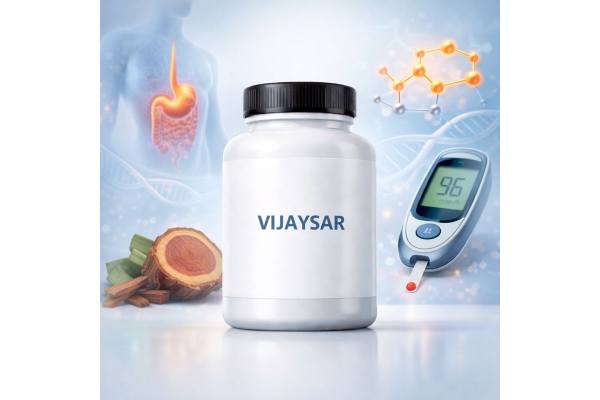
Vijaysar is the heartwood of Pterocarpus marsupium, a tree also known as Indian kino. In Ayurveda, it is most closely associated with blood-sugar support, especially for people with sluggish metabolism, sugar cravings, or post-meal spikes. Today, you will see Vijaysar as heartwood powder, capsules, extracts, and even traditional wooden tumblers used to infuse water overnight. What makes it unique is its rich mix of polyphenols (including pterostilbene-related compounds and flavonoids) that may support glucose handling, oxidative stress balance, and inflammation pathways that often travel with metabolic strain.
This guide focuses on the benefits people search for most, how Vijaysar is used in real routines, what dosage ranges are commonly studied or used in practice, and the side effects and interactions that matter most—especially if you already take diabetes medications.
Essential Insights for Vijaysar Users
- Vijaysar may help support fasting and post-meal glucose control when paired with diet, activity, and consistent sleep.
- If you take glucose-lowering medication, monitor readings closely because hypoglycemia risk can increase.
- Typical adult dosing ranges include 2–4 g/day heartwood extract (traditional clinical use) or 200 mg/day standardized bark extract in safety studies.
- Avoid using it as a substitute for prescribed diabetes care, especially with rising HbA1c or new symptoms.
- People who are pregnant, breastfeeding, or have liver disease should avoid self-supplementing.
Table of Contents
- What is Vijaysar and why do people use it?
- What benefits can you realistically expect?
- How Vijaysar works: compounds and mechanisms
- How to use Vijaysar: powder, capsules, and wooden tumbler water
- How much Vijaysar should you take?
- Common mistakes that make Vijaysar fail
- Side effects, interactions, and who should avoid it
What is Vijaysar and why do people use it?
Vijaysar refers to the heartwood of Pterocarpus marsupium—not the leaves, not the resin, and not a generic “wood powder.” This detail matters because the heartwood is the traditional part used for metabolic support, and it is where many of the key polyphenols are concentrated. In many regions, you will also see it called Indian kino, Bijasar, or Asan, and it appears in classical formulas focused on “sweet urine” patterns that map closely to modern concerns like insulin resistance and elevated blood glucose.
People use Vijaysar for one primary reason: blood-sugar support. But that headline benefit breaks into several practical motives:
- Supporting fasting glucose trends over time
- Reducing post-meal spikes and cravings that follow them
- Supporting energy steadiness (less “wired after sugar, tired later”)
- Complementing weight management efforts when diet changes are underway
- Supporting metabolic markers that often cluster together, like triglycerides and oxidative stress
A useful way to set expectations is to treat Vijaysar as a metabolic companion, not a metabolic rescue. It is most often used alongside consistent meals, higher fiber intake, and regular walking or strength training. When people take it while continuing high-sugar eating patterns, results are usually modest and inconsistent.
You will encounter several product formats, and each has tradeoffs:
- Heartwood powder: closest to traditional use; taste can be woody and tannic.
- Capsules of heartwood powder or decoction powder: more convenient; dose clarity varies by brand.
- Extracts standardized to certain compounds: easier to dose; potency depends on standardization and testing.
- Wooden tumbler water infusion: culturally popular; practical, but dosing is less precise.
If you want the most reliable experience, prioritize products that clearly state Pterocarpus marsupium, specify the heartwood, and provide basic quality testing for contaminants.
What benefits can you realistically expect?
Most interest in Vijaysar centers on type 2 diabetes and prediabetes support. The strongest real-world use case is when a person is already working on diet and movement and wants an herbal tool that may improve consistency and response. Benefits are best framed as supportive and trend-based, not immediate or dramatic.
1) Blood-sugar support and post-meal control
Vijaysar is traditionally used to help bring down elevated glucose patterns. In a clinical context, heartwood extracts have been used in gram-level dosing and have shown meaningful average reductions in fasting and post-meal glucose over weeks in people with type 2 diabetes. In day-to-day life, this may show up as:
- Less intense post-meal sleepiness
- Fewer sugar crashes
- More predictable morning readings for some users
Because glucose is highly sensitive to meals and sleep, a smart approach is to watch weekly averages rather than single readings.
2) Cravings and appetite “noise”
Many people do not realize how often cravings are driven by rapid swings in glucose. When post-meal spikes and dips soften, some people report fewer intense urges for sweets. This is not guaranteed, but it is one of the most commonly noticed lifestyle-adjacent benefits.
3) Oxidative stress and inflammation balance
Metabolic strain is closely linked to oxidative stress. Vijaysar’s polyphenols are often discussed for antioxidant and anti-inflammatory signaling, which may support tissues that take the biggest hit from chronic hyperglycemia. Practically, this is less about “feeling antioxidants” and more about supporting long-term metabolic resilience.
4) A supportive role for lipids and weight goals
Some people use Vijaysar alongside changes aimed at triglycerides or central weight. This is best treated as a secondary benefit: if glucose control improves, lipid markers sometimes follow, but Vijaysar should not replace targeted lipid management.
A grounded takeaway: Vijaysar can be worth trying if you will measure outcomes (glucose trends, cravings, waist measurements) and keep the fundamentals stable. Without that structure, you are unlikely to know whether it helped.
How Vijaysar works: compounds and mechanisms
Vijaysar is often described as “anti-diabetic” in traditional language, but modern explanations focus on how its polyphenols may influence glucose uptake, oxidative stress, and carbohydrate processing. Think of its effects as coming from multiple small levers that add up when lifestyle is already moving in the right direction.
Key compounds people discuss
Vijaysar heartwood contains a range of phenolic compounds, including constituents frequently discussed in the research literature such as pterostilbene-related compounds, flavonoids, and tannin-like polyphenols. Rather than fixating on a single “active,” it is more realistic to treat Vijaysar as a multi-compound botanical where synergy and extraction method matter.
Mechanisms that fit what users experience
These are the most plausible and practical pathways:
- Glucose uptake support: Some lab and cell studies suggest heartwood extracts can support glucose handling in liver and muscle-relevant models, which fits reports of steadier post-meal patterns.
- Carbohydrate breakdown modulation: Many polyphenols can reduce the speed at which carbohydrates are broken down and absorbed, which can soften spikes for some people.
- Oxidative stress reduction: Hyperglycemia increases oxidative stress, which can worsen insulin signaling and vascular strain. Antioxidant signaling support may improve the metabolic “background noise” that makes glucose harder to manage.
- Inflammation signaling balance: Low-grade inflammation is common in insulin resistance; downshifting inflammatory signaling can indirectly support better glucose handling.
Why the “wood water” tradition makes sense
The traditional practice of soaking water in Vijaysar wood likely extracts a small amount of water-soluble compounds over time. This is a low-intensity delivery method, which may partly explain why some people find it gentle and sustainable. The downside is that it is harder to standardize.
A clear caution about mechanism claims
You will sometimes see dramatic claims about beta-cell regeneration or “curing diabetes.” Treat those as marketing, not a promise. Type 2 diabetes is a complex, long-term condition. Vijaysar may support better control, but it should be viewed as one tool in a larger plan, not a replacement for medical care.
How to use Vijaysar: powder, capsules, and wooden tumbler water
Choosing how to use Vijaysar is mostly about adherence and dose clarity. The best method is the one you can do consistently while monitoring results.
Option 1: Heartwood powder in water or warm liquids
This is a common approach when people want a traditional-feeling routine with flexible dosing.
- Mix the powder into water and drink it with or after a meal.
- If taste is a barrier, take it with warm water after food rather than trying to “enjoy” it.
- Some people prefer evening dosing to reduce stomach sensitivity.
If you are targeting post-meal glucose, taking it around your highest-carb meal can be a sensible strategy.
Option 2: Capsules for consistency
Capsules remove taste and make routines easier. The key is verifying what is inside:
- Some capsules contain straight heartwood powder.
- Others contain extracts with different concentrations.
If the label does not clearly state the extract ratio or standardization, treat it as a lower-confidence product and start conservatively.
Option 3: The wooden tumbler water method
This method is popular because it feels simple and “food-like.” A practical routine looks like this:
- Fill the Vijaysar wooden tumbler with drinking water at night.
- Let it sit for 6–10 hours.
- Drink the infused water in the morning, ideally before breakfast.
- Refill for the next day if you plan to continue.
Important limitations:
- The dose is not precise, so outcomes can vary.
- Quality of the wood matters; poorly sourced wood increases contamination risk.
- It is not ideal if you need tight glucose management or have frequent hypoglycemia.
Best use cases by goal
- Prediabetes support: capsules or powder with meals, measured with fasting and post-meal readings.
- Type 2 diabetes alongside medication: capsules with clear dosing and careful glucose monitoring.
- Lifestyle-based “maintenance”: wooden tumbler water can be a gentle habit if readings are stable.
How much Vijaysar should you take?
Vijaysar dosing depends on whether you are using traditional heartwood extract, powder, or a standardized extract product. Because brands vary, the safest approach is to start low, track glucose response, and increase only if you tolerate it well.
Common adult dosing ranges seen in practice
These ranges reflect typical use patterns and what has appeared in human research contexts:
- Heartwood extract or decoction powder: 2–4 g/day, often divided into 2 doses
- Heartwood powder (non-extract): commonly 1–3 g/day to start, sometimes increased based on tolerance
- Standardized bark extract products: 200 mg/day has been used in a controlled safety study in healthy adults (typically as 100 mg twice daily)
If your product is an extract, do not assume gram-level dosing applies. Extract strength can vary widely.
Timing guidance that improves tolerance
- With meals is the most reliable way to reduce nausea or stomach heaviness.
- If you are prone to reflux, avoid taking it on an empty stomach.
- For post-meal spikes, consider taking it with the meal that usually produces your highest readings.
How long to try it before judging results
Vijaysar is best assessed with a structured window:
- 2 weeks: tolerance check, routine stability, early trend hints
- 4–8 weeks: better view of fasting trends and post-meal response
- 8–12 weeks: more meaningful pattern recognition alongside lifestyle changes
If you have diabetes, track readings in a way that protects you from false conclusions:
- Keep meals and activity patterns as consistent as possible during the trial.
- Watch for lows if you take metformin, sulfonylureas, insulin, or other glucose-lowering therapies.
When to reduce dose or stop
Reduce the dose or discontinue if you develop:
- Repeated low glucose episodes
- Persistent stomach upset
- New fatigue that tracks closely with dosing
- Rash, itching, or swelling
If your glucose rises despite use, or you have symptoms like excessive thirst, frequent urination, or unexplained weight loss, treat that as a medical priority rather than a supplement problem.
Common mistakes that make Vijaysar fail
Many “it did nothing” experiences come from avoidable mistakes in dosing, expectations, or measurement. Fixing these often matters more than switching brands.
Mistake 1: Using Vijaysar instead of changing the glucose drivers
Supplements cannot outwork daily high-sugar meals, low fiber intake, and poor sleep. Vijaysar is most likely to help when you also:
- Add fiber to meals
- Walk after eating
- Keep protein steady
- Reduce late-night snacking
Fix: pair Vijaysar with one non-negotiable habit, such as a 10–15 minute walk after your highest-carb meal.
Mistake 2: Not measuring the right outcomes
Single glucose readings can mislead you. Hydration, stress, and sleep can shift glucose significantly.
Fix: track:
- Fasting glucose averages (weekly)
- Post-meal readings at the same time point (for example, 2 hours after your main meal)
- Cravings intensity and late-day energy stability
Mistake 3: Starting too high and quitting due to side effects
Large first doses increase the chance of nausea and stomach heaviness.
Fix: start with the lowest reasonable dose for 4–7 days, then increase gradually.
Mistake 4: Combining with multiple glucose herbs at once
Stacking bitter melon, gymnema, berberine, and Vijaysar can increase hypoglycemia risk and makes it difficult to know what is helping.
Fix: introduce one supplement at a time and keep the rest stable for at least 2 weeks.
Mistake 5: Treating the wooden tumbler method as “dose-accurate”
The tumbler method can be gentle, but it is not standardized.
Fix: if you need precision, switch to a capsule or powder with known grams per serving, and use the tumbler method only as a lifestyle habit when readings are stable.
Side effects, interactions, and who should avoid it
Vijaysar is often tolerated well, but safety depends heavily on your health status, medications, and the quality of the product. If you have diabetes, the main safety issue is not “toxicity” in the abstract—it is glucose dropping too low when Vijaysar is combined with other glucose-lowering tools.
Common side effects
Most side effects are mild and digestive:
- Stomach heaviness or nausea, especially with higher doses
- Gas, bloating, or loose stools
- Bitter or astringent aftertaste (more common with powder)
These often improve by reducing the dose and taking it with meals.
Hypoglycemia risk and medication interactions
If you take insulin or medications that can cause hypoglycemia (including some common oral diabetes drugs), adding Vijaysar may increase the chance of low readings. Signs of low glucose can include shaking, sweating, irritability, confusion, and sudden hunger.
Practical safety steps:
- Increase monitoring during the first 1–2 weeks.
- Do not increase dose rapidly.
- If you have repeated lows, stop and discuss medication adjustment with your clinician rather than pushing through.
Who should avoid Vijaysar
Avoid self-supplementing, or use only with professional guidance, if you are:
- Pregnant or breastfeeding
- Managing liver disease or unexplained abnormal liver tests
- On complex medication regimens where small changes can be risky
- Experiencing unexplained weight loss, persistent diarrhea, or symptoms suggesting uncontrolled diabetes
- Scheduled for surgery soon, especially if glucose management is sensitive
Quality and contamination concerns
Because Vijaysar is a wood product, source quality matters. Poorly processed wood or powders can carry contaminants. Choose products that provide basic testing and avoid unknown “wood tumbler” sources that do not clearly identify the species.
When to stop immediately
Stop and seek medical care if you develop:
- Hives, facial swelling, wheezing, or trouble breathing
- Severe or persistent vomiting
- Signs of severe hypoglycemia or repeated low readings
- Yellowing of the skin or eyes, dark urine, or unusual bruising
Used responsibly, Vijaysar can be a helpful adjunct for metabolic support. The safest path is conservative dosing, careful monitoring if you use diabetes medications, and treating supplements as additions—not replacements—for proven care.
References
- A Short-Term Safety Evaluation of Silbinol®- an Extract from Pterocarpus marsupium in Healthy Adults- a Randomized, Double-Blind, Placebo-Controlled Study 2023 (RCT)
- Heartwood Extract of Pterocarpus marsupium Roxb. Offers Defense against Oxyradicals and Improves Glucose Uptake in HepG2 Cells 2022 (Preclinical Study)
- Biotechnological Advances in Pharmacognosy and In Vitro Manipulation of Pterocarpus marsupium Roxb 2022 (Review)
- Flexible dose open trial of Vijayasar in cases of newly-diagnosed non-insulin-dependent diabetes mellitus. Indian Council of Medical Research (ICMR), Collaborating Centres, New Delhi 1998 (Clinical Trial)
Disclaimer
This article is for educational purposes only and does not provide medical advice, diagnosis, or treatment. Vijaysar (Pterocarpus marsupium) may affect blood glucose and can interact with diabetes medications, increasing the risk of hypoglycemia. Do not use Vijaysar as a substitute for prescribed diabetes care or to delay medical evaluation. If you are pregnant, breastfeeding, have liver disease, or take prescription medicines for diabetes or other chronic conditions, speak with a qualified healthcare professional before using Vijaysar. Seek urgent medical help for severe allergic reactions, repeated low glucose episodes, confusion, fainting, or signs of liver injury such as jaundice.
If you found this guide helpful, please share it on Facebook, X (formerly Twitter), or any platform you prefer, and follow us on social media. Your support through sharing helps our team continue producing well-researched, high-quality content.