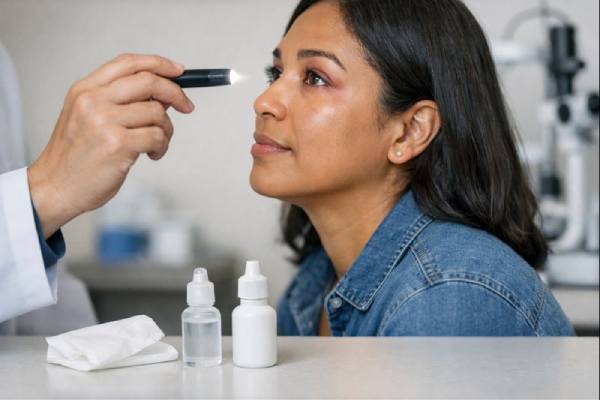
Pink eye, or conjunctivitis, is one of those conditions that looks dramatic but can have very different causes—each with its own best approach. Viral conjunctivitis often arrives with cold-like symptoms, watery discharge, and a gritty sensation that spreads easily through households. Bacterial conjunctivitis is more likely to produce thicker discharge that glues the eyelids shut and may respond to antibiotic drops, especially in certain high-risk situations. The challenge is that early symptoms overlap, and over-treating with antibiotics can be unnecessary, while under-treating an eye infection in a contact lens wearer can be risky.
This guide helps you tell viral from bacterial pink eye using practical clues, explains which home-care steps actually improve comfort, and outlines when medical treatment or urgent evaluation is the safer choice.
Key Takeaways
- Watery discharge and cold symptoms point toward viral pink eye, while thick pus-like discharge suggests bacterial infection.
- Most viral conjunctivitis improves with supportive care over 1–2 weeks, but it is highly contagious early on.
- Antibiotics may shorten bacterial conjunctivitis in some cases, but they are not needed for every red eye.
- Contact lens wearers with a red painful eye should stop lenses immediately and seek prompt evaluation.
- Use strict hygiene and avoid sharing towels, cosmetics, and pillows until symptoms fully resolve.
Table of Contents
- What pink eye is and why cause matters
- Viral pink eye: typical signs and timeline
- Bacterial pink eye: signs and when antibiotics help
- A practical self-check: watery vs thick discharge
- Treatment options: home care and medications
- Contagiousness, cleaning, and return to work or school
- When to get checked: urgent red flags
What pink eye is and why cause matters
Pink eye is inflammation of the conjunctiva, the thin transparent tissue that covers the white of the eye and lines the inside of the eyelids. When it becomes inflamed, the eye can look strikingly red, feel gritty or burning, and produce discharge. Because the conjunctiva is richly supplied with blood vessels and immune cells, it reacts strongly to infection, allergens, and irritants. That is why “pink eye” is a symptom pattern, not a single diagnosis.
The reason cause matters is simple: viral and bacterial conjunctivitis behave differently, spread differently, and respond differently to medications. Viral conjunctivitis typically does not improve faster with antibiotics, while bacterial conjunctivitis sometimes does—especially when discharge is heavy or when risk factors are present. Meanwhile, allergic conjunctivitis needs allergy-focused treatment and is not contagious, and irritant conjunctivitis improves when the exposure stops.
What most people mean by viral vs bacterial
- Viral conjunctivitis is commonly linked to respiratory viruses. It often starts in one eye and spreads to the other within days. It is usually watery and highly contagious early on.
- Bacterial conjunctivitis is caused by bacteria that infect the conjunctiva. It can affect one or both eyes. Discharge tends to be thicker, and eyelids may stick together, especially after sleep.
Why “just try drops” can be the wrong move
Not every red eye is conjunctivitis. Some conditions look similar but require different treatment and faster evaluation, such as:
- keratitis (corneal inflammation or infection), a particular concern for contact lens wearers
- uveitis, which can cause pain and light sensitivity
- acute glaucoma, which can cause severe pain and blurred vision
Because of these possibilities, the most important first step is not identifying the perfect cause at home. It is recognizing whether your symptoms fit uncomplicated conjunctivitis or whether they include red flags that deserve a clinician’s assessment.
When the pattern is uncomplicated pink eye, home care and time are often enough. When the pattern is atypical, painful, or vision-affecting, guessing can delay the care that prevents complications.
Viral pink eye: typical signs and timeline
Viral conjunctivitis is the most common type in many communities, and it often appears alongside a cold or after exposure to someone with an eye infection. It tends to be annoying rather than dangerous, but it is contagious and can linger longer than people expect.
How viral conjunctivitis usually starts
A typical timeline looks like this:
- Day 1–2: one eye becomes red, watery, and gritty
- Day 2–4: the other eye often becomes involved
- Week 1: peak redness and tearing; discomfort is common
- Week 2: gradual improvement, though mild redness may persist
Some people experience eyelid swelling and a tender preauricular lymph node (a small node in front of the ear), which can be a helpful clue for viral causes.
Common symptoms
- watery discharge or clear mucus
- gritty or sandy sensation
- mild burning and irritation
- eyelid swelling, especially in the morning
- light sensitivity that is mild
- recent sore throat, runny nose, or cough
Viral conjunctivitis often feels worse than it looks. The eye may water constantly, making reading and screen use uncomfortable.
What makes viral pink eye tricky
- Discharge can become stringy: People interpret any discharge as bacterial, but viral infections can produce mucus, especially after sleep.
- Redness can outlast discomfort: The eye may look “still infected” even when symptoms are improving.
- Contagiousness is front-loaded: It spreads easily in the first several days, often before you are sure what it is.
When viral conjunctivitis is not “routine”
Certain viral infections can involve the cornea, causing more significant pain, light sensitivity, or blurry vision. If you have:
- moderate to severe pain
- significant light sensitivity
- blurred vision that does not clear with blinking
- a sensation of something stuck in the eye that is intense
it is safer to be evaluated.
Most viral conjunctivitis improves with supportive care and careful hygiene. The goal is comfort while your immune system clears the infection and preventing spread to others.
Bacterial pink eye: signs and when antibiotics help
Bacterial conjunctivitis is often associated with thicker discharge and eyelids that stick together. It can occur in children and adults and may follow an upper respiratory infection. While many cases are mild and self-limited, antibiotics are more likely to help here than with viral pink eye—especially in certain scenarios.
Typical bacterial symptoms
- yellow, green, or white discharge that re-accumulates after wiping
- eyelids crusted shut on waking
- redness and irritation in one or both eyes
- a feeling of heaviness in the eyelids
- less frequent association with cold symptoms than viral cases
The discharge is a key point. In bacterial conjunctivitis, you may wipe the eye and see discharge return quickly.
When bacterial infection deserves extra caution
Some situations increase the need for prompt evaluation:
- contact lens wearers: higher risk of corneal infection, which can threaten vision
- significant eye pain or light sensitivity: may indicate corneal involvement
- reduced vision: especially if it does not improve with blinking
- immunocompromised individuals: infections can progress faster
- newborns or very young infants: require medical evaluation
In contact lens wearers, a red eye should be treated as higher risk until proven otherwise. If you wear lenses and have a painful red eye, stop lens wear immediately and seek care.
Do antibiotics always help?
Not always. Mild bacterial conjunctivitis can resolve on its own, and antibiotics do not guarantee instant relief. But antibiotics can:
- shorten symptom duration in some cases
- reduce contagiousness earlier
- lower the chance of complications in specific risk groups
Clinicians also consider practical factors such as daycare and school policies, though medical decisions should prioritize safety and appropriate use rather than convenience alone.
Why “leftover drops” are a bad plan
Using someone else’s or an old prescription drop can be harmful. The medication may be inappropriate, contaminated, or expired. Some drops can worsen the surface or mask worsening symptoms that should prompt evaluation.
Bacterial conjunctivitis is often manageable, but the key is identifying when it is truly bacterial and when the “bacterial look” is actually viral inflammation or irritation that does not benefit from antibiotics.
A practical self-check: watery vs thick discharge
Because most people do not have access to lab testing, a practical self-check can help you make sensible choices while staying alert for red flags. No single sign is perfect, but clusters of findings are useful.
Clues that favor viral conjunctivitis
- watery tearing that soaks tissues
- mild burning and gritty feeling
- recent cold symptoms or exposure to someone with a viral illness
- redness that starts in one eye and spreads to the other
- discharge that is mostly clear or thin mucus
- mild swelling and a tender node in front of the ear
Viral pink eye often makes the eye look glassy and feel irritated rather than deeply painful.
Clues that favor bacterial conjunctivitis
- thick yellow or green discharge
- eyelids stuck shut in the morning, repeatedly
- discharge that returns quickly after wiping
- a “goopy” film that builds through the day
- more prominent involvement of one eye, though both may be affected
If you can wipe the eye clean and it stays relatively clear for hours, that leans away from bacterial causes.
Clues that favor allergy or irritation instead
- intense itch as the dominant symptom
- sneezing, nasal allergy symptoms, or seasonal pattern
- both eyes affected at the same time
- swelling that is puffy and pale rather than hot and tender
- symptoms that improve indoors or worsen in specific environments
Allergic conjunctivitis is often under-recognized and can be mistaken for infection.
A caution about “color” of discharge
Discharge color can mislead. Viral conjunctivitis can produce thicker mucus after sleep, and dryness can create stringy discharge. The most useful question is not “Is there discharge?” but “Does thick discharge keep coming back quickly, all day?”
Use time as a diagnostic tool
If supportive care is started and:
- symptoms are improving day by day, infection is less likely to be severe
- symptoms are worsening after 24–48 hours, or pain and light sensitivity rise, evaluation is more important
This approach keeps you from over-treating routine cases and helps you catch the uncommon but important situations that need medical care.
Treatment options: home care and medications
Most uncomplicated conjunctivitis can be managed safely with targeted comfort measures and strict hygiene. Medication choices depend on whether the cause is likely viral, bacterial, or allergic, and whether the person has risk factors that raise concern for corneal involvement.
Supportive home care for most cases
- Cool compresses: 10 minutes, 3–5 times daily for redness, swelling, and discomfort
- Lubricating drops: preservative-free artificial tears reduce grit and improve comfort; use as needed
- Gentle lid cleaning: wipe away discharge with clean cotton and warm water; use a new pad each time
- Avoid contact lenses: stop until the eye is fully white and comfortable again
- Avoid eye makeup: discard products used during infection to reduce reinfection risk
If the eye feels glued shut in the morning, do not force it open. Soften crusting with a warm compress and clean gently.
When antibiotics may be used
Antibiotic eye drops or ointment may be considered when bacterial conjunctivitis is likely, particularly when discharge is heavy or risk factors exist. If prescribed, use them exactly as directed and complete the course even if symptoms improve quickly.
Do not use antibiotics for a routine viral pattern. They do not treat viruses and can cause irritation or allergy-like reactions that prolong symptoms.
What about steroid drops?
Steroid eye drops can reduce inflammation but can worsen certain infections and should not be used without medical supervision. If inflammation is significant or the cornea is involved, an eye professional will guide therapy based on exam findings.
Allergy-focused treatment
If itching is prominent and symptoms are bilateral, allergy treatment can be more effective than antibiotics:
- oral antihistamines may reduce lid swelling and itch
- allergy eye drops can reduce itch and redness
- cool compresses and avoiding rubbing are essential
How fast should you expect improvement?
- Viral conjunctivitis: comfort may improve within days, but redness can take 1–2 weeks to fully resolve.
- Bacterial conjunctivitis: discharge often improves within 24–48 hours of appropriate antibiotics, though redness may take longer.
- Allergic conjunctivitis: itch can improve within hours to a day when triggers are reduced and treatment starts.
If your symptoms are not improving on the expected timeline, or if pain and light sensitivity increase, it is time to move from home care to evaluation.
Contagiousness, cleaning, and return to work or school
Conjunctivitis spreads because the organisms that irritate the eye are easily transferred by hands, towels, pillowcases, and shared cosmetics. Viral conjunctivitis is especially contagious early on, but bacterial conjunctivitis can also spread. The goal is to reduce transmission without turning your home into a quarantine zone.
Hygiene steps that make the biggest difference
- wash hands often, especially after touching your face or applying reminders
- avoid touching or rubbing the eyes
- use separate towels and washcloths
- change pillowcases frequently during active symptoms
- do not share eye drops, cosmetics, or contact lens supplies
- clean phone screens, keyboards, and glasses regularly
If you have children, treat pink eye prevention like a hand-hygiene project for the whole household.
When are you no longer contagious?
There is no single rule that fits every case, but these principles help:
- Viral conjunctivitis is often most contagious in the first several days, especially when tearing is heavy.
- Bacterial conjunctivitis tends to become less contagious after antibiotics are started and discharge is improving, but exact timing varies.
- If discharge is still active and you are wiping the eyes frequently, assume you can still spread infection.
From a practical standpoint, consider returning to work or school when:
- you can control eye rubbing
- discharge is minimal and does not require frequent wiping
- you are able to maintain good hand hygiene
Policies differ across schools and workplaces, but the medical goal is reducing spread, not simply meeting a time threshold.
Contact lenses and reinfection prevention
If you wear contact lenses:
- stop lens wear during active symptoms
- replace or disinfect lens cases as recommended
- discard lenses used during infection, especially disposable lenses
- ensure the eye is fully comfortable and white before restarting
Restarting lenses too early can prolong irritation and raises risk of complications. When in doubt, wait an extra day or two after symptoms resolve.
A clean environment and disciplined hand hygiene often prevent “ping-pong” infections within families. The effort is most important in the first week, when contagiousness and exposure risk are highest.
When to get checked: urgent red flags
Most pink eye is uncomplicated, but some red eyes are not conjunctivitis. The safest approach is to know which symptoms should override any self-diagnosis and prompt medical evaluation.
Seek urgent care if you have
- moderate to severe eye pain
- significant light sensitivity, especially with a very red eye
- blurred vision that does not clear with blinking
- a contact lens–related red eye, especially with pain or discharge
- a sensation of a foreign body that is intense or persistent
- swelling around the eye with fever or worsening redness of eyelid skin
- a history of eye surgery or immune compromise with new red eye
These symptoms can indicate corneal infection, uveitis, or other conditions that require specific treatment.
Seek prompt evaluation if symptoms are not following a typical course
- worsening after 24–48 hours of supportive care
- redness lasting beyond 2 weeks without improvement
- recurrent episodes that keep returning
- severe discharge that continues despite antibiotics
- one eye much worse than the other, especially if pain is prominent
What to expect at a visit
A clinician may:
- assess visual acuity and corneal clarity
- examine the eyelids and conjunctiva for patterns of infection or allergy
- ask about contact lens use and hygiene
- decide whether antibiotic drops are appropriate
- advise on work or school return and contagion precautions
If you are uncertain, a useful safety line is this: uncomplicated conjunctivitis is usually irritating but not intensely painful. When pain becomes the main feature, it is time to get checked.
Pink eye is common, but vision is precious. A low threshold for evaluation in high-risk situations—especially contact lens wear—helps prevent the rare outcomes that people assume “will not happen to me.”
References
- AAO Preferred Practice Pattern® Guidelines. Conjunctivitis. 2023 (Guideline)
- Allergic conjunctivitis: an update on diagnosis and management 2022 (Review)
- Bacterial conjunctivitis: a systematic review of diagnosis and treatment 2022 (Systematic Review)
- Conjunctivitis (Pink Eye) 2024 (Government Health Guidance)
- Adenoviral conjunctivitis: clinical features, diagnosis, and management 2023 (Review)
Disclaimer
This article is for educational purposes and does not replace personalized medical advice, diagnosis, or treatment from a qualified clinician. Red eyes have multiple causes, and some conditions that resemble conjunctivitis can threaten vision if not treated promptly. Stop contact lens wear immediately with any red eye, and seek urgent evaluation for moderate to severe pain, significant light sensitivity, decreased vision, new double vision, or worsening swelling around the eye.
If you found this guide helpful, please consider sharing it on Facebook, X (formerly Twitter), or any platform you prefer.