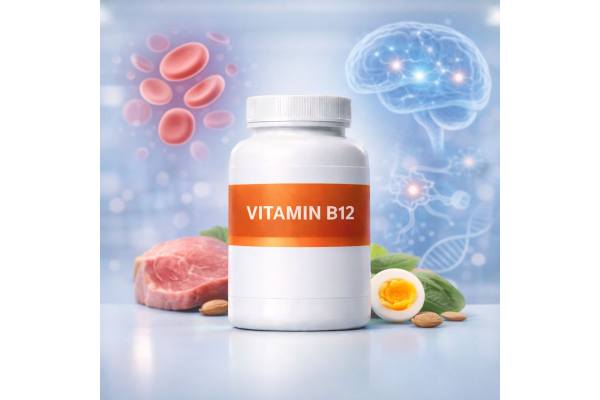
Vitamin B12 (also called cobalamin) is a water-soluble vitamin best known for its role in healthy red blood cell formation, DNA synthesis, and normal nerve function. It is unusual among vitamins because it relies on a multi-step absorption pathway involving stomach acid and a protein called intrinsic factor—one reason deficiency is more common than many people assume. When B12 is low, symptoms can range from fatigue and shortness of breath to numbness, balance problems, mood changes, and memory issues. The good news is that B12 deficiency is often treatable, and supplementation can be highly effective when the dose and form match the cause (dietary gaps vs. absorption problems). This guide focuses on what B12 actually does, who benefits most, how to choose a practical dose, and how to use it safely—without overstating “energy” claims that only apply when deficiency is present.
Essential Insights
- Correcting deficiency can improve anemia-related fatigue and help prevent permanent nerve damage.
- People who eat little or no animal food often need reliable fortified foods or supplements long term.
- High-dose oral therapy for deficiency is commonly 1,000–2,000 mcg/day under clinician guidance.
- Metformin and long-term acid-suppressing medicines can increase deficiency risk, so monitoring may matter.
- Avoid self-treating neurological symptoms or suspected pernicious anemia without medical testing.
Table of Contents
- What is vitamin B12 and why it matters
- Which benefits are real and which are hype
- How do you know if you are low in B12
- How much B12 should you take daily
- Best forms and how to take B12 for absorption
- Common mistakes that delay improvement
- Side effects, interactions, and who should avoid B12
What is vitamin B12 and why it matters
Vitamin B12 is a cobalt-containing vitamin found naturally in animal-derived foods and in some fortified products. Your body uses B12 in a few high-impact places:
- Blood health: B12 helps your bone marrow produce properly formed red blood cells. When B12 is low, red blood cells can become unusually large and fragile, reducing oxygen delivery and causing anemia-like symptoms.
- Nervous system maintenance: B12 supports myelin, the protective “coating” around nerves. Low B12 can lead to tingling, numbness, balance problems, and sometimes cognitive or mood changes.
- DNA and methylation: B12 helps recycle homocysteine into methionine, which feeds into methylation processes used for DNA and protein regulation. This is one reason B12 status is often discussed alongside folate.
B12’s absorption is also a major part of the story. In many people, deficiency is not about “not trying hard enough” to eat well—it is about biology. B12 from food is bound to protein and must be released by stomach acid and enzymes. It then binds to intrinsic factor, a protein made in the stomach, and the complex is absorbed in the far end of the small intestine. If any step is disrupted—low stomach acid, autoimmune damage to intrinsic factor (pernicious anemia), certain GI surgeries, or intestinal disease—B12 can fall even if the diet looks adequate.
A useful practical detail: the body can store B12 for a long time, so deficiency may develop slowly. That delay can create confusion: people may feel “fine” for years, then develop symptoms that seem to appear out of nowhere. That is also why a careful approach—testing, choosing an appropriate dose, and matching the method of supplementation to the cause—matters more than simply buying the highest-strength bottle.
Which benefits are real and which are hype
Vitamin B12 has a strong evidence base for one central benefit: treating and preventing deficiency. Many popular claims (especially around “energy”) are partly true, but only in specific contexts. Here is the clean way to think about it.
Benefits with the best support (when deficiency or low status is present):
- Improved anemia-related fatigue and weakness: If low B12 is contributing to megaloblastic anemia or borderline oxygen delivery, correcting it can improve energy, exercise tolerance, and shortness of breath over weeks to months.
- Neurological protection and symptom improvement: Tingling, numbness, and gait instability can improve if treatment starts early. Delayed treatment increases the risk that nerve damage becomes only partially reversible.
- Support during high-risk life stages: Pregnancy and breastfeeding increase needs. In those who are low, treating B12 deficiency protects both parent and infant. This is especially relevant for people avoiding animal foods.
Benefits that are often overstated:
- “Instant energy boost” in people with normal B12: B12 is not a stimulant. If your levels are normal, extra B12 does not reliably create more energy. What sometimes happens is that people who were unknowingly low feel better after starting supplements, and the supplement gets credit for a “boost.”
- Cognition and mood as a universal upgrade: Low B12 can contribute to cognitive symptoms, irritability, and low mood, but supplementation is not a guaranteed nootropic. The most consistent benefit is correcting deficiency, not enhancing an already-normal baseline.
- Heart health through homocysteine lowering: B vitamins can lower homocysteine, but lowering homocysteine does not automatically translate into fewer heart attacks or strokes in every population. Think of B12 as essential nutrition and deficiency treatment, not a stand-alone cardiovascular strategy.
Where B12 can be strategically helpful even without classic deficiency symptoms:
- Borderline labs plus risk factors: Older age, long-term metformin use, long-term acid suppression, vegan diets without reliable fortified foods, and certain GI histories can justify proactive monitoring and sometimes supplementation.
- Absorption challenges: In some cases, very high-dose oral B12 works even when absorption is impaired, because a small percentage can be absorbed by passive diffusion.
A simple takeaway: the “benefit” of B12 is proportional to the problem it solves. If the problem is deficiency or impaired absorption, B12 can be transformative. If the problem is something else (sleep debt, iron deficiency, thyroid disease, depression, overtraining), B12 is rarely the missing piece.
How do you know if you are low in B12
B12 deficiency can be sneaky because symptoms overlap with many other conditions. Still, there are patterns worth knowing—especially because delayed treatment can leave lasting nerve issues.
Common symptoms that raise suspicion:
- Blood-related: persistent fatigue, weakness, lightheadedness, pale skin, shortness of breath, palpitations.
- Nerve-related: tingling or numbness in hands and feet, burning sensations, balance trouble, clumsiness, “electric” sensations, unexplained gait changes.
- Brain and mood: memory problems, slower thinking, irritability, low mood, confusion in severe cases.
- Mouth and GI: sore tongue, mouth ulcers, appetite changes.
High-risk groups where testing is especially reasonable:
- Adults over about 60–65, especially with chronic gastritis or low stomach acid.
- People following vegan diets (and many vegetarians) without consistent fortified foods.
- People using metformin long term.
- People using long-term acid-suppressing medicines (such as PPIs), especially with other risks.
- People after bariatric surgery or other GI surgeries.
- People with autoimmune conditions linked to pernicious anemia.
Testing and interpretation basics:
Most clinicians start with a serum B12 level, but it is not always the final word. Some people have “low-normal” B12 while tissue levels are falling. That is why confirmatory markers are often used:
- Methylmalonic acid (MMA): tends to rise when B12 is functionally low. It is one of the most sensitive options, but kidney disease can raise MMA even without deficiency.
- Homocysteine: can rise when B12 declines, but it is less specific because folate status and kidney function also influence it.
- CBC and red blood cell indices: macrocytosis (high MCV) and anemia can appear, but neurological symptoms can occur without anemia.
Do not self-diagnose neurological symptoms. Tingling and balance problems can also come from diabetes, spinal issues, thyroid disease, and other nutrient deficiencies. If you suspect B12 deficiency, the fastest path is usually: test → identify cause → treat appropriately → recheck labs and symptoms on a timeline that matches nerve healing (often months).
How much B12 should you take daily
The “right dose” depends on your goal: meeting baseline needs, preventing deficiency in higher-risk diets, or treating confirmed deficiency. B12 is measured in micrograms (mcg), and supplement labels often look “high” because absorption drops as doses rise.
Baseline daily needs (general targets):
- Adults: about 2.4 mcg/day
- Pregnancy: about 2.6 mcg/day
- Breastfeeding: about 2.8 mcg/day
These amounts are small and are typically achievable with animal foods or fortified products—if absorption is normal.
Typical supplement label ranges (why they vary so much):
You will often see:
- Multivitamins: roughly 5–25 mcg
- B-complex products: roughly 50–500 mcg
- B12-only products: often 500–1,000 mcg
This is not automatically “too much.” It often reflects absorption math. At very high doses, only a small percentage may be absorbed, which is one reason high-dose tablets can still be useful when absorption is compromised.
Dosing for prevention in higher-risk diets (general, practical approach):
If you do not eat animal foods reliably, many people use one of these patterns:
- A lower daily dose (for steady coverage), or
- A higher dose a few times per week (for convenience).
Because products vary widely, the best plan is the one you will actually follow consistently. Fortified foods can work well, but only if they are truly consumed in dependable amounts.
Dosing for confirmed deficiency (medical territory):
For documented deficiency, clinicians often use:
- Injections (especially when malabsorption or pernicious anemia is suspected), and/or
- High-dose oral therapy, commonly 1,000–2,000 mcg/day for a period of time.
If your deficiency is due to diet alone, oral supplementation is often enough. If your deficiency is due to absorption failure, injections may be preferred initially, although high-dose oral therapy can still succeed for some people.
How soon does it work?
- Blood markers can improve within weeks.
- Symptoms like fatigue may improve earlier.
- Nerve symptoms can take months, and earlier treatment generally leads to better recovery.
Because dosing depends so strongly on cause, the safest “rule” is simple: use low doses for routine nutrition, and use high doses only when a clinician has confirmed deficiency or a clear high-risk scenario.
Best forms and how to take B12 for absorption
B12 supplements come in several forms, and most people do not need to obsess over the “perfect” one. The more important question is whether you can absorb B12 through your gut—and whether you are consistent.
Common forms you will see:
- Cyanocobalamin: widely used, stable, and common in supplements.
- Methylcobalamin: a bioactive form, popular in marketing.
- Hydroxocobalamin: commonly used in injections in some countries and also appears in some supplements.
- Adenosylcobalamin: another bioactive form, less common.
For most people, there is no strong evidence that one oral form is universally superior for raising B12 levels. A reliable product taken consistently tends to beat an “ideal” product used sporadically.
Route matters as much as form:
- Oral tablets/capsules: the default choice for many people, especially when deficiency is dietary.
- Sublingual tablets/lozenges: often advertised as “better absorbed,” but evidence generally suggests similar effectiveness to standard oral use for most people.
- Injections (intramuscular): often used when absorption is impaired, deficiency is severe, or neurological symptoms are present.
- Nasal preparations: sometimes used by prescription; convenient for some, but not always necessary.
Absorption reality check (why high-dose pills can still work):
B12 absorption drops when you exceed intrinsic factor capacity. That sounds discouraging, but it explains why high-dose B12 is common: even if only a small percentage is absorbed, the absolute amount absorbed can still be enough to correct deficiency.
Timing and food:
- B12 is water-soluble, so it can be taken with or without food.
- If you are using a B12 tablet as part of a routine, take it at the time you are most likely to remember.
- People who feel mild nausea with supplements often do better taking them with food.
When absorption is the core issue:
If you have pernicious anemia, a history of bariatric surgery, significant intestinal disease, or long-standing acid suppression combined with symptoms, the strategy may shift toward injections, higher oral doses, and closer follow-up testing. The goal is not “more B12 forever,” but “enough B12 in the body,” verified by symptom changes and labs over time.
Common mistakes that delay improvement
B12 treatment can feel deceptively simple—take a vitamin, feel better—but several common missteps can slow results or create false reassurance.
1) Treating symptoms without confirming the cause
Fatigue and tingling can come from iron deficiency, vitamin D deficiency, thyroid disease, diabetes, sleep apnea, spinal compression, anxiety, and more. If you guess B12 and skip testing, you can miss the real driver—and neurological causes are especially important not to overlook.
2) Ignoring the absorption question
A diet-heavy solution works when the problem is dietary. But if the issue is pernicious anemia or GI malabsorption, “more steak” or a standard multivitamin may not fix it. People can spend months on low-dose supplements, assuming they are covered, while nerve symptoms worsen.
3) Expecting instant neurological recovery
Blood levels can normalize before nerves fully heal. It is common for tingling and balance issues to improve slowly over months. If symptoms are severe, early medical treatment is important because prolonged deficiency increases the chance of incomplete recovery.
4) Using inconsistent dosing patterns
B12 support is often about steady coverage. The best protocol is the one you can follow for the long term—especially for vegans, older adults, and those with ongoing medication-related risks.
5) Over-focusing on “energy” rather than deficiency correction
If you start B12 and feel a short-lived lift, it can be tempting to keep escalating doses. But if your levels were normal, that “lift” may be placebo, caffeine timing, or day-to-day variation. A better approach is: test, treat if needed, and reassess.
6) Missing medication-related risk
Metformin and long-term acid-suppressing medicines can contribute to low B12 status. If you are in one of these groups, ask whether periodic monitoring makes sense, especially if you have anemia, neuropathy symptoms, or multiple risk factors.
7) Forgetting the folate relationship
High folic acid intake can correct anemia while B12-related nerve damage progresses. If someone is taking high-dose folic acid and has neurological symptoms, B12 should be evaluated promptly.
A practical “do this next” checklist:
- Get tested if symptoms or risk factors are present.
- Identify whether the cause is dietary vs. absorption-related.
- Match the route and dose to that cause.
- Recheck labs and symptoms on a timeline that respects nerve healing.
Side effects, interactions, and who should avoid B12
Vitamin B12 is generally well tolerated, and serious toxicity from oral B12 is considered uncommon. Still, “safe” does not mean “always appropriate,” especially when B12 is used to self-treat symptoms that deserve evaluation.
Possible side effects (more likely at higher supplemental doses):
- Mild digestive upset (nausea, diarrhea)
- Headache in some individuals
- Acne-like skin eruptions in a small subset of users
- Restlessness or sleep disruption in sensitive people (often timing-related)
If side effects occur, consider lowering the dose, switching the timing (with food or earlier in the day), or changing the product.
Medication interactions and special situations:
- Metformin: long-term use is associated with a higher risk of low B12 status in some people. This does not mean metformin should be stopped; it means B12 monitoring and supplementation may be appropriate when risk is high.
- Acid-suppressing medicines (for reflux): reducing stomach acid can reduce release of B12 from food, increasing risk over time, especially in older adults.
- Nitrous oxide exposure: repeated nitrous oxide can inactivate B12 and can trigger neurological issues in people with low stores. This is a high-stakes situation to disclose to clinicians.
Who should be cautious or avoid self-supplementing without medical guidance:
- Anyone with neurological symptoms (numbness, balance changes, weakness, cognitive decline): treat this as a medical issue first, not a supplement experiment.
- People with suspected pernicious anemia: long-term treatment may be required, and the diagnosis changes how clinicians monitor you.
- People with Leber hereditary optic neuropathy: B12 products—especially cyanocobalamin—are commonly flagged as requiring specialist guidance.
- People with unexplained very high B12 on lab tests: high B12 can sometimes reflect underlying medical conditions rather than “great nutrition,” so it should be interpreted clinically rather than “balanced” with more supplements.
When to seek care urgently:
- New or rapidly worsening numbness, weakness, trouble walking, confusion, or severe anemia symptoms.
- Symptoms in pregnancy, postpartum, or in infants (B12 deficiency in infants can be serious and time-sensitive).
Used wisely, B12 is one of the more straightforward nutrients: you identify the risk, confirm the need, treat appropriately, and monitor. The main safety issue is not usually the vitamin—it is missing the real diagnosis or delaying treatment when nerves are already involved.
References
- Vitamin B12 – Health Professional Fact Sheet 2025 (Guideline-Style Fact Sheet)
- Vitamin B12 or folate deficiency anaemia 2023 (Clinical Overview)
- Efficacy of different routes of vitamin B12 supplementation for the treatment of patients with vitamin B12 deficiency: A systematic review and network meta-analysis 2024 (Systematic Review)
- Effect of Metformin on Vitamin B12 Deficiency in Patients With Type 2 Diabetes Mellitus and Factors Associated With It: A Meta-Analysis 2022 (Meta-Analysis)
- The efficacy of vitamin B12 supplementation for treating vitamin B12 deficiency and peripheral neuropathy in metformin-treated type 2 diabetes mellitus patients: A systematic review 2022 (Systematic Review)
Disclaimer
This article is for educational purposes only and does not provide medical advice, diagnosis, or treatment. Vitamin B12 deficiency can cause serious and sometimes irreversible neurological complications, and symptoms such as numbness, balance problems, confusion, or severe fatigue should be evaluated by a qualified clinician. Supplement needs vary based on diet, medications, medical history, and lab results. If you are pregnant, breastfeeding, managing chronic illness, taking prescription medicines, or suspect pernicious anemia or malabsorption, consult a healthcare professional before starting high-dose vitamin B12.
If you found this guide helpful, please consider sharing it on Facebook, X (formerly Twitter), or any platform you prefer, and following us on social media. Your support through sharing helps our team continue creating accurate, high-quality health content.