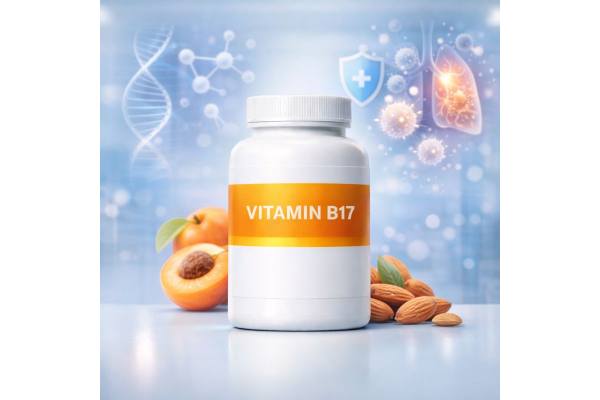
Vitamin B17 is a name you may see on supplement labels, wellness blogs, or “natural cancer remedy” discussions—yet it is not an official vitamin. The term usually refers to amygdalin (and sometimes laetrile, a related semi-synthetic compound), substances found in the pits and kernels of certain fruits such as apricots and bitter almonds. What makes Vitamin B17 uniquely controversial is its chemistry: when broken down in the body, it can release cyanide, a fast-acting toxin. That single fact shapes every responsible conversation about potential uses, safety, and dosing.
This guide explains what Vitamin B17 is, what claims exist, what the evidence actually supports, how to evaluate products, why dosing is difficult to define, and which side effects and interactions can be serious.
Essential Insights for Vitamin B17
- Lab research suggests possible anti-inflammatory and antioxidant activity, but human benefits remain unproven.
- Oral use can release cyanide, and risk may rise with crushed kernels, raw bitter almonds, or high-dose vitamin C.
- No established safe dose; protocols reported in some sources range around 600–1,000 mg amygdalin/day, but self-dosing is not advised.
- Avoid if pregnant or breastfeeding, giving to children, or if you have liver or kidney disease.
- Anyone in active cancer treatment should avoid unsupervised use and discuss any supplement with their oncology team first.
Table of Contents
- What is vitamin B17 really
- Does vitamin B17 have proven benefits
- How amygdalin turns into cyanide
- Common forms and label red flags
- How much vitamin B17 is safe
- Side effects interactions and who should avoid
What is vitamin B17 really
“Vitamin B17” is a marketing label, not a scientific nutrient category. True vitamins are essential compounds your body needs in small amounts to function normally, and deficiency leads to a predictable syndrome that can be prevented or corrected by replacing that nutrient. Vitamin B17 does not meet that standard.
Most products sold as Vitamin B17 contain amygdalin, a naturally occurring compound in the seeds (kernels) of certain fruits, especially apricot kernels and bitter almonds. Amygdalin belongs to a group called cyanogenic glycosides—plant chemicals that can generate cyanide when metabolized. The name laetrile is often used interchangeably online, but it typically refers to a related compound that was promoted historically as an alternative cancer treatment.
It helps to separate three ideas that are often blurred together:
- Food sources: apricot kernels, bitter almond kernels, and pits or seeds from other fruits. These vary widely in their amygdalin content, even within the same type of food.
- Supplement sources: tablets, capsules, powders, or extracts labeled as amygdalin, laetrile, apricot kernel extract, or Vitamin B17.
- Medical claims: many claims focus on cancer, immune support, “detox,” or anti-aging—yet those claims are not the same as clinically proven outcomes.
A key practical point: if a label calls something a “vitamin,” people may assume it is automatically safe at moderate doses. With Vitamin B17, that assumption can be dangerous because the core safety issue is not a minor side effect—it is the possibility of cyanide exposure.
If you are looking for “B vitamins” in the conventional sense (like B6, folate, or B12), Vitamin B17 is not part of that family. It sits in a separate category: a plant chemical with a risk profile that depends heavily on form, dose, gut metabolism, and co-ingestions.
Does vitamin B17 have proven benefits
The most common reason people seek Vitamin B17 is a promise of serious health benefits—often framed as “natural cancer support,” “immune strengthening,” or “cell protection.” A careful look at the evidence shows a clear pattern: interesting lab findings do not translate into proven clinical benefits in humans.
What research can honestly say, in plain terms:
- Cell and animal studies: Amygdalin can be studied in controlled environments where researchers can measure oxidative stress markers, inflammation signaling, and cell death pathways. In some setups, it appears to influence inflammatory mediators and can be toxic to rapidly dividing cells. However, the same mechanism that can harm cells in a dish can also harm healthy human tissue because cyanide is not selective.
- Human outcomes: Reliable clinical evidence showing meaningful benefits (for cancer treatment, prevention, or symptom control) is lacking. When people report feeling better, it can reflect many factors: supportive care, changes in diet, differences in symptom tracking, concurrent therapies, or the natural fluctuation of symptoms.
Claims you will commonly see—and how to interpret them:
- “It targets cancer cells only.” This is a claim of selectivity. In real physiology, cyanide affects core cellular respiration. The body does have detox pathways, but they can be overwhelmed, and they do not “know” which cells you want to target.
- “It supports immunity.” Immune support is a broad term. There is no agreed-on clinical marker set that Vitamin B17 reliably improves in people.
- “It’s an antioxidant.” Many plant compounds show antioxidant effects in vitro. That alone does not justify supplementation, especially when the compound can also generate a potent toxin.
A more useful way to think about “benefits” is to reframe the question: What goal are you trying to achieve, and what safer tools exist? If the goal is general antioxidant intake, you can get that from fruits, vegetables, legumes, olive oil, nuts you can safely eat, and evidence-backed nutrients when truly needed. If the goal is cancer care, the priority becomes treatments with demonstrated benefit and safety monitoring.
In short, Vitamin B17 is better described as a controversial compound with unproven human benefits and a uniquely serious safety risk, rather than a supplement you take “for wellness.”
How amygdalin turns into cyanide
Understanding Vitamin B17 starts with one question: Why can it be dangerous? The answer is its breakdown pathway.
Amygdalin is a cyanogenic glycoside. When it is metabolized, it can produce hydrogen cyanide along with other breakdown products. Cyanide is dangerous because it interferes with the body’s ability to use oxygen at the cellular level. Even if oxygen is present in the blood, cells can be prevented from using it efficiently, which is why cyanide poisoning can escalate quickly.
Several factors influence how much cyanide is actually released:
- Route of use (oral vs non-oral): Oral exposure generally increases risk because digestion and gut microbes can speed conversion of cyanogenic compounds into cyanide.
- Food matrix and processing: Chewing, crushing, grinding, or blending kernels increases surface area and can increase breakdown. “Whole kernel swallowed” is not a safety strategy—digestion still happens—but particle size and preparation matter.
- Individual gut microbiome: People vary in their gut bacteria and enzymes. That helps explain why one person may report “no issues” at a given intake while another experiences toxicity symptoms. Variability is not reassurance; it is unpredictability.
- Co-ingestions and diet context: Some combinations can plausibly raise risk, including pairing amygdalin sources with other cyanogenic foods or with high-dose antioxidant regimens that are popular in alternative protocols.
Your body does have detox mechanisms. One major pathway converts cyanide into thiocyanate, which is less toxic and excreted in urine. The problem is capacity: detoxification is not unlimited, and it can be impaired by illness, poor nutrition, liver stress, or simply too high a cyanide load too fast.
A practical safety takeaway is that Vitamin B17 is not like most supplements where “more is just wasteful.” Here, more can be hazardous, and the hazard is not subtle.
If you are assessing whether something labeled Vitamin B17 is “mild” or “plant-based,” remember: many of the strongest toxins in the world are plant-derived. “Natural” is not a safety category; dose and metabolism are.
Common forms and label red flags
Vitamin B17 products vary widely, and that variability is a major risk on its own. If you decide to evaluate a product label, the goal is not to find the “best” one—it is to understand why consistent dosing and safety assurance are so hard.
Common forms you may see:
- Apricot kernel capsules or tablets: Often labeled “apricot kernel extract,” “amygdalin,” “laetrile,” or “Vitamin B17.”
- Powders: Sometimes marketed for smoothies. This is a higher-risk format because powders are easy to over-scoop and often represent a “crushed” form that may increase conversion.
- Whole kernels or “bitter apricot seeds”: These are frequently sold online with dosing instructions like “start with 1–2 kernels.” Kernel size and amygdalin content can vary dramatically, so a kernel count is not a reliable dosing method.
- Combination products: Some products pair amygdalin sources with detox blends, enzymes, or large vitamin stacks.
Label red flags that should stop you:
- Cancer cure language: Any product implying it cures cancer, replaces standard care, or guarantees tumor reduction is a major credibility warning.
- Vague standardization: Phrases like “high potency,” “extra strength,” or “therapeutic grade” without a clear quantified active ingredient per serving.
- Inconsistent naming: If a brand uses “amygdalin,” “laetrile,” and “Vitamin B17” interchangeably without specifying what is actually in the capsule, you cannot reliably compare doses across products.
- Missing safety statements: Responsible labeling should warn about toxicity risk, pregnancy and child use, and medical supervision. Silence can indicate poor-quality oversight.
- No batch testing transparency: With higher-risk compounds, third-party testing and batch consistency matter. Many sellers do not provide it.
A smarter checklist is to ask “What does this product allow me to control?” You ideally want:
- A clearly stated amount of amygdalin (mg) per serving, not just “apricot kernel powder.”
- A clear serving definition (1 capsule, 1 tablet) rather than “one scoop” of powder.
- A cautious label that does not hide from the cyanide issue.
Finally, be careful with “protocols” shared online. Protocols often combine multiple variables (diet shifts, supplements, enzymes, vitamins, fasting) and then credit the result to one agent. With Vitamin B17, protocol culture can also normalize risk by framing toxicity symptoms as “detox.” That is not a safe assumption when cyanide exposure is on the table.
How much vitamin B17 is safe
This is the question most readers want answered, and it deserves a direct response: there is no established safe or required daily intake for Vitamin B17 because it is not an essential vitamin, and safety depends on variables that are hard to standardize.
Still, people encounter dosing ranges online. Here is how to interpret them responsibly.
Why dosing guidance is unreliable:
- Different “actives”: Some products report “apricot kernel extract” rather than amygdalin content. That does not tell you how much cyanogenic potential you are taking.
- Different conversion rates: Oral use can produce different cyanide exposure than non-oral routes, and individual gut factors can change conversion.
- Kernel count is not dosing: “3 kernels per day” is not a meaningful measurement because kernel amygdalin content varies by species, growing conditions, and processing.
What ranges you might see—and what they actually mean:
- Some published discussions of amygdalin protocols describe oral intake in the ballpark of hundreds of milligrams up to around 1,000 mg/day. The existence of a reported protocol does not equal safety, and it does not equal efficacy.
- Food-based advice may cite “a few kernels” as a limit because cyanide risk can rise quickly. Even if a small amount does not cause immediate symptoms, it can still be an avoidable exposure with no proven benefit.
A safer way to approach the decision is to use a risk-first framework:
- Start with your goal. If your goal is cancer support, the safest move is to bring any supplement idea to your oncology team and avoid anything that could add toxicity, interact with treatment, or delay effective care.
- Avoid stacking risk. Do not combine amygdalin sources with other cyanogenic foods or with high-dose vitamin regimens promoted as “activation.”
- Do not treat symptoms as “detox.” Headache, dizziness, nausea, weakness, confusion, or shortness of breath can be warning signs, not progress.
- Prefer safer substitutes for the same intent. If the intent is antioxidant intake, choose foods and supplements with a clearer safety profile and evidence base. If the intent is inflammation support, start with sleep, protein adequacy, fiber intake, and clinician-guided options.
If you are determined to use any product marketed as Vitamin B17, the most responsible “dose guidance” is not a number—it is medical supervision and risk screening, because cyanide exposure is not a routine supplement concern.
Side effects interactions and who should avoid
Vitamin B17 risk is not limited to mild digestive upset. Because cyanide exposure is a possibility, side effects can range from uncomfortable to life-threatening. The key is recognizing that early symptoms may look like common “supplement intolerance,” which can delay appropriate action.
Potential side effects people report (and why they matter):
- Nausea, vomiting, stomach pain: These can be early toxicity signs, not just sensitivity.
- Headache, dizziness, weakness: Symptoms consistent with impaired cellular oxygen use can appear as “flu-like” or “off” feelings.
- Confusion, trouble walking, unusual sleepiness: Neurologic symptoms should be treated as urgent warning signs.
- Shortness of breath or rapid breathing: Cyanide disrupts oxygen utilization; breathing changes can escalate quickly.
- Low blood pressure, fainting, bluish discoloration of skin: These are emergency-level symptoms.
Interactions and risk amplifiers:
- Combining with other cyanogenic sources: Bitter almonds, apricot kernels, and some crushed pits can add up.
- High-dose vitamin stacks in alternative protocols: Some protocols pair amygdalin with large doses of vitamins or enzymes. Stacking multiple interventions increases uncertainty and complicates symptom interpretation.
- Liver or kidney stress: Detoxification and excretion pathways may be less resilient.
- Medications and complex illness: If you are on blood pressure medications, sedatives, or are medically fragile, sudden toxicity symptoms can be more dangerous.
Who should avoid Vitamin B17 entirely:
- Pregnant or breastfeeding individuals: Risk to the fetus or infant is not acceptable for an unproven benefit.
- Children and adolescents: Smaller bodies reach harmful exposure levels faster, and risk is harder to monitor.
- People with liver or kidney disease: Reduced capacity to process and clear toxins raises risk.
- Anyone with a history of seizures, severe anemia, or serious cardiovascular disease: Reduced physiologic reserve can worsen outcomes.
- People in active cancer treatment (unless specifically directed in a monitored clinical context): Risks include toxicity, interactions, and the larger danger of delaying effective care.
What to do if symptoms occur:
- Stop use immediately.
- Seek urgent medical evaluation if symptoms are more than mild, especially if there is dizziness, confusion, breathing difficulty, fainting, or bluish skin.
- Be honest about what was taken and how much. Accurate information helps clinicians respond faster.
A final safety point: the most dangerous supplement experiences are often those where symptoms are explained away. With Vitamin B17, symptoms deserve respect, not reinterpretation.
References
- Laetrile/Amygdalin – NCI 2022 (Patient Summary)
- Laetrile/Amygdalin (PDQ®) – PDQ Cancer Information Summaries – NCBI Bookshelf 2022 (Evidence Summary)
- Amygdalin: Toxicity, Anticancer Activity and Analytical Procedures for Its Determination in Plant Seeds – PubMed 2021 (Review)
- Cyanide and Cyanogenic Compounds-Toxicity, Molecular Targets, and Therapeutic Agents – PubMed 2024 (Review)
- Cyanide Toxicity – StatPearls – NCBI Bookshelf 2025 (Clinical Overview)
Disclaimer
This article is for educational purposes only and does not provide medical advice, diagnosis, or treatment. Vitamin B17 products may contain amygdalin or related compounds that can release cyanide and cause serious harm. Always speak with a licensed clinician before starting, stopping, or combining supplements—especially if you are pregnant, breastfeeding, managing a chronic condition, taking prescription medications, or undergoing cancer treatment. If you suspect poisoning or develop severe symptoms after using any product marketed as Vitamin B17, seek emergency care promptly.
If you found this guide helpful, please consider sharing it on Facebook, X (formerly Twitter), or any platform you prefer, and follow us on social media. Your support by sharing helps our team continue producing clear, safety-focused health content.