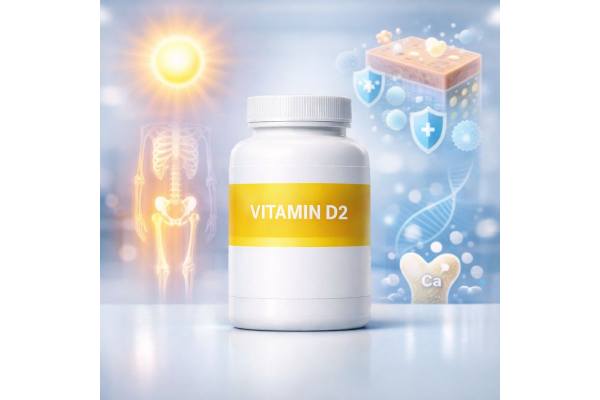
Vitamin D2 (ergocalciferol) is one of the two main forms of vitamin D used in foods and supplements. It matters most when your lifestyle, diet, or health makes it hard to maintain healthy vitamin D status—especially for people who avoid animal products, live in low-sun climates, or have risk factors for low blood levels. Like vitamin D3, vitamin D2 supports calcium and phosphorus absorption and helps maintain normal bone mineralization. Where D2 becomes uniquely relevant is choice: it is often the preferred form for strict vegan supplementation and is also used in some high-dose medical regimens.
This guide explains what vitamin D2 is, what benefits are most realistic, how it compares with D3, and how to dose it safely. You will also learn practical tips for taking D2 with meals, how to avoid common dosing errors, and which side effects or medical conditions should prompt extra caution or clinician oversight.
Vitamin D2 Quick Overview
- Helps support bone and muscle function when vitamin D intake or blood levels are low.
- Works best as a steady routine paired with adequate dietary calcium and protein.
- Typical maintenance range for many adults is 600–2,000 IU (15–50 mcg) daily; higher repletion doses should be supervised.
- Long-term high-dose use can raise blood calcium and strain the kidneys, especially if combined with high calcium intake.
- Avoid unsupervised vitamin D2 if you have hypercalcemia, granulomatous disease (such as sarcoidosis), or recurrent kidney stones.
Table of Contents
- What is vitamin D2 and how does it work?
- What benefits can you realistically expect from D2?
- Vitamin D2 vs D3: which should you choose?
- Who is vitamin D2 most useful for?
- How much vitamin D2 should you take?
- Side effects, interactions, and who should avoid D2
What is vitamin D2 and how does it work?
Vitamin D2—also called ergocalciferol—is a fat-soluble vitamin that behaves like a hormone once your body activates it. You can think of it as a “starter ingredient” your body transforms into signals that help regulate calcium and phosphorus balance. That balance matters for strong bones, normal muscle contraction, and several cellular processes that rely on tightly controlled mineral levels.
Vitamin D2 is produced when certain fungi and yeasts are exposed to ultraviolet (UV) light. That’s why UV-exposed mushrooms can contain meaningful amounts of D2, and why D2 shows up in some fortified foods and vegan-friendly supplements. By contrast, vitamin D3 is typically associated with animal sources or human skin synthesis under UVB light (although vegan D3 from lichen also exists).
What happens after you swallow vitamin D2?
- Absorption: D2 is absorbed in the small intestine. Because it is fat-soluble, it tends to absorb better when taken with a meal containing fat.
- First conversion (liver): Your liver converts D2 into 25-hydroxyvitamin D. This is the main blood marker used to assess vitamin D status.
- Second conversion (kidney and other tissues): Your kidneys convert it to the active hormone form that binds to vitamin D receptors and influences gene expression.
A practical point that prevents dosing mistakes: vitamin D is labeled in IU (international units) or mcg (micrograms). The conversion is straightforward:
- 1 mcg = 40 IU
- 25 mcg = 1,000 IU
- 50 mcg = 2,000 IU
Vitamin D2 is not “instant.” Blood levels typically change over weeks, not days, and the benefit is strongest when you correct a true deficiency or maintain adequacy over time. If your goal is long-term health, consistency matters more than chasing large, occasional doses.
Finally, vitamin D2 is not the same as prescription “active vitamin D” medications (such as calcitriol). Those drugs bypass normal control points and can raise blood calcium more directly. Vitamin D2 supplements are usually safer for routine use—when the dose matches your needs and risk factors.
What benefits can you realistically expect from D2?
Vitamin D2 supports many biological pathways, but the most dependable benefits are still the most practical: bone and muscle health, especially in people who start out low. When vitamin D status is adequate, adding more does not reliably produce “extra” gains across the body. The strongest improvements show up when D2 helps move someone from deficiency to sufficiency.
1) Bone mineralization and fracture-relevant outcomes
Vitamin D’s core job is helping your gut absorb calcium and phosphorus. When vitamin D is low, the body may compensate by increasing parathyroid hormone, which can pull calcium from bone over time. Correcting deficiency supports normal mineralization and can reduce the risk of deficiency-related bone pain and weakness. In higher-risk groups—older adults, people with low dietary calcium, or those with limited sun exposure—vitamin D supplementation is often part of a broader bone plan that also includes strength training and adequate protein.
2) Muscle function and physical stability
Severe deficiency can contribute to muscle weakness, cramps, or difficulty with tasks like climbing stairs or rising from a chair. Restoring vitamin D status may improve function when deficiency is present. The effect is usually subtle rather than dramatic, and it works best when paired with resistance exercise and sufficient dietary protein.
3) Immune support: modest and context-dependent
Vitamin D receptors exist in immune cells, and vitamin D participates in immune signaling. Some people notice fewer respiratory infections after correcting deficiency, but results vary. It is more realistic to view vitamin D2 as a “supportive nutrient” than as an immune treatment. If you are looking for fewer colds, consistent sleep, hand hygiene, vaccination, and adequate zinc and protein tend to be higher-impact levers.
4) Mood, energy, and nonspecific symptoms
Low vitamin D levels are associated with fatigue and low mood in some studies, but those symptoms have many causes. If D2 helps, it usually does so by correcting a deficiency rather than acting like a fast-acting mood supplement. A useful approach is to track one or two concrete outcomes (for example: fewer muscle aches, improved stamina in workouts) over 8–12 weeks, instead of expecting a sudden shift.
5) A vegan-friendly advantage
For strict vegans, vitamin D2 can be an accessible option that aligns with dietary values. That “fit” matters because long-term adherence is often what determines whether a supplement helps.
A good way to set expectations: vitamin D2 can be clinically meaningful when it fixes a gap. It is less likely to feel like a “performance enhancer” if you already have adequate levels.
Vitamin D2 vs D3: which should you choose?
Many people land on vitamin D2 after one practical question: “Which form is better?” The most honest answer is: both can work, but they are not identical in how they behave in the body, and your best choice depends on your priorities (vegan sourcing, medical plan, convenience, and your starting blood level).
How D2 and D3 are similar
- Both raise vitamin D status by increasing circulating 25-hydroxyvitamin D.
- Both support calcium absorption and bone mineralization.
- Both can cause toxicity if taken in excessive doses long term, because the risk comes from high calcium levels—not the label on the bottle.
How they can differ in practice
- Potency and durability: Many clinicians consider D3 more “efficient” at maintaining total 25-hydroxyvitamin D over time for the same IU dose, especially with long-term daily supplementation. D2 can raise levels, but the rise may be less durable in some people.
- What your lab value represents: Vitamin D status tests usually measure total 25-hydroxyvitamin D, which includes contributions from D2 and D3. If you take D2, part of your “total” comes from 25(OH)D2. Some people also see a drop in their 25(OH)D3 fraction when taking D2, even though total vitamin D increases. That can look confusing on detailed lab reports, but total status is typically the main clinical focus.
- Use in high-dose regimens: D2 is sometimes used in high-dose prescription protocols (for example, weekly dosing for deficiency under medical supervision). This does not mean D2 is inherently “stronger”—it often reflects historical prescribing patterns and product availability.
A decision guide that keeps it simple
Choose vitamin D2 if:
- You want a reliably vegan form and prefer D2 over vegan D3 options.
- You are using a clinician-directed regimen that specifically prescribes ergocalciferol.
- You tolerate a particular D2 product well and your blood levels respond appropriately.
Choose vitamin D3 (including vegan D3 from lichen) if:
- Your priority is maintaining levels with the smallest daily dose.
- You have struggled to raise or maintain levels on D2.
- You want the most commonly recommended over-the-counter default.
What matters more than the form
- A dose you can take consistently
- Taking it with a meal containing fat
- Avoiding “stacking” multiple vitamin D products
- Monitoring if you need higher doses or have kidney, parathyroid, or calcium-related conditions
If your levels are low and you are unsure which form to pick, consistency and follow-up testing usually settle the debate faster than internet arguments do.
Who is vitamin D2 most useful for?
Vitamin D2 is most useful when it solves a real-world constraint: diet, ethics, absorption challenges, or a clinician’s specific treatment plan. Rather than thinking of D2 as “better” or “worse,” it helps to think of it as strategic—a tool that fits certain people particularly well.
1) People who follow a strict vegan diet
If you avoid animal-derived ingredients, vitamin D2 is a straightforward option found in many vegan-labeled supplements. It can also come from UV-exposed mushrooms and some fortified plant milks or cereals. For many vegans, the biggest benefit is not theoretical biology—it is consistency. A supplement you feel comfortable taking long term is often the one that works.
2) People with limited effective sun exposure
Even in sunny regions, indoor work, sunscreen use, protective clothing, and winter-angle sunlight can limit UVB exposure enough to reduce vitamin D synthesis. D2 can be part of a year-round plan, especially if you live at higher latitudes or notice a recurring seasonal dip in energy, muscle comfort, or lab values.
3) Older adults and people at higher deficiency risk
With age, skin synthesis decreases and outdoor time often shrinks. Add in lower dietary intake and you get a common pattern: lower vitamin D status plus higher fracture consequence. D2 can help maintain adequacy when paired with strength training, fall-risk reduction, and adequate calcium and protein intake.
4) People with dietary patterns that reduce vitamin D intake
Vitamin D occurs naturally in only a limited set of foods. If you eat little fish, avoid eggs, or do not consume fortified dairy, you may be relying on fortification or supplements. D2 can fill that gap, particularly if you already take a multivitamin that does not contain enough vitamin D to meet your needs.
5) People following a clinician-directed deficiency protocol
Some clinicians prescribe ergocalciferol in structured regimens for deficiency. In that case, the key is not the brand—it is the plan: a defined dose, a defined timeframe, and follow-up to ensure levels rise without creating high calcium.
Food and lifestyle sources worth knowing
- UV-exposed mushrooms: the most recognizable natural D2 source
- Fortified foods: many plant milks and cereals, depending on country and brand
- Supplement drops or capsules: easiest for consistent dosing
A practical tip: if you are using D2 primarily for ethical reasons, you may also want to confirm whether your chosen product is third-party tested and whether it contains allergens (soy, gelatin, dyes). Small label details often determine whether a supplement becomes part of your routine or ends up unused.
How much vitamin D2 should you take?
Vitamin D2 dosing is best approached in two modes: maintenance (keeping levels adequate) and repletion (correcting a confirmed deficiency). The right dose depends on your starting blood level, body size, sun exposure, dietary intake, and any conditions that change vitamin D metabolism.
Key unit conversion
- 1 mcg = 40 IU
- 15 mcg = 600 IU
- 50 mcg = 2,000 IU
- 100 mcg = 4,000 IU
Maintenance dosing for many adults
A common daily range for adults who get limited sun exposure is:
- 600–2,000 IU (15–50 mcg) per day
This range is intentionally broad because needs vary. Many people do well around 800–1,000 IU daily, while others (higher body weight, very low sun exposure, or winter months) may need closer to 1,500–2,000 IU daily to maintain a stable level.
When higher doses may be used
If you have confirmed deficiency on a blood test, clinicians may recommend a short-term higher dose to replenish stores. Repletion dosing varies widely and should be individualized, but it often involves:
- A defined higher-dose phase for several weeks
- A step-down to a long-term maintenance dose
- Follow-up testing to confirm response
This is especially important with vitamin D2 because people sometimes continue a “repletion” dose indefinitely, assuming more is always better. That is the main pathway to problems.
Upper limits and safety guardrails
A widely used tolerable upper intake level for adults is:
- 4,000 IU (100 mcg) per day from food plus supplements
Some medical regimens temporarily exceed this, but that is usually done with monitoring. Long-term high dosing increases the risk of high blood calcium, kidney stones, and kidney injury—especially if you also take calcium supplements.
How to take vitamin D2 for best absorption
- Take it with a meal that contains fat (even modest fat helps).
- Choose a simple schedule you will follow (daily is easiest for most people).
- Avoid “stacking” multiple vitamin D products unless you have calculated the total IU.
A practical dosing approach without lab testing
If you cannot test and you are generally healthy:
- Consider 800–1,000 IU (20–25 mcg) daily as a conservative routine.
If you have multiple deficiency risk factors: - Consider 1,000–2,000 IU (25–50 mcg) daily, and test when feasible.
If you have kidney disease, parathyroid disease, granulomatous disease, recurrent kidney stones, or a history of hypercalcemia, treat dosing as a clinician-supervised decision, not a wellness upgrade.
Side effects, interactions, and who should avoid D2
Vitamin D2 is typically safe at reasonable daily doses, but it becomes risky when people take high doses for long periods without monitoring. Most serious side effects of vitamin D come from excess calcium in the blood (hypercalcemia), which can quietly develop over time.
Common side effects (usually mild)
At standard doses, many people notice no side effects. If they occur, they are often nonspecific:
- Mild stomach upset or nausea
- Constipation (often worse if combined with calcium supplements)
- Headache or fatigue that may reflect something else entirely
If symptoms appear soon after starting D2, check whether your product also includes high-dose calcium, vitamin A, or other additives that may drive the reaction.
Signs of too much vitamin D (red flags)
Toxicity is rare at typical doses but more likely with chronic high intake. Symptoms can include:
- Nausea, vomiting, poor appetite
- Excess thirst and frequent urination
- Constipation and abdominal pain
- Muscle weakness, confusion, or feeling unusually “foggy”
- Kidney stones or flank pain
These symptoms deserve prompt evaluation—especially if you have been taking high-potency products (5,000–10,000 IU daily) or combining multiple supplements.
Who should avoid vitamin D2 unless supervised
Vitamin D2 should be treated as a medical decision—not a casual supplement—if you have:
- Hypercalcemia or unexplained high calcium
- Granulomatous disease (such as sarcoidosis) or certain lymphomas, which can increase activation of vitamin D
- Primary hyperparathyroidism or other calcium-regulation disorders
- Chronic kidney disease (especially advanced) or a history of recurrent kidney stones
- Use of prescription active vitamin D analogs (your clinician should coordinate dosing)
Medication interactions to know
- Thiazide diuretics: can reduce calcium excretion and increase hypercalcemia risk with higher vitamin D intake.
- Digoxin: abnormal calcium levels can increase arrhythmia risk; caution is warranted.
- Orlistat and bile-acid binders (such as cholestyramine): may reduce vitamin D absorption.
- Some anticonvulsants and long-term glucocorticoids: can alter vitamin D metabolism and may require individualized dosing.
Common mistakes that create avoidable risk
- Taking a “repletion” dose long term without retesting
- Adding vitamin D2 on top of a multivitamin, fortified foods, and protein powders without totaling IU
- Taking high calcium plus vitamin D without a clear reason
- Using large intermittent doses to “catch up” after missed days
A safer mindset is simple: use the lowest effective dose for your situation, take it consistently, and monitor when the dose goes up or your medical complexity increases.
References
- Vitamin D – Health Professional Fact Sheet 2025 (Government Resource)
- Vitamin D for the Prevention of Disease: An Endocrine Society Clinical Practice Guideline – PubMed 2024 (Guideline)
- A Systematic Review Supporting the Endocrine Society Clinical Practice Guidelines on Vitamin D – PubMed 2024 (Systematic Review)
- The effect of vitamin D2 supplementation on vitamin D levels in humans: A time and dose-response meta-analysis of randomized controlled trials – PubMed 2024 (Systematic Review and Meta-Analysis)
Disclaimer
This article is for educational purposes only and does not provide medical advice, diagnosis, or treatment. Vitamin D2 needs vary based on age, sun exposure, diet, pregnancy status, body weight, and medical conditions. Do not use high-dose vitamin D2 long term without clinician guidance, as excessive intake can cause hypercalcemia, kidney stones, kidney injury, and other serious complications. If you have kidney disease, a history of kidney stones, high calcium levels, parathyroid disorders, granulomatous disease (such as sarcoidosis), cancer, or you take prescription medications, consult a licensed clinician before starting or changing vitamin D2 supplementation. Seek urgent care for symptoms of high calcium, including confusion, severe nausea or vomiting, dehydration, or abnormal heartbeat.
If you found this guide helpful, please share it on Facebook, X (formerly Twitter), or any platform you prefer, and follow us on social media. Your support through sharing helps our team continue producing clear, high-quality health content.