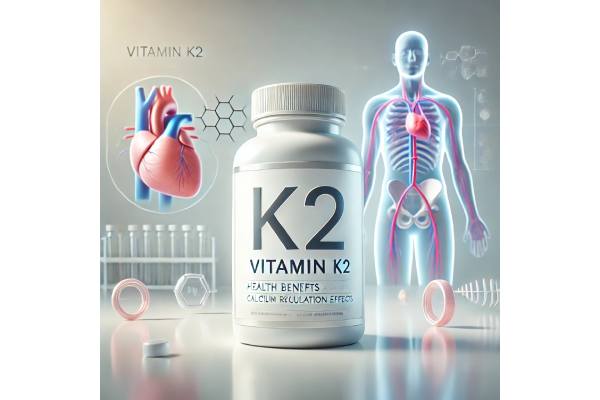
Vitamin K2 is a fat-soluble nutrient best known for “activating” proteins that move calcium to the right places in the body. Instead of letting calcium linger in soft tissues, K2 helps enable proteins that support normal blood clotting pathways and, more distinctively, guides calcium use in bones and away from blood vessels. That is why K2 is often discussed alongside bone density, fracture risk, and arterial health.
Unlike vitamin K1 (common in leafy greens), vitamin K2 comes in several forms—most often MK-4 and MK-7—with different absorption and duration in the body. This matters for choosing a supplement and setting realistic expectations.
K2 can be a practical option for people who do not get much vitamin K from food, have limited sun exposure and use vitamin D, or want a bone-focused strategy that goes beyond calcium alone—while still respecting important medication interactions.
Essential Insights for Vitamin K2
- Supports activation of osteocalcin and matrix Gla protein, which helps regulate where calcium is used in the body.
- Evidence is strongest for improving vitamin K status markers and some bone markers; “hard outcomes” vary by population and study design.
- Typical supplemental range is 90–200 mcg/day (MK-7), while 45 mg/day (MK-4) is a medical-dose approach used in some settings.
- Do not use without clinician guidance if you take warfarin or other vitamin K–antagonist anticoagulants.
- People with active clotting disorders or recent major cardiovascular events should only supplement under medical supervision.
Table of Contents
- What is vitamin K2, exactly?
- What does vitamin K2 do in the body?
- Does vitamin K2 help bones and heart health?
- How should you take vitamin K2?
- How much vitamin K2 per day?
- Side effects, interactions, and who should avoid
What is vitamin K2, exactly?
Vitamin K2 refers to a family of compounds called menaquinones. They all share a similar “vitamin K” backbone, but they differ in the length of a side chain. That side chain length affects how long they stay in the bloodstream and how they distribute in tissues—details that can influence supplement choice.
You will most commonly see:
- MK-4 (menaquinone-4): Found in small amounts in animal foods (like egg yolk and liver) and can also be made in the body from vitamin K1. MK-4 tends to have a shorter time in the blood, which is one reason higher doses have been used in some clinical contexts.
- MK-7 (menaquinone-7): Often derived from fermented foods (notably natto). MK-7 generally stays in circulation longer than MK-4, which is why many daily supplements use microgram doses of MK-7.
You may also see MK-9 or mixed menaquinones, especially in products emphasizing fermented sources.
A simple way to think about K2 is that it is less about “adding calcium” and more about directing calcium traffic. Calcium is necessary, but where it ends up matters. K2 supports the activation of vitamin K–dependent proteins that bind calcium—some in bone and some in blood vessel walls—helping the body manage calcium placement.
One important clarification: vitamin K2 is not a substitute for vitamin D, calcium, exercise, or medical osteoporosis treatment when those are indicated. Instead, it is best viewed as one tool in a broader bone-and-cardiometabolic plan.
Because K2 is fat-soluble, it is typically absorbed better with a meal containing fat. People who have trouble absorbing fats (certain digestive or liver conditions, bariatric surgery, or specific medications) may respond differently, and that can affect both benefits and safety considerations.
What does vitamin K2 do in the body?
Vitamin K2’s defining “job” is enabling a biochemical step called gamma-carboxylation. In plain terms, K2 helps switch certain proteins from an inactive form into an active form, so they can bind calcium effectively.
Two of the most discussed vitamin K–dependent proteins are:
- Osteocalcin: Produced by bone-forming cells (osteoblasts). When activated, osteocalcin can bind calcium and supports healthy bone mineralization.
- Matrix Gla protein (MGP): Found in blood vessel walls and other soft tissues. When activated, MGP helps inhibit inappropriate calcification in those tissues.
This is why discussions of K2 often connect bone and vascular topics. It is not that K2 “removes plaque” or acts like a drug; it supports normal physiology that regulates calcification processes.
K2 also plays a supporting role in normal blood clotting. However, clotting is more classically associated with vitamin K1 in the liver. K2’s unique interest is that it appears more involved in extra-hepatic (outside the liver) tissues in many models—though the practical takeaway is still the same: vitamin K intake can meaningfully affect anticoagulant medications that work by blocking vitamin K recycling.
You may see lab terms that reflect vitamin K status and protein activation:
- Undercarboxylated osteocalcin (ucOC): Higher levels often suggest lower vitamin K–dependent activation in bone-related pathways.
- Dephosphorylated undercarboxylated MGP (dp-ucMGP): Higher levels can indicate lower activation of MGP, often discussed as a marker of vitamin K status in vascular tissues.
These markers can improve with supplementation even when symptoms are not obvious. That is important because many people expect to “feel” vitamin K2 working. Often, it is a slow, quiet nutrient story—more about long-term maintenance than immediate sensation.
Finally, K2 is frequently paired with vitamin D3 because vitamin D supports calcium absorption and bone remodeling, while K2 supports activation of calcium-binding proteins. This pairing can be reasonable, but it also increases the importance of getting dosing and medical context right—especially if someone is using high-dose vitamin D or has conditions that predispose them to high blood calcium.
Does vitamin K2 help bones and heart health?
People usually consider vitamin K2 for two headline reasons: bone strength and cardiovascular calcification concerns. The evidence is nuanced, so it helps to separate “what consistently changes” from “what may change in some groups.”
What tends to improve more consistently
- Vitamin K status markers: Measures like undercarboxylated osteocalcin and dp-ucMGP often move in a favorable direction with K2 supplementation. This suggests the nutrient is doing its intended biochemical work.
- Some bone turnover markers: Certain studies and pooled analyses show changes in markers related to bone formation and resorption. These are early signals, not the same as fewer fractures.
Bone density and fractures
In research involving postmenopausal women and other higher-risk groups, K2—particularly certain dosing strategies—has sometimes been associated with maintaining or modestly improving bone mineral density at sites like the lumbar spine. Effects on fracture outcomes are more mixed: some analyses suggest benefit under specific conditions, while other well-designed trials do not show a clear reduction in fractures over the study period.
A practical interpretation is that K2 may be most relevant when:
- Baseline vitamin K intake is low,
- The person is older or postmenopausal,
- K2 is used alongside established bone supports (strength training, adequate protein, sufficient vitamin D, and clinically appropriate calcium),
- The timeframe is long enough to matter (often many months to years, not weeks).
Vascular calcification and arterial stiffness
Vitamin K2 is frequently marketed as a “heart health” supplement, but the most responsible framing is narrower: K2 supports activation of MGP, which is involved in calcification regulation. Whether that translates into measurable clinical improvements depends on population and context. Trials in very high-risk groups (for example, people on hemodialysis) illustrate this complexity: K2 can improve vitamin K status markers, yet may not reliably slow coronary artery calcification progression over the study window or at the tested dose.
So, if your main goal is “prevent arterial calcification,” K2 is not a stand-alone solution. The fundamentals—blood pressure control, smoking cessation, diabetes management, sleep, exercise, and appropriate medical therapy—remain far more influential.
Where K2 can still be a smart choice
- You want a bone-supportive nutrient that is not simply “more calcium.”
- You are taking vitamin D and want to ensure you are not neglecting vitamin K intake.
- You have dietary patterns that are low in vitamin K foods.
- You are looking for long-term maintenance support and can hold realistic expectations.
How should you take vitamin K2?
Most people get the best results from K2 when they treat it like a routine nutrient, not a quick-fix supplement. Here are the practical variables that matter.
1) Take it with food (and some fat)
Vitamin K2 is fat-soluble. Taking it with a meal that includes fat (even something as simple as yogurt, eggs, olive oil, nuts, or avocado) can improve absorption and reduce stomach upset.
2) Pick a form you can stay consistent with
- MK-7 is commonly taken once daily because it tends to remain in circulation longer.
- MK-4 has been used in much higher “pharmacologic” doses in some contexts, which is very different from typical over-the-counter microgram dosing. If you see MK-4 in a supplement at low microgram amounts, do not assume it matches the dosing used in clinical studies.
3) Consider pairing logic carefully
K2 is often paired with:
- Vitamin D3: Reasonable when D3 is needed, but avoid pushing D3 to very high doses without monitoring (especially if you have a history of kidney stones, high calcium, or parathyroid issues).
- Calcium: Not mandatory for everyone. If your diet already provides adequate calcium, adding more may not help and could be counterproductive for some people. Calcium needs should be individualized.
- Magnesium: Many people have low magnesium intake, and magnesium supports vitamin D metabolism and bone health. If you use D3, magnesium adequacy is often overlooked.
4) Give it enough time
For bone and vascular-related goals, think in terms of months, not days:
- 8–12 weeks may be enough to see changes in biochemical markers.
- 6–12 months is a more realistic window for shifts in bone turnover patterns.
- Multi-year habits matter most for bone density and calcification outcomes.
5) Know what to monitor
If you have medical risk factors, consider discussing lab and clinical monitoring with a clinician. Depending on your situation, useful checks may include:
- 25(OH)D (vitamin D status) if you take D3,
- Calcium and kidney function if you have a history of stones or kidney disease,
- Bone density testing (DXA) at clinically appropriate intervals if osteoporosis risk is a concern.
6) Avoid “stacking” blindly
It is easy to create a high-intensity supplement stack (high-dose D3 + calcium + K2) without a clear reason. A better approach is to identify the limiting factor: low dietary calcium, low vitamin D, low vitamin K intake, low protein, or lack of resistance training—and target that first.
How much vitamin K2 per day?
There is no single “perfect” K2 dose for everyone. The right dose depends on the form (MK-7 vs MK-4), your goal, diet, medications, and overall risk profile. Still, there are sensible ranges that match how K2 is commonly used.
Common daily supplemental ranges (general wellness)
- MK-7: 90–200 mcg/day is a frequent range in consumer supplements.
- Some people use up to 300 mcg/day under professional guidance, especially if the goal is improving vitamin K status markers, though higher is not automatically better.
Higher-dose clinical-style strategies
- MK-4: 45 mg/day has been used in certain medical contexts. This is milligrams, not micrograms—hundreds of times larger than typical MK-7 doses. This approach should be considered medical-level and discussed with a clinician.
How to choose a starting dose
A practical decision path:
- If you are new to K2 and not on anticoagulants, start with MK-7 90–120 mcg/day with food.
- If your diet is low in vitamin K foods or you are using vitamin D3 regularly, consider MK-7 120–200 mcg/day.
- If your goal is specifically bone support and you are higher risk (older age, postmenopausal, low bone density), discuss whether 200 mcg/day MK-7 makes sense and whether other interventions should be prioritized (strength training, adequate protein, fall-prevention, and clinically indicated medication).
Do you need to match vitamin K “adequate intake” numbers?
You may see general vitamin K intake targets expressed as:
- 90 mcg/day for adult women
- 120 mcg/day for adult men
These values refer to total vitamin K (mostly K1 from food), not specifically K2. If your diet includes leafy greens, you may already meet these numbers without a K2 supplement. K2 supplementation is more about targeted support and form choice than chasing a single daily intake number.
Special situations
- Older adults: May benefit from focusing on consistency and pairing with resistance training and protein rather than pushing doses.
- Vegetarians and people who do not eat fermented foods: Often have lower K2 intake and may be more likely to consider MK-7.
- Kidney disease or dialysis: This is a high-risk medical category. Do not self-prescribe high doses; evidence is mixed and medication complexity is common.
Finally, remember the “ceiling effect” pattern seen with many nutrients: once the body has enough to activate key proteins, additional amounts may produce diminishing returns, while interaction risks (especially with medications) remain.
Side effects, interactions, and who should avoid
Vitamin K2 is generally well tolerated at typical supplement doses, but “safe” does not mean “right for everyone.” The most important safety issues are medication interactions and specific medical conditions.
Common side effects (usually mild)
- Stomach discomfort, nausea, or appetite changes (often improved by taking with food)
- Headache or light dizziness in sensitive individuals (less common and non-specific)
- Skin reactions are rare but possible with any supplement (stop if you develop rash or swelling)
If you feel unwell after starting K2, pause and reassess: dose, timing, product quality, and whether another supplement in your stack is the real cause.
The major interaction: warfarin and vitamin K antagonists
If you take warfarin (or another vitamin K–antagonist anticoagulant), vitamin K intake changes can alter how the medication works. This can increase clotting risk or bleeding risk depending on how dosing and monitoring shift. Do not add K2 without the involvement of the clinician managing your anticoagulation.
Other medication considerations
- If you take medications that affect fat absorption (some weight-loss or lipid-lowering strategies), K2 absorption may be reduced.
- If you take high-dose vitamin D and calcium together, discuss monitoring if you have kidney stone history, kidney disease, or known high blood calcium risk. K2 is not a guarantee against high calcium problems.
Who should avoid vitamin K2 unless a clinician approves
- People taking warfarin or other vitamin K–antagonist anticoagulants
- People with active clotting disorders, recent unexplained clots, or recent major cardiovascular events where anticoagulation strategy is still being stabilized
- People with significant liver disease affecting clotting factors (vitamin K metabolism and clotting balance can be complex)
- People with advanced kidney disease or on dialysis without specialist guidance (studies show mixed clinical outcomes, and medication complexity is common)
- Pregnant or breastfeeding individuals considering high-dose supplementation beyond prenatal guidance (discuss with an obstetric clinician)
Quality and labeling pitfalls
K2 products vary widely. Watch for:
- Confusing mcg vs mg labeling (this is a common and meaningful difference)
- Proprietary blends that do not state the exact MK form and dose
- “Mega-dose” stacks that combine high-dose D3, calcium, and K2 without a clear rationale
A careful, medically aware approach is especially important because vitamin K sits at the intersection of bone health and clotting physiology—two systems where unintended changes can matter.
References
- Vitamin K – Health Professional Fact Sheet 2021 (Guideline)
- Efficacy of vitamin K2 in the prevention and treatment of postmenopausal osteoporosis: A systematic review and meta-analysis of randomized controlled trials 2022 (Systematic Review)
- Vitamin K supplementation and vascular calcification: a systematic review and meta-analysis of randomized controlled trials 2023 (Systematic Review)
- Randomized Controlled Clinical Trial of the Effect of Treatment with Vitamin K2 on Vascular Calcification in Hemodialysis Patients (Trevasc-HDK) 2023 (RCT)
- The effect of vitamin K2 supplementation on bone turnover biochemical markers in postmenopausal osteoporosis patients: a systematic review and meta-analysis 2025 (Systematic Review)
Disclaimer
This article is for educational purposes only and does not provide medical advice, diagnosis, or treatment. Vitamin K2 can interact with prescription medications—especially anticoagulants such as warfarin—and may be inappropriate for certain medical conditions. If you are pregnant, breastfeeding, managing kidney or liver disease, have a history of blood clots, or take any prescription medication, consult a qualified clinician before starting vitamin K2 or changing your dose. Seek urgent care for symptoms of an allergic reaction, severe side effects, or signs of abnormal bleeding or clotting.
If you found this guide useful, please share it on Facebook, X (formerly Twitter), or any platform you prefer, and follow us on social media. Your support through sharing helps our team continue producing high-quality, trustworthy health content.