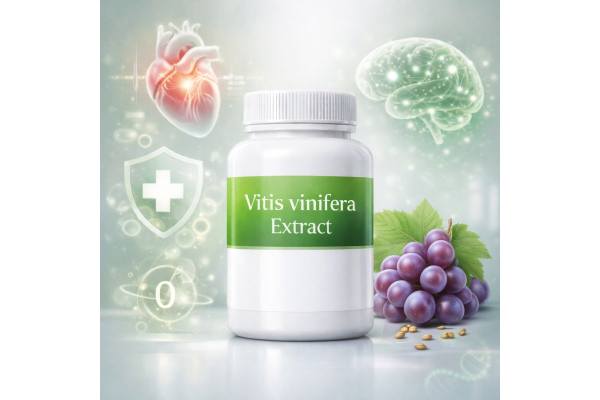
Vitis vinifera extract is an umbrella term for supplements made from the common grape vine—most often grape seed extract, but sometimes grape skin, grape fruit, or red vine leaf extracts. People reach for it for one main reason: grape compounds are unusually rich in polyphenols, especially proanthocyanidins (often shortened to OPCs), which are studied for supporting blood-vessel function, circulation comfort, and antioxidant balance.
Its advantage is flexibility. Some users want practical help with heavy legs or ankle swelling after long days. Others are looking for modest support for blood pressure, or for skin aging concerns linked to oxidative stress. The challenge is that “Vitis vinifera extract” can mean very different products with very different strengths. This guide shows you how to identify what you’re actually buying, how to use it in a trackable way, what dose ranges are realistic, and what side effects and interactions to respect—especially if you take blood thinners or manage chronic conditions.
Quick Overview
- May support vein comfort, leg heaviness, and swelling when paired with movement and compression habits.
- Can modestly improve blood pressure markers in some people, but it is not a replacement for prescribed therapy.
- Typical supplemental range is 150–300 mg/day for standardized grape seed extract, depending on the goal and product.
- Avoid or use only with clinician guidance if you take anticoagulants or antiplatelet drugs or have upcoming surgery.
- People who are pregnant or breastfeeding, or who have bleeding disorders, should generally avoid concentrated extracts unless advised by a clinician.
Table of Contents
- What is Vitis vinifera extract?
- What are the main benefits people notice?
- Does it help blood pressure and heart health?
- How to choose a quality extract
- How much should you take and for how long?
- Side effects, interactions, and who should avoid
What is Vitis vinifera extract?
“Vitis vinifera extract” is not one ingredient. It is a label family that can include extracts from different parts of the grape vine, each with a different polyphenol profile. Most supplements sold under this name are grape seed extract (often abbreviated GSE), because grape seeds concentrate proanthocyanidins, a class of flavonoids known for their affinity for connective tissue and blood vessels. Other versions include grape skin or grape fruit extracts (sometimes richer in anthocyanins or resveratrol-like compounds), and red vine leaf extracts used for leg swelling and chronic venous discomfort in some regions.
What it contains, in plain language
A quality product usually highlights one or more of these:
- Proanthocyanidins (OPCs): the “signature” compounds of grape seed extract
- Catechins and related flavanols: supporting antioxidant capacity and vascular signaling
- Other polyphenols: depending on whether the extract comes from seed, skin, or leaf
You do not need to memorize chemistry, but you do need to recognize that “polyphenols” are a broad category. A label that states how much of a key fraction you’re getting is more informative than a label that just says “grape extract 500 mg.”
Why people use it
Most real-world use falls into three buckets:
- Vein and circulation comfort: leg heaviness, a tendency toward swelling, discomfort from prolonged standing, or support alongside compression and walking
- Cardiometabolic support: modest changes in blood pressure, endothelial function, and oxidative stress markers in some people
- Skin and aging support: a secondary use, usually tied to antioxidant and collagen-related narratives
A realistic framing is that Vitis vinifera extract supports “terrain,” not emergencies. It is not designed to treat acute chest pain, sudden one-sided leg swelling, or severe hypertension. It is better suited to persistent, mild-to-moderate concerns where gradual improvement is meaningful.
Why product identity matters so much
Two bottles can look similar yet behave differently:
- One might provide 150 mg of a standardized grape seed extract taken twice daily.
- Another might provide 600 mg of grape powder with unknown polyphenol content.
- A third might blend grape seed with pine bark, citrus bioflavonoids, or resveratrol, making it hard to tell what caused any benefit.
If you want a trial you can trust, start by identifying which “Vitis vinifera” you actually have—seed, skin, leaf, or a blend—and whether it is standardized.
What are the main benefits people notice?
Most people don’t take Vitis vinifera extract to chase lab numbers—they take it to feel better in everyday life: less heaviness, less puffiness, and more “comfort margin” during long days on their feet. The most practical benefits are tied to microcirculation, the tiny vessels and veins that influence fluid movement and tissue pressure.
Vein comfort and leg heaviness
When grape seed extract is used for venous symptoms, people often describe:
- less end-of-day leg heaviness
- reduced aching after standing
- improved sense of “lightness” during walking or stair climbing
- less tightness around socks or shoes
A key point: supplements rarely beat physics. If your job requires long standing, you will usually get the best results when you combine an extract with:
- short walking breaks (even 3–5 minutes every hour helps)
- calf raises or ankle pumps when seated
- leg elevation for 10–15 minutes in the evening
- compression stockings if recommended for your situation
Think of the extract as a support layer, not the whole plan.
Swelling tendencies and fluid balance
Some people use grape-derived extracts for mild ankle swelling, especially in warm weather, travel, or long sedentary stretches. The likely pathway is not “water loss” like a diuretic. It is more about capillary permeability and venous return—how easily fluid shifts out of vessels and how efficiently it returns.
A helpful way to track this benefit is simple and practical:
- measure ankle circumference at the same time each evening for 2–3 weeks
- or take a weekly “shoe fit” note: same shoes, same time, same conditions
- rate swelling sensation from 0–10 nightly
If you notice no change after a structured trial, that information is valuable. It may mean you need a different approach or that swelling is driven by another cause.
Skin and connective tissue support
Grape seed extract is also marketed for collagen and skin aging. The strongest practical expectation is not “wrinkle reversal,” but support for oxidative-stress balance and the collagen environment over time. If you try it for skin, treat it as a slow strategy:
- consistent dosing for at least 8–12 weeks
- paired with basics that actually move the needle (sun protection, adequate protein, and sleep)
Who is most likely to notice benefits
People tend to report the best “felt” improvements when their symptoms are:
- mild to moderate, stable, and activity-related
- worse with heat, standing, or travel
- improved by movement and elevation (a sign the circulatory component is real)
If symptoms are severe, rapidly worsening, or one-sided, skip supplementation and get evaluated.
Does it help blood pressure and heart health?
Interest in grape seed extract and cardiovascular health is driven by a consistent theme: polyphenols can influence endothelial function. The endothelium is the inner lining of blood vessels that helps regulate tone (how relaxed or constricted vessels are), inflammation signaling, and oxidative stress. When endothelial function improves, blood pressure can shift modestly in the right direction for some people.
What “help” usually looks like
For blood pressure, the most realistic outcome is a small reduction, not a medication-level drop. Many users who see a benefit describe it as:
- slightly lower home readings over several weeks
- improved “stability” (fewer random spikes)
- better response when combined with exercise and sodium awareness
If you already have well-controlled blood pressure on medication, adding an extract may do little—or it may lower readings enough that you should monitor for lightheadedness, especially when standing quickly.
Who might respond best
Based on how these trials often play out, the highest-likelihood responders are people who:
- have elevated or borderline blood pressure
- have diet patterns low in polyphenol-rich foods
- have inconsistent sleep or high stress (where small vascular shifts matter)
- can commit to consistent daily dosing and consistent measurement
Home tracking makes a difference. If you decide to try grape seed extract for blood pressure, use a clean protocol:
- measure at the same time daily (or twice daily), seated, after 5 minutes of rest
- avoid caffeine, nicotine, and exercise for 30 minutes before measuring
- record the average of two readings, not just one
What it does not replace
Grape seed extract does not replace:
- prescribed antihypertensive medication
- evaluation for secondary causes of hypertension
- core lifestyle levers: sodium reduction when appropriate, aerobic activity, weight management, alcohol moderation, and sleep apnea screening
If your blood pressure is in a high range, treat it as a medical condition first. Supplements are optional add-ons, not primary therapy.
A smart way to pair it with lifestyle
If you want the best chance of a noticeable shift, pair a grape seed extract trial with one “high-yield” change you can keep:
- a daily 20–30 minute brisk walk
- earlier and lighter dinners (especially if sleep is poor)
- replacing one processed snack with a polyphenol-rich option (berries, cocoa, nuts)
- reducing alcohol frequency in the week
This avoids the trap of taking a supplement while keeping every other lever stuck.
How to choose a quality extract
“Vitis vinifera extract” quality is mostly about transparency. The goal is to know what fraction of the capsule is likely to be active polyphenols and whether the dose matches how it has been studied.
Start by identifying the plant part
Look for wording such as:
- grape seed extract (most common, often proanthocyanidin-focused)
- red vine leaf extract (often used for leg swelling and venous discomfort)
- grape skin extract or whole grape extract (polyphenol profile differs)
If your goal is leg heaviness and venous comfort, seed or leaf extracts are the most typical choices. If your goal is broad antioxidant intake, any could fit—but standardization still matters.
Prefer standardization over vague milligrams
Two labels can both say “300 mg grape seed extract,” but one may be weak and one may be potent. Better labels specify something like:
- a percentage of proanthocyanidins
- a standardized polyphenol content
- a named extract preparation with consistent manufacturing
You do not need the highest percentage on the shelf. You need a product that is consistent enough that your trial results mean something.
Watch for blends that confuse the outcome
Many formulas pair grape seed extract with:
- pine bark extract
- citrus bioflavonoids
- resveratrol
- vitamin C or vitamin E
These combinations are not automatically bad, but they make it harder to interpret what helped. If you’re troubleshooting symptoms or you want a clean experiment, start with a single-ingredient or clearly dosed product.
Match the form to your tolerance
- Capsules or tablets: simplest for consistency
- Powders: can work, but taste and dosing accuracy can be barriers
- Liquid extracts: less common for grape seed; dosing may be less standardized
If you are prone to reflux or nausea, taking the extract with food may be more comfortable. If you want a circulation-focused trial, splitting doses (morning and evening) can be easier on the stomach and may improve adherence.
How to know your product is “working,” not just existing
Choose one primary outcome and one secondary outcome, then track them:
- primary: leg heaviness score (0–10) or blood pressure averages
- secondary: ankle circumference, travel swelling, or exercise comfort
A supplement that “works” should change something you can observe, not just something you hope is happening.
How much should you take and for how long?
Dosage depends on the specific extract type and the goal. Because labels vary, it helps to anchor dosing to the forms most often used in clinical studies of grape seed extract for vascular outcomes.
Common dose ranges people use
For standardized grape seed extract:
- 150 mg twice daily is a commonly used pattern in venous-focused trials and protocols.
- A general daily range for many goals is 150–300 mg per day of a standardized extract, with some products used up to 300 mg twice daily in specific contexts.
For red vine leaf extract, dosing depends strongly on the preparation, so follow the product’s standardized guidance rather than trying to translate it from grape seed doses.
How long to trial it
A practical timeline by goal:
- Vein comfort and swelling tendencies: give it 8–12 weeks for a fair trial, especially if symptoms are chronic and activity-related.
- Blood pressure support: evaluate after 6–8 weeks with consistent home readings.
- Skin or aging support: commit to 12 weeks before deciding; changes are usually subtle.
Stop early if you experience side effects that do not resolve with dose changes.
How to take it for the best chance of benefit
- Take with food if you get stomach upset.
- Split doses if you’re taking 300 mg/day or more.
- Keep your routine stable—changing many variables at once makes results hard to interpret.
- For vein comfort goals, pair the supplement with a daily movement habit. Even a short walk often amplifies perceived benefit.
A simple trial protocol you can actually follow
- Pick a standardized grape seed extract and start at 150 mg/day for one week.
- If tolerated, move to 150 mg twice daily.
- Track one primary metric (heaviness score or blood pressure average) weekly.
- At week 8, decide: continue, adjust, or stop.
This approach is conservative, measurable, and easier to evaluate than jumping to high doses immediately.
When “more” is not better
Higher doses do not always mean better outcomes. They can increase the chance of headaches, nausea, or dizziness and can complicate interactions if you take medications. If you’re not seeing benefit by 8–12 weeks at a reasonable dose, the next best step is often to reassess the diagnosis or the product type—not to escalate indefinitely.
Side effects, interactions, and who should avoid
Vitis vinifera extracts are often well tolerated, but safety depends on dose, product composition, and your medication profile. Because these extracts can influence vascular signaling and platelet-related pathways in some contexts, interaction awareness matters more than many people expect.
Common side effects
Most side effects are mild and tend to improve with taking it with food or lowering the dose:
- nausea or stomach discomfort
- headache
- dizziness or lightheadedness
- mild skin reactions in sensitive individuals
If you experience rash, hives, swelling, or breathing difficulty, treat it as a possible allergy and seek urgent care.
Medication interactions to take seriously
Use caution and get clinician guidance if you take:
- anticoagulants (blood thinners) or antiplatelet drugs
- regular high-dose NSAIDs (bleeding risk and GI irritation concerns)
- multiple supplements that affect circulation at once (for example, high-dose fish oil plus other polyphenol concentrates)
If you bruise easily, have a bleeding disorder, or have had bleeding complications, do not self-prescribe concentrated grape extracts.
Who should avoid it or use only with clinician oversight
- pregnant or breastfeeding individuals
- people with upcoming surgery or invasive dental procedures
- anyone with unexplained bruising, bleeding, or anemia symptoms
- those with significant liver or kidney disease unless cleared by a clinician
- people with severe, unexplained swelling—especially one-sided swelling or swelling with pain and warmth
Red flags that should not be “treated with supplements”
Seek medical evaluation rather than experimenting with extracts if you have:
- sudden one-sided leg swelling, redness, warmth, or calf pain
- chest pain, shortness of breath, or fainting
- black stools, vomiting blood, or persistent abdominal pain
- blood pressure readings in a dangerous range, especially with symptoms
How to use it safely if you are a good candidate
- Start low and increase only if tolerated.
- Keep a short list of what you are taking and share it with a pharmacist if you add new supplements.
- Use a time-limited trial and reassess—long-term use should have a reason, not inertia.
- If you are using it for blood pressure, monitor readings so you can catch unexpectedly low values.
Used thoughtfully, Vitis vinifera extract can be a reasonable adjunct for venous comfort or modest cardiometabolic support. Used casually, it can become a confusing variable in a situation that deserved clearer diagnosis.
References
- Vitis vinifera seed extract reduces venous reflux time in patients with varicose veins: VICTORY randomized controlled trial – PubMed 2025 (RCT)
- Vitis Vinifera Seed Extract Versus Micronized Purified Flavonoid Fraction for Patients with Chronic Venous Disease: A Randomized Noninferiority Trial – PubMed 2024 (RCT)
- The effect of grape (Vitis vinifera) seed extract supplementation on flow-mediated dilation, blood pressure, and heart rate: A systematic review and meta-analysis of controlled trials with duration- and dose-response analysis – PubMed 2022 (Systematic Review and Meta-analysis)
- The effect of grape seed extract supplementation on oxidative stress and inflammation: A systematic review and meta-analysis of controlled trials – PubMed 2021 (Systematic Review and Meta-analysis)
- Grape Seed – LiverTox – NCBI Bookshelf 2023 (Safety Monograph)
Disclaimer
This article is for educational purposes only and does not provide medical advice, diagnosis, or treatment. Vitis vinifera extracts (including grape seed and vine leaf extracts) can interact with medications, especially anticoagulants and antiplatelet drugs, and may be inappropriate for people who are pregnant, breastfeeding, have bleeding disorders, or have upcoming surgery. If you have severe or worsening symptoms, sudden one-sided leg swelling, unexplained bruising or bleeding, chest pain, shortness of breath, or dangerously high blood pressure readings, seek urgent medical evaluation.
If you found this guide helpful, please share it on Facebook, X (formerly Twitter), or any platform you prefer, and follow us on social media. Your support through sharing helps our team continue producing high-quality, trustworthy health content.