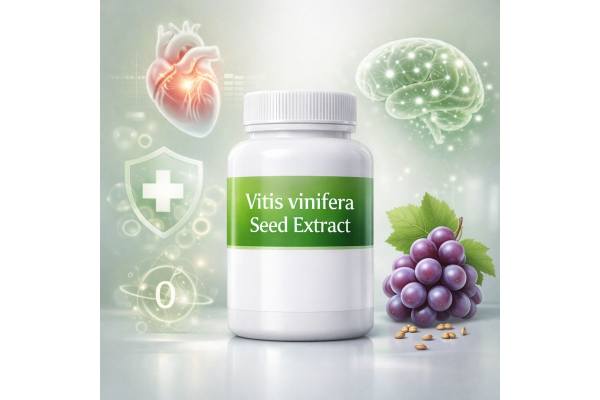
Vitis vinifera seed extract—better known as grape seed extract—is a concentrated source of grape polyphenols, especially oligomeric proanthocyanidins (often shortened to OPCs). People use it for practical, body-level goals: steadier circulation, healthier blood-vessel function, and support for blood pressure that trends high. It is also popular for “oxidative stress” support, which can matter for endurance, recovery, and skin aging over time.
Its main advantage is that it is measurable and standardizable. A quality product often states a defined polyphenol or proanthocyanidin percentage, making it easier to choose a dose and run a clean, trackable trial. Still, results vary by person and by product. This guide clarifies what grape seed extract is, which benefits are best supported, how to choose a credible supplement, how much to take for different goals, and what side effects and interactions deserve real caution—especially if you take blood thinners or have upcoming surgery.
Key Takeaways
- May modestly reduce diastolic blood pressure and support vascular function in some adults over 6–12 weeks.
- Can support leg comfort and venous symptoms when paired with walking, elevation, and compression when appropriate.
- Common supplemental range is 150–300 mg/day of a standardized extract, with some studies using 150 mg twice daily.
- Use caution with anticoagulants and antiplatelet drugs, and stop before surgery unless your clinician says otherwise.
- Avoid during pregnancy and breastfeeding, and avoid if you have bleeding disorders unless supervised by a clinician.
Table of Contents
- What is Vitis vinifera seed extract?
- Which benefits are most supported?
- Does it help blood pressure and circulation?
- How to use it for real-world goals
- How to choose a standardized product
- Dosage: how much, when, and how long
- Side effects, interactions, and who should avoid
What is Vitis vinifera seed extract?
Vitis vinifera seed extract is made by extracting bioactive compounds from grape seeds and concentrating them into capsules, tablets, powders, or liquids. Most supplements marketed as “grape seed extract” emphasize their content of proanthocyanidins, a family of polyphenols also found in cocoa, some berries, and pine bark. In grape seeds, these compounds are often present as oligomers (short chains), which is why you may see “OPCs” on labels.
A useful distinction: grape seed extract is not the same as grape leaf extract or grape skin extract.
- Seed extract is typically chosen for vascular and blood pressure support and for broader antioxidant effects.
- Leaf extracts are most commonly associated with heavy legs and swelling support.
- Skin extracts are sometimes used for color-rich polyphenols, but dosing and evidence can differ.
What “standardized” means
In practice, “standardized” means the product promises a consistent amount of a key fraction—often a percentage of total polyphenols or proanthocyanidins. This matters because “300 mg grape seed extract” can describe a weak powder or a potent extract. Standardization makes it easier to compare products and to reproduce results.
Why people take it
Most use falls into three overlapping buckets:
- Vascular support: blood pressure trends, endothelial function, circulation comfort
- Venous symptoms: leg heaviness, mild swelling, travel-related puffiness (often as an add-on to lifestyle steps)
- Oxidative stress balance: recovery, general wellness, and sometimes skin aging support
Think of grape seed extract as a “systems support” supplement. It is not intended for emergencies or acute symptoms. If you have sudden one-sided leg swelling, chest pain, shortness of breath, or dangerously high blood pressure readings, you need medical evaluation—not a supplement trial.
Which benefits are most supported?
Grape seed extract is heavily marketed, so it helps to separate plausible, measurable benefits from fuzzy promises. The best-supported benefits are typically modest, gradual, and easiest to notice when you track outcomes.
1) Blood pressure support
A consistent theme in controlled trials is small improvements, especially in diastolic blood pressure for some users. This is not a substitute for prescribed therapy, but it can be a reasonable adjunct for adults whose readings run mildly high and who can commit to consistent dosing and consistent measurement.
Practical signs you are assessing this benefit correctly:
- You use the same cuff, same arm, same time window, and the same seated rest routine.
- You evaluate weekly averages, not single readings.
- You keep caffeine, alcohol, and sleep patterns relatively stable during the trial.
2) Venous and leg comfort support
Although grape leaf extract is the more classic “heavy legs” ingredient, standardized grape seed extracts are also used in venous-support contexts. Users commonly describe:
- less end-of-day heaviness
- fewer “sock marks” from mild swelling
- improved comfort during travel or prolonged standing
These effects are usually more noticeable when combined with movement, leg elevation, and compression when appropriate.
3) Oxidative stress and inflammation markers
Controlled trials often evaluate biomarkers of oxidative stress. For everyday users, the practical translation is not “you will feel antioxidants working,” but that the extract may support recovery and vascular resilience over time—particularly in people with low polyphenol intake from foods.
4) Skin appearance and aging narratives
Grape seed extract is sometimes used for collagen support. The most realistic expectation is subtle: support for the skin’s oxidative environment and microcirculation rather than dramatic cosmetic change. If skin is your goal, treat this as a slow strategy (8–12+ weeks), and make sure you also address higher-impact fundamentals like sun protection and adequate protein.
Does it help blood pressure and circulation?
When grape seed extract helps, the effect is usually explained through blood-vessel biology rather than “detox” or water loss. Blood vessels are lined by the endothelium, which helps regulate vessel tone, nitric oxide signaling, and inflammatory traffic. Polyphenols can influence these pathways, which is why grape seed extract is often framed as “endothelial support.”
What results tend to look like
For many adults, a realistic best-case outcome is a modest shift in blood pressure markers over several weeks. That might mean:
- a slightly lower diastolic average
- fewer high spikes after stressful days
- improved consistency in home readings
These changes matter most when you are on the borderline. If your blood pressure is already excellent, you may not see anything meaningful.
Who is more likely to benefit
People tend to report better results if they:
- have elevated or borderline blood pressure
- are low in polyphenol-rich foods (berries, cocoa, colorful plants)
- are willing to track readings and stick to a routine
- address one major lifestyle lever at the same time (walking, sleep, sodium, alcohol)
A simple pairing strategy that keeps the trial interpretable:
- Keep the supplement dose stable.
- Add one consistent habit, such as a daily 20–30 minute brisk walk.
- Avoid changing several supplements at once.
Circulation support beyond blood pressure
Circulation is broader than blood pressure. Some users try grape seed extract for cold hands and feet, exercise “pump,” or general vascular comfort. These outcomes are harder to measure, so it helps to define one observable marker before you start:
- walking comfort on stairs
- ankle circumference change from morning to evening
- leg heaviness rating after a work shift
- post-exercise perceived recovery
If you cannot define how you will judge success, it becomes easy to continue a supplement indefinitely without knowing whether it is doing anything.
How to use it for real-world goals
Grape seed extract works best when you treat it like a structured experiment: one product, one dose plan, one or two outcomes, and a time boundary. Below are practical ways people use it, with simple tracking ideas.
Goal: blood pressure support
A clean approach:
- Measure blood pressure for 7 days before starting (same routine daily).
- Start grape seed extract and keep your routine stable for 6–8 weeks.
- Compare weekly averages to your baseline week.
Helpful habits that improve signal quality:
- Sit quietly for 5 minutes before measuring.
- Take two readings, 1 minute apart, and record the average.
- Keep caffeine and exercise at least 30 minutes away from measurements.
Goal: leg comfort, swelling, travel support
Grape seed extract is not a replacement for compression or movement. It is best used as an add-on to simple circulation mechanics:
- calf raises and short walks during the day
- leg elevation in the evening (10–20 minutes)
- compression socks during travel or long standing if appropriate
Track outcomes with:
- evening ankle circumference 2–3 times per week
- heaviness score from 0–10 after your typical workday
- “shoe fit” notes: whether the same shoes feel tighter by evening
Goal: recovery and oxidative stress support
This is the hardest to quantify, so focus on tangible proxies:
- perceived soreness duration after a consistent workout
- readiness-to-train rating (0–10) the next morning
- sleep quality notes (since recovery is deeply tied to sleep)
If you want meaningful insight, keep training volume and protein intake stable during the trial window.
Common mistakes that blur results
- Switching products mid-trial because a bottle “feels weak”
- Starting three supplements at once
- Taking it inconsistently, then judging it harshly
- Expecting a stimulant-like “kick” (this is not that kind of supplement)
- Ignoring obvious drivers like prolonged sitting, high-salt meals, poor sleep, or dehydration
A supplement trial is only as good as your ability to notice change.
How to choose a standardized product
The biggest quality issue with grape seed extract is not whether grapes are healthy. It is whether the product is standardized, tested, and labeled clearly enough to match studied doses.
Look for clear identity and strength
A quality label usually includes:
- “grape seed extract” (not just “grape” or “Vitis vinifera extract”)
- a defined amount per serving in mg
- a standardization statement (for example, a percentage of polyphenols or proanthocyanidins)
Avoid products that rely on vague language like “high potency” without quantifying what that means.
Prefer single-ingredient clarity for your first trial
Blends can be useful, but they hide what is doing what. If you are testing grape seed extract for blood pressure or circulation, consider starting with a product that is primarily grape seed extract and does not stack multiple “vascular” botanicals. That makes side effects easier to interpret and success easier to attribute.
Third-party testing and simple manufacturing cues
You do not need a perfect supplement, but you do want fewer unknowns. Helpful signals include:
- third-party testing claims (identity and contaminants)
- batch or lot numbers and an expiration date
- transparent company contact information
If you have sensitivities, also check excipients (fillers) and capsule material.
Match form to your adherence
- Capsules/tablets: best for consistency, easiest to track
- Powders: can work, but dosing accuracy and taste are common barriers
- Liquids: vary widely; harder to compare to studied dosing
If adherence is a challenge, choose once-daily dosing when possible. Consistency beats complexity.
Red flags that suggest you should choose differently
- Proprietary blends that do not show the grape seed extract dose
- Claims that promise medical cures
- Labels that list only “grape complex” without seed specificity
- Doses that look enormous but have no standardization information
Your goal is a product that behaves predictably, so your results mean something.
Dosage: how much, when, and how long
Dosage is where grape seed extract becomes practical. The best dose depends on your goal, the product’s standardization, and your tolerance.
Common daily ranges
For standardized grape seed extract, many adults use:
- 150–300 mg per day as a general range
- 150 mg twice daily in some venous-support trials and protocols
- Up to 300 mg twice daily in certain study contexts, though higher dosing increases the chance of side effects and may be unnecessary for most people
If your product is not standardized, these ranges become much less meaningful, which is another reason standardization matters.
How to start
A conservative ramp that fits many people:
- Start at 150 mg/day for 7 days.
- If tolerated, increase to 300 mg/day (either once daily or split).
- Maintain for your full trial period.
If you are sensitive, stay at the lower dose longer. If you are using it alongside medication for blood pressure, monitor readings and symptoms (lightheadedness, fatigue) more closely.
How long to trial it
- Blood pressure: 6–8 weeks of consistent dosing and consistent measurement
- Venous comfort and leg heaviness: 8–12 weeks, paired with movement and elevation habits
- Recovery or skin goals: at least 8–12 weeks, with realistic expectations
Avoid “forever supplementation” without reassessment. A time-limited trial creates clarity.
Timing with food
- Take with food if you experience nausea or stomach discomfort.
- Splitting doses (morning and evening) can improve tolerance for 300 mg/day or higher.
- If you forget doses frequently, choose the simplest schedule you can actually follow.
When dose changes are not the right move
If you see no benefit after a full trial at a reasonable dose, the next step is often not “double it.” Better next steps:
- confirm you are using a standardized seed extract
- tighten measurement habits (blood pressure routine, swelling tracking)
- reassess whether the symptom pattern fits the supplement’s best use
- consider clinician evaluation for underlying causes
More is not always better, and it is rarely better than better data.
Side effects, interactions, and who should avoid
Grape seed extract is often well tolerated, but safety depends on dose, product quality, and your medical context. The most important risk category is interaction with medications that affect bleeding, clotting, or blood pressure.
Common side effects
These are usually mild and may improve with dose reduction or taking with food:
- stomach upset, nausea, or loose stools
- headache
- dizziness or lightheadedness
- mild itchy skin or rash in sensitive individuals
If you develop hives, facial swelling, wheezing, or difficulty breathing, treat it as a possible allergy and seek urgent care.
Interactions to take seriously
Use caution and consult a clinician or pharmacist if you take:
- anticoagulants or antiplatelet medications
- frequent high-dose NSAIDs
- multiple supplements that may influence bleeding risk
Also monitor carefully if you take blood pressure medication, since even a modest additional lowering effect can increase dizziness in some people.
Who should generally avoid grape seed extract
- pregnant or breastfeeding individuals
- people with bleeding disorders or unexplained easy bruising
- those scheduled for surgery or invasive dental procedures (unless your clinician advises otherwise)
- children and adolescents unless specifically recommended by a qualified clinician
Red flags that require medical evaluation, not supplementation
Do not self-treat with grape seed extract if you have:
- sudden one-sided leg swelling, warmth, redness, or calf pain
- chest pain, shortness of breath, fainting, or severe dizziness
- black stools, vomiting blood, or unexplained anemia symptoms
- consistently very high blood pressure readings or symptoms of hypertensive urgency
Used thoughtfully, grape seed extract can be a reasonable adjunct for modest vascular support. Used casually, it can become a confusing variable that delays the care you actually needed.
References
- Vitis vinifera seed extract reduces venous reflux time in patients with varicose veins: VICTORY randomized controlled trial – PubMed 2025 (RCT)
- Vitis Vinifera Seed Extract Versus Micronized Purified Flavonoid Fraction for Patients with Chronic Venous Disease: A Randomized Noninferiority Trial – PubMed 2024 (RCT)
- The effect of grape (Vitis vinifera) seed extract supplementation on flow-mediated dilation, blood pressure, and heart rate: A systematic review and meta-analysis of controlled trials with duration- and dose-response analysis – PubMed 2022 (Systematic Review and Meta-analysis)
- The effect of grape seed extract supplementation on oxidative stress and inflammation: A systematic review and meta-analysis of controlled trials – PubMed 2021 (Systematic Review and Meta-analysis)
- Grape Seed – LiverTox – NCBI Bookshelf 2023 (Safety Monograph)
Disclaimer
This article is for educational purposes only and does not provide medical advice, diagnosis, or treatment. Dietary supplements, including Vitis vinifera seed extract (grape seed extract), can cause side effects and may interact with medications—especially anticoagulants, antiplatelet drugs, and blood pressure medicines. Avoid use during pregnancy and breastfeeding unless advised by a qualified clinician. Seek prompt medical care for sudden one-sided leg swelling, chest pain, shortness of breath, fainting, signs of bleeding, or dangerously high blood pressure readings. Always consult a healthcare professional if you have chronic conditions or take prescription medications before starting a new supplement.
If you found this guide helpful, please share it on Facebook, X (formerly Twitter), or any platform you prefer, and follow us on social media. Your support through sharing helps our team continue producing trustworthy health content.