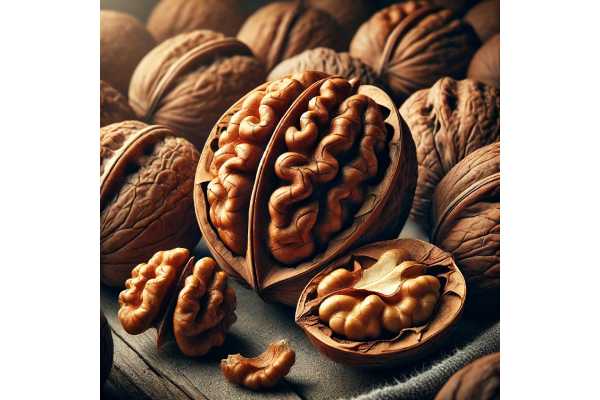
Walnuts are one of the most researched nuts—and for good reason. A small handful delivers plant omega-3 (alpha-linolenic acid), fiber, and polyphenols in a package that works for breakfast bowls, salads, baking, and savory dishes. Their mellow bitterness comes from protective phenolics concentrated in the thin skin, while the kernel supplies mostly unsaturated fats that support heart-smart swaps. Whether you choose English (Persian) walnuts for everyday cooking or the more robust black walnuts for desserts and sauces, you get a nutrient-dense, shelf-friendly pantry staple. Below, you’ll find a practical guide to selecting quality walnuts, comparing them with other nuts, storing them to prevent rancidity, and using gentle heat to protect delicate fats. You’ll also see an evidence-based view of potential benefits—from lipids to vascular function and cognition—plus clear safety advice for people with allergies or specific medical needs.
Top Highlights
- 1 oz (28 g) daily provides ~2.5 g ALA omega-3, fiber, and minerals.
- Replacing saturated fat with walnuts may modestly lower LDL and improve lipoprotein profiles.
- Tree nut allergy can cause severe reactions; avoid and carry an action plan if allergic.
- Typical serving: 28 g (about 14 halves) once daily; adjust for energy needs.
- People with nut allergy or a history of oxalate kidney stones should limit or avoid.
Table of Contents
- Walnuts: Detailed Overview
- Walnuts Nutrition Profile
- Walnut Health Benefits
- Risks, Allergies and Interactions
- Buying, Sustainability and Storage
- Preparation and Nutrient Retention
- Portions, Comparisons and FAQs
Walnuts: Detailed Overview
Walnuts (Juglans regia, often called English or Persian walnuts) are drupes—botanically different from legumes or true seeds—whose edible “nut” is the two-lobed kernel we recognize. Flavor varies by cultivar: Chandler and Hartley tend to be mild and buttery; Franquette and Lara can be more robust; black walnut (Juglans nigra) is intensely aromatic with a woodsy note prized in baking and confectionery. The thin, papery pellicle is rich in polyphenols (notably ellagitannins), contributing both antioxidants and a pleasant, tea-like astringency that balances sweetness in fruit, roasted squash, or honey-based dishes.
Nutritionally, walnuts stand out among nuts for their alpha-linolenic acid (ALA) content—the plant omega-3 fatty acid that the body can convert in small amounts to EPA and DHA. They also provide manganese, copper, magnesium, and a set of B-vitamins (especially folate and vitamin B6). Per calorie, you get meaningful fiber alongside mostly unsaturated fats, which makes walnuts a smart swap for saturated fat sources in snacks, breakfasts, and baking. Because the lipid fraction is rich in polyunsaturated fatty acids, quality and storage are critical: oxygen, heat, and light drive oxidation, which dulls flavor and generates rancid notes.
Culinary range is wide. Lightly toasted halves add crunch to salads and grain bowls; ground walnuts turn into a savory paste for sauces (think Georgian satsivi) or plant-forward meatballs. Walnut butter offers a less sweet alternative to peanut or almond butter, while walnut oil—best used unheated—brings a fragrant finish to cooked vegetables, soups, and vinaigrettes. For baking, chopped walnuts pair with chocolate, dates, and spices; for savory cooking, they play well with mushrooms, eggplant, herbs, citrus zest, and pomegranate molasses. With a neutral cost-per-serving and broad availability, walnuts are an accessible path to higher unsaturated-fat eating patterns.
Finally, walnuts have a robust research base. Trials in diverse populations suggest modest improvements in blood lipids when walnuts replace equal calories from less healthy fats, with additional signals in vascular function and lipoprotein particle profiles. Observational work links regular walnut intake with cardiometabolic and cognitive advantages; mechanistic studies highlight the roles of ALA, polyphenols, and microbiome-derived metabolites (urolithins). The following sections unpack these findings, show you how to keep walnuts fresh, and offer preparation tips that preserve nutrients without sacrificing flavor.
Walnuts Nutrition Profile
Serving note: Tables show raw English walnuts per 100 g with U.S. % Daily Value (%DV). Values vary by cultivar, season, and handling.
Macros and Electrolytes (per 100 g)
| Nutrient | Amount | %DV |
|---|---|---|
| Energy | 654 kcal | — |
| Water | 4.1 g | — |
| Protein | 15.2 g | 30% |
| Total fat | 65.2 g | 84% |
| Saturated fat | 6.1 g | 31% |
| Monounsaturated fat | 8.9 g | — |
| Polyunsaturated fat | 47.2 g | — |
| Omega-3 ALA | 9.08 g | 568% (AI) |
| Omega-6 Linoleic acid | ~38.1 g | 224% (AI) |
| Carbohydrate | 13.7 g | 5% |
| Fiber | 6.7 g | 24% |
| Total sugars | 2.6 g | 5% |
| Sodium | 2 mg | 0% |
| Potassium | 441 mg | 9% |
Vitamins (per 100 g)
| Vitamin | Amount | %DV |
|---|---|---|
| Thiamin (B1) | 0.34 mg | 28% |
| Riboflavin (B2) | 0.15 mg | 12% |
| Niacin (B3) | 1.1 mg | 7% |
| Vitamin B6 | 0.54 mg | 32% |
| Folate (DFE) | 98 µg | 25% |
| Choline | 39.2 mg | 7% |
| Vitamin E (alpha-tocopherol) | 0.7 mg | 5% |
| Vitamin K | 2.7 µg | 2% |
| Vitamin C | 1.3 mg | 1% |
Minerals (per 100 g)
| Mineral | Amount | %DV |
|---|---|---|
| Magnesium | 158 mg | 38% |
| Phosphorus | 346 mg | 28% |
| Calcium | 98 mg | 8% |
| Iron | 2.9 mg | 16% |
| Zinc | 3.1 mg | 28% |
| Copper | 1.6 mg | 176% |
| Manganese | 3.4 mg | 148% |
| Selenium | 4.9 µg | 9% |
Fats and Fatty Acids (detail)
| Fatty Acid | Amount (g) |
|---|---|
| Palmitic (16:0) | 4.40 |
| Stearic (18:0) | 1.66 |
| Oleic (18:1) | 8.80 |
| Linoleic (18:2 n-6) | 38.09 |
| Alpha-linolenic (18:3 n-3) | 9.08 |
Protein and Key Amino Acids (per 100 g)
| Amino Acid | Amount |
|---|---|
| Arginine | 2.28 g |
| Leucine | 1.17 g |
| Valine | 0.75 g |
| Isoleucine | 0.63 g |
| Lysine | 0.42 g |
| Phenylalanine | 0.71 g |
| Threonine | 0.60 g |
| Tryptophan | 0.17 g |
| Methionine | 0.24 g |
Bioactives and Anti-nutrients
- Polyphenols: Ellagitannins (e.g., pedunculagin) convert to urolithins via gut microbes; also catechins and phenolic acids.
- Phytosterols: ~70–80 mg/100 g, mainly beta-sitosterol and campesterol.
- Phytic acid: Naturally present; soaking/toasting can reduce modestly.
- Glycemic impact: Low glycemic load; negligible starch.
- Acid–base (PRAL): ~+5.5 per 100 g (slightly acid-forming).
Footnote: Data reflect raw, unfortified English walnuts; %DV uses U.S. FDA reference intakes for adults. ALA and linoleic Adequate Intakes (AI) expressed as %AI.
Walnut Health Benefits
Heart and lipids. When walnuts replace foods higher in saturated fat, trials consistently show modest improvements in circulating lipids. Typical findings include small reductions in LDL cholesterol and favorable shifts in lipoprotein particle numbers and sizes over months of regular intake. These effects likely arise from the high proportion of polyunsaturated fatty acids—especially linoleic acid and ALA—plus the replacement of saturated fat in the overall diet. Small changes (for example, single-digit mg/dL reductions in LDL or several-percent reductions in LDL particle numbers) are meaningful when sustained and combined with other heart-healthy habits.
Vascular function and inflammation. Walnut-rich patterns may improve endothelial function, a measure of how well blood vessels dilate. Mechanistically, ALA can be converted (inefficiently) to longer-chain omega-3s involved in producing pro-resolving mediators, while walnut polyphenols upregulate antioxidant defenses and dampen NF-κB signaling in preclinical models. Together with minerals such as magnesium and potassium, this profile supports blood pressure and vascular health when layered onto a balanced dietary pattern.
Metabolic health and weight. Walnuts are energy-dense, yet controlled trials do not show adverse effects on body weight when walnuts displace less healthy calories. Satiety likely improves due to the combination of fiber, protein, texture (chewing time), and delayed gastric emptying. In everyday terms, swapping a pastry or chips for a handful of walnuts can reduce refined carbohydrate and trans/saturated fat intake while adding unsaturated fats and fiber—an advantage for glycemic stability and triglycerides.
Gut microbiome and urolithins. Ellagitannins in the walnut skin are transformed by gut microbes into urolithins (notably urolithin A), which may influence mitochondrial function and inflammatory pathways. Individual “metabotypes” (your microbiome’s ability to make urolithins) vary; still, short-term walnut interventions show shifts in microbial composition and increases in beneficial metabolites. This microbiota angle helps explain why whole walnuts (with skins) deliver benefits beyond isolated oils.
Brain and aging. Observational cohorts associate walnut intake with healthier aging markers and cognitive performance, and longer trials in older adults report small, favorable effects on LDL and lipoprotein subfractions without weight gain. The plausible contributors are ALA, polyphenols, vitamin B6, and minerals that support neuronal membranes and antioxidant defenses. While walnuts are not a treatment for neurodegenerative disease, they fit well within dietary patterns linked to cognitive health.
Practical dose and pattern. A realistic, research-aligned target is 28 g daily (about 14 halves), built into meals: stir into oats or yogurt, toss over salads or roasted vegetables, or blend into a pesto with herbs and olive oil. Emphasize replacement: use walnuts where you would otherwise use processed snacks, some cheeses in toppings, or part of the butter in baking (by swapping in ground walnuts or walnut oil in dressings rather than heating it).
Who benefits most? People aiming to improve lipid profiles, those following vegetarian or plant-forward diets who need reliable omega-3 sources, and anyone looking for a shelf-stable way to add fiber, minerals, and unsaturated fats to daily meals.
Risks, Allergies and Interactions
Tree nut allergy. Walnuts are a major allergen. Reactions can be severe and rapid, ranging from hives and vomiting to wheeze or anaphylaxis. Anyone with a confirmed walnut or tree nut allergy should avoid all forms (whole, pieces, flours, butters, oils that are not highly refined) and carry an emergency action plan. Cross-contact is common in bakeries, mixed-nut facilities, and restaurants; read labels and inquire when eating out. Children with suspected nut allergy need specialist assessment; emerging therapies exist for selected allergies, but avoidance and preparedness remain central.
Choking risk. Whole nuts are choking hazards for children under ~4 years and for people with dysphagia. Use thinned nut butters or finely ground walnuts mixed into soft foods instead.
Digestive tolerance. Most people digest walnuts well. Large amounts may cause fullness or mild GI symptoms due to fat load and fiber; introduce gradually and sip water. Walnuts are generally compatible with low-FODMAP patterns at small servings, but individual tolerance varies.
Kidney stones. Walnuts naturally contain oxalates. People with a history of calcium oxalate stones may need to limit portions and pair nuts with calcium-rich foods during meals to reduce oxalate absorption, under clinician guidance.
Calorie density and weight goals. At ~185 kcal per 28 g, walnuts are energy-dense. They can still support weight goals if used as swaps for lower-quality calories. Pre-portioning (small jars or snack bags) helps prevent mindless handfuls.
Medications and conditions.
- Anticoagulants: Walnuts are low in vitamin K, so they do not carry the spinach-level interaction risk; still, keep intake consistent if you take warfarin and coordinate with your care team for INR monitoring.
- Blood sugar management: Walnuts are very low in sugars and starch; they may blunt post-meal glycemic excursions when replacing refined snacks, but they are not a treatment for diabetes.
- Oral allergy syndrome (pollen-food): Some people with birch pollen sensitivity experience mouth itching with raw nuts; heating or avoiding during pollen season may help.
Quality issues. Rancidity produces off-odors (paint, putty, crayon) and a waxy bitterness. Discard rancid nuts; oxidized fats do not taste good and detract from diet quality.
Allergen labeling and “may contain.” “May contain tree nuts” on packaged foods signals possible cross-contact, not an ingredient. For confirmed allergy, treat it seriously and choose guaranteed nut-free options.
Buying, Sustainability and Storage
Choosing quality.
- In-shell vs shelled: In-shell walnuts protect kernels from oxygen and light; choose shells that feel heavy for size, without cracks or mold. For shelled nuts, prefer light-colored halves in well-sealed, oxygen-barrier packaging.
- Smell test: Fresh walnuts smell mild, nutty, and slightly sweet. A paint-like or waxy odor signals rancidity.
- Variety matters: English walnuts are the default for cooking and snacking; black walnuts have a bold, woodsy aroma for desserts or small savory accents. If a recipe calls for walnut “pieces,” halves offer better freshness (less exposed surface) and can be chopped just before use.
Sustainability pointers. Walnuts are a long-lived tree crop that store carbon in biomass and soils. They also require careful water management. Support growers who invest in efficient irrigation, pollinator-friendly practices, and waste-to-value streams (hulls/shells for compost, energy, or materials). Buying regionally grown walnuts when available can lower transport impacts.
Smart storage.
- Short term (≤1 month): Keep in an airtight container in a cool, dark cupboard away from heat sources.
- Medium term (≤6 months): Refrigerate in airtight glass or high-barrier plastic. Keep away from strong odors (onions, cheese).
- Long term (6–12+ months): Freeze walnuts in well-sealed bags or jars; thaw sealed at room temperature to avoid condensation.
- Protect from three culprits: oxygen, heat, and light. Re-seal promptly after opening; divide bulk bags into smaller containers to limit air exposure.
Walnut oil. Choose cold-pressed oil in dark glass for dressings and finishing. Store refrigerated after opening; use within a few months. Avoid high-heat sautéing or frying—delicate polyunsaturated fats degrade quickly under high temperatures.
Bulk buying tips. Inspect bins (if buying from bulk) for turnover and odor; preferentially buy sealed packages with a “harvest” or “best by” date. When possible, ask your grocer about storage conditions—cooler storage behind the scenes preserves quality.
Food safety. Discard any nuts with visible mold, moisture, or insect damage. If you detect rancidity, do not attempt to “toast it off”—oxidation byproducts do not disappear with heat.
Preparation and Nutrient Retention
Best uses for whole nuts. Add untoasted halves to salads or yogurt for maximum preservation of polyunsaturated fats. For aroma, use gentle toasting: spread on a sheet pan and bake at 160–170 °C (325 °F) for 7–10 minutes, stirring once, until fragrant and just colored. This lightly reduces moisture and activates Maillard notes without excessive oxidation.
Managing bitterness. Bitterness resides mostly in the skin (pellicle). If you prefer a milder flavor for desserts, briefly blanch and rub off some skin, but remember: the pellicle holds many polyphenols. Pairing walnuts with acidity (citrus, vinegar), salt, or sweetness balances the profile without removing the skin.
Soaking and “sprouting.” Brief soaking softens texture and can reduce some surface phytates and tannins, but it also increases moisture and shortens shelf life. If you soak, dry thoroughly in a low oven (≈95 °C / 200 °F) until crisp to deter spoilage. Keep portions small and refrigerate.
Grinding and blending. Grinding exposes surface area to oxygen. Grind just before using for pesto, sauces, or walnut “crumbs.” For plant-forward cooking, replace part of ground meat with finely chopped or pulsed walnuts for texture, fiber, and unsaturated fats (great in tacos, meatballs, or Bolognese).
Walnut butter. Make at home by roasting lightly, cooling, then blending with a pinch of salt. Store refrigerated; stir before use. Try walnut butter on whole-grain toast with sliced pears, or whisk a spoonful into oatmeal for creaminess.
Walnut oil in the kitchen. Use as a finishing oil in dressings (with lemon and mustard), drizzled over roasted carrots, or to finish soups. Avoid high-heat applications; if you need to sear, choose a higher-smoke-point oil and finish the dish with walnut oil off heat.
Retention tips—what to avoid.
- Deep frying walnuts rapidly oxidizes delicate PUFAs; it’s not recommended.
- Prolonged high-heat roasting (≥180 °C / 356 °F) deepens flavor but accelerates oxidation; if you like darker toast, do it right before serving and store the remainder raw.
- Repeated reheating of walnut-rich dishes degrades aroma; add walnuts late or reserve a portion for topping just before serving.
Easy, nutrient-savvy ideas.
- Citrus-herb walnut gremolata: finely chop walnuts, parsley, and zest; spoon over fishless grain bowls or roasted broccoli.
- Creamy walnut dressing: blend walnuts with water, lemon, garlic, Dijon; season and toss with shredded cabbage for a dairy-free slaw.
- Walnut-mushroom “ragù”: sauté mushrooms and aromatics in olive oil; pulse walnuts and add to simmer with tomatoes and herbs; finish with walnut oil.
Portions, Comparisons and FAQs
How much should I eat? A practical, research-aligned pattern is 28 g (1 oz) daily—about 14 halves. That delivers roughly 2.5 g ALA, 2–3 g protein, and ~2 g fiber per ounce. If you’re calorie-conscious, fold walnuts into meals (oats, salads, soups) rather than adding them on top of an already calorie-dense menu.
How do walnuts compare with other nuts?
- Almonds: Higher in vitamin E and calcium; lower in ALA.
- Pecans: Similar texture and very high in monounsaturated fats; lower omega-3; milder phenolics.
- Hazelnuts: Great for vitamin E; low ALA; stronger roasted aroma.
- Pistachios: More potassium and vitamin B6 per ounce; different flavor profile, less ALA.
- Peanuts (legume): Protein-dense and economical; little ALA; different allergen profile.
English vs black walnuts? English walnuts are versatile and common; black walnuts are bold, with higher aroma intensity and a distinctive, almost truffle-like note. Use black walnuts sparingly in desserts or to accent savory dishes. Allergy risk applies to both.
Can walnuts help cholesterol? Swapping walnuts for foods higher in saturated fat is associated with modest LDL reductions and favorable changes in lipoprotein particles. Expect incremental benefits that add up when combined with other heart-healthy habits (vegetables, whole grains, activity, adequate sleep).
Are walnuts good for brain health? Walnuts fit well in dietary patterns linked to healthy aging. Their ALA, polyphenols, and micronutrients support general brain nutrition, though no nut can replace medical care or targeted therapies.
Do I need walnut oil if I eat the nuts? Not necessarily. Whole walnuts provide fiber and polyphenols absent from refined oils. Walnut oil shines as a flavoring and finishing oil; keep it for cold uses.
What if I’m watching oxalates? If you form calcium-oxalate stones, discuss a personalized plan. Pairing moderate walnut portions with calcium-containing foods at meals can lower oxalate absorption. Diversify your nut and seed choices based on your clinician’s advice.
Budget-friendly tips. Buy halves rather than pieces (better freshness, you can chop as needed), store cold, and use walnuts to replace pricier toppings like specialty cheeses or processed snacks.
Quick substitutions. If a recipe calls for toasted pecans, walnuts usually swap 1:1; for almond flour, pulse walnuts to a coarse meal (avoid over-processing into butter). For crunch without nuts (allergy households), try roasted pumpkin seeds and toasted oats as an alternative.
References
- The Effect of Walnut Intake on Lipids: A Systematic Review and Meta-Analysis of Randomized Controlled Trials 2022 (Systematic Review)
- Effects of Walnut Consumption for 2 Years on Lipoprotein Subclasses Among Healthy Elders: Findings From the WAHA Randomized Controlled Trial 2021 (RCT)
- Antioxidant and Anti-Inflammatory Properties of Walnut Constituents: Focus on Personalized Cancer Prevention and the Microbiome 2023 (Systematic Review)
- EAACI guidelines on the management of IgE‐mediated food allergy 2024 (Guideline)
- Nutrition Comparison of Walnuts 2024 (Database)
Disclaimer
This article is for general education and is not a substitute for personalized medical advice, diagnosis, or treatment. Always consult your healthcare professional or a registered dietitian for guidance on allergies, kidney stones, heart disease, diabetes, medication interactions, or major diet changes. If you suspect an allergic reaction, seek emergency care immediately.
If you found this guide helpful, please consider sharing it with friends or colleagues on Facebook, X (formerly Twitter), or any platform you prefer. Your support helps us keep producing clear, trustworthy nutrition content.