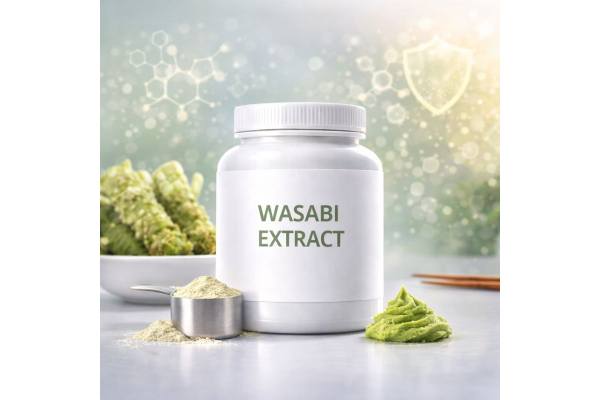
Wasabi extract is a concentrated ingredient made from Eutrema japonicum (often called Japanese wasabi). In supplements, it is typically used for its pungent plant compounds called isothiocyanates, especially 6-MSITC (6-methylsulfinylhexyl isothiocyanate). Unlike the sharp “burn” of chili, wasabi’s heat is aromatic and fast, and the same chemistry that makes it intense is also why people explore it for wellness goals like cognitive support, daily fatigue, and antioxidant balance.
A practical detail many shoppers miss: much “wasabi” flavor in condiments is actually horseradish and mustard. A true wasabi extract should name Eutrema japonicum and ideally state a standardized amount of 6-MSITC. This guide explains what wasabi extract is, what benefits are realistic, how to dose it sensibly, and how to avoid common safety and quality pitfalls.
Wasabi Extract Key Takeaways
- May support memory performance in older adults when standardized to 6-MSITC and used consistently.
- May help with daily fatigue and sleep quality in some people, but results depend on dose and product quality.
- Typical supplemental range is 0.8–9.6 mg/day of 6-MSITC (often within 100–600 mg/day of extract, depending on standardization).
- Can irritate the stomach or sinuses; start low and stop if you develop persistent burning, nausea, or reflux.
- Avoid if you are pregnant, breastfeeding, on blood thinners, or sensitive to cruciferous vegetables, unless your clinician approves.
Table of Contents
- What is wasabi extract?
- What benefits does wasabi extract have?
- How wasabi extract works in the body
- How to choose a quality wasabi extract
- Wasabi extract uses and best ways to take it
- Wasabi extract dosage
- Side effects, interactions, and who should avoid
What is wasabi extract?
Wasabi extract is a concentrated preparation made from Japanese wasabi (Eutrema japonicum). In supplements, it most often comes from the rhizome (the stem-like “root” portion used as a spice), because that is where key pungent compounds are abundant. The extract is typically dried into a powder and then encapsulated, or it is blended into tablets designed to deliver a consistent amount of one main marker compound.
The compounds that matter most for supplement use are isothiocyanates. These are formed when plant precursors (glucosinolates) are broken down—usually when the plant is grated or processed. The “signature” compound in many wasabi supplements is 6-MSITC, which is frequently described as a major bioactive in wasabi rhizomes. Some research also discusses related wasabi isothiocyanates such as 6-HITC, and you may see marketing that uses names like “hexaraphane” alongside 6-MSITC.
A crucial consumer reality: many foods labeled “wasabi” are mainly horseradish and mustard. That is not automatically bad, but it means “wasabi taste” does not guarantee “wasabi extract.” If you are buying a supplement for research-aligned dosing, the label should include:
- The botanical name (Eutrema japonicum or sometimes “Wasabia japonica” in older labeling)
- The plant part (ideally rhizome)
- A standardized marker amount, most commonly 6-MSITC (in mg or as a percentage)
Wasabi extract is not the same as:
- Wasabi condiment (often a blended paste with dyes, sweeteners, and horseradish)
- Horseradish extract (a different plant with overlapping but not identical compounds)
- Cruciferous vegetable extracts like broccoli sprout extract (different dominant isothiocyanates)
Finally, do not assume “more heat equals more benefit.” The sensory “burn” is influenced by formulation and delivery (and can even be masked in capsules), while the functional effect depends on dose, standardization, and consistent use.
What benefits does wasabi extract have?
Most people consider wasabi extract for one of three buckets: cognitive support, fatigue and sleep, or general antioxidant and inflammation balance. The most responsible way to approach these benefits is to treat them as supportive and dose-dependent, not as a shortcut for medical treatment.
Cognitive support and memory performance
Wasabi extract standardized to 6-MSITC has human research suggesting benefits for memory-related performance, particularly in older adults. The effect profile is best described as “sharpening and support,” not stimulation. People who choose wasabi extract for cognition often do it because they want a daily routine that complements sleep, exercise, and a brain-healthy diet rather than relying on a strong stimulant.
Practical expectations:
- Benefits, if they occur, are more likely to show up after weeks of consistent intake than after a single dose.
- The most meaningful improvements are often reported in specific memory domains, not across every cognitive skill.
Daily fatigue and sleep quality
Some people use wasabi extract for an “energy steadiness” effect rather than a caffeine-like boost. In studies involving a wasabi-derived ingredient containing 6-MSITC, daily fatigue and certain sleep-related outcomes improved over several weeks in some participants. Importantly, not all fatigue measures change, and results are easier to interpret as “potential support” than as a definitive treatment.
Where this can be useful:
- If you feel run down but you do not want more stimulants
- If you want a supplement that fits into a broader recovery routine (sleep schedule, light exposure, stress management)
Antioxidant and inflammation balance
Wasabi isothiocyanates are often discussed for their antioxidant and anti-inflammatory signaling effects. In supplement terms, this benefit is usually subtle and best measured indirectly: better “bounce-back” after stress, improved sense of wellbeing, or improved tolerance for normal daily demands. It should not be framed as a painkiller, infection cure, or immune replacement.
Oral and respiratory “freshness” and antimicrobial interest
Wasabi has a long cultural association with food hygiene and pungent freshness. Supplement marketers sometimes extend this to oral health or seasonal wellness claims. If you see this positioning, treat it as exploratory: wasabi compounds show interesting lab activity, but real-world outcomes depend on delivery, dose, and individual factors.
A useful decision rule: wasabi extract is most reasonable when you can clearly name the goal (memory, fatigue, or general resilience), pick a standardized product, and commit to a consistent trial period. If you want dramatic, immediate effects, wasabi extract is unlikely to match that expectation.
How wasabi extract works in the body
Wasabi extract’s effects are best understood through the behavior of isothiocyanates, especially 6-MSITC. These compounds are chemically reactive in a way that can “nudge” cellular signaling pathways involved in oxidative stress response, inflammation regulation, and metabolic housekeeping. That sounds abstract, so here is a clearer, practical explanation.
It supports the body’s own antioxidant response systems
Rather than acting only as a simple antioxidant that “soaks up free radicals,” isothiocyanates are often discussed as signal activators. They can influence internal systems that regulate antioxidant enzymes and protective proteins. In everyday terms, the body may become better at handling oxidative load from stress, aging, and normal metabolism.
It may influence inflammatory messaging
Inflammation is not inherently bad—it is a normal immune and repair process. Problems arise when inflammatory signaling stays elevated or poorly regulated. Wasabi isothiocyanates are studied for their capacity to influence enzymes and messenger pathways involved in inflammation. For supplement users, this translates into the possibility of modest improvements in “inflammation balance,” especially when paired with sleep, movement, and a diet with sufficient plants and protein.
It interacts with the gut and the “response variability” problem
Your gut and liver are the main processing hubs for many plant compounds. Two people can take the same labeled dose and experience different outcomes because:
- Gut microbiome differences change how compounds are metabolized
- Baseline diet affects oxidative and inflammatory tone
- Stress and sleep quality change the “signal environment” where supplements operate
This is one reason careful trials matter: a 4–12 week consistent period tells you more than a few days of inconsistent dosing.
It can feel “strong” even at low doses
Wasabi compounds can irritate mucous membranes. Even if you do not taste the spice in a capsule, you may notice:
- Warmth in the stomach
- A mild “spicy reflux” sensation
- Nasal or throat tingling if the capsule opens early
This is not always dangerous, but it is a useful feedback signal. If you feel repeated irritation, lowering the dose or taking it with meals is typically smarter than pushing through.
It is not the same mechanism as caffeine
Wasabi extract does not primarily work by stimulating the nervous system. If it helps fatigue, it is more likely through downstream effects tied to oxidative stress response, inflammation signaling, and sleep-related outcomes. That difference can be an advantage for people who do not tolerate stimulants well.
The main takeaway: wasabi extract is a “pathway support” supplement. It works best when used steadily, matched to a specific goal, and chosen in a form that makes dose and quality transparent.
How to choose a quality wasabi extract
Choosing a wasabi extract is less about brand hype and more about verifying what is in the capsule. The market has three common problems: confusing “wasabi flavor” with true wasabi, weak labeling, and oxidation or stability issues for active compounds. Use the checklist below to avoid most disappointments.
1) Confirm the plant and the plant part
A quality product should name:
- Eutrema japonicum (or “Wasabia japonica” in some labeling)
- The rhizome (ideal for 6-MSITC-focused products)
If the label only says “wasabi” without a botanical name, treat it as a red flag.
2) Look for standardization to a measurable compound
If your goal is cognition or fatigue support, choose a product that states 6-MSITC content in one of these formats:
- “Provides X mg 6-MSITC per serving”
- “Standardized to X% 6-MSITC”
This matters because “200 mg wasabi extract” can mean very different things depending on extraction and concentration.
3) Favor realistic, research-aligned serving sizes
Many studies use small milligram amounts of 6-MSITC, not huge gram doses of raw powder. A supplement that claims dramatic effects but cannot tell you its 6-MSITC content is difficult to evaluate. If you cannot measure it, you cannot compare it.
4) Pay attention to capsule design and tolerability
Because wasabi compounds can irritate the stomach, consider:
- Taking it with food
- Choosing a formulation described as enteric-coated if you are sensitive (when available)
- Avoiding high doses right away
If you have reflux, this step is especially important.
5) Identify “cheap imitation” patterns
These are not automatic disqualifiers, but they should make you cautious:
- Bright green products with heavy coloring
- Labels that emphasize “wasabi heat” more than measurable content
- Products that mix many pungent ingredients without listing amounts
6) Think about what you actually want: extract or food
If you enjoy real wasabi as a condiment, that can be a useful culinary habit, but it is hard to dose precisely. Supplements are better when you want consistency. Many people do best with a hybrid approach:
- Use real wasabi in food for enjoyment and routine
- Use a standardized extract when a consistent daily dose is the goal
A quality wasabi extract should feel boring on the label: clear name, clear marker compound, clear dose, and clear serving instructions. That “boring” transparency is what protects you from wasting time and money.
Wasabi extract uses and best ways to take it
Wasabi extract is usually taken as a capsule or tablet, once or twice per day. The best “how to” approach depends on whether your priority is cognition, fatigue and sleep, or general wellness support. Regardless of goal, the most consistent results tend to come from steady routines rather than complicated timing.
For memory and cognitive support
- Take the product daily, preferably at the same time.
- If your supplement includes a small, clearly stated 6-MSITC dose, treat it like a long-term habit.
- Pair it with “high-return” brain basics: regular walking, adequate protein, and consistent sleep timing.
A practical cognitive routine example:
- Take the capsule with breakfast.
- Do 10–20 minutes of light movement within 2 hours.
- Keep caffeine earlier in the day so sleep stays stable.
For fatigue and sleep-related goals
If your goal is less daily fatigue or better sleep quality:
- Take it with food to improve tolerance.
- Consider taking it earlier in the day if you are sensitive to anything that feels activating, even mildly.
- Track a simple outcome for 4 weeks: “time to fall asleep,” “number of awakenings,” or “morning freshness,” using the same scale each day.
For general “resilience” support
If you are using wasabi extract for overall antioxidant and inflammation balance:
- Avoid stacking it immediately with multiple other pungent or polyphenol-heavy supplements.
- Use it as part of a stable routine for 6–8 weeks before judging.
Steps to reduce stomach and reflux issues
- Start with the lowest effective label dose.
- Take it mid-meal, not before eating.
- Increase only if you tolerate it well for 7–10 days.
- If irritation persists, reduce the dose or discontinue.
What not to do
- Do not take a high dose on an empty stomach to “feel it working.”
- Do not combine multiple spicy or irritating supplements at once (for example, high-dose ginger extracts, strong pepper extracts, and wasabi extract together) if you already have reflux.
- Do not treat it as a substitute for medical care for chronic fatigue, insomnia, or cognitive decline.
How to know if it is worth continuing
Wasabi extract is not usually dramatic. Good signs include:
- A mild but consistent improvement in mental clarity or memory confidence
- Less “drag” in the afternoon without adding caffeine
- Better sleep quality scores over multiple weeks
If nothing changes after a careful 8–12 week trial with a standardized product, it is reasonable to stop. Supplements should earn their place in your routine.
Wasabi extract dosage
Wasabi extract dosing can be confusing because some labels list the extract weight (mg of powder), while research often focuses on the marker compound (mg of 6-MSITC). When possible, anchor your dose to 6-MSITC rather than to total extract weight.
Typical dosage ranges used in human research
Based on published human studies using wasabi-derived ingredients containing 6-MSITC, the daily intake of 6-MSITC commonly falls in this range:
- 0.8 mg/day of 6-MSITC (used in cognitive-focused supplementation over multiple weeks)
- 4.8 mg/day of 6-MSITC (used in a fatigue and sleep-focused study over several weeks)
- Up to 9.6 mg/day of 6-MSITC (used in a clinical context over a longer period)
Some research also includes higher-dose safety evaluations over shorter periods. This does not mean higher is always better; it means certain higher intakes have been studied for tolerability in controlled settings.
How to translate that into supplement labels
Because products vary, two examples help:
- If your label says “0.8 mg 6-MSITC per tablet,” you can follow the tablet count directly.
- If your label says “200 mg wasabi extract standardized to 0.8% 6-MSITC,” then one capsule provides 1.6 mg 6-MSITC (because 0.8% of 200 mg is 1.6 mg).
If the product does not state its 6-MSITC content, dose precision is not possible. In that case, it is safer to follow label directions and treat the product as a general botanical supplement rather than a research-aligned tool.
A conservative ramp-up plan (improves tolerance)
- Week 1: 0.8–1.6 mg/day of 6-MSITC with food
- Week 2–4: increase toward 3–5 mg/day only if well tolerated and goal-oriented
- Longer trials: consider 8–12 weeks for cognitive goals before judging
Timing
- Take wasabi extract with meals, especially if you have reflux or a sensitive stomach.
- If taking more than one capsule daily, split between breakfast and dinner for steadier tolerance.
- Avoid taking it right before lying down if you are reflux-prone.
When to choose the lower end
Stay on the lower end if you:
- have GERD or frequent heartburn
- are new to pungent botanical extracts
- are taking multiple supplements and want to isolate what helps
The most effective dose is the smallest one that supports your goal without causing irritation. If a supplement consistently makes you uncomfortable, it is not a good long-term fit.
Side effects, interactions, and who should avoid
Wasabi extract is generally used in small doses, but its bioactive compounds can be potent and irritating. Safety is mostly about tolerability, medication caution, and who should avoid experimentation altogether.
Common side effects
- Stomach burning, nausea, or reflux, especially if taken on an empty stomach
- Throat or nasal irritation, sometimes from capsule leakage or early dissolution
- Loose stools if you increase dose too quickly
- Headache in sensitive individuals (uncommon, but possible with strong botanicals)
Most mild side effects improve by lowering the dose and taking it with meals. If symptoms persist, stop the supplement.
Who should avoid wasabi extract
Avoid use unless your clinician specifically advises otherwise if you are:
- Pregnant or breastfeeding (safety data for concentrated extracts is limited)
- Under 18
- Diagnosed with active gastritis, peptic ulcer disease, or uncontrolled reflux
- Highly sensitive to cruciferous vegetables or pungent spices
- Experiencing unexplained weight loss, swallowing pain, or GI bleeding symptoms
Medication and condition cautions
Discuss wasabi extract with a clinician if you use:
- Anticoagulants or antiplatelet medications (blood thinners), especially if you bruise easily or have bleeding risk
- Thyroid medication, particularly if you have known thyroid disease and are using multiple cruciferous concentrates
- Diabetes medications, if you are also changing diet and supplements aggressively (overall metabolic changes can shift medication needs)
Wasabi extract is not a substitute for treatment, and it should not be layered into complex regimens without oversight if you have chronic conditions.
Allergy considerations
True wasabi allergy is uncommon, but any botanical can cause reactions. Stop and seek medical care urgently if you develop:
- hives, facial swelling, or throat tightness
- wheezing or breathing difficulty
- severe dizziness, fainting, or vomiting after dosing
Surgery and procedures
If you have an upcoming procedure, it is prudent to disclose all supplements. Many clinicians prefer discontinuing non-essential supplements before surgery to reduce bleeding and anesthesia variables.
Quality and safety are linked
A surprising amount of “side effects” come from:
- unclear products that are not truly Eutrema japonicum
- inconsistent dosing
- capsule designs that irritate the stomach
Choose a transparent product, start low, and treat comfort as part of the safety signal. If your body is consistently pushing back, that is a strong reason to stop.
References
- Benefits of Wasabi Supplements with 6-MSITC (6-Methylsulfinyl Hexyl Isothiocyanate) on Memory Functioning in Healthy Adults Aged 60 Years and Older: Evidence from a Double-Blinded Randomized Controlled Trial 2023 (RCT)
- Oral administration of 6-methylsulfinylhexyl isothiocyanate extracted from wasabi is safe and improves the fatigue and sleep of healthy volunteers 2023
- Clinical effects of wasabi extract containing 6-MSITC on myalgic encephalomyelitis/chronic fatigue syndrome: an open-label trial 2022 (Clinical Study)
- Methylsulfinyl Hexyl Isothiocyanate (6-MSITC) from Wasabi Is a Promising Candidate for the Treatment of Cancer, Alzheimer’s Disease, and Obesity 2024 (Review)
Disclaimer
This article is for educational purposes only and does not provide medical advice, diagnosis, or treatment. Wasabi extract can irritate the stomach and may worsen reflux or ulcer symptoms. If you are pregnant, breastfeeding, have a chronic medical condition, or take prescription medications—especially blood thinners, thyroid medication, or diabetes medication—consult a qualified healthcare professional before using wasabi extract. Stop use and seek urgent medical care if you develop symptoms of an allergic reaction such as hives, swelling, wheezing, or trouble breathing, or if you experience severe or persistent gastrointestinal symptoms.
If you found this guide helpful, please share it on Facebook, X (formerly Twitter), or any platform you prefer, and follow us on social media. Your support through sharing helps our team continue producing practical, high-quality health content.