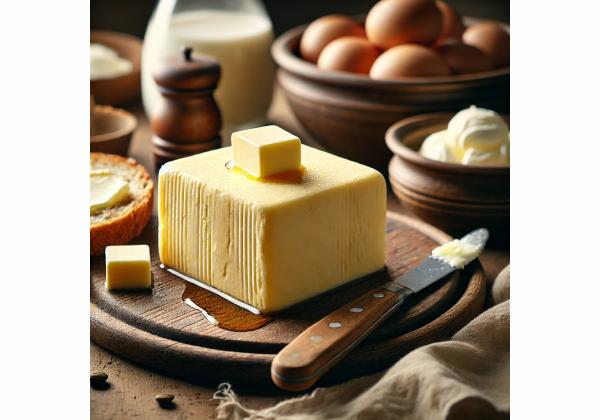
Water buffalo butter is a specialty dairy fat churned from the cream of water buffalo milk—the same rich milk used for mozzarella di bufala. Compared with standard cow’s-milk butter, it tends to taste slightly cleaner and sweeter, look whiter (buffalo convert more beta-carotene to vitamin A), and feel exceptionally silky on the palate. Cooks love it for laminated doughs, finishing sauces, and spreading on warm bread; pastry chefs prize its plasticity and melt for flaky, tender results. Nutritionally, it’s almost pure fat with trace protein and carbohydrates, delivering vitamin A and small amounts of vitamin E and vitamin K alongside short-chain fatty acids like butyric acid. As with any butter, it’s calorie-dense and high in saturated fat, so portions matter—especially if you’re managing cholesterol. For everyday use, reach for pasteurized products and store them cold to protect flavor and safety. In short, water buffalo butter can be a luxurious, versatile ingredient when used thoughtfully within an overall balanced eating pattern.
Nutrition Snapshot
- Rich in vitamin A (≈684 µg RAE per 100 g, 76% DV); nearly zero carbs and sugars.
- Choose pasteurized water buffalo butter; avoid raw dairy during pregnancy or if immunocompromised.
- Typical serving: 5–10 g (1–2 tsp), used as a finish or spread; enjoy a few times per week within saturated-fat limits.
- People with dairy allergy, high LDL cholesterol, or on strict saturated-fat targets should limit or avoid.
Table of Contents
- Water Buffalo Butter: Detailed Overview
- Water Buffalo Butter Nutrition Profile (per 100 g)
- Health Benefits of Water Buffalo Butter
- Risks, Allergies and Interactions
- Selecting, Quality, Sustainability and Storage
- Preparation, Cooking and Nutrient Retention
- Portions, Comparisons and FAQs
Water Buffalo Butter: Detailed Overview
Water buffalo butter is made by churning the cream skimmed from water buffalo milk until fat globules coalesce into butter grains. Those grains are washed, worked, and shaped; salt may be added for flavor and preservation. Because water buffalo milk contains more fat solids than cow’s milk, the resulting butter often feels denser and more pliable at cool room temperature, with a distinctive clean, lactic aroma and a mild sweetness. Its color is porcelain-white rather than yellow because buffalo efficiently convert beta-carotene into retinol (vitamin A), leaving less pigment in the milk fat.
In day-to-day cooking, this butter excels when you want rich flavor with a smooth, fast melt: finishing grilled vegetables and steaks, whisking into pan sauces, coating risotto, or layering into croissants and puff pastry. Compared with cow butter, many bakers find it slightly more plastic (malleable) when cold, which can help reduce cracking in laminated doughs and create exceptionally fine pastry layers.
Nutritionally, water buffalo butter is extremely similar to cow’s butter: about 80–83% fat, ~16% water, and traces of milk solids. Its fat is predominantly saturated, with meaningful amounts of monounsaturated fat and a smaller fraction of polyunsaturated fat. Like all ruminant butters it contains natural trans fatty acids (such as vaccenic acid) and conjugated linoleic acid (CLA) in small quantities, plus short-chain fatty acids including butyric acid. It provides fat-soluble vitamins—most notably vitamin A—with modest vitamin E and vitamin K.
Availability varies by region. You’ll most often see Italian water buffalo butter (from the Campania/Lazio areas where buffalo mozzarella is produced) and Indian or Turkish products in specialty shops. Some brands are salted; others are unsalted for pastry. Label reading matters: pasteurization status, salt level, and storage instructions differ by producer.
Finally, safety and quality hinge on pasteurization and cold chain. As with any dairy fat, choose pasteurized butter unless you fully understand (and accept) the risks of raw dairy. Keep it refrigerated and protect it from light and oxygen to slow rancidity. Used thoughtfully, water buffalo butter is both a culinary luxury and an effective flavor carrier.
Water Buffalo Butter Nutrition Profile (per 100 g)
Below is a detailed profile using the best available reference values for unsalted butter per 100 g (buffalo butter is compositionally very similar; branded buffalo labels typically show 750–800 kcal and ~82–83 g fat per 100 g). Percent Daily Values (%DV) use U.S. DVs for a 2,000-kcal diet.
Macros & Electrolytes
| Nutrient | Amount (per 100 g) | %DV |
|---|---|---|
| Energy | 717 kcal | 36% |
| Water | 16.2 g | — |
| Total Fat | 81.1 g | 104% |
| Saturated Fat | 50.5 g | 252% |
| Monounsaturated Fat | 23.4 g | — |
| Polyunsaturated Fat | 3.0 g | — |
| Cholesterol | 215 mg | 72% |
| Protein | 0.85 g | 2% |
| Carbohydrate (total) | 0.06 g | 0% |
| Total Sugars (lactose) | 0.06 g | 0% |
| Sodium (unsalted butter) | 11 mg | 0% |
| Potassium | 24 mg | 1% |
Fats & Fatty Acids
| Component | Amount (per 100 g) | Notes |
|---|---|---|
| Butyric acid (C4:0) | 3.23 g | Short-chain fatty acid found in ruminant fats |
| Caproic + Caprylic + Capric (C6:0–C10:0) | ~5.7 g | Short/medium-chain fraction |
| Lauric (C12:0) | 2.59 g | Saturated |
| Myristic (C14:0) | 7.44 g | Saturated |
| Palmitic (C16:0) | 21.70 g | Saturated (major SFA) |
| Stearic (C18:0) | 10.00 g | Saturated |
| Oleic (C18:1) | ~20.4 g | Main MUFA |
| Linoleic (C18:2 n-6) | ~2.17 g | Main PUFA |
| Alpha-linolenic acid (ALA, n-3) | ~0.32 g | Omega-3 |
| Conjugated linoleic acid (CLA) | ~0.27 g | Naturally occurring CLA |
| Ruminant trans fats (e.g., vaccenic) | ~3 g | Naturally present in butterfat |
Vitamins
| Vitamin | Amount (per 100 g) | %DV |
|---|---|---|
| Vitamin A (RAE) | 684 µg | 76% |
| Vitamin E (alpha-tocopherol) | 2.3 mg | 15% |
| Vitamin K (phylloquinone + menaquinones) | 7 µg | 6% |
| Vitamin B12 (cobalamin) | 0.17 µg | 7% |
| Choline | 18.8 mg | 3% |
| Vitamin D | 0 µg | 0% |
Minerals
| Mineral | Amount (per 100 g) | %DV |
|---|---|---|
| Calcium | 24 mg | 2% |
| Phosphorus | 24 mg | 2% |
| Potassium | 24 mg | 1% |
| Selenium | 1 µg | 2% |
| Sodium (unsalted) | 11 mg | 0% |
Allergens & Intolerance Markers
| Item | Presence | Practical note |
|---|---|---|
| Milk proteins (casein/whey) | Trace amounts | Can trigger dairy allergy even in small servings |
| Lactose | ~0.06 g/100 g | Functionally very low; usually tolerated in lactose intolerance, but individual responses vary |
Footnotes:
- Numbers reflect unsalted butter as a reference; salted buffalo butter can exceed 500–600 mg sodium per 100 g.
- Brand-specific buffalo butter labels often list ~750–800 kcal and ~82–83 g fat per 100 g; use the package for exact values.
- Fortified products are uncommon; if vitamins are added, labels must state this.
Health Benefits of Water Buffalo Butter
Flavor and culinary functionality. The most immediate benefit is culinary: water buffalo butter’s clean dairy flavors and smooth mouthfeel amplify aroma compounds and carry fat-soluble flavors from herbs and spices. A small knob can finish sauces, glaze vegetables, or enrich grains, improving palatability and helping you enjoy nutrient-dense foods like steamed greens or whole-grain pilafs.
Vitamin A for vision and immune function. Water buffalo butter contributes vitamin A (as retinol), which supports vision, epithelial health, and immune competence. Per 100 g, unsalted butter provides roughly three-quarters of the Daily Value; real-world portions are smaller, but even a teaspoon adds a measurable amount to the day’s total—useful in diets otherwise low in preformed vitamin A.
Fat-soluble vitamin carriers. Although butter itself only provides modest vitamin E and vitamin K, adding butter to dishes containing carotenoids (for example, carrots or leafy greens) can enhance absorption of these fat-soluble compounds. This is a culinary, not pharmacologic, effect: pairing vegetables with a little fat improves the bioavailability of their fat-soluble nutrients.
Short-chain fatty acids and digestibility. Butter contains notable short-chain fatty acids (SCFAs), especially butyric acid. In the body, SCFAs are rapidly oxidized for energy and, in the colon, butyrate is a preferred fuel for colonocytes. While dietary butyrate from butter largely absorbs in the upper gut rather than reaching the colon, the SCFA profile contributes to the quick energy feel and characteristic digestibility of dairy fats for many people.
Texture advantages in baking. Thanks to its high fat and low water, water buffalo butter can improve lamination and crumb tenderness in pastry. Its plasticity at cool temperatures and decisive melt can yield fine layers in croissants and puff pastry. That’s a practical benefit if you’re seeking professional baking results at home.
Satiety and portion control. Fat slows gastric emptying and can increase satiety in mixed meals. Using a small, measured amount of butter to make vegetables or legumes more satisfying may, for some people, reduce the urge to overeat more energy-dense desserts or snacks later. This is context-dependent and works best within structured meal planning.
A note on fatty acid balance. Butter’s fatty acid spectrum is dominated by saturated fat, but it also supplies monounsaturated oleic acid and a small amount of polyunsaturated fats, including ALA. The health impact of butter depends on what it replaces: it fits more comfortably in a pattern rich in unsaturated fats from olive oil, nuts, seeds, and fish, compared with patterns high in refined carbohydrates and processed meats.
Bottom line: water buffalo butter can enhance diet quality by making nutrient-dense foods more appealing and by contributing vitamin A—but it should be used in small amounts and balanced with unsaturated fats day-to-day.
Risks, Allergies and Interactions
Saturated fat and heart health. Butter—buffalo or cow—is high in saturated fat. Many people benefit from limiting saturated fat to a small share of total energy, favoring unsaturated fats instead. Swapping a portion of butter for oils rich in unsaturated fats (olive, canola, high-oleic sunflower) can help maintain favorable LDL cholesterol levels. If you have high LDL, familial hypercholesterolemia, diabetes, or cardiovascular disease, keep portions especially modest and work with your clinician or dietitian.
Calorie density and weight management. At ~717–800 kcal per 100 g, even small amounts add up. One level teaspoon (5 g) has ~36–40 kcal; a tablespoon (14 g) has ~100–110 kcal. Weigh or measure during recipe testing to avoid unintentional excess.
Dairy allergy. Butter contains trace milk proteins and can provoke allergic reactions in sensitive individuals. Those with confirmed dairy allergy should avoid butter (and products made with it) unless cleared by their allergist. Ghee (clarified butter) removes most but not all milk proteins; it’s not guaranteed safe for dairy-allergic individuals.
Lactose intolerance. Butter contains negligible lactose—typically a fraction of a gram per 100 g—so most people with lactose intolerance tolerate small amounts. Individual responses vary: if you’re highly sensitive, trial cautious portions or opt for clarified butter, which is nearly lactose-free.
Food safety: raw dairy. Unpasteurized (raw) dairy products can harbor pathogens such as Listeria monocytogenes. Pregnant people, older adults, young children, and those with weakened immune systems should avoid raw milk and raw-dairy products, including raw butter. Choose pasteurized water buffalo butter and keep it refrigerated.
Medication and nutrient interactions. There are no common direct drug–butter interactions. If you take fat-soluble vitamin supplements (A, D, E, K), remember that butter contributes additional vitamin A; keep total intakes within recommended ranges. People on strict low-sodium diets should prefer unsalted butter.
Digestive comfort. Large servings of fat can aggravate symptoms in gallbladder disease or pancreatitis. If you have these conditions, consult your clinician about total fat limits and cooking fats that fit your plan.
In summary, the main risk is excess saturated fat and calories; the main safety issue is avoiding raw dairy. With those managed, water buffalo butter can be enjoyed in small, flavorful amounts.
Selecting, Quality, Sustainability and Storage
How to read the label.
- Pasteurized vs raw: Choose pasteurized butter for broad safety, especially for at-risk groups.
- Salt level: Unsalted is preferred for baking and precise seasoning; salted can range widely in sodium.
- Fat content: Expect ~82–83% fat for European-style butters; buffalo butter commonly sits in this range.
- Ingredients: Should be cream (or buffalo milk/milk fat) and possibly salt. Avoid added flavors if you want pure dairy notes.
Quality cues at purchase.
- Color: Water buffalo butter is naturally pale to porcelain-white. A uniform color without spots suggests good handling.
- Aroma: Clean, sweet, slightly lactic; avoid cheesy, soapy, or rancid notes.
- Packaging: Opaque paper or foil protects from light; vacuum-sealed blocks reduce oxygen exposure.
Ethical and sustainability notes.
- Origin: Italy (Campania/Lazio), South Asia, and parts of the Middle East are common sources. Shorter supply chains can mean fresher butter.
- Animal welfare and feed: “Grass-fed” claims may indicate different fatty acid profiles, but standards vary by country and producer. Certification schemes and transparent producer info are helpful.
- Waste reduction: Because butter is concentrated, small amounts go far; buy sizes you can finish before quality declines.
Storage and shelf life.
- Refrigeration: Keep at 1–4 °C (34–39 °F). Unopened pasteurized butter typically keeps several months refrigerated; once opened, aim to use within 3–4 weeks for peak flavor.
- Freezing: Butter freezes well for 6–9 months; portion into sticks or cubes, wrap tightly in foil, then place in airtight bags. Thaw in the fridge.
- Counter storage: For short-term spreadability, you can keep a 2–3-day portion covered in a clean, opaque butter crock in a cool kitchen; refresh regularly and keep the rest refrigerated.
- Protect from rancidity: Light, heat, air, and time drive oxidation. Keep packages sealed, minimize temperature cycling, and avoid leaving butter near the stove.
Buying tips by use case.
- Baking/lamination: Choose unsalted butter at ~82–83% fat; lower moisture aids flakiness.
- Finishing and sauces: Either salted or unsalted; prioritize fresh, aromatic butter for best flavor.
- Clarifying/ghee: Unsalted butter simplifies skimming and reduces splatter.
Approach water buffalo butter as a premium ingredient: store it like you would a fine oil, buy thoughtfully, and rotate stock for best results.
Preparation, Cooking and Nutrient Retention
Best uses in the kitchen.
- Finishing fat: Whisk a cold cube into pan sauces off the heat for gloss and body (monte au beurre).
- Vegetable glaze: Melt with a splash of water to create a thin emulsion for carrots, asparagus, or green beans.
- Baking: Use well-chilled butter for pie dough, puff pastry, and croissants; its plasticity helps lamination.
- Compound butters: Mash softened butter with herbs, citrus zest, or spices; re-chill and slice over grilled fish or steaks.
Heat behavior and smoke points.
Whole butter contains ~16% water and milk solids that brown quickly. It begins to brown around 150–175 °C (300–350 °F); these flavorful milk-solid reactions are great for beurre noisette but limit high-heat frying. To cook hotter, clarify the butter: removing water and milk solids raises the practical smoke point and reduces splatter.
How to clarify butter (make ghee-style clarified butter).
- Melt unsalted water buffalo butter gently over low heat; don’t stir.
- Skim foam; let milk solids sink.
- Ladle or pour off the clear golden fat, leaving solids behind; strain through fine mesh if needed.
- Cool and store in a clean jar. Clarified butter keeps longer and tolerates higher heat than whole butter.
Nutrient retention tips.
- Protect fat-soluble vitamins: Vitamin A is reasonably heat-stable during typical sautéing and baking, but prolonged high heat and light exposure degrade quality. Store cold and cook just to the texture you want.
- Add last for flavor: For sauces and vegetable glazes, add butter at the end or off-heat to minimize browning and preserve fresh dairy notes.
- Pair for absorption: Use butter to help absorb fat-soluble compounds from vegetables (carotenoids, vitamin K1) while keeping portions small.
Kitchen safety.
- Avoid scorching: Overheated butter smokes and can form bitter compounds; moderate the flame and use clarified butter for searing.
- Cross-contact: For guests with dairy allergy, prevent cross-contact on griddles, knives, and boards.
- Raw butter caution: If experimenting with raw butter in regions where it’s legal, understand the elevated microbiological risk and keep it out of at-risk diets.
Use technique to stretch flavor: small, strategic amounts deliver luxury without excessive saturated fat.
Portions, Comparisons and FAQs
Practical portions
- Everyday cooking: 1–2 teaspoons (5–10 g) per person to finish vegetables, grains, or sauces.
- Baking: Follow recipe percentages; for laminated dough, plan butter at 30–45% of dough weight, but remember final portions per serving are small.
- Weekly pattern: If you’re targeting saturated fat at ≤10% of total energy, a 2,000-kcal pattern allows at most ~22 g of saturated fat per day. One tablespoon of butter has about 7 g saturated fat, so plan other fats accordingly (leaner proteins, more olive oil, nuts, and fish).
How water buffalo butter compares
- Versus cow butter: Nearly identical calories and fat. Buffalo butter is paler and often tastes slightly cleaner. Texture can feel more plastic when cold, which bakers appreciate.
- Versus ghee (clarified butter): Ghee is essentially 100% fat with no lactose and almost no milk proteins; it tolerates higher heat and keeps longer. Its nutty flavor differs from fresh butter’s creamy notes.
- Versus olive oil: Olive oil is predominantly monounsaturated fat and contains phenolic antioxidants; it’s the better daily cooking fat for heart health. Butter is best as a finishing or baking fat.
- Versus plant-based spreads: Many are formulated with unsaturated oils; check labels for hydrogenated oils (avoid) and added sugars/salt. Flavor and performance in pastry differ.
FAQs
Is water buffalo butter lactose-free?
Not entirely. Lactose is extremely low (trace levels), so most lactose-intolerant people tolerate small amounts. Clarified butter has even less but still isn’t appropriate for dairy allergies.
Is water buffalo butter better for cholesterol than cow butter?
No. The saturated fat content is similar; your LDL response will be driven by total saturated fat intake and your genetics. Favor unsaturated fats day-to-day and keep butter portions small.
Is the white color a sign of lower quality?
No. It reflects buffalo’s efficient conversion of carotene to retinol (vitamin A). The butter can be excellent despite its pale hue.
Can I freeze it?
Yes. Wrap tightly and freeze for up to 6–9 months. Thaw in the refrigerator to protect texture.
What’s the best way to enjoy it without overdoing it?
Use it where it makes the biggest flavor impact—finishing vegetables, glazing grains, or spreading a measured pat on fresh bread—and lean on olive oil and other unsaturated fats for everyday sautéing.
References
- Fatty acid and amino acid profiles of buffalo cheese, butter and ghee 2022 (Research Article)
- Saturated fatty acid and trans-fatty acid intake for adults and children 2023 (Guideline)
- How Listeria Spread: Soft Cheeses and Raw Milk 2025 (Public Health Guidance)
- Eating, Diet, and Nutrition for Lactose Intolerance 2023 (Government Health Information)
- Unsalted Butter 2024 (USDA-Derived Nutrient Data)
Disclaimer
This article is for general information only and does not replace personalized advice from a qualified health professional. Dietary needs and health risks vary by individual. If you have high cholesterol, cardiovascular disease, diabetes, a dairy allergy, are pregnant, or are immunocompromised, seek guidance from your clinician or a registered dietitian before making changes to your diet.
If you found this guide useful, please consider sharing it on Facebook, X (formerly Twitter), or your favorite platform. Your support helps us keep producing clear, evidence-based articles. Thank you.