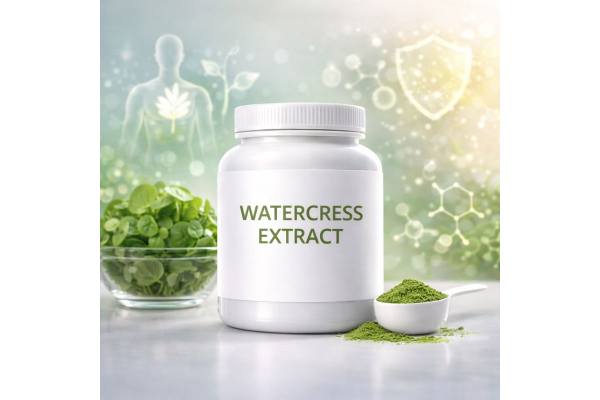
Watercress extract comes from Nasturtium officinale, a peppery, aquatic leafy green in the cruciferous family. In food, it is often treated like a salad green. In supplements, it is concentrated for its plant compounds—especially glucosinolates and their active breakdown products called isothiocyanates, including phenethyl isothiocyanate (PEITC). These compounds are studied for their roles in antioxidant balance, inflammation signaling, and cellular “detox” enzyme activity.
People usually consider watercress extract for practical, modern goals: supporting oxidative stress markers, cardiovascular wellness, metabolic resilience, and recovery during physically demanding periods. It is not a stimulant and it is not a medication. The best results tend to come when you treat it like a structured trial—choose a standardized product, use it consistently, and track one or two outcomes over several weeks. This guide explains what watercress extract is, what benefits are realistic, how to use it wisely, and what safety caveats matter.
Quick Overview of Watercress Extract
- May support antioxidant defenses and oxidative stress balance, especially when used consistently for several weeks.
- May modestly improve certain lipid and oxidative stress markers in some populations.
- Common supplemental range is 250–1,000 mg/day of extract (or 30–85 g/day fresh watercress as food).
- Can irritate the stomach and may increase bleeding risk in people on anticoagulants due to vitamin K content in food-based forms.
- Avoid if pregnant or breastfeeding, and use extra caution with kidney stones, thyroid conditions, or blood-thinning medication.
Table of Contents
- What is watercress extract?
- What benefits are plausible?
- How watercress extract works
- How to choose a quality extract
- Best uses and how to take it
- Watercress extract dosage
- Side effects, interactions, and who should avoid
What is watercress extract?
Watercress extract is a concentrated preparation made from Nasturtium officinale—a leafy plant that grows in clean, flowing water. In a kitchen, watercress is valued for its bright, peppery bite. In supplements, the goal is different: to deliver more of watercress’s bioactive compounds than you would typically get from a casual serving of greens.
The main compound families you will see discussed are:
- Glucosinolates (notably gluconasturtiin in watercress). These are stable storage compounds in the plant.
- Isothiocyanates, formed when glucosinolates are broken down—usually by plant enzymes activated when the plant is chopped, chewed, blended, or processed. The best-known watercress isothiocyanate is phenethyl isothiocyanate (PEITC).
- Polyphenols and flavonoids, which support antioxidant activity in broader, less “marker-specific” ways.
- Nutrients that matter in food forms, such as vitamin K, vitamin C, carotenoids, and minerals.
This leads to a key distinction that affects results:
- Food watercress delivers a broad nutrient profile and fiber, but the isothiocyanate yield can vary depending on freshness, chewing, preparation, and your gut environment.
- Extracts aim for more consistent delivery, but only if they are produced and labeled well.
Watercress extract is commonly sold as:
- Capsules or tablets (most practical for consistent dosing)
- Powders (more flexible dosing, but less convenient)
- Liquids (variable stability and dosing precision)
Another practical detail: “watercress extract” is not a single standardized substance across brands. Two products can differ substantially in plant part used (leaf, aerial parts), extraction method, and marker content. If your goal is research-aligned use, look for labeling that specifies the botanical name (Nasturtium officinale) and provides either a standardization marker or a clear manufacturing quality signal.
What benefits are plausible?
Watercress extract is usually explored for oxidative stress, inflammation balance, and cardiometabolic support. The strongest way to think about benefits is as “supportive nudges” rather than dramatic changes. People who do best with it tend to have a clear goal, use it consistently, and track outcomes over weeks.
1) Antioxidant and oxidative stress support
Watercress is frequently studied because its compounds can influence the body’s antioxidant defenses. In real life, this may matter for people who want help with:
- General resilience during high-stress periods
- Recovery after physically demanding training
- Supporting healthy aging routines
What it may look like day to day is not necessarily a “feeling,” but steadier recovery and less perceived wear-and-tear when your routine is demanding.
2) Lipid profile and cardiometabolic markers
Some human research using watercress extract has reported improvements in certain markers such as LDL cholesterol and lipid peroxidation in specific populations. That does not mean watercress replaces dietary changes, activity, or medications when those are needed. A more realistic framing is: watercress extract may complement a heart-healthy program by supporting oxidative stress pathways that interact with lipid health.
3) Inflammation signaling balance
Cruciferous plants are often discussed for their ability to influence inflammatory messaging. Watercress fits this pattern. If it helps, people may notice indirect benefits such as:
- Less “puffy” or inflamed feeling after poor sleep or travel
- A calmer baseline when stress is high
- Better tolerance to normal training load (not a cure for injuries)
4) Cellular protection and “detox enzyme” support
PEITC and related compounds are often researched for how they influence enzymes involved in neutralizing reactive compounds and supporting healthy cellular turnover. This is the source of many “detox” marketing claims. The useful translation is: watercress compounds may help the body run its normal protective systems more efficiently. The unhelpful translation is: “this will flush toxins.” Your liver and kidneys already handle detoxification; supplements can only modulate parts of that system.
A good decision rule: watercress extract makes the most sense if you want support for oxidative stress balance or cardiometabolic wellness and you are willing to evaluate it over 4–12 weeks with stable habits.
How watercress extract works
Watercress extract’s “how” comes down to a chain reaction that starts with glucosinolates and ends with biologically active isothiocyanates such as PEITC. The steps are simple, but the outcomes can be broad because these compounds touch multiple signaling pathways.
From glucosinolates to PEITC
Watercress contains glucosinolates like gluconasturtiin. When watercress tissue is cut, chewed, or processed, plant enzymes help convert these precursors into PEITC and related compounds. That conversion is part of why preparation and product quality matter so much: two “watercress” inputs can yield different amounts of active compounds.
Activation of antioxidant response systems
Isothiocyanates are often described as “signal activators.” Instead of acting only like direct antioxidants, they can stimulate the body’s own protective response systems that regulate antioxidant enzymes. Practically, this can support how the body manages oxidative load from:
- intense exercise
- poor sleep
- environmental stressors
- normal aging metabolism
Inflammation modulation without shutting it down
Inflammation is a necessary process for repair and immunity. The goal is not to eliminate it, but to keep it appropriately regulated. Watercress compounds may influence inflammatory messaging in ways that support healthier balance. If you notice benefits, they may feel like improved recovery or less “inflammatory drag” rather than a painkiller effect.
Support for metabolic and vascular pathways
Oxidative stress, lipids, endothelial function, and inflammation interact. Watercress’s nutrient and phytochemical profile is one reason it is explored as a functional food and as an extract. If changes occur, they often show up in lab markers rather than immediate subjective sensations.
Why results vary so much
Individual response can differ due to:
- Differences in gut microbiome composition
- Baseline diet (especially cruciferous intake)
- Smoking status and alcohol intake
- Training load and sleep quality
- Genetics and enzyme activity differences
- Formulation factors (fresh food, powder, standardized extract)
This is why watercress extract works best as a measured trial: pick one form, keep other variables steady, and assess after enough time for cellular signaling changes to matter.
How to choose a quality extract
Watercress extract quality is not just about “how many milligrams.” It is about whether the product reliably delivers the compounds you think you are paying for, while minimizing contamination risks that can occur with botanicals—especially plants grown in or near water.
1) Confirm identity and labeling clarity
A serious product should list:
- The botanical name: Nasturtium officinale
- The plant part (aerial parts, leaves, or whole herb)
- The extract ratio or standardization information (when available)
If the label only says “watercress” without botanical identification, you are taking a guess.
2) Look for a standardization or a meaningful marker
Watercress is often discussed via PEITC and glucosinolates. Not every supplement will list these, but if your goal is consistency, it helps when a product:
- standardizes to a compound class, or
- provides a measured marker amount, or
- offers robust testing documentation
If no marker is listed, treat the extract more like a general botanical and keep expectations conservative.
3) Third-party testing matters more than usual
Because watercress is associated with aquatic cultivation, contamination concerns deserve attention. Prefer brands that provide third-party testing for:
- heavy metals
- microbial contamination
- pesticide residues
- identity confirmation
Even if you never see the lab report, a brand that regularly publishes testing practices is generally a safer bet than one that provides no quality details.
4) Choose the form that matches your goal
- Capsules/tablets: best for consistent daily use and tracking.
- Powders: good for flexible dosing but easier to dose inconsistently.
- Food-based intake: great for overall nutrition and habit-building, but less predictable for isothiocyanate yield.
Many people do well with a hybrid approach: use watercress as a food regularly, and use a supplement only when they want a controlled trial.
5) Avoid common “marketing traps”
Be cautious with products that:
- make disease-treatment claims
- rely on vague terms like “detox cleanse” without measurable details
- use proprietary blends that hide exact dosing
- push very high doses without a safety rationale
A good watercress extract product should feel transparent, not mystical: clear identity, clear dose, and sensible directions.
Best uses and how to take it
Watercress extract fits best into routines where oxidative stress and recovery matter: training blocks, demanding work seasons, travel-heavy periods, or health programs focused on cardiometabolic markers. The most useful approach is to choose one clear goal, take it consistently, and avoid changing five other variables at the same time.
Best use cases
- Recovery-focused routines: If your training or physical work is intense, watercress compounds are often discussed for supporting antioxidant defenses. The goal is not to blunt adaptation with heavy antioxidant megadosing, but to support a balanced response when oxidative stress is high.
- Cardiometabolic support: If you are already working on diet quality, movement, and weight management, watercress extract may be used as a complementary tool for oxidative stress and lipid-related pathways.
- Lifestyle stress periods: People sometimes use it during phases of poor sleep and high stress to support general resilience. This is more indirect, but oxidative stress and inflammation are tightly linked to perceived wellbeing.
How to take it for better tolerance
Many people tolerate watercress extract best when they:
- Take it with meals, especially at first.
- Start at the lowest label dose for 7–10 days.
- Increase only if they tolerate it and have a defined reason to do so.
- Split doses if the product suggests twice-daily use.
If you are sensitive to cruciferous vegetables, start even more conservatively and pay attention to digestive feedback.
How to run a clean 8-week trial
A structured approach helps you avoid “noise”:
- Keep caffeine intake stable.
- Do not add a new antioxidant supplement at the same time.
- Track one or two outcomes weekly (for example: recovery quality, resting heart rate trend, lipid labs if you are already testing, or subjective fatigue score).
- Reassess at week 4 and week 8.
What not to do
- Do not treat watercress extract like a replacement for vegetables, fiber, or protein.
- Do not take a high dose on an empty stomach to “feel it.”
- Do not stack multiple concentrated cruciferous extracts immediately (broccoli sprout plus watercress plus strong mustard extracts) if you are prone to stomach upset or thyroid concerns.
If watercress extract earns a place in your routine, it will do so quietly—through steadier recovery and better marker trends—rather than through an obvious, immediate sensation.
Watercress extract dosage
Watercress dosing is tricky because research and real-world products use different forms: fresh food (grams), standardized extracts (mg), and sometimes body-weight dosing (mg/kg). The safest way to proceed is to anchor your plan to the product form you are actually using and to keep dosing conservative until you know your tolerance.
Common practical dose ranges
For supplements (capsules, tablets, powders), a reasonable everyday range is:
- 250–1,000 mg/day of watercress extract, taken with food
Because products vary, always start with the lowest effective label dose, especially if your extract is concentrated or standardized.
For food-based intake, amounts commonly used in dietary contexts include:
- 30–85 g/day fresh watercress (roughly 1–3 packed cups, depending on leaf size and packing)
Food intake supports overall nutrition and is often easier to sustain long-term, but it is less precise if your goal is consistent delivery of isothiocyanates.
How long to take it
Most people evaluate watercress extract over:
- 4–12 weeks, depending on the goal and the outcome being tracked
Oxidative stress and lipid markers typically require weeks, not days, to show meaningful change.
Timing and splitting doses
- With meals is usually best for stomach comfort.
- If you take more than one capsule daily, consider splitting between breakfast and dinner.
- If you are prone to reflux, avoid taking it right before lying down.
A conservative ramp-up plan
- Days 1–7: 250–500 mg/day with a meal
- Weeks 2–4: increase toward 500–1,000 mg/day only if tolerated and goal-driven
- Weeks 5–12: maintain the smallest dose that supports your goal without side effects
If your product is unusually strong or explicitly standardized, treat the lower end as your main range and increase only if you have a clear reason.
When higher is not better
Watercress is not a “more is more” supplement. Higher dosing can increase GI irritation and does not guarantee better outcomes. If you are already getting plenty of cruciferous vegetables, a smaller supplement dose may be sufficient or unnecessary.
The best dose is the one you can take consistently, tolerate comfortably, and evaluate honestly.
Side effects, interactions, and who should avoid
Watercress is a food plant, but extracts concentrate bioactive compounds and can create effects that feel stronger than eating a salad. Safety mostly comes down to digestive tolerance, medication interactions, and specific health conditions where caution is warranted.
Common side effects
- Stomach upset (nausea, cramps, reflux), especially if taken without food
- Loose stools when starting or increasing the dose
- Gas or bloating in sensitive individuals
- Less commonly, headache or a “warming” sensation in the stomach
Most mild side effects improve when you lower the dose and take it with meals. If symptoms persist, stop the supplement.
Who should avoid watercress extract
Avoid use unless your clinician approves if you are:
- Pregnant or breastfeeding
- Under 18
- Managing an active gastric ulcer, severe reflux, or chronic gastritis
- Dealing with recurrent kidney stones, especially calcium oxalate stones (watercress contains oxalates as a leafy green, and concentrated forms may be more relevant for sensitive people)
- Diagnosed with a significant thyroid disorder, especially if iodine intake is low or thyroid medication dosing is delicate
Medication interactions and special cautions
- Blood thinners (anticoagulants/antiplatelets): Food watercress can be high in vitamin K, which may interfere with warfarin management if your vitamin K intake swings significantly. Even if your supplement is not vitamin-K-focused, discuss any concentrated botanical with your clinician if you have bleeding risk.
- Thyroid medications: Concentrated cruciferous compounds can be a concern in thyroid disease, particularly with high-dose extract stacking and low iodine intake.
- Diabetes medications: If you are changing diet and supplements at the same time, glucose control can shift; monitor and coordinate with your care team.
Allergy and intolerance signals
Stop and seek urgent medical care if you develop:
- hives, facial swelling, or throat tightness
- wheezing or difficulty breathing
- severe vomiting, fainting, or signs of a serious reaction
Before surgery or procedures
Tell your clinician about all supplements. Many surgical teams prefer simplifying supplements ahead of procedures to reduce bleeding and anesthesia variables.
Overall, watercress extract is best treated as an active supplement: start low, prioritize product quality, and don’t ignore persistent irritation or medication-related risks.
References
- Evaluating the Anti-Oxidant and Anti-Inflammatory Properties of Watercress Supplementation at Short-Term Follow-Up: A Systematic Review of Randomized Controlled Trials – PubMed 2025 (Systematic Review)
- Effect of watercress extract supplementation on lipid profile and oxidative stress markers in overweight people with physical disability: A randomized, double-blind, and placebo-controlled trial – PubMed 2021 (RCT)
- Polyphenolics, glucosinolates and isothiocyanates profiling of aerial parts of Nasturtium officinale (Watercress) – PubMed 2022
- Acute and chronic watercress supplementation attenuates exercise-induced peripheral mononuclear cell DNA damage and lipid peroxidation – PubMed 2013 (RCT)
Disclaimer
This article is for educational purposes only and does not provide medical advice, diagnosis, or treatment. Watercress extract may cause digestive upset and may not be appropriate for everyone. If you are pregnant or breastfeeding, have a thyroid condition, have kidney stone history, have a bleeding disorder, or take prescription medications—especially blood thinners, thyroid medication, or diabetes medication—consult a qualified healthcare professional before using watercress extract. Stop using the product and seek urgent medical care if you develop signs of a serious allergic reaction such as swelling, hives, wheezing, or difficulty breathing, or if you experience severe or persistent gastrointestinal symptoms.
If you found this guide helpful, please share it on Facebook, X (formerly Twitter), or any platform you prefer, and follow us on social media. Your support through sharing helps our team continue producing practical, high-quality health content.