White truffles (Tuber magnatum) are among the most treasured wild foods on earth—famous for an aroma that chefs describe as savory, garlicky, and almost cheese-like. Yet beyond the restaurant mystique lies a nutritious fungus with distinctive bioactives, including sulfur-rich volatiles and the antioxidant ergothioneine. This guide translates the hype into practical facts: what white truffles can (and cannot) do for health, how they compare nutritionally with other fungi, and how to buy, store, and shave them for maximum flavor. You’ll also find clear guardrails on safety and allergies, sustainable sourcing tips, and realistic serving sizes—because a few grams go a long way. Expect a people-first explainer that favors evidence, gives you exact amounts where possible, and focuses on real-world use at home.
Top Highlights
- Typical use is 5–10 g shaved per serving, enjoyed occasionally during the autumn–winter season.
- Potential benefits include antioxidant support (ergothioneine) and flavor-driven salt reduction when used as a finishing ingredient.
- People with known mushroom allergies, mold sensitization, or oral allergy symptoms should avoid raw truffles.
- Store unwashed in breathable paper at 1–4 °C for 2–5 days; clean gently just before use to preserve aroma.
Table of Contents
- Detailed Overview
- Nutrition Profile
- Evidence-Based Health Benefits
- Risks, Allergies and Interactions
- Selecting, Quality, Sustainability and Storage
- Preparation, Cooking and Nutrient Retention
- Portions, Comparisons and FAQs
Detailed Overview
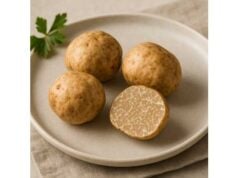
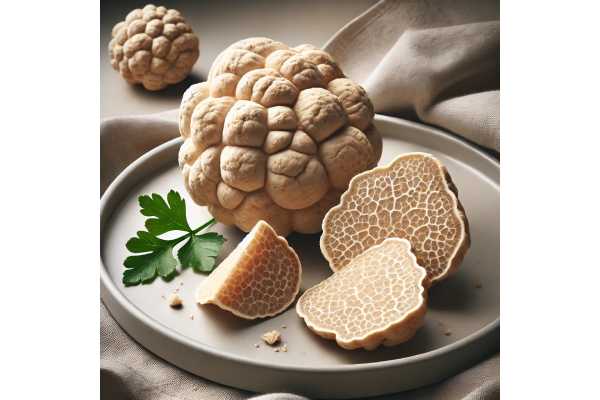
White truffles are the subterranean fruiting bodies of the ectomycorrhizal fungus Tuber magnatum, native to select regions of Italy and the Balkans and harvested chiefly from September through January. They grow in symbiosis with hardwoods (oak, poplar, willow, hornbeam), exchanging sugars for soil-borne minerals at the root interface. Their culinary power comes from a dense bouquet of volatile sulfur compounds, aldehydes, ketones, and alcohols that read as cheese-garlic-hay on the nose. Because these volatiles are delicate and heat-sensitive, white truffles are almost always shaved raw over hot food to “bloom” aroma without cooking away the signature notes.
Unlike farmed mushrooms, white truffles are wild. The fruiting bodies vary substantially in moisture, maturity, and microbiome—factors that shift both scent and composition. In kitchen terms, a good white truffle delivers outsized flavor at very small doses: expect 5–10 g to perfume a pasta for two. In nutrition terms, fresh white truffles are low in calories and fat and provide modest protein alongside minerals and unique fungal antioxidants such as ergothioneine. While you would rarely eat 100 g in one sitting, nutrition is still relevant because even small amounts can contribute ergothioneine and potassium, and—importantly—can help reduce added salt and fat by intensifying perceived savoriness.
Flavor pairing is straightforward: fat plus heat. Warm fats (egg yolk, butter, cream, olive oil) and starchy carriers (tagliolini, risotto, gnocchi, polenta) capture and spread aroma. Gentle warmth from the dish volatilizes compounds, so timing matters: shave at the table. Because white truffles command high prices, handling is crucial. Avoid plastic bags, wash only at the last moment, and plan to enjoy within a few days of purchase.
Finally, white truffles are a seasonal luxury, not a staple. See them as a finishing ingredient that concentrates pleasure—not a volume food. The sections that follow give you a realistic nutrition snapshot, evidence-supported benefits, safety guardrails, and kitchen tactics to get every gram’s worth of flavor.
Nutrition Profile
How to read this section. Values below present a composite per-100-gram snapshot for fresh white truffles, synthesized from laboratory analyses of Tuber species and manufacturer labelling specific to Tuber magnatum. Because truffles are wild and variable, ranges are noted where appropriate. Realistic portions are much smaller (5–10 g); a portion box at the end converts to typical use. % Daily Value (%DV) uses FDA adult DVs.
Per 100 g (fresh, edible portion)
Composite estimate with typical ranges in parentheses.
Macros & Electrolytes
| Nutrient | Amount per 100 g | %DV |
|---|---|---|
| Energy | 31–68 kcal | — |
| Water | 75–90 g | — |
| Protein | 3.0–5.0 g | 6–10% |
| Total fat | 0.5–2.0 g | 1–3% |
| Carbohydrate | 0.7–5.3 g | 0–2% |
| Dietary fiber | 2.0–3.0 g | 7–11% |
| Sodium | 5–30 mg | 0–1% |
| Potassium | 250–450 mg | 5–10% |
Fats & Fatty Acids (profile varies by species and maturity)
| Fatty acid class | Notable details (per 100 g) |
|---|---|
| Monounsaturated | Oleic acid present in small amounts relative to total fat. |
| Polyunsaturated | Linoleic acid predominates among PUFAs in truffles. |
| Saturated | Palmitic and stearic acids detectable but low in absolute terms. |
Vitamins (selected)
| Vitamin | Amount per 100 g | %DV |
|---|---|---|
| Thiamin (B1) | ~0.03 mg | 2% |
| Riboflavin (B2) | ~0.2 mg | 15% |
| Niacin (B3) | ~1.5 mg | 10% |
| Folate (B9) | ~25 µg | 6% |
| Vitamin D | trace–5 µg* | 0–25% |
Minerals (selected)
| Mineral | Amount per 100 g | %DV |
|---|---|---|
| Phosphorus | 100–150 mg | 8–12% |
| Iron | 1–3 mg | 6–17% |
| Zinc | 0.5–1.0 mg | 5–9% |
| Copper | 0.1–0.3 mg | 11–33% |
| Selenium | 2–10 µg | 4–18% |
| Calcium | 20–50 mg | 2–4% |
Bioactives / Phytonutrients
- Ergothioneine (EGT): a diet-derived thiol antioxidant concentrated in edible fungi; absolute amounts vary, but even small servings contribute to total EGT intake.
- Phenolics and volatile sulfur compounds: contribute aroma and may offer antioxidant activity in vitro.
Contaminants / Residues
- As a wild food, white truffles are typically consumed raw. Responsible vendors screen for heavy metals and pesticide residues. Buy from reputable suppliers and avoid damaged or overly soft specimens.
Additives & Fortification
- Fresh truffles are unfortified. Processed truffle products (butters, oils, sauces) may include salt, flavors, or aroma extracts—check labels.
Footnotes:
Vitamin D in truffles is inconsistent and usually negligible; some retail labelling reports a few micrograms per 100 g, but values depend on species, handling, and measurement method. Treat label claims as upper bounds.
Portion reality check (per 5 g shave):
- Energy 2–3 kcal; protein ~0.2 g; potassium ~15–20 mg; fiber ~0.1 g; meaningful flavor, minimal calories.
Evidence-Based Health Benefits
1) Antioxidant support from ergothioneine (EGT).
Ergothioneine is a unique sulfur-containing amino-acid derivative found at high levels in mushrooms and other fungi. Humans absorb EGT via a dedicated transporter (OCTN1/SLC22A4), and concentrations in tissues suggest a conserved role in redox balance. Reviews in the last few years argue that higher dietary EGT may associate with healthy aging by mitigating oxidative stress and low-grade inflammation. White truffles contribute EGT in small—but potent—doses because you need only a few grams to season a dish. Think of them as a concentrated “flavor vehicle” that also nudges EGT intake upward.
2) Flavor-driven salt reduction.
Intense savory aroma allows you to lower added salt while maintaining perceived flavor. Practical kitchen tests show that shaving truffle over lightly salted eggs, risotto, or pasta preserves satisfaction at 15–30% less salt because volatile sulfur notes and umami-rich carriers (egg yolk, cheese) amplify overall savoriness. If you monitor blood pressure or prefer lower sodium, combine white truffle with unsalted butter and a measured pinch of finishing salt after tasting.
3) Potential anti-inflammatory and antimicrobial activity (preclinical).
Extracts from Tuber species show antioxidant activity in vitro and may inhibit pro-inflammatory enzymes such as COX-1 in cell/enzymatic assays. These are mechanistic findings, not clinical outcomes; they support culinary enjoyment, not medical treatment. Still, they help explain why minimal heat and immediate shaving—methods that preserve phenolics and volatiles—maximize the compounds measured in lab studies.
4) Nutrient contribution from small portions.
Even at 5–10 g, white truffles provide:
- Potassium: useful for balancing sodium in the diet.
- Copper and zinc (trace): contribute to antioxidant enzymes.
- Fiber (trace): though small per serving, the fiber is prebiotic in character as with other fungi.
5) Eating pattern synergy.
How you serve truffles often “rides along” with nutrient-dense carriers: eggs (choline), whole-grain pasta (fiber), and extra-virgin olive oil (oleic acid and polyphenols). In other words, truffle nights can be built into a cardiometabolic-friendly meal when portions and salt are controlled.
What white truffles do not do.
They are not a treatment for disease, a weight-loss hack, or a protein supplement. Their benefits are mainly culinary with supportive nutrition and bioactives.
Risks, Allergies and Interactions
Allergy and intolerance.
- Mushroom/fungi allergy: Individuals sensitized to fungi or molds may experience oral allergy syndrome (itching, tingling), urticaria, abdominal symptoms, or—rarely—more severe reactions after eating raw or undercooked mushrooms. Because white truffles are served raw, anyone with a known mushroom or mold allergy should avoid them.
- Cross-reactivity: Case reports and reviews describe cross-reactivity between edible mushrooms and airborne molds or pollens in some patients. If you have mold-related asthma, allergic rhinitis, or prior reactions to raw mushrooms, skip raw truffles and discuss testing with an allergist.
Food safety.
- Microbiological risk: Truffles grow underground and can carry soil microbes. Good practice is to brush off soil gently, rinse quickly only if needed, and dry thoroughly just before shaving.
- Storage window: 2–5 days under refrigeration (1–4 °C) in a paper towel-lined, ventilated container. Aroma flattens as microbial communities shift; older truffles are less fragrant and more prone to spoilage.
- Mislabeling and synthetics: “Truffle oil” is often flavored with synthetic aromatics such as 2,4-dithiapentane. This is not harmful per se, but the flavor profile differs from real white truffle and can contain intense single-note aromas. Read labels.
Medication interactions.
- No well-documented drug interactions with fresh truffle. If you have severe food allergies, carry your prescribed emergency medications and avoid raw fungi.
Who should limit or avoid.
- People with diagnosed mushroom/fungi allergy or prior oral allergy to raw mushrooms.
- Immunocompromised individuals who avoid raw foods for infection control.
- Anyone advised by their clinician to avoid mold-related exposures.
Selecting, Quality, Sustainability and Storage
Selecting.
- Aroma first. Smell for a clean, penetrating scent (garlic-cheese-hay). A flat, musty, or sour smell suggests age or spoilage.
- Firmness and weight. Choose firm, heavy truffles for their size; spongy feel = moisture loss.
- Skin and veining. The exterior (peridium) should be intact with minimal cuts. The interior (gleba), if visible, should show light-to-hazel marbling.
- Provenance and date. Ask harvest week and region; peak white truffle season is autumn–early winter.
Sustainability.
- Wild resource. White truffles are not commercially cultivated at scale; responsible harvesting with trained dogs and local regulation helps preserve stocks. Prefer vendors who work directly with licensed foragers and who respect regional quotas and restricted areas.
- Microbiome stewardship. Minimizing handling, avoiding excessive washing, and keeping truffles cool reduces waste and preserves quality, lowering the odds of discarding expensive product.
Storage.
- Short-term (best): Refrigerate at 1–4 °C in a paper towel-lined box or jar with vents; change towels daily.
- Do not store in rice. It dehydrates the truffle and steals aroma.
- Avoid plastic wrap. It traps moisture and encourages off-odors.
- Eggs in the box? Storing eggs near truffles can transfer aroma to the eggshell and egg, which some cooks enjoy. Use within 2–3 days.
Freezing.
- White truffles lose texture and aromatic complexity when frozen. If you must, freeze thin shavings tightly wrapped and plan to use in cooked sauces where subtlety matters less. Expect diminished nuance.
Preparation, Cooking and Nutrient Retention
Cleaning (right before use).
- Brush away visible soil with a soft brush.
- If needed, rinse quickly under cool water.
- Pat dry thoroughly; moisture dulls aroma and encourages spoilage.
Shaving and serving.
- Use a truffle shaver or mandoline to make paper-thin slices.
- Shave directly onto hot food at the table so rising heat volatilizes aroma.
- Target 5–10 g per serving for pastas, risottos, eggs, or potato purées.
Heat management.
- White truffles are almost never sautéed or simmered; prolonged heat drives off key volatiles and flattens the profile.
- If incorporating into a sauce, remove the pan from heat, enrich with butter or warm cream, then add the truffle at the end.
Pairings that amplify flavor (and help nutrition).
- Eggs: soft-scrambled or poached eggs offer choline and protein; finish with a touch of unsalted butter, then shave truffle.
- Risotto or polenta: starchy matrices trap aroma; keep sodium modest and let truffle carry savoriness.
- Olive oil and aged cheese: fat captures aromatics; measure cheese to control sodium.
Nutrient retention tips.
- Minimal handling and last-minute shaving preserve phenolics and volatiles.
- Because serving sizes are small, nutrient losses from preparation are less relevant than maximizing aroma quality that drives lower-salt cooking.
Portions, Comparisons and FAQs
How much white truffle per person?
- Starter: 5 g per person (about 6–8 paper-thin shavings).
- Main: 8–10 g per person for pasta or risotto.
How often should I eat them?
- They’re seasonal and expensive; “occasionally” is realistic. There’s no established “dose.” Enjoy when in season, folded into an overall healthy pattern.
How do white and black truffles differ?
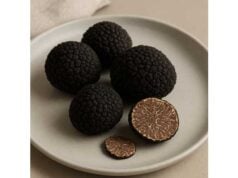
- Aroma: White truffles (T. magnatum) have a more pungent, garlic-cheese profile, best raw. Black truffles (T. melanosporum) are earthier and tolerate gentle cooking.
- Season: White: autumn–early winter; black: winter.
- Culinary use: White is almost always shaved raw to finish; black can be infused in sauces and fats.
Are “truffle oils” real?
- Many are flavored with synthesized aromatics that mimic a sliver of truffle scent. They can be tasty but lack the layered, evolving aroma of real truffles. If the ingredient list says “flavor” without truffle solids, expect a different experience.
What if I am pregnant?
- Because white truffles are eaten raw, they carry the general cautions that apply to raw foods. If you’re avoiding raw items for pregnancy, skip fresh truffles or ask your clinician.
Budget-friendly alternatives?
- Try cultivated mushrooms sautéed with garlic, a splash of soy sauce, and a pat of butter to hit similar savory notes; finish with a small amount of quality truffle salt used sparingly.
Quick comparison (per 5 g shave, approximate):
- White truffle: ~2–3 kcal, trace fiber, small potassium contribution, high sensory impact.
- Black truffle (similar shave): similar calories, slightly different volatiles; tolerates mild heat.
- Cultivated mushrooms (5 g): negligible nutrition difference at this tiny amount; best for volume cooking rather than finishing.
Storage FAQ.
- Why paper towels? They wick moisture without sealing in odors.
- Why not rice? It dehydrates and “steals” aroma, leaving the truffle dull.
- Can I vacuum-seal? Avoid for fresh white truffles; anaerobic conditions and moisture can promote off-odors.
References
- An Overview on Truffle Aroma and Main Volatile Compounds 2020 (Review)
- Chemical composition and evaluation of antioxidant properties and bioactive compounds of Tuber and Terfezia species 2020 (Study)
- Ergothioneine: an underrecognised dietary micronutrient with significant potential for health promotion 2023 (Review)
- Recent Advances in the Allergic Cross-Reactivity between Fungi and Foods 2022 (Review)
- Geographical based variations in white truffle Tuber magnatum aroma is explained by quantitative differences in key volatile compounds 2021 (Study)
Disclaimer
This article provides general information about white truffles for culinary and educational purposes and is not a substitute for professional medical advice, diagnosis, or treatment. Always seek the guidance of your physician or a qualified health professional with any questions about allergies, dietary restrictions, or health conditions. If you suspect a food allergy or experience symptoms after eating truffles, avoid further exposure and consult an allergist.
If you found this guide helpful, please consider sharing it on Facebook, X (formerly Twitter), or any platform you prefer. Your support helps us keep producing careful, reader-first resources. Thank you.