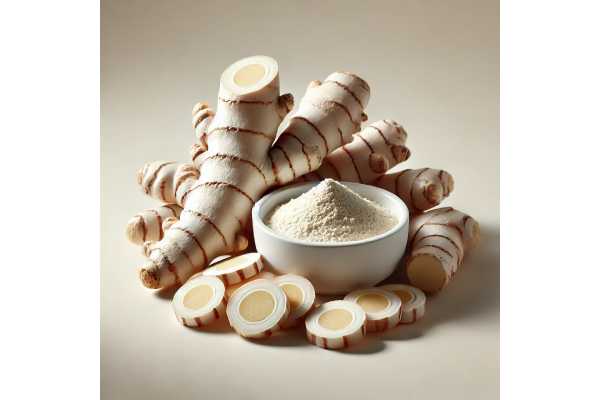
White turmeric, often known by its botanical name Curcuma zedoaria, is a lesser-known cousin of the bright yellow turmeric many people recognize. Its pale interior, fresh camphor-like aroma, and slightly bitter, ginger-like taste have made it a valued root in traditional Asian medicine and regional cooking. In some cuisines it is sliced into salads or pickles; in others it is dried and ground into a fragrant powder used in spice blends and herbal preparations.
Beyond its culinary role, white turmeric contains essential oils, phenolic compounds, and small amounts of curcuminoids that have attracted research interest. Experimental studies suggest possible antioxidant, anti-inflammatory, lipid-lowering, and liver-supporting properties, though most of this work is still preclinical or early stage. At the same time, concentrated extracts can show measurable toxicity in laboratory models, reminding us that “natural” does not always mean risk-free. This article explores what is currently known about white turmeric’s composition, potential benefits, appropriate use, and safety so you can decide how it fits into your own kitchen and wellness routine.
White Turmeric At a Glance
- Offers aromatic flavor plus bioactive compounds such as essential oils, phenolics, and low levels of curcuminoids.
- Early research suggests antioxidant, anti-inflammatory, lipid-lowering, and liver-supporting effects, but human data remain limited.
- A typical culinary amount is around 1–3 g dried powder per day (about ½–1 teaspoon) used in food.
- Concentrated extracts and very high doses have shown toxicity in experimental models and should not be self-dosed.
- People who are pregnant, have gallbladder disease, bleeding disorders, or complex medication regimens should be especially cautious and seek medical advice before using supplements.
Table of Contents
- White Turmeric History and Culinary Roles
- White Turmeric Nutrients and Key Constituents
- Current Science on White Turmeric Benefits
- White Turmeric Side Effects, Allergies and Interactions
- Buying White Turmeric, Quality and Sustainability
- Preparing White Turmeric and Protecting Nutrients
- How Much White Turmeric? Portions and FAQs
White Turmeric History and Culinary Roles
White turmeric belongs to the ginger family (Zingiberaceae) and has been used for centuries across South and Southeast Asia. Traditional texts and folk practices describe its rhizome as aromatic, warming, and carminative (gas-relieving), with applications for digestive discomfort, menstrual issues, respiratory complaints, and certain skin problems. Today, it remains part of traditional herbal systems in India, Indonesia, and other tropical countries, though it is far less globally known than yellow turmeric.
The plant itself is a perennial herb. Underground, it forms knobbly rhizomes with a thin, pale yellow to whitish interior; above ground, it produces long green leaves and seasonal flowers. Compared with common turmeric, the fragrance of fresh white turmeric is more reminiscent of a blend between ginger and mango, with notes of camphor and eucalyptus. This aromatic profile comes from its essential oil fraction, which is rich in sesquiterpenes such as curzerenone, curzerene, germacrone, and related compounds.
In the kitchen, white turmeric is used in several ways:
- Fresh slices or matchsticks: In some Indian and Indonesian dishes, thinly sliced white turmeric is added to salads, chutneys, or pickles, often with lime, chili, and salt.
- Pickled preparations: The crisp texture lends itself to quick pickles that bring both crunch and a subtle bitterness to balance rich or fatty foods.
- Dried and powdered: In powdered form, it can be blended into herbal teas, spice mixtures, or pastes. Compared with common turmeric, it imparts less yellow color but adds a distinct scent and moderate heat.
- Topical and traditional uses: Pastes made from the rhizome may be applied in some traditions to the skin for localized discomfort, insect bites, or cosmetic applications, though robust clinical evidence is still limited.
Outside of traditional cuisines, white turmeric is increasingly sold as a specialty powder or capsule in wellness markets. Here it is often marketed for digestion, liver support, or skin health. It is important to distinguish between the small amounts used in food and the much higher concentrations found in extracts and supplements, because their risk–benefit profiles are not the same.
In modern cooking, you can think of white turmeric as an aromatic bridge between ginger and common turmeric. It works well:
- Finely grated into vegetable stir-fries and lentil dishes.
- Blended into marinades for fish and poultry.
- Mixed with other spices to create herbal tea infusions.
Because its flavor is assertive, most people find a little goes a long way.
White Turmeric Nutrients and Key Constituents
White turmeric is usually consumed in gram-level amounts, so its macronutrients contribute very little to daily energy needs. Like other rhizomes, dried white turmeric is primarily carbohydrate, with small amounts of protein and fat and a modest fiber content. The starchy fraction provides structure, while non-starch polysaccharides contribute a bit of fiber. From a strictly macronutrient perspective, a teaspoon of dried powder adds only a few calories and a trace amount of fiber to a meal.
The real interest lies in its phytochemical profile:
- Essential oils: White turmeric essential oil is rich in sesquiterpenes such as curzerene, curzerenone, epicurzerenone, germacrone, and β-eudesmol. These volatile molecules give the rhizome its penetrating aroma and have shown antioxidant, anti-inflammatory, and various bioactive effects in experimental models.
- Curcuminoids (phenolic pigments): While yellow turmeric is famous for curcumin and its relatives, white turmeric generally contains much lower levels of these pigments. Analyses of extracts detect small amounts of curcumin, demethoxycurcumin, and bisdemethoxycurcumin, often at a fraction of the levels reported for common turmeric. This means many of white turmeric’s effects are likely driven more by its essential oils and other phenolics than by curcumin itself.
- Other phenolic and flavonoid compounds: Reviews highlight additional phenolics and flavonoids that contribute to radical-scavenging and potential anti-inflammatory effects, though not all have been fully characterized.
In traditional preparations, the whole rhizome is used rather than isolated compounds. In food, this means you are getting a complex mixture where different constituents may act additively or synergistically. For example, antioxidant components can help neutralize reactive molecules, while certain terpenes may influence digestive enzyme activity, vascular tone, or microbial growth in the gut environment.
From a safety standpoint, it is also important to recognize that the same molecules responsible for desirable effects can cause problems at higher doses. The essential oil fraction has shown notable biological activity, including potent antiparasitic and cytotoxic effects in experimental systems. Those properties are promising for drug development but also signal that concentrated forms should be handled with care.
Overall, as a culinary ingredient, white turmeric offers:
- Minimal calories and modest fiber.
- A diverse mix of essential oils and phenolics.
- Very low but measurable levels of curcuminoids.
These features support its role as a flavoring and as one small contributor to the overall phytochemical richness of a plant-forward diet, rather than as a stand-alone nutrient powerhouse.
Current Science on White Turmeric Benefits
Modern research on white turmeric is still developing, and most studies have been conducted in cells, animals, or small pilot trials. Results are encouraging in several areas, but they should be interpreted with appropriate caution.
Antioxidant and anti-inflammatory potential
Multiple laboratory studies report that extracts of white turmeric show strong antioxidant activity in chemical assays and can reduce markers of oxidative stress and inflammation in experimental models. These effects are linked both to the essential oil fraction and to phenolic components that can scavenge free radicals and modulate signaling pathways involved in inflammatory responses.
In practical terms, this suggests that including white turmeric alongside other herbs and spices may contribute modestly to overall antioxidant intake. However, most experiments use higher concentrations than those found in a lightly seasoned meal, so culinary amounts should be seen as supportive rather than therapeutic.
Digestive and metabolic effects
Traditional uses of white turmeric often center on digestion and metabolism, and some animal research aligns with these uses:
- Experimental diets supplemented with zedoary-based herbal preparations have shown improvements in blood lipids and markers of oxidative stress in animal models of high cholesterol or high-fat feeding, including reductions in total cholesterol and triglycerides.
- Other work suggests that white turmeric may influence bile flow and certain liver enzymes, which could partially explain its traditional use for “cleansing” or supporting liver function.
Most of this evidence comes from animal studies with controlled doses, often in extract or tea form. It is not appropriate to assume the same magnitude of effect in humans based solely on these findings, but they provide a scientific rationale for why white turmeric has been valued in traditional diets and remedies.
Liver health and early clinical data
More recently, clinical work has evaluated white turmeric-based treatments in people with nonalcoholic fatty liver disease (NAFLD). Participants receiving white turmeric-containing formulations showed improvements in subjective symptoms such as digestive discomfort and fatigue and favorable changes in some liver-related parameters compared with standard care, with no major treatment-related adverse events reported during the study period.
This early human evidence is promising but not definitive. The study design, dose used, and population characteristics may not generalize to all patients with liver disease, and long-term safety data are still limited. White turmeric should therefore be seen as a potential adjunct under professional supervision, not a replacement for established medical care or lifestyle changes such as diet, weight management, and physical activity.
Antimicrobial, antiparasitic, and anticancer research
White turmeric also features in experimental work on:
- Anticancer activity: Extracts and isolated compounds such as isocurcumenol have shown the ability to inhibit proliferation and induce cell death in various cancer cell lines and to suppress tumor growth in some animal models.
- Antiparasitic activity: Essential oil from white turmeric has demonstrated potent activity against hydatid cyst protoscoleces in laboratory and ex vivo models, suggesting possible future applications in parasitic disease management.
- Skin protection: Extracts have been studied for their capacity to reduce UVB-induced skin inflammation and markers of photoaging in experimental systems, supporting their exploration in dermatologic or cosmetic formulations.
These findings are scientifically interesting but remain far from everyday culinary or self-care use. The concentrations and delivery forms are very different from using a teaspoon of white turmeric powder in a recipe.
Taken together, current evidence suggests that white turmeric:
- Has a complex phytochemical profile capable of influencing oxidative stress, inflammation, lipid metabolism, and certain microbial or parasitic targets.
- Shows promising effects in preclinical models and some early clinical contexts, particularly related to metabolic and liver health.
- Requires more rigorous human research before any strong health claims can be made.
For now, using white turmeric primarily as a food and, if desired, as part of professionally supervised herbal strategies is the most balanced approach.
White Turmeric Side Effects, Allergies and Interactions
Although white turmeric has a long history of traditional use, this does not guarantee complete safety in all situations—especially when modern extracts and concentrated products are involved.
Gastrointestinal effects
In small culinary amounts, most people tolerate white turmeric well. At higher doses, however, its bitter, warming constituents and essential oils can cause:
- Stomach discomfort or cramping.
- Nausea or a feeling of fullness.
- Loose stools in sensitive individuals.
People with existing digestive disorders such as gastritis, peptic ulcers, or active reflux may be more likely to notice irritation if they consume large amounts of white turmeric regularly, particularly on an empty stomach.
Toxicity of concentrated extracts
Recent work using brine shrimp and zebrafish embryo models has evaluated the acute toxicity of ethanol extracts of white turmeric rhizomes. These studies report lethal concentration values in the low hundreds of parts per million for embryos and larvae and identify specific essential oil components as likely contributors to toxicity at high concentrations.
Other evidence compiled by food safety authorities indicates that certain turmeric-related extracts, including white turmeric, can elevate liver enzymes or cause organ changes in animal studies when administered at high doses over time.
These findings do not mean that normal culinary use is dangerous; the doses used in toxicity testing are much higher than those in food. They do highlight that:
- Self-prescribing large doses of white turmeric extracts or essential oil is not advisable.
- Products with concentrated white turmeric should be used only under professional guidance, especially for long-term or high-dose regimens.
Allergy and hypersensitivity
Spice allergies are uncommon but recognized. People may develop reactions to members of the ginger family, including turmeric and related rhizomes. Symptoms can range from mild oral itching or hives to more serious respiratory or systemic reactions in rare cases.
Warning signs after consuming white turmeric may include:
- Tingling, burning, or swelling of the lips, mouth, or throat.
- Generalized itching, hives, or flushing.
- Wheezing, chest tightness, or shortness of breath.
Anyone experiencing these symptoms should stop using the product and seek medical assessment. Those with a history of spice allergies should be especially cautious when trying white turmeric for the first time.
Interactions with medications and health conditions
Because white turmeric contains phenolics and essential oils capable of influencing liver enzymes, antioxidant systems, and inflammation pathways, there is potential—though not yet fully defined—for interactions with certain medications. Extrapolating from broader turmeric and curcumin data, caution is especially sensible if you:
- Take anticoagulant or antiplatelet medicines.
- Use drugs that are highly dependent on liver metabolism or have a narrow safety margin.
- Are on multiple medications for chronic conditions such as cardiovascular disease, autoimmune disease, or cancer.
White turmeric products should not be used as a stand-alone treatment for serious illnesses, and any supplement use should be disclosed to healthcare professionals so interactions can be monitored.
Specific groups who should be extra careful include:
- Pregnant and breastfeeding individuals: Traditional use does not replace safety testing. Normal culinary amounts shared in family meals are usually acceptable, but high-dose supplements and essential oils should be avoided unless clearly recommended by a clinician.
- People with gallstones or bile duct obstruction: As with other turmeric preparations, there is concern that increased bile flow could aggravate symptoms in some cases.
- Children: Small amounts in shared meals are generally reasonable, but medicinal doses or concentrated products are not appropriate without pediatric guidance.
In summary, white turmeric is likely safe for most healthy adults when used as a spice in moderate amounts. Risks increase mainly with pre-existing conditions, allergies, and high-dose or long-term use of extracts and essential oils.
Buying White Turmeric, Quality and Sustainability
Because white turmeric is less common internationally than yellow turmeric, quality can vary widely between products and suppliers. Taking a little time to choose well can improve both safety and flavor.
Fresh rhizomes vs dried products
- Fresh white turmeric: Look for firm, smooth rhizomes without soft spots or visible mold. The interior should be pale yellow to off-white with a crisp texture and a clean, aromatic scent when cut. Avoid roots that are shriveled, damp, or have a strong musty or rotten smell.
- Dried slices and powder: Good-quality dried white turmeric should have a characteristic aroma that is slightly camphor-like and not overwhelmingly musty or smoky. Powder should be free-flowing, with a light cream to beige color, and should not clump excessively.
Because white turmeric is sometimes confused with other rhizomes, buying from a reputable supplier that clearly identifies the botanical name (Curcuma zedoaria) can reduce the risk of mislabeling.
Assessing purity and avoiding adulteration
Spices and herbal powders are occasionally adulterated with cheaper fillers or, in some cases, unrelated plant material. While white turmeric is less frequently targeted than some high-value spices, it is still wise to:
- Check the ingredient list and select products that list only white turmeric or Curcuma zedoaria.
- Be cautious of very low prices compared with market averages, which can indicate dilution.
- Favor brands that provide batch numbers, best-before dates, and some description of sourcing and processing.
If a powder has an uncharacteristically strong artificial color, off smell, or unusual texture (for example, very chalky), it is reasonable to question its quality.
Storage for safety and flavor
Proper storage helps protect both flavor and safety:
- Keep white turmeric (fresh or dried) in an airtight container away from light, heat, and humidity.
- Store fresh rhizomes in the refrigerator wrapped loosely in paper, then sealed in a breathable bag or box, and use within a week or two.
- Use dried powder within about 6–12 months for best aroma; whole dried slices can sometimes keep their character a little longer.
Good storage practices reduce the risk of mold growth and the breakdown of fragile aromatic compounds.
Sustainability and ethical sourcing
White turmeric is grown primarily by smallholder farmers in tropical regions. While detailed sustainability data are limited, the broader issues seen with spice crops apply here too:
- Pressure on land and ecosystems when demand rises without careful management.
- Economic imbalances where farmers receive only a small fraction of the final retail price.
- Pesticide and fertilizer use that can impact soil and water quality.
Consumers can encourage better practices by:
- Choosing products from companies that describe long-term relationships with growers, fair pricing, or community support.
- Looking for certifications that align with your values, while recognizing that many small producers cannot afford certification fees.
- Buying only quantities you will genuinely use, reducing waste of both product and the resources used to produce it.
By paying attention to origin, handling, and storage, you can enjoy white turmeric’s distinctive character while supporting more responsible supply chains.
Preparing White Turmeric and Protecting Nutrients
How you prepare white turmeric influences not only its flavor but also the stability of its active constituents. A few practical choices can help you capture its benefits while keeping use moderate and well tolerated.
Using fresh white turmeric
Fresh rhizome offers a bright, complex aroma and can be used:
- Washed and peeled lightly to remove surface dirt and any tough outer skin.
- Sliced, grated, or julienned depending on the dish—thin slices for pickles, fine grating for marinades or dressings.
- Combined with acid and fat, such as lime juice and a small amount of oil, to help disperse its flavor and potentially improve the solubility of some constituents.
Because its taste is assertive, it is usually best to start with small amounts—such as a few thin slices or a teaspoon of grated root in a recipe for several servings—and adjust to taste.
Working with dried powder
Dried white turmeric powder is convenient for:
- Stirring into soups, stews, and curries.
- Blending into herbal teas or warm drinks.
- Adding to spice mixes for rubs and marinades.
To preserve aroma:
- Add part of the powder earlier in cooking to infuse the dish and a smaller amount near the end to refresh the fragrance.
- Avoid frying the powder for long periods in very hot oil, which can degrade volatile oils and increase the risk of burning.
Heat, time, and phytochemical stability
Different compounds in white turmeric respond differently to cooking:
- Essential oils are volatile and can evaporate or degrade with prolonged high heat, so gentle cooking or late addition tends to preserve them better.
- Phenolic compounds and curcuminoids, though present at lower levels than in yellow turmeric, are relatively heat-stable in many cooking conditions but can slowly degrade with extended boiling or storage.
In practice, home cooking amounts and typical preparation times are unlikely to ruin all beneficial components. The main goal is tasteful and efficient use rather than maximizing every milligram of a given molecule.
Combining with other ingredients
White turmeric is rarely used alone. Synergistic combinations can be both tasty and sensible:
- Pair with ginger, garlic, and black pepper in savory dishes. Pepper may modestly enhance absorption of certain compounds, while garlic and ginger bring their own complementary benefits.
- Combine with healthy fats (such as olive oil or sesame oil) to improve dispersion of fat-soluble constituents.
- Use alongside vegetable-rich dishes where the spice boosts palatability, supporting higher intake of fiber and micronutrients.
Homemade infusions and pastes
For those exploring traditional-style preparations:
- A simple infusion can be made by steeping thin slices or a pinch of powder in hot (not boiling) water for 5–10 minutes, optionally with ginger or lemongrass.
- A paste for culinary use might blend white turmeric with other spices, a little oil, and aromatics like onion and garlic, to be sautéed as a flavor base.
Any more concentrated or medicinal-style use (for example, daily shots of strong extract or self-prepared high-dose capsules) should be approached cautiously and ideally under guidance, due to the toxicity concerns discussed earlier.
How Much White Turmeric? Portions and FAQs
Because formal dosing guidelines for white turmeric are limited, it is helpful to distinguish clearly between culinary use and supplemental or medicinal use.
Practical culinary portions
For most healthy adults:
- About ½–1 teaspoon (1–3 g) of dried white turmeric powder per day, spread across meals, is a reasonable upper range for routine cooking.
- Fresh root can be used in similar quantities by weight; for example, a few thin slices or roughly 5–10 g grated across a family dish.
These amounts match traditional culinary patterns in regions where white turmeric is used and are well below doses that have raised toxicity concerns in experimental models.
When to be more conservative
Consider staying near the lower end of the range or using white turmeric only occasionally if you:
- Tend to have heartburn, gastritis, or a very sensitive digestive tract.
- Are pregnant, breastfeeding, or planning pregnancy.
- Have a history of gallstones, bile duct problems, or significant liver disease.
- Take blood thinners, strong immunosuppressive drugs, or multiple medications metabolized by the liver.
In these situations, it is sensible to treat white turmeric as a regular food rather than as a daily “functional” ingredient and to discuss any idea of supplemental use with a healthcare professional.
Comparisons with yellow turmeric and ginger
- Yellow turmeric (Curcuma longa): Typically higher in curcuminoids and widely studied for anti-inflammatory effects in joint health, metabolic conditions, and more. It also carries its own safety considerations at high doses.
- White turmeric (Curcuma zedoaria): Lower in curcuminoids but richer in certain essential oils and distinct sesquiterpenes, which may account for some of its traditional uses in digestion, liver support, and gynecologic health.
- Ginger (Zingiber officinale): Well studied for nausea, digestion, and some cardiometabolic aspects, and often better tolerated at higher culinary intakes.
Rather than trying to choose a “winner,” you can see these roots as complementary, each contributing a different profile of compounds and flavors.
Common questions
Can I take white turmeric every day?
Using modest culinary amounts daily in varied meals is likely acceptable for most healthy people. Daily use of concentrated extracts or high-dose capsules is a different question and should be guided by a qualified professional.
Is white turmeric better than yellow turmeric for inflammation?
Current evidence is much stronger for yellow turmeric and curcumin in this area. White turmeric may have useful anti-inflammatory actions, but research is sparser, and it should not be viewed as a direct substitute for well-studied treatments.
Can white turmeric help with weight loss?
Animal studies suggest possible favorable effects on lipid profiles and oxidative stress, but there is no strong human evidence that white turmeric alone causes significant weight loss. It may play a small supportive role within a broader program that includes dietary changes, movement, and adequate sleep.
Is white turmeric safe for children?
Small amounts in family dishes are generally reasonable. Dedicated white turmeric supplements or high-dose preparations are not recommended for children unless specifically advised by a pediatric healthcare provider.
Ultimately, the safest way to benefit from white turmeric is to treat it as what it has often been in traditional settings: a flavorful ingredient that can gently support health as part of a balanced, varied diet—rather than a quick fix or stand-alone remedy.
References
- Curcuma zedoaria Rosc (Zingiberaceae): a review on its chemical, pharmacological and biological activities 2021 (Systematic Review)
- Curcuma zedoaria Rosc. (white turmeric): a review of its chemical, pharmacological and ethnomedicinal properties 2009 (Review)
- Phytopreventive antihypercholesterolemic and antilipidemic perspectives of zedoary (Curcuma zedoaria Roscoe) herbal tea 2016 (Animal Study)
- Efficacy and safety of Curcuma zedoaria to inactivate the hydatid cyst protoscoleces 2020 (Experimental Study)
- Acute toxicity of ethanol extract of Curcuma zedoaria rhizomes on brine shrimp larvae and zebrafish embryos 2024 (Toxicity Study)
Disclaimer
The information in this article is intended for general educational purposes only and is not a substitute for professional medical advice, diagnosis, or treatment. Individual responses to white turmeric and other herbal products can vary, especially in the presence of underlying medical conditions or prescription medications. Always consult a qualified healthcare professional before starting, stopping, or changing any diet, supplement, or treatment plan, and never disregard or delay seeking medical advice because of something you have read here.
If you found this guide useful, you are welcome to share it on Facebook, X (formerly Twitter), or any platform you prefer. Thoughtful sharing helps more readers access balanced, evidence-informed information and supports the ongoing work that goes into producing resources like this one.