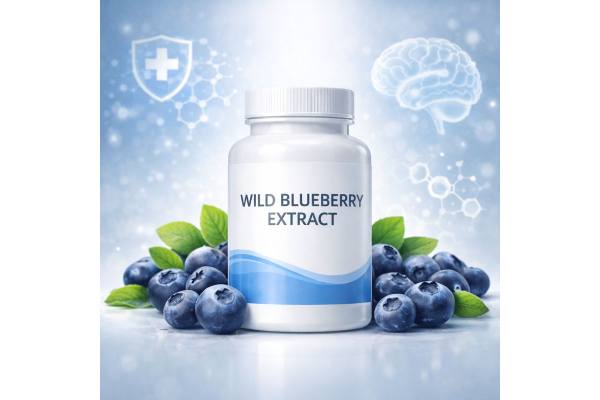
Wild blueberry extract is a concentrated form of the dark, polyphenol-rich compounds found in wild blueberries (often Vaccinium angustifolium, also called lowbush blueberry). People use it because it delivers anthocyanins and related (poly)phenols in a smaller, more consistent dose than fresh berries—useful when you want a “daily baseline” for heart, brain, and metabolic support without relying on seasonality or appetite. The most credible benefits seen in human research are modest but meaningful: improved blood-vessel function, small improvements in blood pressure in some groups, and short-term or longer-term support for certain thinking skills in older adults.
That said, extracts are not all the same. Potency, standardization, and added ingredients can change the real-world outcome. This guide will help you understand what it is, what it can realistically do, how to choose and use it well, and how to avoid common safety mistakes.
Key Takeaways for Wild Blueberry Extract
- Expect the strongest support for vascular function and modest cognitive benefits, not overnight transformation.
- Typical supplemental ranges are about 300–1,200 mg/day of extract, often targeting ~150–300 mg/day of anthocyanins when standardized.
- Start low; stomach upset and headache are the most common mild complaints.
- Avoid use (or get clinician guidance) if you take blood thinners, have a berry allergy, or are pregnant or breastfeeding.
Table of Contents
- What is wild blueberry extract?
- What benefits can you expect?
- How does wild blueberry extract work?
- How to choose a quality extract
- How much should you take?
- Who should not take it?
- What the research really says
What is wild blueberry extract?
Wild blueberry extract is made by concentrating the bioactive components of wild blueberries—especially anthocyanins (the pigments responsible for the deep blue-purple color), along with other polyphenols, small amounts of organic acids, and trace micronutrients. “Wild” typically refers to lowbush blueberries, which grow in cooler climates and are often smaller and darker than cultivated highbush berries. In practice, many supplements blend species or simply say “blueberry extract,” so label reading matters.
How it is produced
Most commercial extracts are created in a few steps:
- Harvest and stabilization: Berries are frozen or gently dried to protect fragile compounds.
- Extraction: Water, ethanol, or a mix pulls out polyphenols from skins and pulp.
- Filtration and concentration: The liquid is filtered and concentrated into a thick extract.
- Standardization (sometimes): Better products adjust batches to a consistent level of anthocyanins or total polyphenols.
- Drying into powder: Spray-drying or freeze-drying produces a powder for capsules, tablets, or drink mixes.
Not every product is standardized. Without standardization, “500 mg” can mean very different things depending on how concentrated the extract is and what part of the berry was used.
Common forms you will see
- Capsules or tablets: Convenient, but quality depends heavily on standardization and testing.
- Powders: Can be mixed into yogurt or smoothies; sometimes closer to whole-food “berry powders” than true extracts.
- Liquids/tinctures: Useful for dosing flexibility, though taste and stability vary.
A quick distinction: freeze-dried blueberry powders contain more of the whole berry matrix (fiber-like components and sugars), while extracts are more concentrated in polyphenols relative to calories and sugar. They are not interchangeable, but both show up in clinical research.
What benefits can you expect?
If you want a realistic, evidence-aligned picture, think of wild blueberry extract as a supportive “nudge” supplement: it can improve certain biomarkers and performance measures, especially in people who are older, stressed, or starting from a lower baseline of vascular function. It is not a replacement for blood pressure medication, diabetes management, or cognitive care—but it can complement healthy habits.
Heart and blood-vessel support
The most consistent human signal for blueberries and their polyphenols is better endothelial function—how well blood vessels relax and respond to blood flow. Across controlled studies, blueberry interventions have been associated with improvements in flow-mediated dilation (FMD), a standard marker of vascular responsiveness. Some analyses also show small reductions in diastolic blood pressure, with certain subgroups (such as smokers) seeing larger changes.
Why this matters: endothelial function is not just a lab metric; it is tied to circulation, exercise tolerance, and long-term cardiovascular risk patterns. Improvements are often modest, but they can add up when paired with sleep, movement, and diet.
Brain and cognitive performance
Wild blueberry products have been studied for attention, executive function (task switching, mental flexibility), and memory—particularly in older adults. Results tend to be subtle: a few tasks improve, others do not, and the greatest effects appear when cognition dips during the day (for example, after meals or during the afternoon slump). If you are looking for day-to-day “sharpness,” the benefits may feel like smoother mental stamina rather than a dramatic change.
Metabolic and immune-related support
Blueberry powders and extracts are also studied in people at risk for metabolic syndrome. Not every trial shows improvements in classic markers like fasting glucose or cholesterol over short timeframes, but some research finds changes in gene expression and metabolite patterns linked to inflammation and immune pathways. Practically, this suggests blueberries may influence upstream biology even before major lab numbers move.
Antioxidant and recovery advantages
Blueberry polyphenols can reduce oxidative stress signaling after metabolic strain (like high-fat meals or heavy exercise). If you train hard or have a high-stress lifestyle, the “advantage” may be better recovery capacity and less vascular drag—again, subtle, but potentially meaningful.
How does wild blueberry extract work?
Wild blueberry extract is best understood as a polyphenol delivery system. The headline compounds—anthocyanins—are joined by flavonols, phenolic acids, and other berry metabolites. Together, they interact with blood vessels, immune signaling, and the gut microbiome.
1) Vascular effects: nitric oxide and vessel flexibility
A central mechanism is improved endothelial signaling, often discussed through nitric oxide (NO). NO helps blood vessels relax and widen, improving circulation and lowering vascular resistance. Blueberry polyphenol metabolites appear to support this pathway by:
- Improving the balance between oxidative stress and antioxidant defenses inside vessel walls
- Shifting inflammatory signaling that otherwise stiffens the endothelium
- Supporting NO availability, which helps the artery respond to changes in blood flow
This aligns with observed improvements in FMD and small blood pressure changes in human trials.
2) Brain effects: blood flow, signaling, and “mental energy”
The brain is sensitive to both inflammation and vascular function. When blood vessels respond better, the brain often has more consistent perfusion during demanding tasks. Separately, polyphenol metabolites can influence neuronal signaling pathways involved in learning and attention. In real life, that can look like slightly better task-switching accuracy, steadier recall, or fewer “stalls” during complex thinking—more like a reliability upgrade than a stimulant effect.
3) Gut microbiome: turning polyphenols into active metabolites
Here is a detail many labels do not explain: your gut bacteria do a lot of the work. Many berry polyphenols are poorly absorbed in their original form. They reach the colon, where microbes break them down into smaller metabolites that can be absorbed and circulated. This is one reason two people can take the same product and report different outcomes.
Practical implication: consistent daily intake often matters more than “mega-doses,” because the microbiome may adapt over weeks.
4) Metabolic signaling: inflammation and post-meal stress
After a high-carb or high-fat meal, the body experiences a temporary rise in oxidative stress and inflammatory signaling. Blueberry polyphenols can dampen that post-meal stress response. Over time, reducing these repeated “micro-hits” may support better cardiometabolic resilience, even if changes in fasting labs take longer.
How to choose a quality extract
The biggest risk with wild blueberry extract is not that it is “dangerous”—it is that it is under-dosed, poorly standardized, or not meaningfully wild blueberry at all. A smart purchase is less about hype and more about documentation.
Look for clarity on species and plant part
- Prefer labels that specify wild blueberry or lowbush blueberry (often Vaccinium angustifolium).
- If the label only says “blueberry extract,” it may be highbush, blended, or unspecified. That is not automatically bad, but it makes potency harder to predict.
Standardization: the most useful number on the bottle
A strong label will state something like:
- “Standardized to X% anthocyanins” or
- “Provides Y mg anthocyanins per serving” or
- “Standardized to total polyphenols (less ideal than anthocyanins, but still useful).”
If you see only “1000 mg blueberry extract” with no standardization, you are buying a weight number, not a potency number.
Third-party testing and contaminants
Berries can concentrate residues depending on sourcing and processing. Choose brands that provide:
- Third-party testing (identity, potency, heavy metals, microbes)
- Lot-specific certificate of analysis access (even if you have to request it)
If a product claims “wild harvested,” that is marketing unless backed by traceable sourcing.
Watch the “extras” that change how it behaves
- Added sugars or sweeteners (common in gummies and drink mixes) can undermine metabolic goals.
- Caffeine blends can confuse whether the benefit is from blueberry or stimulants.
- Proprietary blends can hide the actual blueberry dose.
A quick checklist before you buy
- Clear serving size in mg
- Anthocyanins listed (mg or %)
- Minimal fillers, no mystery blends
- Transparent testing and contactable support
If you cannot find any potency information, consider using a reputable freeze-dried berry powder instead, where the “dose” is more intuitive and closer to the food studied in many trials.
How much should you take?
Dosage is tricky because clinical studies often use freeze-dried wild blueberry powder or whole blueberry interventions, while supplements may use extracts with very different anthocyanin density. The best approach is to anchor your target to the amount of anthocyanins used in human research and then translate that into an extract dose if your product is standardized.
A practical daily range
For most adults using wild blueberry extract for general support:
- 300–1,200 mg/day of extract is a common real-world range.
- If standardized, many people aim for ~150–300 mg/day of anthocyanins.
Why those numbers? Human trials with wild blueberry powders often land around a few hundred milligrams of anthocyanins per day. If your extract is standardized to 25% anthocyanins, then:
- 600 mg extract ≈ 150 mg anthocyanins
- 1,200 mg extract ≈ 300 mg anthocyanins
If your extract is standardized to 10% anthocyanins, you would need more extract to reach the same target.
How to start (and why starting low helps)
A sensible ramp looks like this:
- Days 1–3: 150–300 mg extract daily with food
- Days 4–10: increase toward your target (for example, 600 mg/day)
- After 2–4 weeks: decide if you benefit from the higher end (up to ~1,200 mg/day)
Starting low reduces the chance of digestive discomfort and makes it easier to notice subtle changes in circulation, mental stamina, or post-meal sluggishness.
Timing: morning, with meals, or split dose?
- With breakfast or lunch is usually easiest, and may align with post-meal vascular stress.
- Split dosing (morning + early afternoon) can feel steadier if you use it for cognition.
- If you are sensitive to fruit acids or get reflux, always take it with food.
How long until you notice effects?
- Acute effects (same day) are possible for some cognitive and vascular measures.
- Meaningful habit-level changes are more likely after 4–12 weeks of consistency.
If you are using it for blood pressure or metabolic goals, measure outcomes over weeks, not days, and keep the rest of your routine stable so you can tell what is doing what.
Who should not take it?
Wild blueberry extract is generally well tolerated, but “natural” does not mean “risk-free.” The biggest issues are predictable: allergy, medication interactions, and using overly concentrated products without paying attention to how your body responds.
Common side effects
Most side effects are mild and dose-related:
- Stomach upset, nausea, or loose stools (more common with higher doses or on an empty stomach)
- Headache (uncommon, but reported by some users with polyphenol supplements)
- Heartburn or reflux (especially with acidic powders or liquids)
If you notice these, reduce the dose for a week and take it with a full meal.
Medication interactions and monitoring
Use extra caution and professional guidance if you take:
- Blood thinners or antiplatelet drugs (for example, warfarin, clopidogrel, aspirin therapy)
- Diabetes medications (especially if you are prone to low blood sugar)
- Blood pressure medications (if your pressure runs low already)
The goal is not to avoid blueberries forever—many people can use them safely—but to avoid unexpected additive effects. If you monitor at home (blood pressure cuff or glucose meter), you will catch problems early.
Who should avoid it or get medical clearance first
- Pregnant or breastfeeding people (lack of extract-specific safety data)
- Anyone with a known berry allergy or history of severe allergic reactions
- People scheduled for surgery who have been told to avoid supplements that may affect bleeding risk
- Those with complex medical conditions where small blood pressure or glucose shifts could matter (for example, frailty, recurrent hypoglycemia)
Special note on “more is better” thinking
Polyphenols are biologically active. Extremely high supplemental doses can backfire by irritating the gut or creating inconsistent effects. If you want a higher-intake strategy, a better long-term plan is often a combination of:
- a moderate extract dose, and
- real berries (fresh or frozen), and
- a diet pattern that supports the microbiome that processes polyphenols well.
What the research really says
Wild blueberry extract sits in a rare middle ground: it is not a “miracle,” but it is also not fluff. Human studies and meta-analyses show consistent directions of benefit—especially for vascular function—while reminding us that outcomes depend on population, dose form, and study length.
Vascular function: a repeatable signal, usually modest
A systematic review and meta-analysis of blueberry interventions found improvements in endothelial function, including higher FMD, along with a small reduction in diastolic blood pressure. These are not huge changes, but they are meaningful because endothelial function is a foundational cardiovascular marker.
Individual randomized trials in older adults using wild blueberry interventions report improvements in FMD and small reductions in ambulatory systolic blood pressure, paired with measured increases in circulating polyphenol metabolites. This supports a believable biological chain: intake → metabolites → vessel response.
Cognition: benefits are selective and task-dependent
When studies do see cognitive improvements, they often show up in specific domains such as executive function (task switching, attention control) or immediate recall, rather than across-the-board IQ-style gains. Systematic reviews of anthocyanin-rich interventions suggest potential cognitive and mood benefits, but also note high variability: different tests, different populations, different dosing strategies.
A practical way to interpret this: wild blueberry extract is more likely to support cognitive performance under strain (fatigue, post-meal dip, aging-related vulnerability) than to noticeably boost a healthy, well-rested brain that is already performing near its ceiling.
Metabolic markers: do not judge too quickly
Shorter interventions do not always move fasting glucose, insulin, or lipids, even when molecular markers shift. Some trials show changes in immune-related pathways and metabolites after blueberry supplementation, suggesting the body is responding—even if the “headline labs” lag behind.
If your goal is metabolic health, you will get the best payoff from pairing wild blueberry extract with:
- daily movement (even brisk walking)
- protein and fiber at meals
- consistent sleep
- a realistic calorie pattern
What this means for your expectations
Wild blueberry extract is best used as:
- a long-game vascular and cognitive support tool, and
- a diet-strengthener, not a diet replacement.
If you want a supplement you can “feel” immediately, this is not that category. If you want something that quietly improves the odds over months—especially when paired with lifestyle—this is a more reasonable fit.
References
- Wild Blueberry Extract Intervention in Healthy Older Adults: A Multi-Study, Randomised, Controlled Investigation of Acute Cognitive and Cardiovascular Effects – PubMed 2024 (RCT)
- Wild blueberry (poly)phenols can improve vascular function and cognitive performance in healthy older individuals: a double-blind randomized controlled trial – PubMed 2023 (RCT)
- Effect of blueberry intervention on endothelial function: a systematic review and meta-analysis – PubMed 2024 (Systematic Review and Meta-analysis)
- An 8-week freeze-dried blueberry supplement impacts immune-related pathways: a randomized, double-blind placebo-controlled trial – PubMed 2021 (RCT)
- The Effect of Anthocyanins on Cognition: A Systematic Review and Meta-analysis of Randomized Clinical Trial Studies in Cognitively Impaired and Healthy Adults – PubMed 2025 (Systematic Review and Meta-analysis)
Disclaimer
This article is for educational purposes and does not provide medical advice. Wild blueberry extract can affect blood pressure, blood sugar regulation, and bleeding risk in sensitive individuals or when combined with certain medications. If you are pregnant or breastfeeding, have a chronic medical condition, take prescription drugs (especially anticoagulants, antiplatelets, diabetes medications, or blood pressure medications), or are preparing for surgery, consult a licensed clinician before using wild blueberry extract. Stop use and seek medical help if you develop signs of an allergic reaction.
If you found this guide helpful, please consider sharing it on Facebook, X (formerly Twitter), or any platform you prefer, and follow us on social media. Your support through sharing helps our team continue producing high-quality, practical health content.