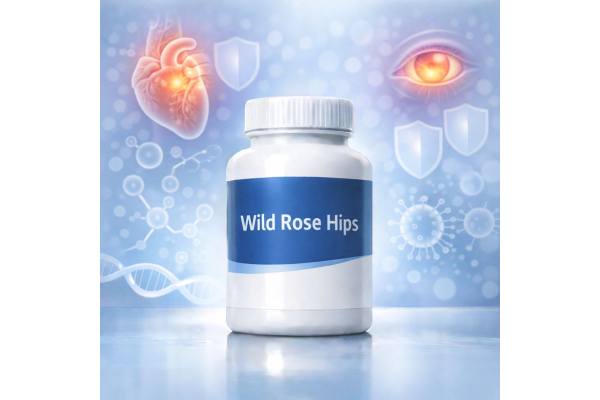
Wild rose hips are the bright, berry-like fruits that form after wild roses flower. They look simple, but inside is a dense package of vitamin C, protective plant pigments, and fatty acids from the tiny seeds. That mix is why rose hips show up in two very different places: as a tart tea for winter wellness and as a standardized powder studied for joint comfort. They also have a long tradition as a jam, syrup, or “fruit leather” when foraged and properly prepared.
This guide focuses on what matters most if you are considering wild rose hips as a supplement or functional food: what is actually in them, which benefits have the best evidence, how to use different forms (tea, powder, capsules, oil), how much to take, and what to watch for. You will also learn practical selection and storage tips that make a real difference in potency and safety.
Essential Insights
- Rose hip powders can modestly support osteoarthritis pain and function in some people when taken daily for several weeks.
- Vitamin C and polyphenols are real, but heat and storage can sharply reduce vitamin C in teas and cooked preparations.
- Typical oral doses range from 2,500–5,000 mg per day of rose hip powder, often split into 1–2 servings.
- Avoid or get clinician guidance if you are prone to kidney stones, have iron overload, or take warfarin or other anticoagulants.
Table of Contents
- What are wild rose hips?
- Which benefits are best supported?
- How to use rose hips in real life
- How much should you take?
- Side effects, interactions, and who should avoid
- How to choose quality and store it well
What are wild rose hips?
Wild rose hips are the fruit of rose species that grow without intensive cultivation. After the petals fall, the flower base swells into a firm, red-orange “hip” that contains many small seeds surrounded by tart flesh. In practice, “wild rose hips” in supplements most often refers to Rosa canina (dog rose), but other species are used in foods and traditional preparations.
What makes rose hips unique is the way their nutrients and phytochemicals cluster into three “zones,” each with a different use:
- Flesh (shell): This is where you find much of the vitamin C, carotenoids (orange-red pigments), and many polyphenols. The flesh is what gives rose hip tea its bright tang and what becomes the “shell” portion of many standardized powders.
- Seeds: The seeds contain oils rich in unsaturated fatty acids. When cold-pressed, rose hip seed oil is mostly used topically for skin barrier support and cosmetic goals.
- Fine hairs around seeds: These hairs can be irritating if not removed. In food processing, good manufacturers de-seed thoroughly and filter particles to avoid throat or stomach irritation.
The core actives people talk about usually fit into these categories:
- Vitamin C: A well-known antioxidant vitamin, but also one of the most fragile components. It degrades with heat, oxygen, and long storage. That means a “vitamin C boost” is far more reliable from carefully dried, well-stored powder than from a long-simmered tea.
- Carotenoids and polyphenols: These are plant compounds that contribute to antioxidant and anti-inflammatory effects. They are generally more heat-stable than vitamin C, though still sensitive to light and oxygen.
- Galactolipids (often discussed as GOPO): These are fat-like plant molecules studied for joint comfort and inflammation signaling. Standardized powders that include both shells and seeds may contain more of these lipid-associated compounds.
If you take one practical point from this section, make it this: rose hips are not “one thing.” A tea, a seed oil, and a standardized powder can behave like three different products. The best choice depends on your goal.
Which benefits are best supported?
Rose hips are often marketed as a general immune tonic, but the strongest human evidence is more specific: certain rose hip powders can help some people with osteoarthritis symptoms. Beyond joints, there are promising but less consistent signals for cardiometabolic markers (like cholesterol) and for skin aging measures in limited studies.
1) Osteoarthritis pain and function
Standardized rose hip powders have been studied in people with knee or hip osteoarthritis. Across trials, the typical pattern is modest improvement in pain and, in some cases, function scores after several weeks, especially when taken daily and consistently. This does not behave like a fast painkiller. Think of it more like a “slow-burn” option that may reduce symptom intensity over time for some users.
Why might it help? Two plausible mechanisms are often discussed:
- Inflammation signaling: Rose hip compounds may reduce certain inflammatory pathways that amplify pain sensitivity.
- Oxidative stress balance: Antioxidant compounds may help counter oxidative processes that can worsen inflammation in joint tissues.
2) Cardiometabolic markers (cholesterol and blood pressure)
In at least one controlled human study in obese participants, daily rose hip powder was associated with small improvements in systolic blood pressure and cholesterol measures over several weeks. Systematic reviews that pool multiple trials describe mixed results overall, which is an important reality check: the effect is not guaranteed, and it may depend on the dose, the product, and who is taking it.
3) Immune support and “cold season” resilience
This is where tradition is strong, but modern clinical evidence is thinner. Rose hip products do provide antioxidant compounds and can contribute vitamin C, yet the immune system is not switched on by a single nutrient. If rose hip tea helps you drink more fluids, replace sugary beverages, and get a modest antioxidant intake, that can be supportive. Just do not expect it to prevent infections on its own.
4) Skin and barrier support
Topically, rose hip seed oil is used for dryness and appearance goals, mainly because of its fatty acid profile. Orally, some rose hip powders have been studied for skin appearance measures, but evidence is still limited and product-specific.
A helpful way to set expectations: rose hips are best viewed as a functional food or adjunct supplement. For osteoarthritis, they may be worth a structured trial. For broader “wellness,” the benefit is likely subtle and depends heavily on the form you choose and how you use it.
How to use rose hips in real life
Rose hips are unusually versatile, but the “right” preparation depends on what you want from them: vitamin C, polyphenols, joint-focused actives, or topical fatty acids. Below are practical, low-friction ways to use each form.
1) Tea and infusion (best for ritual and polyphenols, not maximum vitamin C)
A rose hip infusion is tart, slightly floral, and easy to combine with hibiscus, cinnamon, or ginger. For a gentler approach:
- Use 2–4 g of dried rose hip shells per cup (about 1–2 heaping teaspoons, depending on cut size).
- Steep 10–15 minutes in hot (not vigorously boiling) water.
- Strain well to remove fine particles.
If your primary goal is vitamin C, avoid long simmering. Heat and oxygen quickly reduce vitamin C content. A shorter steep in hot water is a better compromise.
2) Powder in smoothies, yogurt, or oatmeal (best for a consistent daily habit)
Powder is the most convenient daily option and often the best match for joint-support studies. The taste is tart and slightly earthy. Tips that improve compliance:
- Mix into thick foods (yogurt, oatmeal) to mask tartness.
- Combine with banana, berries, or honey if using smoothies.
- Start with a smaller amount for a few days if you have a sensitive stomach.
3) Capsules or tablets (best for predictable dosing)
Capsules are ideal if you want dose precision without taste. Look for a product that clearly states:
- The amount per serving in mg or g
- Whether it uses shell, seed, or both
- Any standardization markers (when provided)
4) Syrup, jam, or “rose hip honey” (best as food, not as a supplement)
Traditional rose hip syrups and jams can be delicious, but they often involve heat and added sugar. That does not make them “bad,” it just changes the purpose. Think of these as enjoyable ways to eat rose hips, not a reliable way to target clinical-like doses.
5) Rose hip seed oil (topical use)
Rose hip seed oil is typically used on damp skin after cleansing, sometimes layered under a moisturizer. Patch-test first, especially if you are acne-prone or reactive. While many people tolerate it well, any oil can trigger breakouts in some individuals.
A simple decision rule
- For joint goals: choose a standardized powder or capsules and commit to a daily trial.
- For enjoyment and general antioxidant intake: choose tea or food forms.
- For skin barrier support: consider seed oil topically, with realistic expectations.
The best results come from consistency, not intensity. Rose hips work best when they become a small daily habit you can keep.
How much should you take?
Dosing for wild rose hips is not one-size-fits-all because different forms deliver different actives. A tea dose cannot be compared directly with a standardized powder, and a seed oil is a separate category entirely. Use the ranges below as practical starting points, not as medical instructions.
Rose hip powder (shell and seed powders used for joints)
Clinical studies commonly use gram-level doses. In practice, many supplements land in a daily range that people can actually maintain.
- Typical daily range: 2,500–5,000 mg per day (2.5–5 g), taken once daily or split into two doses
- Higher clinical-style dosing (product-specific): some studies use 5,000 mg per day; others have used larger daily intakes in drink form for metabolic markers
- How long to evaluate: give it 6–12 weeks for joint goals before deciding if it is helping
If you are trialing rose hip powder for osteoarthritis, track one or two concrete markers (for example, morning stiffness minutes and your average pain score after walking). That turns your trial into a real test instead of a vague impression.
Capsules and tablets
Use the label’s stated mg per serving and aim for the same daily gram-level total described above if your goal is similar to joint-support research. Many capsule products require multiple capsules to reach 2.5–5 g per day.
Tea or infusion
Tea dosing is more about consistency and preference than precision:
- Dried shells: 2–4 g per cup, up to 1–3 cups per day based on tolerance
- If you notice heartburn or stomach discomfort, steep weaker or reduce frequency.
Timing and food
- Taking powder with food often improves stomach comfort.
- If splitting the dose, consider morning and evening to support steadier intake.
- There is no universal “best time,” but consistency matters more than timing.
Combining with other supplements
Be cautious with stacking. Rose hips already contribute antioxidant compounds and may overlap with other products you take for similar goals (vitamin C, anti-inflammatory botanicals). If you are combining, keep one variable stable so you can tell what is doing what.
When you should not self-experiment
If you take anticoagulants, have a history of kidney stones, or are pregnant or breastfeeding, do not guess your dose. Use clinician guidance and choose food-level use only unless your clinician approves supplementation.
A good dose is the smallest dose that you can take consistently and tolerate comfortably. Start modestly, assess calmly, and adjust only if you have a clear reason.
Side effects, interactions, and who should avoid
Wild rose hips are generally well tolerated as a food, but concentrated powders and extracts can cause side effects in some people. Most issues are mild and gastrointestinal, yet there are a few situations where caution is warranted.
Common side effects (more likely with higher doses)
- Stomach upset, nausea, or cramping
- Heartburn or acid-like discomfort
- Diarrhea or, less commonly, constipation
- Headache in sensitive individuals
- Itchy mouth or rash if you have a plant allergy tendency
If you feel throat irritation, suspect poor filtering or residual fine hairs from the hip interior. Choose better-processed products and strain tea more thoroughly.
Who should avoid or get clinician guidance first
- Kidney stone history (especially calcium oxalate stones): vitamin C metabolism can increase urinary oxalate in some contexts, and high-dose vitamin C supplementation is a known concern for stone-prone individuals. Rose hip products vary widely in vitamin C content, but caution is reasonable.
- Iron overload conditions (such as hemochromatosis): vitamin C can increase iron absorption.
- People using warfarin or other anticoagulants: rose hips can contain vitamin K and other compounds that may complicate anticoagulation stability. Do not add a concentrated supplement without clinician oversight and extra monitoring.
- Pregnancy and breastfeeding: food amounts are typically fine, but concentrated extracts and high-dose powders have limited safety data for these groups.
- Children: avoid supplement-level dosing unless advised by a pediatric clinician.
- Known allergy to rose family plants: proceed carefully and discontinue if allergic symptoms occur.
Potential interactions to consider
- Anticoagulants and antiplatelet drugs: potential for altered clotting balance or monitoring needs.
- Blood pressure medications: if rose hip lowers systolic blood pressure modestly for you, it could add to medication effects. Monitor for lightheadedness.
- Diabetes medications: some studies explore metabolic effects. If you use glucose-lowering medication, watch for unexpected changes in blood sugar.
- High-dose vitamin C supplements: stacking can push your total vitamin C exposure higher than you realize, which may increase GI upset and stone risk in susceptible people.
How to use safely if you are a good candidate
- Start at the low end (for example, 2,500 mg per day of powder).
- Take with food for 3–7 days before increasing.
- Stop and reassess if you develop persistent GI symptoms, rash, wheezing, swelling, or severe heartburn.
Safety is less about fear and more about fit. Rose hips can be a reasonable option, but only when the product and the person match.
How to choose quality and store it well
Quality varies more than many people expect. With wild rose hips, potency and tolerability depend heavily on harvest timing, drying method, and how thoroughly the product is processed. A few smart checks can prevent disappointment.
What to look for on the label
- Species and plant part: Ideally, the label identifies the species (often Rosa canina) and whether the product contains shell, seed, or both.
- Dose clarity: A trustworthy product states grams or milligrams per serving and per day.
- Processing notes: “De-seeded” or “filtered” is useful language because it suggests attention to irritant hairs and particle size.
- Standardization or batch testing: Not every good product is standardized, but third-party testing, batch numbers, and clear manufacturing details are strong signs.
Freshness matters more than you think
Vitamin C and some aroma compounds degrade over time. To protect potency:
- Choose products with recent manufacturing dates and well-sealed packaging.
- Prefer opaque, airtight containers over clear bags.
- Avoid powders that smell “flat” or stale; fresh rose hip powder usually has a tangy, slightly fruity scent.
How to store at home
- Keep in a cool, dark place with the lid tightly closed.
- Minimize moisture exposure by using a dry scoop.
- If you live in a humid environment, consider refrigeration for powders, but only if the container seals well (to prevent condensation).
- For tea-grade shells, store away from light and heat to protect color and flavor.
A short comparison: tea vs powder vs seed oil
- Tea: best for a soothing ritual and polyphenols; less reliable for vitamin C because heat and oxygen reduce it.
- Powder or capsules: best for consistent, measurable intake and for joint-focused goals.
- Seed oil: a topical product for skin barrier and appearance goals; not a substitute for oral powders.
Sustainability and “wildcrafted” claims
Wild harvesting can be sustainable when done responsibly, but it can also be exploitative or poorly controlled. If sustainability matters to you, look for transparent sourcing statements and avoid products that lean on “wild” as a marketing shortcut without any detail.
How to run a smart personal trial
If your goal is osteoarthritis support, treat it like a mini-project:
- Pick one standardized product and keep your other routines stable.
- Take a consistent daily dose for 8 weeks.
- Track a few measurable outcomes (steps per day, pain after stairs, rescue medication use).
- Decide based on your data, not hope.
When you buy rose hips, you are not just buying a plant. You are buying a process: harvest, drying, storage, and formulation. Choose the process well, and the product is far more likely to meet your expectations.
References
- Recent advances and insights into the bioactive properties and applications of Rosa canina L. and its by-products 2024 (Review)
- Effects of Daily Intake of Rosehip Extract on Low-Density Lipoprotein Cholesterol and Blood Glucose Levels: A Systematic Review 2023 (Systematic Review)
- Comparative Study of Bioactive Compounds and Biological Activities of Five Rose Hip Species Grown in Sicily 2023
- Effects of rose hip intake on risk markers of type 2 diabetes and cardiovascular disease: a randomized, double-blind, cross-over investigation in obese persons 2012 (RCT)
- A powder made from seeds and shells of a rose-hip subspecies (Rosa canina) reduces symptoms of knee and hip osteoarthritis: a randomized, double-blind, placebo-controlled clinical trial 2005 (RCT)
Disclaimer
This article is for educational purposes only and does not provide medical advice, diagnosis, or treatment. Supplements can affect people differently based on health conditions, medications, and individual sensitivity. If you are pregnant or breastfeeding, have kidney stone history, iron overload, bleeding disorders, or take prescription medicines (especially anticoagulants, blood pressure medicines, or diabetes medicines), speak with a qualified clinician before using wild rose hip supplements. Seek urgent care for signs of a serious allergic reaction such as swelling, wheezing, or difficulty breathing.
If you found this guide helpful, please consider sharing it on Facebook, X (formerly Twitter), or any platform you prefer, and follow us on social media. Your support through sharing helps our team continue producing high-quality, trustworthy health content.