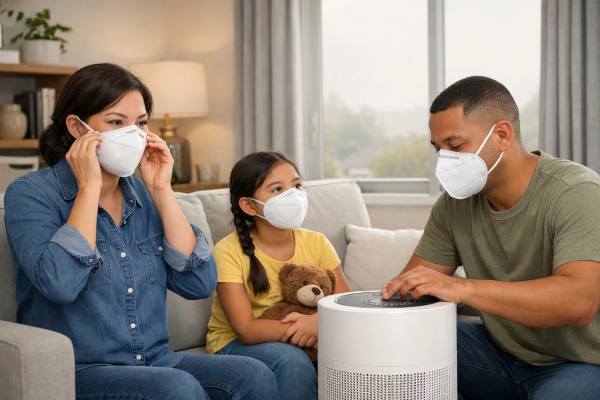
Wildfire smoke can turn a normal day into a lung stress test. Even far from flames, smoke plumes carry fine particles that slip deep into airways, irritate the lining of the lungs, and can trigger asthma flares, stubborn cough, and chest tightness. The most protective response is also the most practical: recognize early symptoms, limit exposure during the worst hours, and create cleaner indoor air that gives your lungs time to recover. Masks can help, but only if the material and fit match the problem—tiny particles that bypass loose coverings. The good news is you do not need perfect conditions to make a meaningful difference. With a few targeted steps—right-size filtration, smart ventilation, and clear criteria for when to seek care—you can lower exposure, protect kids and older adults, and avoid the “smoke hangover” that lingers after skies clear.
Top Highlights
- Fine particle exposure can worsen cough, wheeze, and shortness of breath within hours, especially in asthma and COPD.
- A well-fitting N95-class respirator can reduce inhaled particles outdoors, but comfort and fit determine real protection.
- A single “clean room” with a properly sized HEPA air cleaner often lowers indoor smoke faster than trying to treat the whole home.
- Infants, pregnant people, older adults, and those with heart or lung disease should act earlier and monitor symptoms more closely.
- Use a 21-day perspective after major smoke events: symptoms can linger, and returning to exercise too fast can prolong irritation.
Table of Contents
- What wildfire smoke does to the lungs
- Common symptoms and urgent warning signs
- People who need extra protection
- Choosing masks that actually help
- Indoor air tips that make a real difference
- Recovery steps and when to seek care
What wildfire smoke does to the lungs
Wildfire smoke is not just “bad air.” It is a moving mixture of tiny particles and gases created by burning trees, grasses, and sometimes buildings and household materials. For lung health, the most important component is fine particulate matter—often called PM2.5, meaning particles small enough (about 2.5 microns and smaller) to travel deep into the lungs. These particles can reach the small airways and air sacs, where oxygen exchange happens, and they can trigger inflammation that makes breathing feel tighter and more effortful.
Many people notice irritation first: burning eyes, scratchy throat, and a dry cough. Under the surface, smoke can also increase airway reactivity—your bronchi become more likely to spasm and narrow in response to triggers such as cold air, exercise, laughter, or strong odors. This “twitchy airway” effect helps explain why asthma symptoms can flare quickly during smoke, and why a cough can linger even after air looks clearer. For some people, smoke exposure also increases mucus production, which can create a cycle of coughing, throat clearing, and chest discomfort.
Wildfire smoke can affect more than the lungs. PM2.5 can contribute to systemic inflammation and can stress the heart and blood vessels, which is one reason smoke events are taken seriously for older adults and people with cardiovascular disease. Smoke also contains gases that can irritate airways, and no mask filters all gases equally—so reducing exposure time and improving indoor air remain core strategies.
A key practical detail: indoor air is not automatically “safe.” Smoke can seep indoors through cracks, open doors, leaky windows, and ventilation systems. Some homes keep particles out better than others, and indoor levels can rise significantly during prolonged events. That is why a focused plan—closing up during the worst hours and filtering indoor air—often does more for comfort than trying to treat symptoms alone.
Finally, not all smoke is identical. When wildfires burn through neighborhoods, the smoke can include additional irritants from plastics, paints, and treated wood. You do not need to identify every chemical to protect yourself; the same playbook still applies: reduce time in smoke, use effective filtration, and escalate care if breathing changes become significant.
Common symptoms and urgent warning signs
Smoke symptoms often start subtly and then build, especially when exposure repeats day after day. Many people describe a pattern: the eyes sting first, then the throat feels dry, then coughing and chest tightness show up later in the day or at night. Because smoke can irritate the entire respiratory tract, symptoms can look like a cold at first, but there are telltale differences: symptoms may worsen quickly when you go outside and ease when you move to cleaner indoor air.
Common symptoms include:
- Eye irritation, tearing, and redness
- Sore throat or a “sandpaper” throat feeling
- Dry cough or a cough that becomes more frequent at night
- Chest tightness or mild shortness of breath with activity
- Wheezing, especially in asthma or people who have had wheeze before
- Headache, fatigue, and trouble sleeping (often from airway irritation plus stress)
- Increased mucus or post-nasal drip, which can prolong throat clearing
In children, smoke can show up as irritability, reduced playfulness, or a cough that interrupts sleep. Some children do not describe “tightness” clearly, so watch for faster breathing, a persistent cough during play, or avoidance of activity that is normally easy.
What separates “unpleasant but expected” from “needs medical attention” is the impact on breathing and function. Seek urgent evaluation if any of these occur:
- Shortness of breath at rest or difficulty speaking full sentences
- Lips or face turning bluish or gray, or a child showing color change
- Chest pain, especially if it is new, severe, or paired with breathlessness
- Wheezing that is escalating or not improving with prescribed rescue inhaler use
- Rapid breathing with visible effort (ribs pulling in, nostrils flaring, grunting)
- Confusion, fainting, or severe weakness
Also treat certain situations as higher-stakes even if symptoms are not dramatic yet: infants, older adults, pregnancy, and anyone with asthma, COPD, heart disease, or immune suppression. In these groups, a “mild” symptom can progress faster, and dehydration or poor sleep can tip a manageable flare into a more serious episode.
One more nuance: smoke exposure can coexist with respiratory infections. If you develop fever, body aches, or significant sore throat along with cough, do not assume smoke is the only cause. Smoke can aggravate infections and make symptoms feel worse, but infection may need its own plan—especially if breathing becomes progressively harder over 24 to 48 hours.
People who need extra protection
Wildfire smoke can bother anyone, but some groups face higher risk of severe symptoms or complications. Extra protection does not mean panic; it means acting earlier, reducing exposure more aggressively, and having a low threshold to contact a clinician if symptoms shift.
People who usually benefit from earlier precautions include:
- Asthma: Smoke can trigger bronchospasm and increased airway inflammation. Even well-controlled asthma can flare during heavy smoke days.
- COPD or chronic bronchitis: Baseline lung reserve is lower, so a small decline in airflow can feel dramatic.
- Heart disease or prior stroke risk: Smoke-related particle exposure can increase physiologic stress and may worsen cardiovascular symptoms in vulnerable people.
- Older adults: Age-related changes in defense mechanisms can make smoke effects more pronounced.
- Infants and young children: Their lungs are still developing, and they breathe faster, which can increase dose for the same air concentration.
- Pregnancy: Breathing patterns and circulation change during pregnancy, and many clinicians recommend a more protective stance during heavy smoke.
- People with diabetes or kidney disease: Smoke and dehydration can complicate overall physiologic balance, especially if appetite and sleep are disrupted.
- Outdoor workers and athletes: Higher breathing rates during exertion increase particle dose; protective measures must match the workload.
If you fall into a higher-risk group, preparation matters as much as the day-to-day tactics. Before or early in smoke season, consider these readiness steps:
- Review your asthma or COPD action plan and confirm what to do when symptoms increase.
- Keep rescue inhalers accessible and check remaining doses. If you use a spacer, make sure it is clean and easy to find.
- If you use a daily controller inhaler, take it consistently during smoke events; missed doses raise flare risk.
- Plan a clean-air fallback: one room with filtration where you can sleep and rest without ongoing exposure.
- Identify the signs that mean you should call: increased rescue inhaler use, nighttime symptoms, or activity limitation that is new.
For infants, the protective goal is different: minimize exposure rather than “treat symptoms at home.” Babies can tire quickly with respiratory stress. If an infant is feeding poorly, breathing faster than usual, or showing any color change, seek prompt care rather than waiting for a classic cough.
Finally, consider the social environment. Exposure is not only outdoor. A smoky household with candles, incense, or indoor smoking adds layers of irritants. For higher-risk people, eliminating indoor sources during smoke events can be as important as sealing the windows, because the lungs are already inflamed and reactive.
Choosing masks that actually help
Masks can reduce wildfire smoke exposure, but only when they match the physics of the problem. The main harmful component—PM2.5—is tiny, and loose face coverings leak. The best protection comes from respirators designed to seal to the face and filter fine particles.
A practical hierarchy:
- Best: well-fitting N95-class respirators (or higher, such as P100)
- Good: well-fitting KN95 or KF94 respirators when N95 fit is not achievable
- Limited: surgical masks (some particle reduction, but significant leakage)
- Not reliable for smoke: cloth masks, neck gaiters, and fashion coverings
Fit is the multiplier. A high-quality filter material performs poorly if air escapes around the cheeks or nose. Use a simple fit check every time:
- Put the respirator on with straps correctly placed.
- Press the nose wire to mold it to your nose bridge.
- Inhale sharply. The mask should pull in slightly toward your face.
- Exhale. You should feel minimal air leaking near eyes or cheeks.
If you wear glasses and they fog heavily, that is a clue that air is escaping upward. Adjust the nose wire and strap tension. Facial hair also makes sealing difficult; a tight seal is hard to achieve over beards.
Children need special consideration. Many N95 respirators are made for adult faces, and a poor fit reduces benefit. For children old enough to tolerate a respirator, a child-sized KN95 or KF94 that seals well is often more realistic than forcing an adult N95. The goal is a mask your child can keep on properly without constant touching or slipping below the nose.
A few important limitations:
- Respirators mainly filter particles. They do not fully remove gases such as carbon monoxide, and they cannot make extremely hazardous air “safe” for long outdoor activity.
- People with significant lung or heart disease may find respirators uncomfortable. If breathing becomes difficult while masked, move to cleaner air and seek medical advice rather than pushing through.
- Reuse is possible for short periods if the mask stays clean and dry, but discard respirators that are wet, visibly dirty, crushed, or hard to breathe through.
When should you wear a respirator? Use it for short necessary outdoor tasks—commuting, essential errands, walking a dog quickly—especially when air quality is poor. For exercise, the better strategy is usually to move activity indoors and focus on indoor filtration. A mask is a tool for reducing exposure, not a license to stay outside for hours in heavy smoke.
Indoor air tips that make a real difference
During smoke events, your home can become either a refuge or a slow source of ongoing exposure. The most effective approach is to create one or two spaces with noticeably cleaner air rather than trying to perfect the entire building.
Start with the “clean room” strategy:
- Pick a bedroom or living room where you can rest and sleep.
- Keep windows and doors closed during the worst smoke hours.
- Minimize door-opening to the outside and seal obvious gaps if you can.
- Run a properly sized portable air cleaner continuously.
Sizing matters. For smoke particles, look for a portable air cleaner that uses a true HEPA filter and has a clean air delivery rate (CADR) appropriate for the room. A useful rule of thumb for an 8-foot ceiling is: aim for a minimum CADR roughly equal to two-thirds of the room’s floor area in square feet (for example, a 200 square foot room benefits from a CADR around 130 cfm or higher). Running the unit longer and at higher fan settings increases filtration, but noise can be a real barrier at night—so consider a daytime high setting and a nighttime moderate setting if needed, with the unit still running.
If you have central heating and cooling, you can often improve whole-home filtration:
- Set the fan to run more often (or continuously if practical).
- Use the highest-efficiency filter your system can handle—many households can use a MERV 13 filter, but some systems need a slightly lower rating for airflow.
- Replace filters on schedule; a clogged filter reduces both airflow and filtration.
Avoid devices that generate ozone or heavy ionization as a “clean air” shortcut. Ozone is a lung irritant, and adding it during smoke events can worsen respiratory symptoms.
If you cannot access a commercial purifier, a DIY approach can still help. A common method uses a box fan with a high-quality HVAC filter securely attached to the intake side. If you use a DIY unit, prioritize safety: use a stable setup, keep it away from curtains, do not leave it unattended around small children or pets, and follow basic electrical and fire safety practices.
Indoor activities matter too. During smoke events, indoor particle levels can rise from cooking, frying, vacuuming, burning candles, and smoking. Choose low-smoke cooking methods, run a vent hood if it exhausts outdoors (and if outdoor air is not extremely smoky), and postpone vacuuming if it stirs up particles.
Finally, cars can be a helpful bridge. Use “recirculate” mode while driving through smoke and keep windows closed. A short drive with recirculation on can reduce exposure compared to being outdoors, but do not idle in heavy smoke near active fires or dense plumes.
Recovery steps and when to seek care
Even after skies look clearer, many people experience lingering symptoms: a scratchy throat, a cough that flares with exertion, or fatigue that feels disproportionate. Recovery is often about reducing ongoing irritation and giving inflamed airways time to settle.
Practical recovery steps that help most people:
- Prioritize clean air during sleep. Nighttime exposure can prolong cough and worsen morning tightness.
- Hydrate and use gentle throat care (warm fluids, humidified air if your home is very dry).
- Reduce additional irritants: avoid smoke from cooking, incense, strong fragrances, and secondhand smoke.
- Return to outdoor activity gradually. If you restart hard exercise too quickly, airway irritation can persist. Begin with light activity and increase only if symptoms remain stable.
If you have asthma or COPD, treat smoke recovery like a planned flare window:
- Follow your action plan for stepped-up treatment if symptoms increase.
- Track rescue inhaler use. Needing it more often than usual, waking at night with symptoms, or reduced ability to do normal activities are meaningful signals.
- If your clinician has previously recommended a temporary adjustment to controller medication during smoke season, follow that guidance rather than improvising.
Know when home care is no longer enough. Seek prompt medical advice if:
- Shortness of breath is increasing over 24 to 48 hours, or you cannot do normal tasks without stopping.
- Wheezing or chest tightness is persistent, especially if rescue medication is not providing expected relief.
- You develop chest pain, significant dizziness, fainting, or confusion.
- A cough becomes productive with thick or discolored mucus and you also have fever or worsening fatigue, which may suggest infection.
- Symptoms in a child include fast breathing, visible work of breathing, poor feeding, or unusual sleepiness.
For infants, the threshold should be lower. If a baby is feeding poorly, breathing faster than usual, showing color change around the lips, or having pauses in breathing, seek urgent evaluation. Infants can deteriorate quickly, and “waiting it out” is not a safe strategy when breathing or feeding changes are present.
Finally, if smoke events are recurring in your area, consider turning recovery lessons into prevention. Keep a respirator option available for unavoidable outdoor time, maintain a clean room setup that you can activate quickly, and store extra HVAC filters. The goal is not to live in fear of the next smoke day—it is to shorten your exposure, protect vulnerable lungs, and keep symptoms from compounding across the season.
References
- Safety Guidelines: Wildfires and Wildfire Smoke | Wildfires | CDC 2024 (Guidance)
- Guide to Air Cleaners in the Home | US EPA 2025 (Guidance)
- Health Effects of Wildfire Smoke Exposure – PMC 2023 (Systematic Review and Meta-Analysis)
- Wildfire Smoke, A guide for public health officials 2021 (Guidance)
Disclaimer
This article is for general educational purposes and does not provide medical advice, diagnosis, or treatment. Wildfire smoke exposure affects people differently based on age, underlying health conditions, and exposure intensity, and individual care plans should be discussed with a qualified clinician. Seek urgent medical care if you or your child has significant breathing difficulty, blue or gray lips, chest pain, confusion, fainting, or rapidly worsening symptoms, and seek prompt evaluation for infants with feeding or breathing changes.
If you found this article helpful, please consider sharing it on Facebook, X (formerly Twitter), or any platform you prefer.