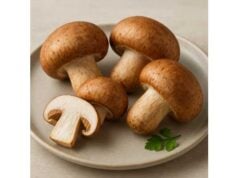
Wine cap mushroom (Stropharia rugosoannulata), also called king stropharia or garden giant, is a robust, burgundy-capped mushroom valued by cooks and gardeners alike. It grows readily on wood chips and straw, making it one of the easiest gourmet fungi to cultivate at home. In the kitchen, wine caps sear beautifully, hold their meaty bite, and deliver a mild, earthy savor with hints of red wine and potato skin. Nutritionally, they follow the mushroom pattern many health-conscious eaters want: low calories, modest protein, potassium, fiber, and unique fungal antioxidants such as ergothioneine. This guide gathers what matters for everyday use—how wine caps compare with common mushrooms, how to cook them for flavor while preserving key nutrients, how to buy or grow and store them well, and what to know about risks and allergy considerations. Whether you harvest from a backyard wood-chip bed or buy from a market, the sections below give you practical, evidence-aware advice for getting the most from this spring-to-autumn staple.
Top Highlights
- Typical cooked serving is 100 g (about 1–1½ cups) once or twice per week in season.
- Benefits: low energy density for high satiety and a natural source of ergothioneine and potassium.
- Safety caveat: correct identification is essential when foraging; cook thoroughly to improve digestibility.
- Avoid or limit: people with known mushroom or mold allergy, and anyone advised to avoid wild or undercooked foods.
Table of Contents
- Detailed Overview
- Nutrition Profile
- Evidence-Based Health Benefits
- Risks, Allergies and Interactions
- Selecting, Quality, Sustainability and Storage
- Preparation, Cooking and Nutrient Retention
- Portions, Comparisons and FAQs
Detailed Overview
Wine cap mushroom is a fast-growing saprotroph that thrives on lignin- and cellulose-rich substrates, especially hardwood chips, straw, and garden mulch. Its burgundy to chestnut cap, sturdy pale stipe with a distinctive wrinkled ring (the “rugose annulus”), and dark purplish-brown spore print make it recognizable when mature. Because it feeds on yard waste and agricultural residues, it is popular in permaculture: gardeners build a wood-chip bed, inoculate with spawn, water, and harvest flushes over one to two seasons while improving soil tilth underneath.
Culinarily, wine caps behave like a cross between cremini and portobello with a denser chew. Young buttons sear well and concentrate juices; larger caps are ideal for grilling, braising, or slicing into soups and grain bowls. The flavor is gentle enough to take assertive partners—garlic, thyme, smoked paprika, soy, miso—yet distinctive enough to stand alone with olive oil, parsley, and lemon. Because cell walls soften with heat, cooking enhances digestibility and unlocks savory notes from glutamates and nucleotides.
Nutritionally, fresh wine caps are mostly water, with modest protein, little fat, and meaningful potassium for the calorie cost. Like other edible fungi, they contain ergothioneine, a sulfur-containing antioxidant that humans absorb via a dedicated transporter. Specific numbers vary by substrate, climate, and maturity. Post-harvest handling also matters: gentle cleaning, quick chilling, and breathable storage slow moisture loss and browning. Unlike some prized wild species, wine caps are widely cultivable, which keeps quality and sustainability high.
Foragers should learn distinguishing traits carefully because spring and autumn fields host lookalikes. When in doubt, buy from reputable growers or cultivate at home. For cooks, think “hot pan, dry surface, then fat”: drive off surface moisture, develop browning, and season at the end to control sodium while maximizing aroma.
Nutrition Profile
How to use this section. Values below summarize per 100 g fresh, raw wine cap mushroom where reported in compositional analyses of S. rugosoannulata and aligned, where necessary, with ranges observed in comparable edible mushrooms. Ranges reflect natural variability in substrate, climate, and maturity. % Daily Value (%DV) uses adult reference values. A serving-conversion box at the end translates to typical 100 g cooked portions.
Macros and Electrolytes (per 100 g raw)
| Nutrient | Amount | %DV |
|---|---|---|
| Energy | 25–35 kcal | — |
| Water | 88–91 g | — |
| Protein | 2.8–4.2 g | 6–8% |
| Total fat | 0.2–0.6 g | 0–1% |
| Carbohydrate | 2.5–4.5 g | 1–2% |
| Dietary fiber | 1.5–3.0 g | 5–11% |
| Sodium | 5–15 mg | 0% |
| Potassium | 300–450 mg | 6–10% |
Carbohydrates (detail)
| Component | Amount | Notes |
|---|---|---|
| Total sugars | 0.5–2.0 g | mainly trehalose and mannitol |
| Starch | trace | fungi store glycogen-like polymers rather than plant starch |
| Beta-glucans (soluble fiber) | 0.3–1.0 g | contributes viscosity and prebiotic effects |
Fats and Fatty Acids
| Class | Typical profile |
|---|---|
| Polyunsaturated | Linoleic acid predominates among total fatty acids; absolute fat is low. |
| Monounsaturated | Small proportion, mostly oleic acid. |
| Saturated | Low; palmitic acid detectable in small amounts. |
Protein and Amino Acids
| Item | Amount/Notes |
|---|---|
| Protein | 2.8–4.2 g per 100 g raw; glutamic and aspartic acids contribute to umami. |
| Limiting amino acid | Methionine often limiting; pair with eggs, legumes, or grains for balance. |
Vitamins (per 100 g raw)
| Vitamin | Amount | %DV |
|---|---|---|
| Thiamin (B1) | ~0.05 mg | 4% |
| Riboflavin (B2) | ~0.25 mg | 19% |
| Niacin (B3) | 3.0–4.5 mg | 19–28% |
| Folate (B9) | 20–40 µg | 5–10% |
| Vitamin D | 0–2 µg* | 0–10% |
Minerals (per 100 g raw)
| Mineral | Amount | %DV |
|---|---|---|
| Phosphorus | 90–150 mg | 7–12% |
| Iron | 0.5–1.3 mg | 3–7% |
| Zinc | 0.5–1.2 mg | 5–11% |
| Copper | 0.1–0.3 mg | 11–33% |
| Selenium | 2–8 µg | 4–15% |
| Calcium | 5–15 mg | 0–1% |
Bioactives / Phytonutrients
- Ergothioneine (EGT): fungal thiol antioxidant transported in humans by SLC22A4; wine caps contribute alongside other edible mushrooms.
- Phenolics, peptides, and volatiles: analysis shows phenolic acids and umami-active peptides; aroma shifts with drying method and maturity.
Allergens and Intolerance Markers
- Fungal proteins can cross-react with inhalant molds in susceptible people; see the Safety section.
Contaminants/Residues
- Cultivated wine caps grown on clean substrates are typically low-risk; avoid foraged mushrooms from polluted soils, roadsides, or spray zones.
Additives & Fortification
- Fresh mushrooms are not fortified. Jarred or pickled products may contain added salt or acids—check labels.
Footnote: Vitamin D varies with light exposure and is usually negligible in fresh, shaded-cultivation mushrooms unless treated with UV.
Portion reality (per 100 g cooked, starting from ~200–250 g raw):
- Approximate result: 40–70 kcal, protein 4–6 g, potassium 400–600 mg, fiber ~2–3 g. Cooking concentrates nutrients by reducing water.
Evidence-Based Health Benefits
1) Low energy density with satisfying volume.
Cooked wine caps add bulk, chew, and savory depth for very few calories. Swapping 100 g of sautéed mushrooms for part of the meat or cheese in mixed dishes (pasta, tacos, frittatas) can lower energy and saturated fat while preserving satisfaction. This “culinary substitution” approach is a practical, behavior-friendly way to reduce calories without shrinking portions.
2) Dietary source of ergothioneine (EGT).
Wine caps, like most edible fungi, provide EGT—a stable, sulfur-containing antioxidant that accumulates in tissues via a dedicated transporter. Reviews continue to explore EGT’s role in redox balance and healthy aging. There is no official daily requirement, but including mushrooms a few times per week is a straightforward way to raise intake.
3) Potassium support with savory flavor.
A typical cooked portion (100 g) often provides several hundred milligrams of potassium with minimal sodium. Because wine caps intensify umami, you can season lighter and still feel satisfied. Together, this pattern supports a lower-sodium eating style without sacrificing taste.
4) Umami-active peptides and phenolics that enhance cooking.
Analyses of S. rugosoannulata identify umami-active peptides and phenolic compounds. In the pan, high heat drives Maillard reactions that deepen flavor, helping you rely less on heavy sauces, cream, or large amounts of cheese for impact—another pathway to keep calories and saturated fat in check.
5) Fiber that aids texture and fullness.
Though mushrooms are not fiber giants, their beta-glucans and chitin add viscosity and bite. Combined with whole grains or legumes, wine caps contribute to a satisfying plate, which may help moderate appetite at meals.
What wine caps do not do.
They are not a medicine and should not be used to treat disease. Claims about “detox” or quick metabolic boosts are not supported by clinical evidence. Use wine caps as part of a varied diet centered on plants, intact grains, and sensible portions of animal foods if you eat them.
Risks, Allergies and Interactions
Identification and lookalikes.
If you forage, confirm multiple features—cap color and texture, gill attachment, presence and shape of the ring, and the dark purplish-brown spore print of wine caps. Several field mushrooms share overlapping traits depending on region and season. When uncertain, consult local experts or purchase from trusted growers. Normal cooking does not neutralize the toxins found in some wild species, so certainty is non-negotiable.
Allergy and cross-reactivity.
People sensitized to molds can react to edible mushrooms due to shared proteins (for example, enolases and other pan-fungal allergens). Symptoms may include oral itching, hives, or gastrointestinal upset. If you have a confirmed mushroom or mold allergy, avoid wine caps. Cooking lowers but does not eliminate risk.
Digestive tolerance.
Raw or undercooked mushrooms can be harder to digest because of chitinous cell walls and sugar alcohols like mannitol. Thorough cooking usually improves tolerance by softening cell walls and driving off some volatile compounds. If you’re sensitive to FODMAPs, start with small portions.
Microbiological safety.
Treat mushrooms like fresh produce: brush, rinse briefly only if needed, and cook. High-risk groups (pregnant people, older adults, those with weakened immunity) should avoid raw mushrooms and prioritize well-cooked servings.
Environmental contaminants.
Fungi may accumulate substances from their substrate. Do not forage near busy roads, industrial sites, or sprayed areas. Cultivate on clean hardwood chips or certified straw; buy from producers who can describe their substrate and handling.
Medication interactions.
There are no well-documented drug interactions specific to S. rugosoannulata. If you carry emergency medications for severe food allergies, use the same precautions here as with other wild foods.
When to seek care.
Anyone developing nausea, vomiting, abdominal pain, diarrhea, dizziness, or confusion after eating wild mushrooms should seek medical attention immediately and bring a specimen if available.
Selecting, Quality, Sustainability and Storage
Selecting wine caps.
- Aroma and texture: pick firm, heavy mushrooms with a clean, earthy scent. Avoid sour, fishy, or ammonia notes.
- Cap and gills: young caps are convex with pale gills that darken as spores mature; the ring is often thick and wrinkled.
- Size matters: small to medium buttons are best for searing; large caps excel grilled, braised, or diced for sauces.
Sourcing and sustainability.
- Cultivation: wine caps are among the most sustainable gourmet mushrooms to grow, thriving on low-value biomass (wood chips, straw) and improving soil structure beneath beds. For home growers, staggered wood-chip additions extend the harvest window.
- Foraging etiquette: harvest lightly, cut rather than pull to minimize substrate damage, and leave older, heavily bug-bitten caps to sporulate.
- Substrate transparency: ask growers about wood type and any chemical treatments; hardwood chips without preservatives are preferred.
Storage.
- Short-term: refrigerate at 1–4 °C in a breathable container lined with paper towels; change the lining daily.
- Shelf life: 3–5 days for peak texture and aroma.
- Do not seal in plastic: trapped moisture accelerates slime and off-odors.
- Freezing: sauté first until moisture evaporates, cool quickly, pack flat, and freeze for up to 3 months; use in sauces, soups, and risotti.
- Pickling or confit: traditional methods extend life but raise sodium and calories—use as condiments.
Quality troubleshooting.
- Slimy surface or sour smell: discard.
- Hollow, spongy stems: past prime—dice for stock or skip.
- Grit or mulch stuck to the base: trim generously; thorough cleaning just before cooking protects pan flavor.
Preparation, Cooking and Nutrient Retention
Clean just before cooking.
- Trim the stem base to remove mulch.
- Brush away debris with a soft brush; if necessary, rinse quickly under cool running water.
- Pat completely dry—dry surfaces brown; wet ones steam.
Core methods that flatter wine caps.
- Hard sauté: slice 5–7 mm thick; heat a wide pan, add mushrooms to a dry or lightly oiled pan, and let them release moisture. Once the pan is nearly dry and edges begin to brown, add a little oil or butter, aromatics (garlic, thyme), and finish with salt and lemon.
- Grill or roast: brush with olive oil, grill or roast at high heat until edges char slightly; finish with parsley and a splash of sherry vinegar.
- Brothy braise: brown lightly, then simmer 5 minutes in light stock with bay and pepper; ladle over toast with chopped herbs.
- Stir-fry: pair with asparagus, sugar snap peas, or bok choy; finish with soy or tamari and a dot of sesame oil.
Seasoning for less sodium.
Use umami and acidity to your advantage. Brown well, then finish with citrus, vinegar, pepper, and herbs. Add cheese or cured meats sparingly—fine shavings go further than chunks.
Nutrient retention tips.
- Avoid soaking: limits loss of water-soluble B vitamins and minerals.
- Cook through, not to mush: 6–10 minutes typically softens cell walls and boosts digestibility while preserving texture.
- Smart pairings: eggs or legumes complement amino acids; whole grains boost fiber; olive oil disperses aroma with modest fat.
Food safety basics.
Cook thoroughly. Keep hot foods above 60 °C once cooked, and cool leftovers rapidly. Reheat until steaming.
Portions, Comparisons and FAQs
How much is a serving?
- Standard cooked portion: 100 g (about 1–1½ cups).
- In mixed dishes: 50–75 g cooked per person delivers flavor and texture without crowding the pan.
- Frequency: once or twice weekly in season fits most meal plans; there is no official “dose.”
How do wine caps compare with other mushrooms?
- Versus button/cremini: similar calories; wine caps are denser, brown more readily, and bring a deeper, slightly wine-like note.
- Versus oyster mushrooms: both sear well; wine caps are thicker and juicier, oyst ers are more delicate and frill-edged.
- Versus portobello: portobellos have stronger “beefy” notes; wine caps are milder and often more versatile in quick sautés.
Can I eat wine caps raw?
While very fresh slices may appear in some salads, most people digest mushrooms better cooked. Cooking also reduces surface microbes and accentuates savoriness.
Best budget uses?
- Stretch meat sauces: replace one-third of ground meat with finely chopped, sautéed wine caps.
- Make weekday toast toppers: sauté a big batch, freeze flat, and rewarm portions for eggs, grains, or greens.
- Build umami without excess salt: brown hard and finish with lemon or a splash of vinegar.
Simple pairing ideas (one skillet).
- Sear wine caps until browned; add garlic and thyme; deglaze with dry white wine; finish with parsley and black pepper.
- Stir-fry with asparagus and spring onions; finish with soy and sesame oil; serve over brown rice.
- Braise lightly in stock; spoon over polenta with grated pecorino (use a light hand).
Growing at home—quick notes.
- Substrate: hardwood chips or a straw–chip mix, at least 7–10 cm deep.
- Moisture: steady dampness, not waterlogging; mulch top-ups extend harvest.
- Timing: first flush in 6–12 weeks depending on temperature; subsequent flushes after rains.
References
- Nutritional, Bioactive, and Flavor Components of Giant Stropharia (Stropharia rugoso-annulata): A Review 2023 (Systematic Review)
- The Nutrients and Volatile Compounds in Stropharia rugoso-annulata by Three Drying Treatments 2023 (Study)
- Nutritional and Therapeutic Potential of Stropharia rugosoannulata and Macrolepiota procera: From Composition to Health-Promoting Effect 2025 (Review)
- Recent Advances in the Allergic Cross-Reactivity between Fungi and Foods 2022 (Review)
- Mushroom Poisoning 2020 (Review)
Disclaimer
This article is for educational purposes and does not replace personalized medical advice, diagnosis, or treatment. Only eat mushrooms that have been correctly identified and handled safely. If you have a known mushroom or mold allergy, or you are pregnant, immunocompromised, or otherwise advised to avoid wild or undercooked foods, consult a healthcare professional before consuming wine cap mushrooms. Seek medical help promptly if symptoms occur after eating mushrooms.
If you found this guide useful, please consider sharing it on Facebook, X (formerly Twitter), or any platform you prefer. Your support helps us continue creating careful, reader-first resources. Thank you.