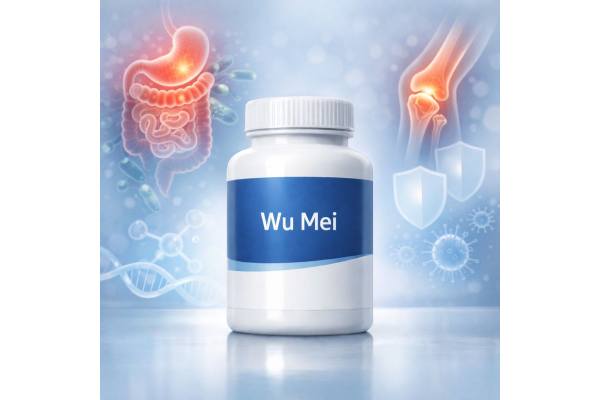
Wu Mei is the traditional name for Mume Fructus—the processed, smoked, and dried unripe fruit of Prunus mume, often called Japanese apricot or Chinese plum. In practice, it is a “sour-astringent” ingredient: people use it when they want to conserve fluids, steady the gut, and calm irritation that shows up as lingering cough, chronic loose stools, or thirst-like dryness. Modern interest adds another layer: Wu Mei contains organic acids (notably citric acid), polyphenols, and processing-derived compounds such as mumefural that may support antioxidant balance and metabolic markers.
Because Wu Mei appears in both food traditions (plum pastes and beverages) and classical herbal formulas, it is easy to assume all products are interchangeable. They are not. Dose, processing style, and co-ingredients can change both effects and tolerability. This guide walks you through the most realistic benefits, how Wu Mei works, how to use it well, and when to avoid it.
Quick Overview for Wu Mei
- May help with occasional loose stools and gut irritation by providing astringent, acid-rich compounds.
- Often used to support comfort in dry, lingering cough patterns when paired appropriately in formulas.
- Typical decoction amount: 6–12 g per day (do not exceed 12 g/day unless professionally directed).
- Avoid if you have uncontrolled acid reflux or active stomach ulcers, or if sour foods reliably worsen symptoms.
- People who should avoid include pregnant or breastfeeding individuals and anyone with a known stone-fruit allergy.
Table of Contents
- What is Wu Mei and what is it not?
- What benefits are most realistic?
- What compounds give Wu Mei its effects?
- How to use Wu Mei in real life
- How much Wu Mei should you take?
- Side effects, interactions, and who should avoid
What is Wu Mei and what is it not?
Wu Mei (乌梅) is the processed fruit of Prunus mume—typically harvested unripe, then smoked and dried. In traditional East Asian herbal practice, processing is not a decorative step; it is part of the identity of the ingredient. Smoking and drying deepen the fruit’s astringency and sourness, which is why Wu Mei is classically described as helping “hold in” fluids and calm leakage-type patterns such as prolonged diarrhea or a persistent, dry cough.
It helps to separate Wu Mei from look-alikes you may see online:
- Wu Mei (Mume Fructus): Smoked/dried unripe Prunus mume used as an herbal material, often simmered as a decoction or used in formula powders and pills.
- Umeboshi: A salted, pickled plum food product. It is tangy and sour, but it can be very high in sodium, and it is not standardized like an herbal dose.
- Plum juice concentrates and vinegars: Often made from Prunus mume fruit, but the processing and active profile can be very different (more dietary-acid focused, less “whole herb” character).
- “Black plum extract” blends: Some are true Prunus mume concentrates; others combine multiple fruits and acids. Without species and processing details, “black plum” can be ambiguous.
From a user-intent perspective, most people exploring Wu Mei fall into one of three goals:
- Gut steadiness: wanting support for occasional loose stools or a “sensitive gut” feeling.
- Fluid comfort: dryness-related discomfort, including thirst or a dry cough sensation, often worse with long speaking, dry air, or recovery from illness.
- General wellness: interest in antioxidant, metabolic, or “liver marker” support using a standardized extract.
Wu Mei is not an emergency treatment for severe diarrhea, dehydration, GI bleeding, pneumonia, or parasitic infection. Those problems need medical evaluation. Wu Mei can be part of a supportive plan, but it should not delay proper care. If your symptoms are intense, persistent, or accompanied by fever, blood, severe pain, or weight loss, treat that as a medical issue first.
What benefits are most realistic?
Wu Mei has a long traditional reputation, but the most helpful way to evaluate benefits is to match claims to realistic outcomes. Think “supportive and symptom-oriented,” not “curative and disease-specific.” The best-supported and most practical benefits tend to cluster around digestive comfort, fluid conservation, and selective metabolic markers.
1) Digestive support for loose stools and gut irritation
Wu Mei’s sour-astringent character aligns with a common use: calming a gut that feels overly reactive or prone to loose stools. Astringency can reduce the “leaky” sensation and may help the bowel feel more settled. In traditional use, Wu Mei is rarely used alone for significant problems; it is combined with other ingredients chosen for the pattern (for example, heat signs versus cold signs, cramping versus urgency). For a modern supplement user, the realistic expectation is modest: fewer episodes of loose stools, improved comfort after meals, and less urgency in mild cases.
2) Comfort for lingering dry cough patterns
In traditional practice, Wu Mei is used when coughing is persistent and dryness is prominent—often described as a cough that is worse at night or with long talking, with little phlegm. The benefit is not “it stops cough instantly,” but “it may reduce irritation and support throat comfort,” especially when combined with soothing or moistening ingredients. If you have shortness of breath, wheezing, chest pain, or coughing blood, do not self-treat.
3) Thirst and “dryness” support
Because Wu Mei is used to help conserve fluids, it is often paired with hydration strategies—warm teas, broths, and adequate electrolytes. A practical benefit is that it can make certain drinks feel more satisfying and may help people who feel dry and depleted maintain better oral comfort. This is not a substitute for rehydration therapy when dehydrated.
4) Antioxidant and metabolic marker support
Modern research reviews describe antioxidant and anti-inflammatory activity across multiple Prunus mume preparations. A human randomized trial with a standardized extract reported improvements in liver enzymes and some metabolic markers in a specific population. This is promising but not universal: effects depend on the extract, dose, and baseline health. A realistic goal is “support for healthy markers,” not treatment of liver disease.
Overall, Wu Mei tends to perform best as a targeted tool: you choose one primary goal, use an appropriate form, and evaluate results over weeks—not days.
What compounds give Wu Mei its effects?
Wu Mei’s actions are easier to understand when you view it as a combination of “sour acids,” plant polyphenols, and processing-shaped molecules. Different products emphasize different fractions, which is why one person’s experience with a plum vinegar can differ from another person’s experience with a decoction of smoked fruit.
Organic acids: the sour foundation
Wu Mei is rich in organic acids, with citric acid often highlighted. These acids contribute to the sharp sour taste and may influence digestion by stimulating salivation and supporting a more comfortable post-meal experience in some people. They also shape how Wu Mei feels in the body: sour flavors can “pull inward,” which matches the traditional idea of astringency and fluid conservation.
Practical implication: if you are prone to reflux, acids can be a double-edged sword. For some, sour foods feel refreshing; for others, they aggravate burning or nausea.
Polyphenols and flavonoids: antioxidant and inflammation balance
Reviews of Prunus mume describe a broad array of phenolic compounds and flavonoids. In lab and animal settings, these compounds are linked with antioxidant effects and modulation of inflammatory signaling. While lab outcomes do not guarantee clinical benefits, they provide a plausible explanation for why people use Wu Mei for “irritation” patterns—whether in the gut or throat.
Triterpenes and related bioactives
Some Prunus mume constituents, including triterpenoid-type compounds, are studied for anti-inflammatory activity. This is part of the modern rationale for exploring Mume Fructus in inflammation-related models.
Processing-derived compounds: mumefural as an example
Processing changes chemistry. One notable compound, mumefural, is associated with processed Prunus mume products and is studied for biological activity and safety. You do not need to chase mumefural specifically, but it illustrates why “processed Wu Mei” is not identical to a raw plum or generic fruit powder.
Astringency: what it actually means
Astringency is a sensory effect that often reflects tannin-like interactions with proteins on mucosal surfaces. In the gut, this can translate into a feeling of “tightening” and reduced excessive secretion. That is a reasonable, symptom-level explanation for why Wu Mei is used for prolonged loose stools.
The key point is that Wu Mei is not one compound with one mechanism. It is a matrix. Your best results come from choosing a form that matches your goal and using it at a dose that supports comfort rather than provoking acidity or irritation.
How to use Wu Mei in real life
Wu Mei can fit into a routine in several ways, but the best approach depends on whether you are using it as an herbal material (decoction and formulas) or as a modern extract (capsules and concentrates). The goal is to make usage consistent, tolerable, and aligned with a specific outcome.
Option 1: Decoction-style use (traditional and flexible)
This method is best when your goal is digestive steadiness or a dryness-related pattern that benefits from warm liquids.
A simple method:
- Rinse the smoked plums quickly under cool water.
- Simmer the daily amount in 400–600 mL water for 20–30 minutes.
- Strain and drink in 2 portions, ideally with or after meals if your stomach is sensitive.
You can make the taste easier by pairing the tea with ginger or a small amount of honey, but avoid heavy sweeteners if blood sugar is a concern.
Option 2: Powder, granules, or “pill” formulas (more convenient)
Many people use Wu Mei as part of a compound formula rather than a single herb. Convenience products can be helpful for consistency, but they also add two challenges:
- The Wu Mei amount may be unclear in blends.
- The formula may not match your specific symptom pattern.
If you use a blend, choose one that lists the amount of Wu Mei or standardization details, and avoid stacking multiple sour-acid products at once.
Option 3: Food-adjacent products (vinegars, concentrates, pastes)
Plum vinegars and concentrates can be appealing for “daily wellness” goals, but they may be more acidic and can irritate reflux-prone stomachs or teeth. If you choose this route:
- Dilute acidic products in water.
- Take them with meals.
- Rinse your mouth afterward to reduce enamel exposure.
Common mistakes that reduce results
- Using Wu Mei when you actually have an acute infection or severe diarrhea with dehydration.
- Taking high-acid products on an empty stomach, then blaming Wu Mei for “not agreeing” with you.
- Expecting a single ingredient to resolve long-standing constipation, hemorrhoids, GERD, or chronic cough without addressing the root cause.
- Increasing dose rapidly instead of building tolerance.
If you want a structured plan, start with a low, consistent dose for 1–2 weeks, track one primary symptom, and adjust based on response. The next section gives practical dosing anchors for the most common product types.
How much Wu Mei should you take?
Wu Mei dosing depends heavily on format. A smoked-fruit decoction is measured in grams of herb, while modern extracts are measured in milligrams, and food-style vinegar products are measured in milliliters. The safest approach is to stay within recognized traditional limits for the raw material and use clinical-trial doses as anchors for standardized extracts.
Decoction dose for dried Wu Mei (most common)
A widely used daily range is:
- 6–12 g per day in decoction
A key safety boundary matters here:
- Do not exceed 12 g/day unless directed by a qualified professional.
This upper limit is important because it reflects traditional pharmacopeia-style constraints and helps reduce the risk of excessive acidity or irritation.
Tea-style use for thirst and comfort
Some people use smaller amounts as a drink rather than a “medicinal decoction.” A practical range is:
- 3–6 g steeped or lightly simmered in hot water
This can be a gentle entry point for people who want a mild effect and better tolerability.
Standardized extract dosing (capsules and tablets)
Extracts vary widely, so follow the label unless you have professional guidance. Two evidence-informed anchors from human studies are:
- 150 mg/day of a standardized Prunus mume extract, used over a multi-month period in a randomized trial for liver and metabolic markers
- 70 mL/day of fermented Prunus mume vinegar, used for 8 weeks in a randomized trial focused on fatigue and safety markers
These are not interchangeable with grams of Wu Mei decoction, but they give you a sense of the scale used in research settings.
Timing and duration
- With meals is often best, especially for anyone sensitive to sour foods.
- For gut comfort, a 2–4 week trial is reasonable before you decide if it is helping.
- For “marker-based” goals (such as wellness labs), allow 8–12 weeks with a consistent product.
How to adjust safely
- If you notice reflux, burning, nausea, or tooth sensitivity, lower the dose, dilute acidic products, and shift intake to mid-meal.
- If you have no effect after 2–3 weeks at a moderate dose, reassess whether Wu Mei fits your goal or whether another approach would be more direct.
Avoid using Wu Mei as a long-term daily high-dose habit unless a professional is monitoring your overall plan.
Side effects, interactions, and who should avoid
Wu Mei is often tolerated when used appropriately, but its sour, acid-rich nature creates predictable side effects in certain people. Most safety issues come from irritation (especially reflux), allergy risk, and using Wu Mei in situations that require medical care.
Common side effects
- Acid reflux or burning: Sour compounds can aggravate GERD, gastritis, or ulcer-prone stomachs.
- Stomach discomfort or nausea: More common when taken on an empty stomach or at high doses.
- Tooth sensitivity: Acidic liquids (vinegars and concentrates) can contribute to enamel stress if sipped frequently.
- Loose stools: Ironically, some people with very sensitive digestion may experience the opposite of the intended effect, especially with concentrates.
If a side effect appears, the first fix is usually practical: reduce dose, take with food, and avoid frequent sipping of acidic drinks.
Potential interactions and special cautions
- Anticoagulants and antiplatelet drugs: Food and herbal products can sometimes influence bleeding risk. If you take warfarin, clopidogrel, or similar medicines, treat Wu Mei as “needs clinician review,” especially if you plan to use concentrated extracts.
- Diabetes medications: If you use glucose-lowering drugs and choose an extract marketed for metabolic support, monitor glucose more closely during the first 1–2 weeks.
- Blood pressure or kidney concerns: Be cautious with salted plum foods (like umeboshi) due to sodium, which is a different risk profile than Wu Mei decoction.
Who should avoid Wu Mei unless medically guided
- Pregnant or breastfeeding individuals, because safety data for concentrated extracts and therapeutic dosing is limited.
- People with active ulcers, uncontrolled GERD, or significant gastritis, especially if sour foods trigger symptoms.
- Anyone with stone-fruit allergy (for example, reactions to apricot, peach, cherry), since Prunus family cross-reactivity is possible.
- Children, unless a clinician experienced with pediatric herbal care is guiding the plan.
When to seek medical care instead of self-treating
- Diarrhea with dehydration, high fever, blood, black stools, or severe abdominal pain
- Persistent cough with shortness of breath, chest pain, wheezing, or blood
- Unexplained weight loss, persistent vomiting, or ongoing symptoms beyond 1–2 weeks
Wu Mei can be a thoughtful support ingredient, but it works best as part of a broader plan that respects diagnosis, hydration, nutrition, and medication safety.
References
- Comprehensive Review of Phytochemical Constituents, Pharmacological Properties, and Clinical Applications of Prunus mume – PubMed 2021 (Review)
- Exploring the mechanism of the Fructus Mume and Rhizoma Coptidis herb pair intervention in Ulcerative Colitis from the perspective of inflammation and immunity based on systemic pharmacology – PubMed 2023
- Efficacy and safety of fermented Prunus mume vinegar on fatigue improvement in adults with unexplained fatigue: A randomized controlled trial – PubMed 2022 (RCT)
- Acute and Subacute Oral Toxicity of Mumefural, Bioactive Compound Derived from Processed Fruit of Prunus mume Sieb. et Zucc., in ICR Mice – PubMed 2020
- Efficacy of a Standardized Extract of Prunus mume in Liver Protection and Redox Homeostasis: A Randomized, Double-Blind, Placebo-Controlled Study – PubMed 2016 (RCT)
Disclaimer
This article is for educational purposes only and does not constitute medical advice, diagnosis, or treatment. Herbal materials and supplements labeled as Wu Mei, Mume Fructus, or Prunus mume extract can differ substantially in processing, concentration, and co-ingredients, which can affect both benefits and risks. If you are pregnant or breastfeeding, have reflux, ulcers, chronic gastrointestinal disease, or allergies, or if you take prescription medicines—especially anticoagulants, antiplatelet drugs, or glucose-lowering medications—consult a licensed healthcare professional before using Wu Mei or concentrated plum extracts. Seek urgent medical care for severe allergic reactions, unusual bleeding, dehydration, or persistent symptoms.
If you found this guide useful, please share it on Facebook, X (formerly Twitter), or any platform you prefer, and follow us on social media. Your support through sharing helps our team continue producing quality content.