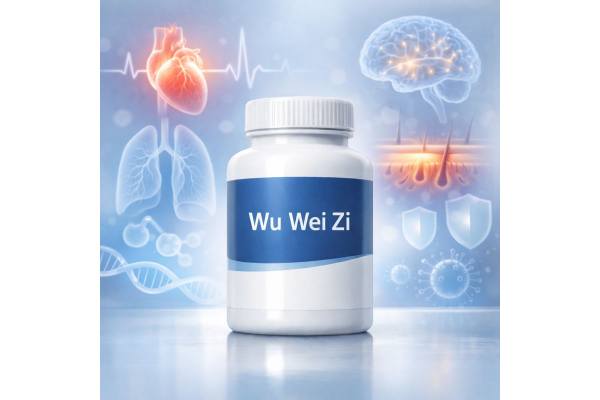
Wu Wei Zi, most commonly made from the fruit of Schisandra chinensis, is often described as a “five-flavor berry” because its taste can shift between sour, sweet, bitter, pungent, and salty notes. In practice, people reach for Wu Wei Zi when they want steadier energy, better stress tolerance, and support for recovery—especially when fatigue feels both physical and mental. Modern supplements typically concentrate its signature compounds (lignans), which are studied for antioxidant activity, liver support pathways, and effects on endurance markers like lactate.
The advantage of Wu Wei Zi is that it can be used in more than one way: as a traditional tea or decoction, as a standardized capsule, or as a tincture—each with a slightly different “feel” and dose-control profile. Like many potent botanicals, it also comes with real cautions, especially around drug interactions and sensitive populations. Used thoughtfully, it can be a practical, targeted addition rather than a vague “wellness” habit.
Quick Overview for Wu Wei Zi
- May support perceived stamina and reduce exercise-related fatigue markers in some adults
- Lignan-rich extracts are studied for antioxidant and liver-protective activity
- Typical supplement range: 500–1,500 mg/day standardized extract, often split into 1–2 doses
- Avoid combining with narrow-therapeutic-index drugs unless a clinician approves
- Avoid if pregnant, breastfeeding, or if you have uncontrolled reflux or active ulcers
Table of Contents
- What is Wu Wei Zi, exactly?
- What benefits should you expect?
- How Wu Wei Zi works in the body
- How to use Wu Wei Zi well
- How much Wu Wei Zi per day?
- Side effects and who should avoid it
What is Wu Wei Zi, exactly?
Wu Wei Zi refers to the dried fruit of Schisandra chinensis (and, less commonly in commerce, related Schisandra species). In many traditional systems it’s categorized as an “astringent tonic” herb—meaning it is used to help “hold in” or stabilize functions that feel leaky or overactive (for example, excessive sweating, chronic loose stools, or a sense of being easily depleted). Whether or not you use that language, it points to a practical theme: Wu Wei Zi is often chosen when someone wants steadier output, not stimulation.
From a supplement standpoint, the most important distinction is whole fruit vs. extract. Whole fruit powders and teas carry a wider range of compounds (organic acids, polysaccharides, volatile aromatics), while concentrated extracts emphasize lignans—a family that includes schisandrin (also called schisandrol A), schisandrin B, and gomisins. These lignans are widely studied for antioxidant signaling, liver-protective mechanisms, and interactions with drug-metabolizing enzymes.
You’ll also see Wu Wei Zi marketed under a few overlapping labels:
- Schisandra, Schisandra berry, Chinese magnolia vine
- “Adaptogen” (a term used for herbs studied for stress resilience and fatigue; it is not a regulated medical category)
- Ergogenic support (performance-related support, often framed around endurance)
Quality varies more than most people expect. A capsule labeled “Schisandra” might be a simple dried berry powder—or a standardized extract designed to deliver a consistent lignan dose. If your goal is measurable consistency (same response week to week), standardized extracts tend to be easier to dose. If your goal is a gentler, food-like approach, teas and powders can be a better fit, especially for people who are sensitive to concentrated botanicals.
What benefits should you expect?
The most realistic benefits of Wu Wei Zi cluster into three categories: fatigue resilience, recovery and performance markers, and liver-oriented support. The key is to match your expectations to the form you’re using and the time window you’re willing to test.
1) Steadier energy and fatigue resilience
Wu Wei Zi is not a classic “kick” like caffeine. People often describe the effect as smoother: fewer dips, less feeling wrung out, and better follow-through on mentally demanding tasks. In real life, that can matter more than a temporary energy spike. When benefits show up, they often do so after 1–3 weeks, especially with daily dosing, because many of its studied effects relate to antioxidant signaling and stress response rather than immediate stimulation.
2) Exercise-related recovery signals
Some clinical research has explored Schisandra extract for strength or fatigue-related outcomes, including markers like resting lactate and perceived exertion. For readers who train, a helpful mental model is: Wu Wei Zi may support how efficiently your body “clears the noise” after exertion—oxidative stress and metabolic byproducts—rather than pushing peak power in a single session.
3) Liver support pathways
Wu Wei Zi has a long reputation for supporting liver function. Modern discussions often center on protective antioxidant pathways, inflammatory signaling, and the way certain lignans influence detoxification enzymes. It’s important to stay precise: “support” is not the same as “treat.” If you have diagnosed liver disease, use Wu Wei Zi only with clinician oversight, because liver conditions often involve prescription medications, and Wu Wei Zi can influence how drugs are metabolized.
Advantages versus similar herbs
Compared with some other “adaptogen” style herbs, Wu Wei Zi is often chosen when the goal is:
- Less stimulation and fewer jitters
- More emphasis on recovery and stress tolerance
- Dual focus on endurance-feel plus liver-oriented support
A practical way to test it is to pick one clear outcome—afternoon energy crashes, perceived workout recovery, or stress-related sleep fragmentation—and track it for 3–4 weeks. If nothing changes, adjust form or stop rather than stacking more supplements.
How Wu Wei Zi works in the body
Wu Wei Zi’s effects are best understood as systems-level support rather than a single on-off switch. Its key compounds (especially lignans) interact with antioxidant signaling, inflammation pathways, and drug-metabolism systems—three areas that shape how “resilient” you feel day to day.
Antioxidant signaling, not just “antioxidant content”
A common misunderstanding is that a plant works only because it contains antioxidant molecules that “soak up” free radicals directly. Wu Wei Zi may also work by influencing the body’s own antioxidant defenses—enzymes and protective pathways that determine how you respond to stress, exercise, poor sleep, or environmental exposures. In practical terms, this is one reason people often notice a change after consistent use rather than after a single dose.
Mitochondria and fatigue feel
Fatigue is not only about willpower; it reflects cellular energy production and how quickly you recover from stress. Schisandra lignans have been studied for mitochondria-related protective effects, which may connect to the “steady energy” reports. This doesn’t mean it is a cure for chronic fatigue conditions, but it does explain why it’s often positioned as a resilience herb rather than a stimulant.
Liver enzymes and detoxification processes
Wu Wei Zi is well known for affecting drug-metabolizing enzymes and transporters—especially cytochrome P450 enzymes and P-glycoprotein. This has two sides:
- Potential upside: these interactions are part of why certain Schisandra preparations have been explored for liver-oriented applications and recovery support.
- Real risk: the same mechanisms can change medication levels in the body, sometimes significantly.
If you take medications that require stable blood levels, Wu Wei Zi should be treated as a serious variable, not a casual tea.
The “five flavors” detail that actually matters
The classic “five flavors” description is not just poetic. Taste correlates with chemistry: the berry contains organic acids (often sour), aromatic compounds (pungent notes), and bitter components. For users, that matters because tea and whole-berry preparations may feel different than capsules—sometimes gentler, sometimes more digestive-focused—because they deliver a broader spectrum rather than a lignan-heavy concentrate.
The takeaway: Wu Wei Zi’s “advantages” come from being multi-pathway. The caution is the same: multi-pathway herbs deserve careful dosing and attention to context.
How to use Wu Wei Zi well
Most disappointing experiences with Wu Wei Zi come from mismatching the form, timing, and goal. A little structure turns it from “another bottle” into a real experiment with a clear outcome.
Step 1: Choose the right form for your intent
Use this as a practical guide:
- Tea or decoction (dried berries): best for a gentle, traditional approach and for people who do well with “food-like” herbs. Taste is strong and astringent.
- Powdered whole fruit: convenient, broader-spectrum than extract, but dose can be less precise and taste still matters.
- Standardized extract (capsules/tablets): best for consistent dosing and for people targeting performance markers or resilience outcomes.
If your main goal is fatigue resilience, standardized extracts are often easiest to test. If your goal is digestive steadiness or you simply prefer a traditional approach, tea can be a better match.
Step 2: Timing matters more than most people think
Wu Wei Zi can feel either calming or sharpening depending on the person and dose. A common pattern:
- Morning or early afternoon: best for energy steadiness and focus support
- Evening: can help some people unwind, but can keep others too alert
If you’re unsure, start earlier in the day for the first week.
Step 3: Build a 3–4 week “trackable” trial
Pick one measurable metric and track it. Examples:
- Afternoon energy crash frequency (0–7 days/week)
- Workout recovery rating the next morning (1–10)
- Number of nighttime awakenings (count)
Keep everything else steady (caffeine, bedtime, training volume) so you can attribute changes more confidently.
Step 4: Avoid common mistakes
- Starting too high: concentrated extracts can cause nausea or reflux in sensitive users.
- Stacking with multiple “adaptogens” immediately: it becomes impossible to know what is doing what.
- Ignoring medication context: if you take prescription drugs, assume interaction potential unless a clinician says otherwise.
- Expecting it to replace sleep: Wu Wei Zi can support resilience, but it can’t outvote chronic sleep debt.
Used well, Wu Wei Zi is less about “more energy” and more about more usable energy—the kind that still shows up at 4 p.m. without pushing your system into overdrive.
How much Wu Wei Zi per day?
Dosing depends on whether you’re using whole berries or a standardized extract. If you want repeatable results, choose an extract with clear labeling and start with a conservative dose.
Common adult dosing ranges (general guidance)
Standardized extract (capsules/tablets):
- Typical range: 500–1,500 mg/day
- Often split: 250–750 mg twice daily
- Many people start at 500 mg/day for 7 days, then adjust.
Whole dried berries (tea/decoction):
- Typical range: 1–3 g/day dried fruit for a gentle tea
- For a stronger decoction: 3–6 g/day, simmered 15–25 minutes
Start lower if you have reflux or a sensitive stomach.
Tincture (alcohol extract):
- Common range: 1–3 mL, 1–2 times daily
Because tincture concentrations vary, use the manufacturer’s conversion details if provided.
What to look for on a label
A high-quality label makes dosing easier. Prioritize products that disclose:
- Plant part: fruit/berry (not “proprietary blend” only)
- Extract ratio (for example, 10:1) or standardization to lignans
- Serving size in mg and suggested daily maximum
If a product is standardized, it may list total lignans. If it is not standardized, two products with the same “1000 mg” can behave differently.
How to adjust your dose safely
Use a simple “low and slow” rule:
- Start at the lowest labeled adult dose for 5–7 days.
- Increase by 250–500 mg/day (extract) only if needed and tolerated.
- Stop increasing once you get the benefit you want.
Cycling and duration
Many users do well with 6–12 weeks on, then 1–2 weeks off to reassess baseline. Cycling isn’t mandatory, but it helps you confirm it’s still doing something useful and keeps your supplement plan intentional.
If you feel no change after 3–4 weeks at a reasonable dose, consider switching form (tea vs. standardized extract) or discontinuing. The goal is a clear, repeatable benefit—not a supplement you keep taking out of habit.
Side effects and who should avoid it
Wu Wei Zi is often well tolerated, but “natural” does not mean “neutral.” Its most important risks involve digestive irritation and drug interactions.
Common side effects
These are usually dose-related and more likely with concentrated extracts:
- Stomach upset, nausea, or cramping
- Heartburn or reflux flare (especially in sensitive users)
- Headache or light dizziness
- Sleep changes (either vivid dreams or feeling too alert if taken late)
- Skin reactions (uncommon, but possible with any botanical)
If side effects appear, reduce the dose for a week or switch to a gentler form (tea or lower-dose whole fruit). If symptoms persist, stop and reassess.
Who should avoid Wu Wei Zi (or use only with clinician oversight)
- Pregnant or breastfeeding individuals: avoid due to limited safety data and the herb’s pharmacologic activity.
- People with uncontrolled GERD, active ulcers, or severe gastritis: the astringent, concentrated profile may aggravate symptoms.
- Those with known liver disease: not because it is automatically harmful, but because liver conditions often involve medications and careful monitoring.
- Anyone preparing for surgery: stop in advance unless your clinician advises otherwise, since interactions and bleeding-risk context can be complex.
Medication interactions: the most important caution
Wu Wei Zi’s lignans can affect drug-metabolizing enzymes and transporters (notably CYP enzymes and P-glycoprotein). That means it can raise or lower medication exposure, depending on the drug and the dosing context.
Be especially cautious with medications where small changes in blood level matter, such as:
- Immunosuppressants (for example, tacrolimus, cyclosporine)
- Anticoagulants and antiplatelet drugs
- Some anti-seizure medications
- Certain psychiatric medications
- Some statins and cardiovascular drugs
If you take any prescription medication, the safest approach is simple: ask a pharmacist or prescribing clinician before starting, and do not “self-test” by adjusting your medication dose.
A practical safety rule
If a product label lists a high-dose extract and you also take medications daily, treat Wu Wei Zi as you would a new medication: start low, monitor closely, and involve a professional. The benefit of Wu Wei Zi is not worth the risk of destabilizing essential therapies.
References
- A comprehensive review of Schisandra chinensis lignans: pharmacokinetics, pharmacological mechanisms, and future prospects in disease prevention and treatment – PubMed 2025 (Review)
- Frontiers | A Comprehensive Review of the Main Lignan Components of Schisandra chinensis (North Wu Wei Zi) and Schisandra sphenanthera (South Wu Wei Zi) and the Lignan-Induced Drug-Drug Interactions Based on the Inhibition of Cytochrome P450 and P-Glycoprotein Activities 2022 (Review)
- Antioxidant Effects of Schisandra chinensis Fruits and Their Active Constituents – PubMed 2021 (Review)
- Effect of Schisandra Chinensis Extract Supplementation on Quadriceps Muscle Strength and Fatigue in Adult Women: A Randomized, Double-Blind, Placebo-Controlled Trial – PubMed 2020 (RCT)
- Frontiers | Efficacy of Schisandra chinensis in liver injury: a systematic review and preclinical meta-analysis 2025 (Systematic Review)
Disclaimer
This article is for educational purposes only and does not provide medical advice, diagnosis, or treatment. Herbal products like Wu Wei Zi can affect the body and may interact with prescription and over-the-counter medications, especially drugs metabolized by liver enzymes or transported by P-glycoprotein. If you are pregnant, breastfeeding, have a medical condition (including liver disease), or take any regular medications, consult a qualified clinician or pharmacist before using Wu Wei Zi. Stop use and seek medical guidance if you develop concerning symptoms or signs of an allergic reaction.
If you found this guide helpful, please consider sharing it on Facebook, X (formerly Twitter), or any platform you prefer, and follow us on social media. Your support through sharing helps our team continue producing high-quality, practical health content.