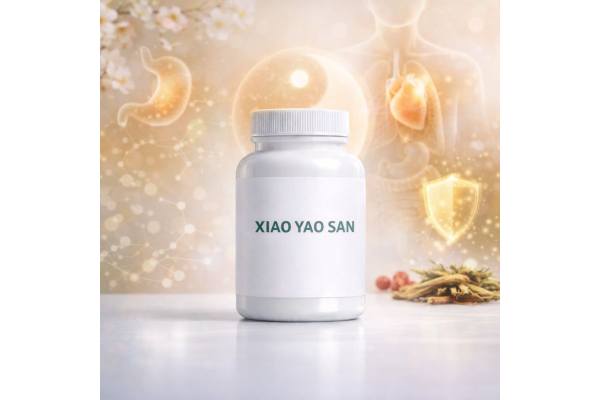
Xiao Yao San (often translated as “Free and Easy Wanderer”) is a classic East Asian herbal formula best known for supporting emotional balance when stress shows up in the body—think tight chest, poor appetite, bloating, fatigue, irritability, or tension headaches. Modern users often look for it as a “mood-and-digestion” blend: a way to take the edge off anxious restlessness while also calming the gut. It is not a single herb, but a multi-herb recipe designed to work as a system—gently supporting stress response, digestion, and energy without acting like a sedative.
That said, “gentle” does not mean “risk-free.” Because Xiao Yao San contains multiple botanicals, quality varies widely, and it can interact with medications or be inappropriate for certain health conditions. This guide explains what it is, what people use it for, how to take it, and when to avoid it.
Essential Insights
- Often used for stress-related mood swings and gut discomfort that worsen together.
- May support appetite, bloating relief, and calmer daily functioning when tension is a trigger.
- Start low and stop if you develop rash, worsening anxiety, or unusual bruising.
- Typical adult use is 1–2 servings daily of standardized granules or tablets (follow the label).
- Avoid during pregnancy, while breastfeeding, or if you take blood thinners unless a clinician approves.
Table of Contents
- What is Xiao Yao San?
- What benefits do people notice?
- How might it work in the body?
- How do you take it safely?
- Side effects and who should avoid it
- What does the evidence really say?
What is Xiao Yao San?
Xiao Yao San is a traditional herbal formula made from a specific combination of botanicals rather than a single “active ingredient.” You may also see it written as Xiaoyao San, Xiao Yao Wan (pill form), or by related variants such as Jia Wei Xiao Yao San (often called “Dan Zhi Xiao Yao San”), which is commonly chosen when heat-type symptoms are more prominent (for example, feeling flushed, more irritable, or having a bitter taste).
While different manufacturers and traditions can vary slightly, the “core idea” stays consistent: it is designed for patterns where emotional strain and digestive weakness feed each other. In practical terms, that means symptoms often look like:
- Feeling emotionally “wired and tired,” easily frustrated, or tearful
- Tension in the chest, ribs, neck, or shoulders
- Bloating, low appetite, irregular bowel habits, or nausea when stressed
- Fatigue that improves with rest but returns quickly under pressure
- Sleep that is light, interrupted, or unrefreshing
A helpful way to think about Xiao Yao San is as a “regulation” formula. It is not meant to force a strong stimulant effect or knock you out like a sleeping pill. Instead, it aims to smooth stress reactivity and support digestion and blood nourishment so mood and energy become steadier over time.
Because it contains multiple herbs, quality and identity matter. Products may be sold as:
- Granules (dissolved in warm water)
- Teapills or tablets
- Powdered extracts
- Practitioner-prepared decoctions
If you are choosing an over-the-counter product, you are not only choosing Xiao Yao San—you are choosing the manufacturing standards behind it. That difference can affect both results and side effects.
What benefits do people notice?
Most people explore Xiao Yao San because they feel caught in a loop: stress tightens the body, digestion suffers, sleep worsens, and mood becomes more reactive. When it’s a good fit, users commonly describe changes that feel “everyday meaningful” rather than dramatic—less spiraling, fewer stress-triggered gut flares, and a calmer baseline.
Commonly reported benefits include:
- Mood steadiness under stress. People often seek it for irritability, mood swings, anxious tension, or feeling emotionally “stuck.” Rather than acting like an immediate calm-down pill, it may support smoother day-to-day regulation so triggers feel less intense.
- Better digestion when emotions are the trigger. For some, bloating, gas, cramping, or early fullness gets worse during conflict, deadlines, or chronic worry. Xiao Yao San is frequently used when digestive symptoms are closely tied to emotional strain.
- Support for fatigue with a “stressed-out” feel. Not all fatigue is the same. Some people are exhausted but restless, with sleep that does not restore them. If the fatigue comes with tension, poor appetite, and emotional reactivity, this formula is often considered.
- Less “body tension” symptoms. Tension headaches, jaw clenching, neck stiffness, and a sensation of tightness under the ribs are commonly described in the pattern it targets.
Advantages people cite compared with simpler options:
- It can address multiple linked symptoms at once (mood + gut + energy).
- Many users tolerate it better than sedating supplements, especially if they still need to function at work.
- It is often used as a “bridge” approach—supporting symptoms while a person improves sleep, nutrition, and stress habits.
However, it is not a universal mood solution. If someone has severe depression, panic disorder, suicidal thoughts, or bipolar disorder, self-treating with an herbal formula is not an adequate plan. Also, if your symptoms are driven by a medical condition such as thyroid disease, anemia, inflammatory bowel disease, or medication side effects, Xiao Yao San may not address the root cause.
A practical way to set expectations: if it helps, you may notice smoother stress response and digestion within 1–3 weeks, with deeper steadiness often taking 4–8 weeks—especially when paired with sleep and diet improvements.
How might it work in the body?
Xiao Yao San is a multi-component formula, so its effects likely come from several overlapping pathways rather than a single mechanism. Modern research often frames the formula through a “network” lens: many plant compounds acting modestly across stress signaling, inflammation, digestion, and the gut-brain connection.
Several plausible mechanisms are discussed in the scientific literature:
- Stress-response modulation. Chronic stress can dysregulate the hypothalamic-pituitary-adrenal (HPA) axis, affecting cortisol rhythms, sleep quality, and emotional reactivity. Xiao Yao San is frequently studied for its potential to support a more balanced stress response rather than suppressing it.
- Inflammation and neuroinflammation. Low-grade inflammation is increasingly associated with mood symptoms in some people. Some constituents in the formula contain flavonoids and other phytochemicals that may influence inflammatory signaling. The practical takeaway: the formula may be most relevant when mood symptoms coincide with “body stress” signs such as poor sleep, gut irritation, and fatigue.
- Gut-brain axis support. Stress changes gut motility, barrier function, and microbiome composition. A formula used for stress-related indigestion naturally draws interest for its potential to support gut comfort, which can then feed back into calmer mood.
- Neurotransmitter-related pathways. While it is not accurate to say Xiao Yao San “raises serotonin” in a simple way, plant compounds may influence neurotransmitter systems indirectly through stress signaling, inflammation, and gut-based mechanisms.
One reason Xiao Yao San is hard to “reduce” to a single claim is that it is designed for a pattern: emotional constraint plus digestive weakness. If you only have one piece—pure digestive disease without stress sensitivity, or pure anxiety without gut involvement—it may be less targeted.
A useful mindset is to treat it as a support for regulation and resilience, not a quick fix. People often get the best results when the formula is paired with:
- Regular meal timing and adequate protein
- Caffeine moderation (especially if anxiety is prominent)
- Sleep consistency and morning light exposure
- Gentle movement that downshifts the nervous system (walking, yoga, tai chi)
This is also why personalization matters. Two people with “anxiety” might need different approaches depending on sleep, digestion, heat/cold signs, and medication use.
How do you take it safely?
Because Xiao Yao San is sold in multiple forms, “how to take it” depends on the preparation. The safest universal rule is simple: follow the product label or a qualified clinician’s instructions, and avoid stacking multiple versions at once (for example, granules plus teapills plus tincture).
Typical forms and how they’re used:
- Granules: Often mixed into warm water and taken once or twice daily. This can be easier to adjust because you can start with less than a full serving.
- Teapills/tablets: Convenient, but dosing can be less transparent if the label does not clearly state extract ratio or raw herb equivalence.
- Decoctions (custom boiled formulas): Usually prescribed by a trained practitioner and adjusted over time based on response.
A practical, safety-first approach:
- Start low for 3–4 days. Begin with about half the label dose to assess tolerance.
- Increase gradually. If no side effects occur, move toward the full label dose.
- Track the right signals. Improvements to watch include appetite steadiness, reduced bloating, fewer stress-triggered symptoms, and calmer sleep onset. Red flags include rash, worsening agitation, palpitations, or unusual bruising.
- Give it a fair trial—then reassess. If it’s helping, you usually notice meaningful changes by 4–6 weeks. If nothing changes by 6–8 weeks, it may be the wrong match or the product quality may be poor.
- Avoid “more is better.” Higher doses increase side-effect and interaction risk without guaranteeing better results.
Timing tips:
- Many people tolerate it best with meals, especially if they have a sensitive stomach.
- If you feel too energized when taking it late, shift the later dose earlier in the day.
- If it makes you sleepy (less common), taking it in the evening may be preferable.
Quality checklist when buying:
- Clear ingredient list naming the formula and its components
- Batch testing for contaminants (heavy metals, microbes)
- Transparent manufacturer details and lot numbers
- Avoid products that make disease-treatment claims or hide amounts behind “proprietary blend” language
If you take prescription medication—or have liver, kidney, bleeding, or hormone-related conditions—treat Xiao Yao San as something to discuss with a clinician, not a casual add-on.
Side effects and who should avoid it
Many people use Xiao Yao San without major problems, but side effects can occur—especially with higher doses, poor-quality products, or when combined with certain medications. Because it is a multi-herb formula, individual sensitivity is real: one person may feel calmer, while another may feel activated or nauseated.
Possible side effects include:
- Digestive upset (nausea, loose stool, stomach discomfort)
- Headache or dizziness in sensitive users
- Sleep changes (either mild sedation or feeling more “awake”)
- Skin reactions (itching, rash)
- Palpitations or jitteriness, especially if combined with caffeine or stimulating supplements
Stop and seek medical advice if you experience:
- Facial swelling, hives, or trouble breathing
- Unexplained bruising or bleeding
- Dark urine, yellowing of the skin/eyes, or severe fatigue (possible liver-related warning signs)
- Marked mood worsening, agitation, or signs of mania (racing thoughts, little sleep with high energy)
People who should avoid Xiao Yao San unless a clinician specifically approves:
- Pregnant or breastfeeding individuals (safety data for complex formulas is limited)
- Children unless supervised by a qualified pediatric practitioner
- People with bipolar disorder or a history of mania/hypomania
- Those with bleeding disorders or who take anticoagulants or antiplatelet drugs
- People scheduled for surgery (a conservative approach is to stop herbal formulas in advance)
- Anyone with significant liver disease unless monitored
- People with complex medication regimens, especially psychiatric medications, immunosuppressants, or drugs with narrow therapeutic ranges
Interaction considerations (why caution is reasonable):
- Multi-herb formulas can influence metabolism enzymes and transporters, altering drug levels.
- Additive effects are possible (for example, combining with sedatives, stimulants, or serotonergic agents).
- Product variability makes risk harder to predict.
If you want the benefits while lowering risk, the best move is not “guessing better,” but improving structure: choose a reputable product, start low, avoid stacking, and track symptoms carefully.
What does the evidence really say?
Xiao Yao San has a long tradition of use, and modern research includes clinical trials, systematic reviews, and mechanistic studies. The overall picture is promising but not definitive—especially because many studies vary in formula versions, dose forms, comparison treatments, and study quality.
What the evidence tends to support:
- Stress-linked mood symptoms: Research commonly explores Xiao Yao San (and related variants) for anxiety- and depression-related symptoms, often as an add-on to standard care. Results frequently show symptom improvement compared with controls, but the strength of evidence depends on trial design and reporting quality.
- Functional digestive complaints: There is also consistent interest in digestive symptom improvement, particularly when symptoms are “functional” (meaning tests may be normal, but symptoms are real and persistent). People with bloating, discomfort, and stress sensitivity are a frequent focus.
- Safety in studied settings: Many trials report low rates of adverse events, but this does not guarantee real-world safety, because supplement quality and user health status vary widely.
Key limitations to keep in mind:
- Heterogeneity: Studies may use different herb ratios, different manufacturing standards, and different outcome measures.
- Small sample sizes and short follow-up: Many trials are not long enough to confirm sustained benefit or rare adverse events.
- Publication bias risk: Positive findings are more likely to be published than null results.
How to use this evidence wisely:
- Treat Xiao Yao San as a supportive option, not a replacement for diagnosis, therapy, or medication when those are indicated.
- If you have moderate-to-severe symptoms, use it as part of a broader plan: sleep, nutrition, psychotherapy skills, and medical evaluation.
- If you do try it, treat your first 6–8 weeks like a structured experiment: consistent dosing, minimal confounders, and a simple symptom tracker (sleep, gut comfort, mood reactivity, energy).
A grounded takeaway: Xiao Yao San appears most reasonable for people whose symptoms cluster around stress sensitivity plus digestive disruption, especially when they want a non-sedating support and can use it responsibly. If your symptoms are severe, rapidly worsening, or medically complex, it should be guided by a clinician who can monitor risks and interactions.
References
- Efficacy and safety of the Chinese herbal medicine Xiao Yao San for treating anxiety: a systematic review with meta-analysis and trial sequential analysis 2023 (Systematic Review)
- Safety and efficacy of Xiaoyao-san for the treatment of functional dyspepsia: a systematic review and meta-analysis of randomized controlled trials 2023 (Systematic Review)
- The pharmacological actions of Danzhi-xiaoyao-San on depression involve lysophosphatidic acid and microbiota-gut-brain axis: novel insights from a systems pharmacology analysis of a double-blind, randomized, placebo-controlled clinical trial 2024 (RCT)
- Bioactive constituents and action mechanism of Xiaoyao San for treatment of non-alcoholic fatty liver disease 2024 (Review)
- Common adverse events of herbal formulas for developing reporting forms for clinical practice and research: An overview of systematic reviews 2025 (Overview of Systematic Reviews)
Disclaimer
This article is for educational purposes only and does not provide medical advice, diagnosis, or treatment. Herbal formulas such as Xiao Yao San can cause side effects and may interact with prescription or over-the-counter medications. If you are pregnant, breastfeeding, have a chronic medical condition, take any medications (especially for mood, blood clotting, or immune conditions), or have severe or worsening symptoms, consult a qualified healthcare professional before using this formula. Seek urgent help if you experience allergic reactions, severe mood changes, or signs of serious illness.
If you found this guide helpful, please consider sharing it on Facebook, X (formerly Twitter), or any platform you prefer, and follow us on social media. Your support through sharing helps our team continue producing high-quality, practical health content.