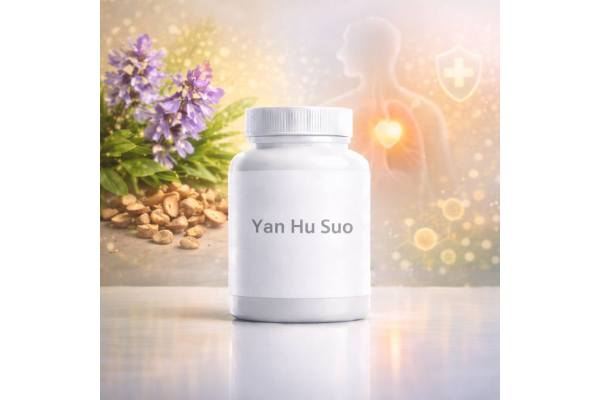
Yan Hu Suo (also called Corydalis yanhusuo or “corydalis”) is a traditional Chinese herb best known for its role in pain formulas—especially for cramping, menstrual discomfort, and “stuck” pain that feels sharp or localized. In modern supplement form, it is usually sold as a powdered tuber or an extract standardized for alkaloids, the plant’s most active compounds. Those alkaloids can influence pain signaling, inflammation, and the nervous system’s “calm” pathways, which explains why many people describe both pain relief and mild relaxation.
At the same time, Yan Hu Suo is not a casual, everyday herb. Potency varies widely between products, it can cause drowsiness, and it may interact with sedating medications. Rare liver-injury cases have also been reported. If you’re considering it, the safest approach is to match the form and dose to your goal, start low, and treat it as a short-term tool—not a long-term habit.
Essential Insights
- May help ease certain types of acute or cramp-like pain and support relaxation.
- Avoid combining with alcohol, opioids, benzodiazepines, or other sedatives due to additive drowsiness.
- Common supplemental range is 250–1,500 mg/day of extract (or 1–3 g/day of powdered tuber), starting low.
- Avoid if pregnant, breastfeeding, managing liver disease, or using sedating or liver-stressing medications.
Table of Contents
- What is Yan Hu Suo, exactly?
- What benefits are realistic?
- How does Yan Hu Suo work?
- What are the best ways to use it?
- How much should you take and when?
- Side effects, interactions, and who should avoid it
- Evidence and how to choose a quality product
What is Yan Hu Suo, exactly?
Yan Hu Suo refers to the dried tuber of Corydalis yanhusuo, a plant used in East Asian herbal practice for centuries. In traditional terms, it is often described as moving “qi and blood,” which is a practical way of saying it has a long history in formulas aimed at pain that feels constrained—cramping, stabbing, or worsened by stress and tension. It’s commonly paired with other herbs rather than used alone, but modern supplements frequently sell it as a single-ingredient extract.
What makes Yan Hu Suo distinctive is its chemistry. The tuber contains many alkaloids (nitrogen-containing compounds) that can act on the nervous system. Two names you’ll see often are tetrahydropalmatine (THP, including the levo-isomer “l-THP”) and dehydrocorybulbine (DHCB). Other alkaloids, such as corydaline and related compounds, also contribute. This matters because alkaloids are not just “nutrients”—they behave more like drug-like actives, which is why the herb can feel noticeably calming or sedating to some people.
You may also see different processing terms, especially in traditional supply chains. Vinegar processing is a classic preparation method used before clinical use in some traditions. Processing can shift the alkaloid profile and may affect both tolerability and absorption. In supplement stores, however, “corydalis” may be sold without clear processing details, so you should treat unfamiliar products with extra caution.
One more point that surprises people: Yan Hu Suo is not the same as culinary yams, yam root, or “wild yam.” The overlap is only in the word “root.” If you are buying it for pain support, look for the botanical name (Corydalis yanhusuo) and an extract or powder form that clearly lists plant part (tuber/rhizome) and serving size.
What benefits are realistic?
Most interest in Yan Hu Suo centers on pain support, but it helps to be specific about the kind of pain it’s most often used for and what “benefit” realistically means. In practice, people typically reach for it when they want a non-opioid option for short-term discomfort—especially cramp-like pain, tension-related pain, or pain that comes with restlessness and poor sleep.
Common, reasonable use-cases include:
- Menstrual discomfort and pelvic cramping. Many traditional formulas for dysmenorrhea include Yan Hu Suo, and modern discussions around THP often point to antispasmodic and pain-modulating actions that fit this use.
- Muscle tightness and “tension pain.” When pain has a stress component—tight shoulders, jaw tension, or a wired-but-tired feeling—Yan Hu Suo’s calming properties may be part of why it feels helpful.
- Occasional headache discomfort. Not as a primary migraine treatment, but sometimes as part of a broader “tension + poor sleep” pattern.
- General relaxation support. Some people notice a shift toward physical calm, which can indirectly reduce pain perception or improve sleep onset.
Where expectations often get too big is chronic, complex pain. For long-standing nerve pain, autoimmune pain, or structural pain (severe arthritis, disc disease), Yan Hu Suo should not be framed as a standalone solution. If it helps, it’s more likely to provide partial relief, make flare-ups more tolerable, or reduce the “edge” so other strategies (movement, physical therapy, sleep) work better.
A realistic timeline also matters. Many users feel effects within 30–90 minutes when taken as an extract, with the strongest effect window often lasting a few hours. That makes it more suitable for “as-needed” situations than for all-day coverage—unless split dosing is used.
Finally, a key advantage—and a key limitation—is that Yan Hu Suo can be noticeable. If you feel nothing, it might be under-dosed or low-quality. If you feel very drowsy, dizzy, or “heavy,” it may be too much for you, the product may be unusually strong, or it may be concentrated in a specific alkaloid like THP. The right target is modest relief without impairment.
How does Yan Hu Suo work?
Yan Hu Suo’s effects are best understood as a multi-pathway “pain modulation” profile rather than a single mechanism. The herb’s alkaloids can influence how the body detects pain, how the brain interprets it, and how the nervous system settles after stress. That multi-target behavior is also why people’s experiences vary: two products labeled “corydalis” may act differently depending on which alkaloids dominate.
Key mechanisms often discussed for Yan Hu Suo and its alkaloids include:
- Dopamine receptor activity. Some Corydalis constituents interact with dopamine signaling, which can affect pain processing and mood. This may partly explain why some users describe both pain relief and a smoother emotional response to discomfort.
- Influence on opioid-related pathways (without being an opioid). Certain alkaloids appear to interact with opioid receptors or downstream pathways involved in pain relief. This does not make it equivalent to prescription opioids, but it helps explain analgesic effects in preclinical work.
- Ion channel modulation. Pain signals travel through nerve membranes using channels (such as sodium channels). Some Corydalis-derived compounds have been studied for effects on nerve excitability, which can reduce “signal volume.”
- Anti-inflammatory signaling. Inflammation is not only swelling—it’s also chemical messaging that sensitizes nerves. Corydalis alkaloids have been explored for effects on inflammatory mediators in experimental models, which may reduce sensitization in certain contexts.
- Sedation and nervous-system downshifting. THP, in particular, is associated with calming effects. For some people this is a benefit (sleep, tension reduction). For others it’s the main side effect (daytime drowsiness).
A practical way to think about Yan Hu Suo is that it can reduce pain by lowering both the input (nerve excitability) and the amplifier (stress arousal and inflammatory sensitization). That’s why it’s often most appealing when pain and tension come as a package.
This also explains the main caution: if a product strongly emphasizes sedation, it may not be appropriate for daytime use, driving, or combining with other calming agents. The mechanism isn’t “gentle nutrition”—it is pharmacologically active. Treat it with the same respect you would give a strong sleep aid or a potent pain-support botanical.
What are the best ways to use it?
Using Yan Hu Suo well is mostly about choosing the right form, matching it to your goal, and minimizing avoidable risks. You’ll typically see three forms: powdered tuber (sometimes called rhizome powder), capsules/tablets of powder, and standardized extracts.
1) Choose a form that fits your goal
- For fast, short-term relief: A standardized extract (capsule or tincture-style product) tends to be the most predictable. Extracts often kick in faster and are easier to titrate.
- For gentler, traditional-style use: Powdered tuber can be milder per gram, but it is also harder to standardize and may vary between batches.
- For “sleep plus discomfort” nights: Some people reserve Yan Hu Suo for evening use because relaxation is part of the desired effect.
2) Use it as an “event-based” tool
Yan Hu Suo often makes the most sense when used around a defined need:
- Menstrual cramps: start at first signs of cramping and reassess after 60–90 minutes.
- Stress-tension pain: use in the late afternoon or evening when tension builds, not first thing in the morning.
- Occasional discomfort flare-ups: use for a few days, then pause.
3) Stack it with non-supplement basics
If you want better results with less dose, pair it with strategies that reduce pain sensitivity:
- Heat therapy for cramps or muscle tightness
- Gentle movement and hydration
- Magnesium-rich foods or a clinician-approved magnesium routine (if appropriate for you)
- Sleep timing and light management (a calmer nervous system often needs less analgesic support)
4) Know what not to do
Avoid the two common mistakes:
- Chasing stronger effects by layering sedatives. If you want more relief, increase only one variable at a time (dose, timing, or form), and avoid “cocktailing” with alcohol or sleep meds.
- Using it daily for months. For persistent pain, it’s better used as part of a structured plan with medical guidance rather than as a long-term default.
In short: pick a consistent product, use it around a clear purpose, start low, and treat it as a short-term support rather than a lifestyle supplement.
How much should you take and when?
Because Yan Hu Suo products vary widely, the safest dosing advice is always form-specific and start-low. A capsule labeled “500 mg corydalis” could be 500 mg of raw powder or 500 mg of a concentrated extract—two very different things. When possible, prioritize labels that specify extract ratio (such as 10:1) or standardization (such as “X% total alkaloids”), and avoid products that hide details inside “proprietary blends.”
Typical supplemental dosing ranges (adult, general guidance)
- Standardized extract capsules/tablets: 250–1,500 mg per day, split into 1–2 doses.
- Starting point: 250 mg once daily, preferably in the evening.
- If tolerated: 250–500 mg twice daily for short-term use.
- Powdered tuber (capsules or loose powder): 1–3 g per day total, split into 1–3 doses.
- Starting point: 500 mg–1 g in the evening.
- Traditional decoction-style use (practitioner-guided): often falls in a multi-gram daily range, but it should be individualized, especially if combined with other herbs.
Timing tips that reduce side effects
- Evening-first strategy: Your first trial dose is best taken after dinner or 60–90 minutes before bed, when drowsiness is less disruptive.
- Match timing to the pain pattern:
- Cramps: take at onset, then reassess.
- Tension pain: take when tension begins rising, not when it is already maximal.
- Avoid “reactive redosing.” If you don’t feel effects in an hour, do not immediately double. Wait, evaluate, and adjust the next day.
How long can you use it?
Many people use Yan Hu Suo as a short course: a few days for a flare-up, or a few days each month for menstrual discomfort. A conservative personal rule is up to 2–4 weeks without clinician oversight, then pause and reassess. If you feel you “need” it daily, that’s a signal to step back and look for the underlying pain driver and safer long-term supports.
When a lower dose is smarter than a higher dose
Choose the lowest effective dose if you:
- drive, operate machinery, or need sharp coordination
- have low blood pressure or a history of dizziness
- are taking any medication that affects the brain or liver
Dose is not a badge of toughness here. With Yan Hu Suo, “too much” usually shows up as impairment, not better pain control.
Side effects, interactions, and who should avoid it
Yan Hu Suo can be well tolerated, but it has real pharmacologic effects, so side effects and interactions deserve more than a footnote. The most common issues come from nervous-system slowing, while the most serious concern is rare but important: liver injury has been reported in association with corydalis-containing products.
Common side effects (more likely with higher doses or strong extracts)
- Drowsiness, slower reaction time, “heavy” feeling
- Dizziness or lightheadedness (sometimes related to blood-pressure changes)
- Nausea, stomach discomfort, dry mouth
- Headache or grogginess the next morning
- Vivid dreams (occasionally reported with sedating botanicals)
If you experience strong sedation, that is not a sign you found the “right” product—it may be a sign the product is overly concentrated in certain alkaloids or simply too strong for you.
Major interaction risks
Avoid combining Yan Hu Suo with:
- Alcohol
- Sedatives or sleep medications (benzodiazepines, Z-drugs, some antihistamines)
- Opioid pain medications
- Cannabis products used for sleep
- Other strongly sedating herbs/supplements (for example, kava or high-dose valerian)
Additive sedation is the main risk, but there is also a practical safety issue: even mild impairment can increase accident risk. If you are trying Yan Hu Suo for the first time, do it on a night when you do not need to drive.
Liver safety: what to know
Cases of drug-induced liver injury have been described with corydalis-containing products. This appears uncommon, but it matters because liver injury can be silent at first. Stop use and seek medical advice promptly if you notice:
- yellowing of skin/eyes, dark urine, pale stools
- unusual fatigue, persistent nausea, right-upper abdominal pain
- itching without a clear cause
Who should avoid Yan Hu Suo (or use only with clinician guidance)
- Pregnant or breastfeeding individuals
- Children and teens
- Anyone with liver disease, elevated liver enzymes, or heavy alcohol use
- People taking multiple medications metabolized by the liver (ask a clinician)
- Those with a history of fainting, severe dizziness, or very low blood pressure
- Anyone scheduled for surgery soon (due to sedative effects and medication interactions)
If you want a simple safety rule: treat Yan Hu Suo like a mild sedative plus a pain modulator. If that would be risky for your body, job, or medication list, choose a different approach.
Evidence and how to choose a quality product
Yan Hu Suo sits in an interesting evidence zone: it has strong historical use and meaningful modern research activity, but translating that into reliable over-the-counter outcomes is complicated by product variability and limited large clinical trials in Western-style supplement formats.
What the evidence supports best
- Analgesic potential through multiple pathways. Reviews of Corydalis yanhusuo describe a broad set of alkaloids with pain-modulating actions, including effects on receptors and nerve signaling. This makes the herb plausible for short-term pain support, especially when tension and poor sleep amplify symptoms.
- THP as a key active compound with both promise and limits. THP is widely studied for analgesic and neuroactive properties, but it also carries the strongest sedation profile and most of the “treat with respect” cautions.
- Processing and formulation matter. Traditional processing methods (such as vinegar processing) are not just cultural—research discussions suggest processing can shift exposure to certain compounds and may influence tolerability.
The biggest real-world issue: inconsistency
Many consumers assume a 500 mg capsule is a 500 mg capsule. With Corydalis products, that assumption can be wrong. Alkaloid content may vary dramatically across brands and batches, and some products may be enriched in a single alkaloid. That creates two problems:
- You cannot reliably predict effect from label dose alone.
- Safety can change with the alkaloid profile—especially if a product is unusually high in THP-like constituents.
How to choose a better product
Use this checklist:
- Look for single-ingredient labeling (avoid proprietary blends).
- Prefer labels that specify extract ratio and/or standardization.
- Choose brands that provide third-party testing (identity, heavy metals, and ideally alkaloid profiling).
- Avoid products that promise opioid-like outcomes, “instant knockout sleep,” or euphoric effects. Overpromising is often a quality red flag.
- Start with a small bottle or a low-count product until you know how you respond.
How to evaluate your results safely
Run a short, structured trial:
- Day 1–2: low dose in the evening only
- Day 3–7: adjust modestly if needed, still avoiding daytime impairment
- End of week: decide whether it is genuinely useful, or whether benefits are mostly sedation
If you need larger and larger doses to feel the same effect, or if you feel unwell when you stop, that’s a sign to discontinue and talk with a clinician. The goal is relief with control—not a supplement you have to “manage.”
References
- Large variability in the alkaloid content of Corydalis yanhusuo dietary supplements 2025
- Corydalis and Drug-Induced Liver Injury: A Series of 2 Cases 2023
- A Comprehensive Review on the Chemical Properties, Plant Sources, Pharmacological Activities, Pharmacokinetic and Toxicological Characteristics of Tetrahydropalmatine 2022 (Systematic Review)
- Processing and Compatibility of Corydalis yanhusuo 2021 (Review)
- Advances in phytochemical and modern pharmacological research of Rhizoma Corydalis 2020 (Review)
Disclaimer
This article is for educational purposes only and is not medical advice. Yan Hu Suo (Corydalis yanhusuo) can cause drowsiness, interact with sedating substances and medications, and has been associated with rare liver injury reports. Do not use it as a substitute for professional diagnosis or treatment. If you are pregnant, breastfeeding, have liver disease, take prescription medicines, or have a chronic pain condition, consult a qualified healthcare professional before using Yan Hu Suo. Stop use and seek medical care promptly if you develop symptoms of liver problems (such as yellowing of the eyes or skin, dark urine, severe fatigue, or persistent nausea).
If you found this guide helpful, please share it on Facebook, X (formerly Twitter), or any platform you prefer, and follow us on social media. Your support through sharing helps our team continue producing accurate, high-quality content.