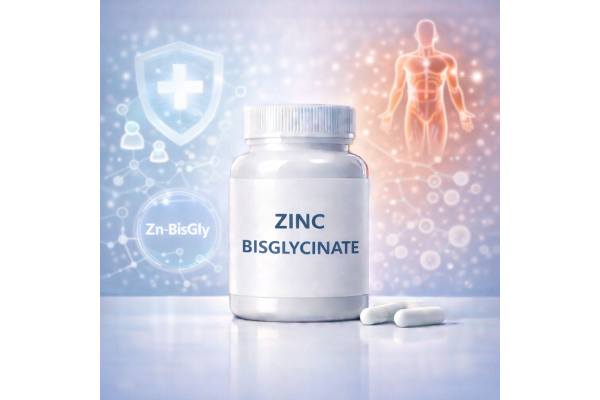
Zinc bisglycinate is a “chelated” form of zinc bound to the amino acid glycine. People often choose it for one simple reason: it tends to be easier on the stomach than harsher salts, and many users find it convenient for steady, everyday supplementation. Zinc itself is an essential mineral involved in immune signaling, wound repair, skin integrity, taste and smell, reproductive health, and hundreds of enzyme reactions.
This guide focuses on what zinc bisglycinate can realistically do, who benefits most, and how to use it without common mistakes. You will learn how to read labels for elemental zinc, how to time doses around foods and medications, and how to stay within safe limits to avoid issues like nausea or copper depletion. If you want a zinc supplement that feels “clean” and predictable, zinc bisglycinate is a practical option—when it is used with the right expectations and dosing habits.
Core Points for Zinc Bisglycinate
- Zinc bisglycinate can support immune function and zinc status, especially when intake is low.
- Long-term high intakes can contribute to copper deficiency—avoid routinely exceeding 40 mg/day elemental zinc.
- A common daily range is 15–30 mg elemental zinc, adjusted to diet and goals.
- People taking tetracycline or quinolone antibiotics should avoid taking zinc at the same time.
- Those with known copper deficiency or significant kidney disease should avoid unsupervised zinc supplementation.
Table of Contents
- What is zinc bisglycinate and how is it different?
- What benefits can you realistically expect?
- Is zinc bisglycinate better absorbed than other forms?
- How much zinc bisglycinate should you take daily?
- How to take zinc bisglycinate with food and supplements
- Side effects, interactions, and who should avoid it
- What the evidence says and how to choose a quality product
What is zinc bisglycinate and how is it different?
Zinc bisglycinate (sometimes written as zinc glycinate or zinc glycine chelate) is zinc attached to two glycine molecules. The goal of chelation is practical: keep zinc in a form that is stable in the digestive tract and less likely to react with compounds that can reduce absorption. That is why zinc bisglycinate is often marketed as “gentle” and “well tolerated.”
A key detail that prevents confusion: the dose that matters is elemental zinc—the amount of actual zinc your body receives—not the total weight of the compound. Different forms contain different percentages of elemental zinc. For example, one label might say “Zinc (as zinc bisglycinate) 25 mg.” That typically means 25 mg elemental zinc provided by zinc bisglycinate. Another label might list the chelate weight separately. When in doubt, treat “Zinc” as the elemental number and the “as bisglycinate” as the source.
How it differs from other common forms:
- Zinc oxide: inexpensive, often lower absorption in practice; sometimes used in multivitamins because it is stable and cheap.
- Zinc sulfate: effective for correcting deficiency but more likely to cause nausea in some people.
- Zinc gluconate: commonly used in lozenges and supplements; generally well tolerated.
- Zinc picolinate and zinc citrate: widely used; some people prefer them for digestibility or personal response.
- Zinc bisglycinate: positioned as a stomach-friendly, potentially well-absorbed option, especially when taken consistently.
Think of zinc bisglycinate as a “daily driver” form: not magical, but often comfortable enough that people actually stick with it—an underrated advantage for any supplement.
What benefits can you realistically expect?
The most reliable benefit of zinc supplementation is simple: improving zinc status when you are not getting enough. If your diet is already zinc-rich and you absorb minerals well, you may feel little difference. If you are borderline low, the same dose can feel surprisingly meaningful over weeks.
Realistic, evidence-aligned benefits include:
Immune support and resilience
Zinc helps maintain normal immune signaling and the integrity of skin and mucosal barriers (your “front lines”). People who are zinc-deficient are more likely to have immune dysfunction, so restoring adequate zinc can support more normal immune responses. This does not mean zinc “prevents everything,” but it can help your immune system operate as designed.
Skin, wound healing, and recovery
Zinc participates in collagen formation, inflammatory regulation, and tissue repair. If you heal slowly, get frequent minor skin issues, or have a low-zinc diet, correcting zinc intake can support normal recovery. Some people also use zinc as part of an acne routine, though acne is multifactorial and results vary.
Taste and smell support
Zinc is involved in taste and smell function. Low zinc can contribute to diminished taste (dysgeusia) or smell changes. If low intake is part of the problem, improving zinc status may help.
Reproductive health and hormone-related roles
Zinc supports normal reproductive function, including sperm production and testosterone metabolism. This does not mean high-dose zinc boosts testosterone in healthy people; the clearer benefit is for those who are deficient or have poor intake.
Who is most likely to notice benefits?
- People with low intake (limited animal proteins, low overall calories, restrictive diets)
- Those eating mostly high-phytate staples (phytates can reduce zinc absorption)
- People with chronic digestive issues that reduce absorption
- Older adults with lower intake or absorption
- Anyone with a confirmed deficiency or clinician-suspected low zinc
If you want a useful self-check: zinc is not a “quick jolt” supplement. For status-related goals, judge it over 3–8 weeks, not 3–8 days.
Is zinc bisglycinate better absorbed than other forms?
Absorption is the main reason people choose zinc bisglycinate, but it helps to frame it correctly: absorption depends on the whole context, not just the ingredient name. Your baseline zinc status, meal composition, competing minerals, gut health, and dose size can all change how much you absorb.
That said, chelated forms such as zinc glycinate are often discussed as potentially advantageous because they may:
- remain more stable in the gut
- interact less with absorption inhibitors (like phytates) in some situations
- cause fewer stomach complaints, which indirectly improves real-world adherence
A practical way to interpret the “better absorbed” question is: Will this form reliably deliver elemental zinc without making me feel sick? For many users, zinc bisglycinate scores well on that test.
Why “more absorbed” is not always “more effective”
If you already meet your zinc needs, extra absorption does not necessarily translate into extra benefits. The body tightly regulates zinc transport and storage. More is not always better—especially long term.
When form matters most
Form tends to matter more when:
- you cannot tolerate zinc sulfate or higher doses of other salts
- you are taking zinc away from food and want fewer GI issues
- your diet is high in inhibitors (for example, heavy reliance on grains and legumes without soaking, sprouting, or fermentation)
- you need consistent daily intake rather than occasional use
A note about lozenges and colds
Many “zinc for colds” studies focus on lozenges (often zinc acetate or zinc gluconate) because local exposure in the throat may matter. Zinc bisglycinate capsules can still support zinc status, but they are not the classic “lozenge protocol.” If your goal is acute cold management, the delivery format and timing can matter as much as the form.
Bottom line: zinc bisglycinate is a sensible choice when you want a well-tolerated zinc supplement for routine use. Treat absorption claims as a “likely advantage,” not a guarantee.
How much zinc bisglycinate should you take daily?
A good zinc dose is one that fits your diet, timeframe, and risk profile. The best starting point is to aim for adequacy, not excess.
Know your baseline targets
Typical daily needs for adults are often summarized as:
- Men: 11 mg/day elemental zinc
- Women: 8 mg/day elemental zinc
- Upper limit (UL) for adults: 40 mg/day elemental zinc (from all sources)
Many people use zinc bisglycinate to “top up” diet, not replace it.
Common supplemental ranges (elemental zinc)
- Diet insurance: 10–15 mg/day
- Useful if your diet is decent but inconsistent.
- Routine support: 15–30 mg/day
- A common range when diet is low in zinc-rich foods or you are trying to rebuild status.
- Short-term higher intake: 25–50 mg/day for 7–14 days
- Sometimes used during periods of high exposure risk or early illness, but avoid making this a chronic habit without clinician guidance.
If you are already getting zinc from a multivitamin, protein powders, “immune blends,” or fortified foods, total intake can quietly climb. Always add up your total elemental zinc.
Should you take zinc every day?
If you are correcting a low intake pattern, daily use is often easier and more predictable. If you are using it as occasional support, you might use it 3–5 days per week. The more your diet supplies zinc reliably, the less you need supplementation.
What about copper?
Long-term higher-dose zinc can reduce copper absorption. If you routinely take 25–40 mg/day for months, talk with a clinician about copper status and whether a small copper supplement (often 1–2 mg/day) is appropriate. Do not add copper casually if you have a medical condition where copper management matters.
A helpful mindset: zinc dosing is about “enough for function,” not “as high as tolerated.”
How to take zinc bisglycinate with food and supplements
Zinc bisglycinate is usually straightforward, but a few habits can make it more effective and more comfortable.
Take it in a way you will actually keep doing
If zinc makes you nauseated, the perfect timing does not matter—you will stop taking it. For many people:
- With a meal reduces nausea.
- With a small snack is enough if you prefer not to take supplements with large meals.
- On an empty stomach can be fine for some, but it is a common trigger for queasiness.
Separate zinc from common “competitors”
Minerals can compete for absorption. If you want to maximize consistency, separate zinc by at least 2 hours from:
- iron supplements
- calcium supplements (including high-calcium antacids)
- high-dose magnesium
- copper supplements (unless your clinician instructs otherwise)
You do not need to fear normal food. This matters most when you are taking mineral supplements together.
Be mindful of high-phytate meals
Phytates in grains and legumes can reduce zinc absorption. If your diet is heavy in these foods, you can improve zinc “value” by:
- taking zinc away from your largest grain-and-legume meal
- using food preparation methods like soaking, sprouting, or fermentation more often
- ensuring you get zinc-rich foods (meat, seafood, dairy, eggs, or well-planned plant sources)
Split dosing for higher intakes
If you take more than 25–30 mg/day, splitting can reduce nausea:
- 15 mg morning + 15 mg evening
- or one dose with lunch and one with dinner
How long until you notice effects?
- Digestive tolerance: immediate
- Skin and recovery: often 4–8 weeks
- Zinc status rebuilding: several weeks to a few months depending on baseline
Consistency beats intensity. A moderate dose you take reliably is usually more useful than a high dose you abandon.
Side effects, interactions, and who should avoid it
Zinc bisglycinate is often chosen because it is gentler, but side effects are still possible—especially as doses rise.
Common side effects
These are usually dose-related and more likely on an empty stomach:
- nausea or stomach upset
- abdominal cramping
- metallic taste
- reduced appetite
- vomiting (typically at higher doses)
If you feel consistently queasy, lower the dose or take it with food. If symptoms persist, stop and reassess.
Long-term high-dose risks
Chronic high zinc intake can cause problems that are easy to miss until they are significant:
- copper deficiency (can contribute to anemia and low white blood cells)
- changes in lipids (including lowering HDL in some contexts)
- immune imbalance from chronic excess
- in extreme cases, neurologic issues related to copper depletion
This is why the 40 mg/day elemental zinc upper limit matters for routine use.
Medication interactions that matter
Zinc can bind certain medications in the gut and reduce their absorption. Separate zinc from:
- tetracycline antibiotics and quinolone antibiotics (commonly by 2–6 hours)
- penicillamine (used for conditions like Wilson disease and rheumatoid arthritis; zinc can interfere)
If you are on long-term medications, it is worth asking a pharmacist about spacing.
Who should avoid zinc bisglycinate without medical supervision?
- people with known copper deficiency or unexplained anemia
- people with significant kidney disease (mineral handling may be altered)
- those taking interacting antibiotics or chelation-related medications who cannot reliably separate doses
- anyone advised to restrict minerals for a specific medical reason
- children, pregnant individuals, and breastfeeding individuals should follow clinician guidance for dosing beyond basic needs
Also avoid zinc-containing nasal sprays. While zinc bisglycinate is typically taken orally, it is still worth stating clearly: intranasal zinc products have been linked to smell loss, and they are not a safe “delivery hack.”
What the evidence says and how to choose a quality product
Zinc research is broad, and supplement marketing often oversimplifies it. A useful way to read the evidence is to separate three questions: (1) does zinc correct low zinc status, (2) does zinc help specific outcomes, and (3) does this form matter?
Where zinc has the strongest “core” value
Zinc’s most dependable role is nutritional: it supports normal physiology, and supplementation helps most when intake is low. That includes immune function, tissue repair, and sensory functions like taste and smell—especially when deficiency is present or likely.
Zinc and respiratory infections
For colds and other viral respiratory infections, findings are mixed because studies vary in dose, form, timing, and delivery (capsules vs lozenges vs sprays). The most careful summaries tend to land on a nuanced conclusion: zinc may reduce duration in some treatment contexts, but it can also raise the likelihood of non-serious side effects. If you try zinc for a cold, choose a plan you can tolerate and stop if it causes significant nausea.
What we know about zinc bisglycinate specifically
Direct studies on zinc bisglycinate are smaller in number than studies on zinc sulfate, acetate, or gluconate. Some human data suggest zinc bisglycinate can be well absorbed and may compare favorably to certain other forms in bioavailability measures. Still, the “form advantage” is usually smaller than the big fundamentals: taking the right elemental dose, spacing it properly, and avoiding chronic excess.
How to choose a zinc bisglycinate supplement
Use this quality checklist:
- Elemental zinc clearly stated (for example, “Zinc 15 mg”).
- Form specified as zinc bisglycinate or zinc glycinate (not just “chelated zinc” with no detail).
- Third-party testing or strong quality controls (USP-style testing, NSF, or equivalent).
- No megadoses by default unless your clinician recommended it.
- If using long term at moderate-to-high doses, consider whether the product includes a small amount of copper—or plan clinician monitoring instead.
A sensible default for many adults is a product that provides 15–25 mg elemental zinc per day, taken consistently, and reassessed after 6–8 weeks based on diet, goals, and tolerability.
References
- Zinc – Health Professional Fact Sheet 2022 (Guideline-Style Fact Sheet)
- Comparative Absorption and Bioavailability of Various Chemical Forms of Zinc in Humans: A Narrative Review – PubMed 2024 (Review)
- Zinc for prevention and treatment of the common cold – PubMed 2024 (Systematic Review)
- Zinc for the prevention or treatment of acute viral respiratory tract infections in adults: a rapid systematic review and meta-analysis of randomised controlled trials – PubMed 2021 (Meta-Analysis)
- A bioavailability study comparing two oral formulations containing zinc (Zn bis-glycinate vs. Zn gluconate) after a single administration to twelve healthy female volunteers – PubMed 2007 (Clinical Bioavailability Study)
Disclaimer
This article is for educational purposes only and does not provide medical advice, diagnosis, or treatment. Dietary supplements can interact with medications and may be inappropriate for certain medical conditions. Zinc supplements can cause side effects and, at high or prolonged doses, may contribute to copper deficiency and other complications. If you are pregnant, breastfeeding, managing a chronic condition, or taking prescription medications (especially antibiotics or chelation-related therapies), consult a qualified healthcare professional before using zinc bisglycinate or changing your dose.
If you found this guide useful, please consider sharing it on Facebook, X (formerly Twitter), or any platform you prefer, and follow us on social media. Your support through sharing helps our team continue producing high-quality, research-informed content.