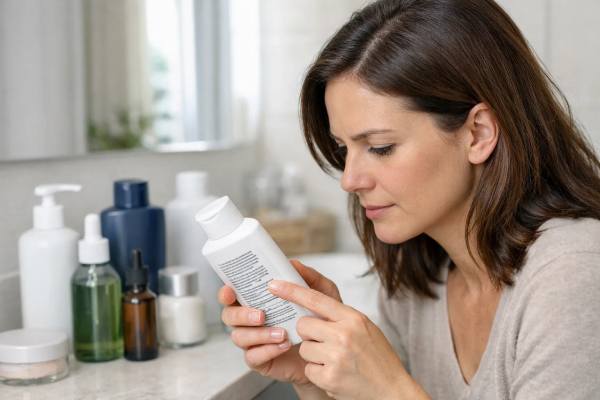
If you used anti-dandruff shampoos for years, the zinc pyrithione debate can feel oddly confusing. In one market, the ingredient disappears from shelves; in another, it remains a standard nonprescription option. That leaves many people wondering whether zinc pyrithione shampoo was genuinely unsafe, simply caught in a stricter regulatory net, or replaced because newer options work better. The answer is more nuanced than the headlines suggest.
Zinc pyrithione, also listed as pyrithione zinc, earned its reputation because it helped many people with dandruff and mild scalp seborrheic dermatitis. But regulation is not based on benefit alone. It also depends on hazard classification, exposure, and whether authorities believe suitable alternatives exist. That means a product can have a history of effective use and still be restricted or prohibited under a specific legal framework. To make sense of it, you need to separate three issues: what the ingredient did well, what the safety concerns actually were, and which substitutes are most worth choosing now.
Essential Insights
- Zinc pyrithione shampoo was effective for many people with dandruff and mild seborrheic dermatitis.
- The European Union ban does not mean every past zinc pyrithione shampoo caused obvious harm in normal use.
- In the United States, pyrithione zinc still appears in the OTC dandruff monograph at specific concentrations.
- Ketoconazole is often the strongest alternative for more inflamed or stubborn dandruff.
- When switching shampoos, use the replacement at least twice weekly at first unless the label or your clinician says otherwise.
Table of Contents
- What zinc pyrithione shampoo did
- What the safety debate really means
- Why regulations changed by region
- Best alternatives for different scalps
- How to switch without a flare
- When dandruff needs a different plan
What zinc pyrithione shampoo did
Zinc pyrithione shampoo became popular for a simple reason: it worked well enough for a very common problem. Dandruff and mild scalp seborrheic dermatitis are not just about visible flakes. They usually involve a mix of Malassezia yeast overgrowth, excess oil, barrier disruption, itching, and inflammation. Zinc pyrithione addressed several parts of that picture at once, which made it useful for everyday maintenance rather than only for short rescue treatment.
Its main strength was antifungal activity against the yeasts commonly linked to dandruff. But the benefit was never only about killing yeast. Well-formulated zinc pyrithione shampoos also reduced flaking, itch, and the greasy, irritated feel many people get between washes. That matters because the “best” dandruff shampoo is often the one people can tolerate and keep using. A treatment that is powerful but cosmetically unpleasant tends to lose in the real world.
Another reason zinc pyrithione lasted so long is that it sat in a practical middle zone. It was usually milder-feeling than stronger medicated options, yet more active than a plain cosmetic shampoo. For someone with mild to moderate dandruff, that balance was ideal. It could be used regularly, often at least twice a week, without making the routine feel medicalized.
What many readers still do not realize is that zinc pyrithione was not one single, identical product everywhere. Concentration, delivery, surfactants, and contact time affected performance. A better-depositing formula could control dandruff more effectively than a weaker one, even when the label looked similar. That is one reason some older users remember one brand as excellent and another as disappointing.
It also helped that zinc pyrithione worked across the overlap zone between simple dandruff and early seborrheic dermatitis. If the scalp was flaky, a bit itchy, and somewhat oily, it often fit the job. If the scalp was severely inflamed, thickly scaled, or relapsing fast, it might be outperformed by stronger options, but it still had a respected place.
A useful way to think about zinc pyrithione is that it was a maintenance-friendly active. It did not need to be the strongest agent in the room to be valuable. It needed to be effective enough, tolerable enough, and easy enough to use consistently. That combination made it a staple for years, especially for people trying to control recurring flakes without moving straight to a harsher treatment ladder. Readers sorting out whether their symptoms matched dandruff or a broader inflammatory scalp issue often benefit from comparing them with seborrheic dermatitis signs and shampoos before choosing the next product.
What the safety debate really means
The phrase “safety concern” sounds simple, but it hides two very different questions. One is whether ordinary rinse-off zinc pyrithione shampoo caused clear, everyday harm in users when applied as directed. The other is whether regulators were willing to keep allowing a cosmetic ingredient once it had a particular hazard classification and once alternative anti-dandruff ingredients were available. Those are not the same question, and confusing them is how most public explanations go wrong.
For years, zinc pyrithione shampoos were used because they had an acceptable real-world balance of benefit and tolerability for many adults. Typical consumer complaints were the ordinary ones seen with many medicated shampoos: dryness, irritation, residue, or dislike of how the hair felt. The later controversy was not driven by a sudden wave of new scalp injuries from shampoo bottles already in people’s showers. The deeper issue was regulatory toxicology.
This is the most important nuance in the entire topic: an ingredient can be judged safe under a narrow use pattern and still fail a broader legal standard for cosmetic use. That is exactly why readers encounter what looks like a contradiction. One European scientific opinion concluded that zinc pyrithione could be considered safe as an anti-dandruff ingredient in rinse-off hair products up to 1 percent. Yet the ingredient was still removed from EU cosmetic use after a classification change and a legal review of whether an exception should continue.
That does not make the science meaningless. It means the final regulatory answer was not based on exposure alone. It also included hazard category and the requirement to show that no suitable alternatives were available. That latter point is easy to miss, but it matters. A shampoo ingredient does not remain allowed in a strict cosmetics system just because it works or because past use looked reasonable. It also has to survive the structure of the law around it.
For consumers, the practical safety picture is clearer than the headlines suggest:
- past use does not automatically mean you were harmed
- past use also does not prove the ingredient deserved permanent approval
- rinse-off exposure is very different from repeated leave-on exposure
- local irritation is a separate issue from long-range reproductive toxicity classification
- country rules can diverge even when the ingredient and shampoo type sound the same
This is why “safe” and “banned” are not always opposites. In conversation, they sound like opposites. In regulation, they often are not. An ingredient may have looked acceptable in one use case but still fail to qualify for continued cosmetic allowance once hazard-based rules and alternative options are weighed together.
That distinction also helps explain why many people felt blindsided. They were judging zinc pyrithione as users: “Did this shampoo help my scalp?” Regulators were judging it under a wider framework: “Should a cosmetic ingredient with this classification remain allowed if other anti-dandruff options exist?” Those are related questions, but not identical ones.
Why regulations changed by region
The sharpest regulatory split is between the European Union and the United States. Understanding that split makes the market much easier to read.
In the European Union, zinc pyrithione was affected by a rule structure that treats substances classified as carcinogenic, mutagenic, or toxic for reproduction with special caution. Zinc pyrithione was classified as a category 1B reproductive toxicant. Once that happened, the default position under EU cosmetics law was prohibition unless specific exception conditions could be met. A scientific review concluded that zinc pyrithione could be considered safe in rinse-off anti-dandruff hair products up to 1 percent, but that was not enough by itself. For the exception to stand, authorities also needed it to be established that suitable alternative anti-dandruff substances were not available. That was not established, so the ingredient was removed from the allowed and restricted cosmetic lists and added to the prohibited list, with the change applying from March 1, 2022.
That single regulatory sequence is why so many summaries miss the point. The EU outcome was not “this ingredient was proven dangerous in every shampoo context.” It was closer to “this ingredient no longer qualifies for a cosmetic exception under our framework, especially because alternatives exist.”
The United States works differently. Under the FDA’s OTC monograph for dandruff, seborrheic dermatitis, and psoriasis drug products, pyrithione zinc remains an allowed active at specified concentrations. The monograph includes wash-off dandruff concentrations of 0.3 to 2 percent, wash-off seborrheic dermatitis concentrations of 0.95 to 2 percent, and lower leave-on concentrations. It also includes directions such as using these products at least twice weekly for best results unless otherwise directed. That means the U.S. treats pyrithione zinc not as a casual cosmetic additive, but as an OTC drug active within a defined framework.
This regional difference leads to a few practical consequences:
- the same ingredient can be unavailable in one market and ordinary in another
- reformulated shampoos may look similar on shelves but perform differently
- online advice often blends EU and U.S. rules together, which creates confusion
- older product recommendations may now be geographically outdated
It also explains why consumers sometimes think a favorite shampoo was “discontinued for safety” when the fuller story is “reformulated because the ingredient’s regulatory pathway changed in that region.” Those are not identical.
The broader lesson is that regulation is not a direct synonym for bedside clinical judgment. It combines toxicology, legal standards, substitution possibilities, and market oversight. That is useful, but it means a banned ingredient is not always the same thing as a product consumers experienced as acutely harmful. With zinc pyrithione, the difference between those two ideas is the whole story.
Best alternatives for different scalps
Once zinc pyrithione is off the table, the next question is not just “What replaces it?” The better question is “What replaces it for my kind of scalp?” Dandruff products are not interchangeable. The best alternative depends on whether your main issue is greasy flakes, stubborn inflammation, thick scale, itching, or simple maintenance.
Ketoconazole is usually the most convincing first alternative when dandruff is more persistent, greasy, or inflamed. In a multicenter trial involving severe dandruff and seborrheic dermatitis, ketoconazole 2 percent outperformed zinc pyrithione 1 percent after four weeks and had a lower recurrence rate afterward. That does not mean everyone needs ketoconazole first. It means ketoconazole is often the strongest step up when zinc pyrithione used to be enough but no longer is available.
Selenium sulfide is another strong option, especially for oily scaling and clear yeast-driven flares. It can be very effective, but some users dislike the feel, smell, or the way it leaves hair. For people who care deeply about cosmetic elegance, this matters more than it sounds. A shampoo that works beautifully in theory but gets abandoned after two washes is not the best alternative in practice.
Salicylic acid is most useful when the problem is thick adherent scale. It loosens and sheds built-up flakes well, but it is not the first pick when the main issue is fungal overgrowth and relapse. Think of it as a scale-lifting helper rather than a full substitute for antifungal control.
Coal tar can still help selected people with heavy scale or overlap with scalp psoriasis, but it is not usually the easiest all-purpose swap. Smell, staining potential, and hair-type compatibility keep it from being the universal answer.
Piroctone olamine and climbazole deserve mention too. They appear in many reformulated anti-dandruff shampoos and can work well for maintenance, especially in markets where brands moved away from zinc pyrithione. For milder dandruff, they may be enough. For more inflamed seborrheic dermatitis, they may feel less decisive than ketoconazole.
A practical ranking looks like this:
- Best for stubborn greasy dandruff: ketoconazole
- Best for oily flares with recurrent scale: selenium sulfide
- Best for thick adherent flakes: salicylic acid, often with another active
- Best for lighter maintenance: piroctone olamine or climbazole-based shampoos
- Best for psoriasis-leaning scale in selected cases: coal tar
If you want a broader ingredient-by-ingredient comparison, it helps to review ketoconazole selenium sulfide and ciclopirox options before buying on branding alone.
The biggest mistake is replacing zinc pyrithione with the “most famous” shampoo rather than the most appropriate one. A mildly flaky scalp and a highly inflamed seborrheic scalp do not need the same solution. The better the match between your scalp pattern and the active ingredient, the less likely you are to bounce from bottle to bottle without clear improvement.
How to switch without a flare
Changing anti-dandruff shampoos sounds easy, but the scalp often reacts badly to abrupt, random switching. Many people stop a familiar formula, wash less often out of frustration, and then blame the new product for a flare that was partly caused by inconsistency. A calmer transition usually works better.
The first step is to choose one replacement based on your dominant symptom. Do not buy four shampoos at once. If flakes are greasy and recurrent, start with ketoconazole or selenium sulfide. If scale is thick and stubborn, consider salicylic acid support. If dandruff is mild and you mainly need maintenance, a piroctone olamine or climbazole formula may be enough.
Then use the product in a way that actually tests it. A reasonable starting pattern is:
- shampoo with the medicated product at least twice weekly unless the label says otherwise
- let it sit on the scalp briefly before rinsing
- use a gentle non-medicated shampoo on other wash days if needed
- reassess after about 3 to 4 weeks, not after two uses
People often sabotage the trial in one of three ways. They either use the product too rarely, abandon it too early, or stack too many actives at once. All three make results hard to interpret.
A few switching rules help prevent that:
- keep wash frequency steady rather than suddenly stretching wash days
- apply the shampoo to the scalp, not just the hair lengths
- avoid vigorous scratching or harsh scalp scrubs during the switch
- do not judge success only by day-one cosmetic feel
- give the scalp time to settle before declaring the product a failure
Hair texture also matters. Some effective anti-dandruff shampoos leave hair drier, flatter, or rougher than a more conditioning zinc pyrithione formula once did. That is not ideal, but it can often be managed by keeping conditioner on the mid-lengths and ends rather than the scalp.
If the scalp gets more irritated with the new product, the problem may be frequency, not necessarily the ingredient itself. Reducing use from every wash to twice weekly may solve it. But if redness, burning, or rash develop, the issue may be intolerance rather than a normal adjustment. In that case, stop and reassess.
Readers who tend to swing between over-washing during flares and under-washing once irritation starts often benefit from reviewing how often to wash by scalp type. Wash rhythm is not as glamorous as active ingredients, but it often decides whether a replacement shampoo succeeds.
The goal of switching is not to replicate the exact feel of your old bottle. It is to regain control of the scalp without making the barrier, hair texture, or routine so unpleasant that you stop using the treatment altogether.
When dandruff needs a different plan
One reason people miss zinc pyrithione is that it often handled the in-between cases: not just dry scalp, not clearly severe seborrheic dermatitis, not obvious psoriasis. Once it disappears, some people discover they were never dealing with ordinary dandruff alone. That is when cycling through alternatives stops being efficient.
A different plan is worth considering when any of these are true:
- flakes are thick, adherent, or silvery rather than loose
- the scalp is painful, not just itchy
- redness extends beyond the scalp margins
- symptoms involve the eyebrows, beard, ears, or chest
- pustules, crusting, or weeping appear
- hair thinning seems to be developing with the flare
- the condition returns immediately when treatment stops
Those clues may point toward scalp psoriasis, stronger seborrheic dermatitis, contact dermatitis, folliculitis, or another scalp disorder that needs more than an OTC shampoo. In that setting, the best “alternative” to zinc pyrithione may not be another shampoo at all. It may be a short course of prescription anti-inflammatory treatment, a stronger antifungal, or a diagnosis correction.
This is also where self-labeling becomes risky. People often call any flake “dandruff,” but true dandruff, dry scalp, psoriasis, allergic reactions, and product buildup do not behave the same way. A person who keeps swapping anti-dandruff actives without getting control may not have the wrong ingredient. They may have the wrong diagnosis.
A few practical thresholds help:
- Try self-care first if symptoms are mild, recent, and clearly flaky rather than inflamed.
- Escalate to a stronger OTC active if simple shampoos are not enough after a few weeks.
- See a clinician if the pattern is severe, painful, spreading, or tied to visible hair loss.
This matters because better treatment often starts with better naming. If the scalp problem is actually psoriasis or allergic dermatitis, even an excellent alternative to zinc pyrithione may underperform.
For readers still unsure whether they are treating dandruff or something drier and less yeast-driven, comparing the symptoms with dandruff versus dry scalp differences can save a lot of trial and error.
The most balanced conclusion is that zinc pyrithione shampoo earned its former popularity, but most users can still get good control without it. The path is simply less automatic now. You need a better match between ingredient and scalp pattern, and sometimes you need to step outside the shampoo aisle entirely. That is less convenient, but it is often more effective.
References
- Commission Regulation (EU) 2021/1902 of 29 October 2021 amending Annexes II, III and V to Regulation (EC) No 1223/2009 of the European Parliament and of the Council as regards the use in cosmetic products of certain substances classified as carcinogenic, mutagenic or toxic for reproduction 2021 (Regulation)
- Over-the-Counter (OTC) Monograph M032: Drug Products for the Control of Dandruff, Seborrheic Dermatitis, and Psoriasis for Over-the-Counter Human Use 2021 (FDA Monograph)
- A comprehensive literature review and an international expert consensus on the management of scalp seborrheic dermatitis in adults 2024 (Consensus Review)
- Opinion on Zinc Pyrithione (ZPT) (CAS No 13463-41-7) – Submission III 2020 (Scientific Opinion)
- A multicenter randomized trial of ketoconazole 2% and zinc pyrithione 1% shampoos in severe dandruff and seborrheic dermatitis 2002 (RCT)
Disclaimer
This article is for educational purposes and does not replace medical advice, diagnosis, or treatment. Dandruff, seborrheic dermatitis, scalp psoriasis, allergic reactions, and product irritation can overlap, and the right shampoo depends on the actual condition, your scalp sensitivity, and your location’s regulations. Seek medical advice if your scalp is painful, heavily inflamed, crusted, spreading beyond the scalp, or linked to noticeable hair loss, or if over-the-counter shampoos are not helping after several weeks.
If this article helped, please share it on Facebook, X, or another platform you prefer so others trying to understand zinc pyrithione shampoo can find clear, balanced guidance.