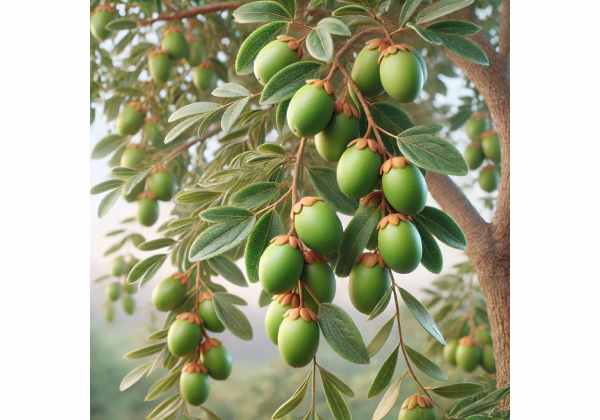
Jojoba is a desert shrub native to the American Southwest and northern Mexico, yet most people know it not as a shrub but as the silky golden liquid pressed from its seeds. That liquid is often called jojoba oil, though it is technically closer to a liquid wax than a typical plant oil. This detail matters because it helps explain why jojoba feels unusually light, stable, and skin-friendly. It spreads easily, softens rough patches, and is widely used in facial oils, scalp products, moisturizers, lip care, and barrier-support formulas.
What makes jojoba especially interesting is the overlap between tradition and modern formulation science. It has a long history of topical use for dry skin, scalp care, and minor irritation, while newer research points to anti-inflammatory activity, support for skin suppleness, and useful roles in delivering other topical ingredients. At the same time, jojoba is easy to overhype. It is a helpful skin and hair care botanical, but it is not a cure-all. Used well, it is a practical, elegant ingredient with real strengths and a generally favorable safety profile.
Quick Summary
- Jojoba is best known for softening dry skin and supporting the skin barrier without a heavy, greasy feel.
- It may help calm mild irritation and can be a useful companion ingredient in acne-prone and sensitive-skin routines.
- A practical facial-use range is about 2 to 6 drops once or twice daily on damp skin.
- People with known jojoba allergy, very reactive skin, or active facial dermatitis should patch test and avoid broad use if irritation appears.
Table of Contents
- What is jojoba and why is it different
- Key ingredients and medicinal properties
- Does jojoba help skin and scalp
- How to use jojoba well
- How much jojoba should you use
- Side effects and who should avoid it
- What the evidence actually says
What is jojoba and why is it different
Jojoba comes from Simmondsia chinensis, a hardy desert shrub that produces seeds rich in a golden liquid commonly sold as jojoba oil. The first useful thing to know is that this “oil” is not a standard triglyceride oil like olive, sunflower, or coconut. It is mostly a liquid wax made of long-chain wax esters. That unusual structure helps explain why jojoba feels smooth rather than sticky, resists rancidity better than many plant oils, and behaves differently on the skin.
This difference is not just cosmetic trivia. Many plant oils sit on the skin with a heavier or more overtly oily feel. Jojoba usually feels lighter, thinner, and more elegant, which is why it shows up so often in facial serums, beard oils, scalp products, cleansing oils, and lip treatments. People who dislike richer emollients often tolerate jojoba better because it softens and reduces tightness without leaving the same dense film. Compared with heavier plant oils such as coconut, jojoba is usually easier to wear during the day and less likely to feel occlusive.
Another reason jojoba stands out is its structural similarity to some of the wax esters found in human sebum. That does not mean it “duplicates” natural sebum or magically balances oil production, but it helps explain why jojoba often feels skin-compatible. It tends to spread well, reduce friction, and support suppleness without immediately making the face look overly shiny. This makes it appealing for people with dry skin, combination skin, mature skin, or skin made fragile by frequent washing and active ingredients.
Jojoba also has a long topical tradition. Historically, seed-derived preparations were used on skin and scalp, especially for dryness, roughness, and minor surface irritation. Modern use has kept that same basic pattern. Unlike many botanicals that moved from folk medicine into capsule culture, jojoba remained mostly topical. That is important for safety and expectations. Its strongest reputation is on the outside of the body, not the inside.
There is another practical point worth keeping in mind: most readers searching for jojoba are really searching for jojoba seed oil or wax, not the leaf, root, or whole plant. The medicinal conversation is therefore mostly about topical jojoba products. That means the most helpful questions are not “What disease does jojoba cure?” but “What does jojoba do well on skin and scalp?” and “How should it be used without overpromising?” Those questions lead to a more accurate, more useful understanding of the plant.
The right mental model is simple. Jojoba is a skin-first botanical ingredient with unusually stable chemistry, elegant texture, and a credible topical record. It is not a trendy miracle oil. It is a well-designed natural emollient that happens to come from a desert shrub.
Key ingredients and medicinal properties
Jojoba’s medicinal value begins with its chemistry. The seed extract sold as jojoba oil is composed mostly of wax esters rather than the triglycerides that dominate many common plant oils. These wax esters are made from long-chain fatty acids and long-chain alcohols, and they are largely monounsaturated. This is the foundation of jojoba’s light feel, stability, and affinity for skin-care formulations. It also helps explain why jojoba is often described as a liquid wax rather than a true oil.
In addition to its wax esters, jojoba contains smaller amounts of sterols, tocopherols, and minor plant compounds. Tocopherols, including forms related to vitamin E, help support oxidative stability. Sterols contribute to the unsaponifiable fraction and may add to the skin-conditioning profile. There are also trace phenolic and related compounds, though jojoba is not primarily valued as a polyphenol-rich botanical in the way green tea or grape seed might be. Its medicinal personality is more biophysical than strongly antioxidant in a dramatic nutritional sense.
The practical medicinal properties most often linked with jojoba include:
- emollient action that softens and smooths the skin surface
- support for water retention and reduced surface dryness
- anti-inflammatory activity in laboratory and ex vivo models
- wound-healing support signals in cell studies
- formulation benefits that can improve spreadability and delivery of other topical actives
These features matter because many skin-supporting botanicals work through multiple pathways at once. Jojoba does not have one famous “hero molecule.” Instead, its value comes from a stable matrix that interacts well with the skin barrier. This is one reason jojoba feels so different from water-rich soothing agents such as aloe vera gel for immediate cooling support. Aloe is primarily watery and calming on contact. Jojoba is more about slip, softness, barrier comfort, and reducing the rough, tight feeling that often comes with dryness or over-cleansing.
Another important property is formulation behavior. Jojoba is widely used not only because it has direct topical benefits, but also because it plays well with other ingredients. It can help dissolve lipophilic compounds, improve application feel, and in some settings enhance penetration of other actives. That can be beneficial, especially in well-designed products, but it also explains why jojoba should be used thoughtfully alongside stronger ingredients like retinoids and exfoliating acids.
The phrase “medicinal properties” can sound bigger than it should. For jojoba, the term is most accurate when it refers to topical support rather than disease treatment. Its chemistry suggests barrier protection, inflammation moderation, and support for a healthier skin surface. Those are real strengths. They just belong to the domain of dermatologic self-care and cosmetic therapeutics more than to internal herbal medicine.
The bottom line is that jojoba’s chemistry is unusual in a useful way. It is stable, elegant, largely wax-based, and well suited to skin contact. Those qualities are exactly why its best-known benefits are practical ones: softer skin, better tolerance in dry or reactive routines, and a reliable place in modern topical care.
Does jojoba help skin and scalp
Yes, jojoba can help, especially when the goal is not “treat a disease by itself” but “support a healthier skin or scalp environment.” Its strongest practical use is as an emollient. It softens rough skin, reduces the tight feel that comes after washing, and leaves a smoother surface without the waxy heaviness some people dislike in richer balms. For dry, mature, or easily irritated skin, that alone can be a major benefit.
Jojoba also has a plausible anti-inflammatory profile. Experimental work suggests it can reduce pro-inflammatory signaling in skin models and may support processes connected with extracellular matrix health, including collagen-related activity and hyaluronic-acid-associated hydration. This is one reason jojoba often appears in products marketed for stressed, reactive, or aging skin. The effect is likely supportive rather than dramatic, but support matters. A product does not need to act like a steroid to be genuinely useful in everyday skin care.
Acne is where many people become overly optimistic. Jojoba may be helpful for acne-prone skin, but the best interpretation is nuanced. It may help by softening sebum buildup, improving tolerance of drying acne treatments, and reducing some of the irritation that can worsen breakouts indirectly. There is also a small pilot literature suggesting jojoba-containing mask regimens may reduce mild acne lesions. Still, that is not the same as proving jojoba is a stand-alone acne treatment. If the main goal is direct antimicrobial or spot-treatment action, tea tree has the more acne-targeted reputation, though it is also more irritating for many users. Jojoba is often the gentler support player rather than the lead actor.
Scalp care is another realistic use. A dry, tight scalp may feel better with jojoba because it improves slip and reduces roughness around the hair shaft. It can also be helpful before shampooing, on beard skin, or on dry ends that need softness without heavy buildup. What jojoba does not clearly do is regrow hair in a clinically proven way. That claim circulates widely online, but the evidence does not justify strong promises. Jojoba can improve the feel and manageability of the scalp and hair environment. That is different from increasing follicle activity.
Jojoba may also be useful in:
- dry lips and weather-exposed skin
- rough elbows, cuticles, and flaky facial patches
- support alongside retinoids when dryness becomes limiting
- beard care where skin and hair need lubrication at once
- gentle massage blends and post-shaving care
For wound healing, the evidence is interesting but not yet strong enough to justify broad clinical claims. Lab work suggests jojoba can promote wound closure behavior in skin cells and support collagen-related processes, but this is still different from having strong human data for cuts, ulcers, or post-procedure healing. The best real-world claim is that jojoba may support surface recovery and comfort, especially when dryness and inflammation are part of the problem.
So does it help? Usually yes, when the target is dryness, friction, mild irritation, scalp comfort, or support within a broader routine. The mistake is expecting a skin-supporting botanical emollient to behave like a prescription drug.
How to use jojoba well
Jojoba is one of those ingredients that works best when used simply. For facial care, apply it to slightly damp skin after cleansing or after a water-based serum. Damp skin matters because jojoba helps reduce water loss, but it does not replace water itself. A few drops pressed over moist skin usually work better than a larger amount rubbed onto a dry face.
For dry or combination facial skin, jojoba can be used as the last step after lighter products. For oily or acne-prone skin, it is often better as a small finishing layer or as a buffer around drying actives rather than as a heavy, repeated coat. People who overapply jojoba sometimes decide it is “too oily” when the real issue is simply too much product.
Common ways to use jojoba include:
- as a face oil over damp skin
- mixed with moisturizer to add slip and softness
- as a cleansing oil or makeup-removal step
- on the scalp before washing
- on dry beard skin and facial hair
- on cuticles, lips, and rough patches
It also layers well with other topical products, but this is where judgment matters. Because jojoba can improve the feel and spread of actives, it may also intensify them in some routines. If you are using retinoids, exfoliating acids, or benzoyl peroxide, start with smaller amounts and watch how your skin responds. This is especially true if your barrier is already stressed. Jojoba can help a routine feel more tolerable, but it cannot erase overuse of strong actives.
For acne-prone skin, a simple plan often works best:
- Cleanse gently.
- Apply your main treatment or serum.
- Use 2 to 4 drops of jojoba only where dryness or tightness develops.
- Reassess after one to two weeks before increasing.
Jojoba can also be paired with soothing or clarifying routines, but it helps to understand what each partner contributes. For example, witch hazel is often used for astringent skin support, while jojoba does almost the opposite: it softens and cushions. Used together, they can balance a routine, but only if the skin is not already overstripped.
For scalp use, apply a small amount to the scalp or hair ends before shampooing, leave it on briefly, then wash out. This is often enough to improve softness and reduce dryness without leaving residue. For beards, one or two drops may be enough, especially when applied to slightly damp hair so the product spreads more evenly.
The biggest mistakes are easy to avoid: using too much, expecting it to substitute for sunscreen or prescription care, and applying it over inflamed or infected skin without a clear reason. Jojoba works best as a support ingredient. When people use it within that role, they tend to see its strengths clearly.
How much jojoba should you use
Jojoba does not have a medically standardized dose in the way an oral herb or prescription treatment might. Topical use is the norm, so the most useful question is not “What is the official dose?” but “How much creates a thin, effective layer without waste or irritation?” For most people, the answer is less than expected.
A practical topical guide looks like this:
- Face: 2 to 6 drops once or twice daily
- Beard: 1 to 3 drops, depending on hair density
- Dry patches or lips: 1 to 2 drops as needed
- Scalp pre-wash: about 1 to 2 teaspoons, massaged lightly and washed out after 20 to 60 minutes
- Body use: enough to leave a light film, usually a few drops to 1 teaspoon depending on the area
These are practical cosmetic ranges, not formal medical doses. The right amount depends on skin type, climate, product texture, and what else is in the routine. Someone in a dry winter climate may want more. Someone with oily skin in humid weather may prefer very little.
Timing also matters. Jojoba usually performs best after water exposure, such as after cleansing, showering, or misting the skin. Applied then, it helps lock in comfort and reduce the tight feel that comes as water evaporates. On dry skin, it can still work, but it is often less impressive because there is less moisture to help retain.
For scalp and hair, frequency matters more than quantity. A small pre-wash application once or twice weekly is usually more effective than frequent heavy use. Too much jojoba on fine hair can make it look flat even if the scalp feels better. On curly or coarse hair, slightly more may be welcome, especially on the ends.
A good starter plan is:
- Use jojoba once daily for facial care.
- Keep the amount small for the first week.
- Increase only if the skin still feels dry or tight.
- Reduce again if the skin looks overly shiny or congested.
There is little value in “megadosing” jojoba. More product rarely means more benefit. In fact, overuse can blur the signal. If the skin looks greasy, makeup pills, or sunscreen shifts, the amount is probably too high. The goal is a light, almost invisible support layer, not an obvious oil coat.
Internal use is a separate matter. Jojoba is primarily a topical ingredient, and oral supplementation is not a mainstream or well-supported health practice. For a reader trying to use jojoba safely, that is the most important dosage principle of all: keep it topical, keep it moderate, and match the amount to the task.
Side effects and who should avoid it
Jojoba is generally well tolerated on the skin, but “generally well tolerated” does not mean universally risk-free. Any botanical topical can cause irritation, and rare cases of contact dermatitis have been reported. That is why patch testing still matters, especially for people with sensitive skin, fragrance allergy, rosacea-prone skin, or a history of reacting to natural products that are marketed as gentle.
The most common practical problems are not severe toxicity. They are ordinary tolerance issues:
- redness after first use
- itching or a prickly feel
- clogged-feeling skin from overapplication
- eye irritation if the product migrates
- residue or flatness on fine hair
A patch test is simple and worth doing. Apply a small amount to the inner forearm or just below the jawline once daily for two or three days. If itching, burning, or visible rash develops, stop. That small step is especially useful when jojoba is part of a mixed product that also contains fragrances, essential oils, or active acids, since those extras are often the true cause of a reaction.
People who should be most cautious include:
- anyone with a known jojoba or cosmetic-ingredient allergy
- people with active facial dermatitis or a disrupted barrier that stings easily
- users of strong retinoids, acids, or benzoyl peroxide who are adding several products at once
- those with acne who tend to overapply oils and occlusives
- anyone considering oral use instead of topical use
Pregnancy and breastfeeding deserve a balanced note. Topical jojoba in normal cosmetic amounts is usually treated as low concern, largely because it is applied to the surface in modest quantities. Still, that is not the same as having robust medicinal safety data for heavy or experimental use. A food-like common sense approach is best: normal topical use is one thing, therapeutic experimentation is another.
Jojoba also should not be treated as a substitute for medical care in certain situations. It is not enough for infected wounds, rapidly worsening dermatitis, severe acne nodules, or unexplained scalp inflammation. It may support comfort in those settings, but it should not delay real evaluation.
For readers who want a gentler-feeling botanical routine, it can help to compare textures and irritation profiles. Someone who reacts badly to essential oils may do better with jojoba than with a more aromatic ingredient. Someone who needs watery soothing rather than emollient softness may do better with gentler calming botanicals such as chamomile or a bland barrier cream.
The overall safety message is reassuring but not careless. Jojoba is one of the better-tolerated plant-derived topical ingredients, yet it still deserves the same respect given to any active skin-care step: start low, patch test, and let your skin decide.
What the evidence actually says
The evidence for jojoba is strongest where readers most often use it: topical skin care. There is good support for describing jojoba as an effective emollient and formulation ingredient, and there is meaningful laboratory and ex vivo evidence for anti-inflammatory effects, barrier support, and skin-surface benefits. Reviews also support its role in dry skin care, scalp care, and broader cosmetic dermatology. That gives jojoba a stronger evidence base than many trendy botanical oils.
Still, it helps to separate levels of evidence. Some findings are practical and well established, such as jojoba’s stability, texture advantages, and usefulness in moisturizers and skin-conditioning products. Other findings are promising but less settled, such as its effects on wound healing, acne control, psoriasis support, or transdermal delivery of active compounds. These areas contain real signals, but they are not equally mature.
Acne is a good example. There is some encouraging evidence, including pilot work with jojoba-containing mask treatments, and the broader logic makes sense: improved tolerance, better softness, possible support for follicular comfort, and anti-inflammatory potential. But the literature is not strong enough to position jojoba as a primary evidence-based acne treatment on its own. It is better seen as an adjunct that can make a regimen easier to stick with.
The same pattern appears in anti-aging claims. Recent work showing improved pro-collagen III and hyaluronic-acid-related responses in human skin models is genuinely interesting, and it supports jojoba’s use in skin-supportive formulas. But it does not mean jojoba alone can replace retinoids, sunscreen, or proven anti-aging strategies. The right claim is support, not transformation.
What the evidence supports best:
- jojoba is a useful topical emollient
- it has a favorable formulation profile for skin and scalp products
- it shows anti-inflammatory and skin-supportive effects in preclinical and ex vivo research
- it may help mild acne-prone or irritated skin as part of a broader routine
What the evidence does not strongly support:
- robust hair-growth claims
- major stand-alone treatment effects for acne, eczema, or psoriasis
- oral use as a mainstream health supplement
- miracle-style promises about oil balancing or pore erasing
This is where jojoba becomes more impressive, not less. A product does not have to cure disease to be clinically useful. A light, stable, well-tolerated ingredient that improves skin feel, supports adherence to treatment, reduces dryness, and works well with other actives can be extremely valuable. In everyday dermatology and self-care, those are not minor advantages.
The best evidence-based conclusion is simple. Jojoba is a strong topical support ingredient with real cosmetic and dermatologic value, modest but interesting medicinal potential, and much better logic than hype. Used in that grounded way, it deserves its reputation.
References
- Jojoba Oil: An Updated Comprehensive Review on Chemistry, Pharmaceutical Uses, and Toxicity 2021 (Review)
- An updated review on efficacy and benefits of sweet almond, evening primrose and jojoba oils in skin care applications 2022 (Review)
- Passive Enhancement of Retinol Skin Penetration by Jojoba Oil Measured Using the Skin Parallel Artificial Membrane Permeation Assay (Skin-PAMPA): A Pilot Study 2023 (Pilot Study)
- Topical application of jojoba (Simmondsia chinensis L.) wax enhances the synthesis of pro-collagen III and hyaluronic acid and reduces inflammation in the ex-vivo human skin organ culture model 2024 (Ex Vivo Study)
- Clay jojoba oil facial mask for lesioned skin and mild acne–results of a prospective, observational pilot study 2012 (Pilot Study)
Disclaimer
This article is for educational purposes only and does not diagnose, treat, or replace medical care. Jojoba is primarily a topical botanical ingredient, and its best-supported uses involve skin and scalp support rather than internal supplementation or disease treatment. If you have severe acne, infected skin, persistent dermatitis, unexplained scalp symptoms, or a history of cosmetic allergy, speak with a qualified clinician before using jojoba medicinally or alongside strong topical actives.
Share this article on Facebook, X, or your preferred platform if you know someone who wants a clearer, more evidence-aware guide to jojoba.