Witch hazel is one of the best-known traditional skin remedies in Western herbal medicine, yet it is often misunderstood. Derived from the bark, leaves, or distilled twigs of Hamamelis virginiana, it is best known as a topical astringent that can calm minor irritation, reduce oozing, and give skin a tighter, drier feel. That reputation is not just folklore. Witch hazel contains tannins, hamamelitannin, proanthocyanidins, flavonoids, and other polyphenols that help explain its soothing, antioxidant, and anti-inflammatory character. It is used most often for minor skin inflammation, hemorrhoid discomfort, shaving irritation, and gentle cleansing of irritated skin, while some traditional systems also use it as an oral astringent for diarrhea or heavy legs.
Still, not every witch hazel product works the same way. A bark or leaf extract is not identical to witch hazel water, and a cosmetic toner is not the same as a medicinal preparation. That difference matters for both benefits and safety. The most useful way to understand witch hazel today is as a mainly topical herb with good traditional support, modest but growing laboratory evidence, and a few important cautions about irritation, formulation, and overuse.
Essential Insights
- Witch hazel is most useful as a topical astringent for minor skin irritation, dryness with inflammation, and hemorrhoid discomfort.
- Its tannins and polyphenols help explain its soothing, antioxidant, and anti-inflammatory effects on skin and mucous membranes.
- A common compress-style preparation uses 5 to 10 g bark or leaf in 250 mL water, applied up to 4 times daily.
- Avoid using witch hazel on deep wounds, serious burns, or severe rectal bleeding, and avoid oral use during pregnancy or breastfeeding unless guided by a clinician.
Table of Contents
- What witch hazel is and why it is mainly a topical herb
- Key ingredients and how it works
- Witch hazel health benefits and medicinal properties
- Common uses for skin, hemorrhoids, and oral care
- Dosage forms and how to use witch hazel correctly
- Safety side effects and who should avoid it
- What the research really supports
What witch hazel is and why it is mainly a topical herb
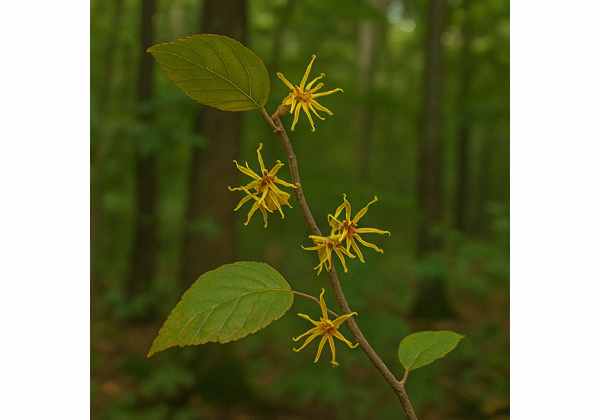
Witch hazel comes from Hamamelis virginiana, a deciduous shrub or small tree native to North America. It has long been used in folk medicine and formal herbal practice, especially for skin and mucosal complaints. The medicinal material may come from the bark, the leaves, or a distillate made from twigs and other plant parts. That detail matters, because people often talk about witch hazel as though it were one simple ingredient. In reality, “witch hazel” can mean different preparations with different chemical profiles and different strengths.
The modern reputation of witch hazel is overwhelmingly topical. Most people know it as a liquid skin product used after shaving, on irritated skin, or in hemorrhoid pads and wipes. That common use is consistent with official herbal monographs, which emphasize minor skin inflammation, dryness of the skin, itching and burning associated with hemorrhoids, and mild inflammation of oral mucous membranes as traditional indications. In plain terms, witch hazel belongs first to the world of external care, not to the world of broad internal tonic herbs.
That topical identity makes sense when you consider the herb’s felt effects. Witch hazel is notably astringent. It can make the skin feel tightened, less oily, and less reactive for a while. That “tightening” sensation is part of why it is popular in facial products, but it is also why the herb should not be oversold as a universal skin fix. Astringency can be helpful when skin is damp, irritated, or mildly inflamed. It is less helpful when skin is already cracked, over-dried, or sensitized by too many products.
One of the most useful distinctions is this: witch hazel is not primarily a nourishing skin herb. It is a toning and calming one. Readers who are looking for a more emollient, moisture-supportive plant usually get more from aloe vera for skin comfort and hydration, while witch hazel shines more when there is mild irritation, swelling, superficial inflammation, or weeping discomfort.
Historically, witch hazel also had broader uses, including oral astringent uses and symptomatic support for heavy legs or varicose-vein discomfort. These traditions still appear in some monographs. Even so, the clearest and most practical modern role remains external use. That is the safest starting point for most readers, and it is also the place where the herb’s chemistry and real-world experience line up best. If there is one idea that keeps the rest of the article grounded, it is this: witch hazel is most credible when treated as a topical medicinal plant, not as a catch-all herbal remedy.
Key ingredients and how it works
Witch hazel works because it is rich in polyphenols, especially tannins. These compounds are central to the herb’s astringent, protective, and calming behavior on skin and mucous membranes. When people say witch hazel “tightens” the skin, what they are usually noticing is the surface effect of these tannins. The bark generally contains more tannins than the leaves, and both are considered official medicinal plant materials in European pharmacopoeial practice.
Among the best-known witch hazel constituents are hamamelitannin, proanthocyanidins, catechins, flavonoids, gallic acid, and ellagic acid derivatives. These compounds matter because they help explain several of the herb’s best-known actions:
- Astringency, which helps reduce superficial oozing and gives a tightening sensation
- Anti-inflammatory activity, which may help calm redness and minor irritation
- Antioxidant effects, which may reduce oxidative stress in skin cells
- Mild antimicrobial support, especially in formulations used on irritated or blemish-prone skin
Recent laboratory work has made this picture clearer. Modern studies suggest that witch hazel bark and leaf extracts can modulate inflammatory signaling, influence oxidative stress, and affect cytokine activity in skin-related models. Not every compound contributes equally. In some experimental work, proanthocyanidins appear to do more of the anti-inflammatory work than hamamelitannin alone. That is a useful reminder that whole herbal preparations often behave as mixtures rather than as single-compound products.
A second important point is that not all witch hazel products contain the same chemistry. This is one of the most overlooked aspects of the herb. A bark or leaf extract may contain meaningful tannin levels, while witch hazel water made by distillation contains far less of those heavier polyphenols. Distilled witch hazel products can still be useful, but they are not the same as a bark tincture or a leaf-and-bark decoction. In practical terms, that means one witch hazel product may feel more soothing and antioxidant-rich, while another may feel lighter, sharper, and more cosmetic than medicinal.
This is also why formulation matters so much. A gentle cream with witch hazel is different from a strongly alcoholic toner. The plant can be helpful, but the final product determines whether it behaves like a medicine, a cosmetic refresher, or an irritant. That is especially relevant for acne-prone or easily sensitized skin, where astringency can be beneficial in moderation but counterproductive in excess.
For readers who like to compare herbs by their active chemistry, witch hazel is much closer to a tannin-rich topical herb than to an oily antimicrobial herb such as tea tree for stronger antimicrobial skin care. Witch hazel is less about aggressive killing and more about toning, calming, and protecting mildly irritated tissue. That distinction helps explain where it performs best.
Witch hazel health benefits and medicinal properties
The strongest benefits of witch hazel are tied to minor skin and mucosal conditions. It is best understood as a topical astringent and soothing herb rather than as a broad internal medicine. That framing is important, because much of the internet treats witch hazel as if it were equally useful for everything from acne to varicose veins to hemorrhoids to digestive issues. The truth is more selective.
Its first major benefit is relief of minor skin inflammation and irritation. This is the most credible and practical use. Witch hazel can help reduce redness, surface irritation, and a damp or inflamed feeling in the skin. This is why it appears in products for razor burn, minor irritation, and sensitive-skin cleansing. It is not a deep wound healer or a treatment for major inflammatory disease, but it can be genuinely useful when the problem is superficial and mild.
Its second major benefit is astringent support for hemorrhoid discomfort. Traditional herbal monographs recognize witch hazel for itching and burning associated with hemorrhoids, especially in topical preparations. In this role, the herb is not curing hemorrhoids at the structural level. It is helping with surface symptoms such as discomfort, irritation, and local inflammation. That may sound modest, but symptom relief is exactly what many people want from a topical product.
A third plausible benefit is support for oral and mucosal irritation. Gargles and mouthwashes made from witch hazel preparations have a traditional role in minor oral inflammation. Again, the key word is minor. Witch hazel is not a substitute for evaluation of severe mouth pain, ulcers that do not heal, or signs of infection. But as a mild astringent gargle, it fits a long herbal tradition.
There is also growing interest in blemish-prone and inflammation-prone skin. Newer research supports anti-inflammatory effects in skin cell models and suggests that certain witch hazel extracts may help calm acne-related inflammatory signaling. That does not make witch hazel a complete acne treatment, and it does not mean every toner marketed for acne is helpful. But it does support the idea that properly formulated witch hazel products may be useful in some inflamed-skin routines.
The main benefits can be summed up this way:
- calming minor inflammation,
- reducing superficial irritation,
- drying or toning mildly weepy or irritated tissue,
- and easing localized discomfort linked with hemorrhoids or mild mucosal inflammation.
What it does not do especially well is nourish dry, broken, lipid-poor skin on its own. Overuse can even make that kind of skin worse. For more barrier-supportive wound and irritation care, many readers find calendula for gentle skin recovery a softer companion herb. Witch hazel is best when the problem calls for toning and calming, not when the main need is rich moisturization.
Common uses for skin, hemorrhoids, and oral care
In real-life herbal use, witch hazel shows up in a handful of recurring situations. The most common is minor skin irritation. People reach for it after shaving, after mild friction, after heat-related redness, or when skin feels reactive and slightly inflamed. In this setting, a compress, lotion, or low-irritation liquid may help calm the area. The key is that the condition should be minor. Witch hazel is not the right herb for deep cuts, puncture wounds, infected lesions, or severe burns.
Another major use is hemorrhoid symptom relief. Pads, wipes, and external liquids containing witch hazel are common because the herb can reduce a burning, itching, or tender feeling around the affected area. This is one of the most durable uses in both traditional practice and modern over-the-counter care. Still, the limits are important. Persistent bleeding, worsening pain, or prolapsing hemorrhoids should not be treated as a cosmetic nuisance. They need proper medical evaluation.
A third practical use is minor oral inflammation. Witch hazel bark decoctions or diluted tinctures have been used traditionally as gargles or mouth rinses when the gums or oral tissues feel mildly irritated. Here again, the herb acts more as a local astringent than as a cure. It can help tone irritated mucosa, but it is not a substitute for dental care or diagnosis of recurring sores, mouth infections, or unexplained bleeding.
There are also more niche uses:
- compresses for minor bruises and local irritation
- topical care for varicose-vein discomfort or heavy-feeling legs in some traditional systems
- support in blemish-prone skin routines, especially when oiliness and inflammation coexist
- soothing products for post-sun or wind-exposed skin, when the formulation is gentle enough
An important modern-use principle is to match the product to the problem. A medicated ointment, a distilled water, a bark decoction, and an alcohol-heavy toner should not all be treated as interchangeable. A face toner may be too drying for hemorrhoids. A strong astringent compress may be unnecessary for mildly dry skin. A cosmetic wipe is not the same as a traditional decoction.
This is why witch hazel works best in focused roles rather than as a vague all-over remedy. Use it where its astringency is actually useful. For example, if your concern is swollen superficial veins or a sense of heavy legs, a circulatory herb such as horse chestnut for vein support may be more on-target than simply wiping the area with witch hazel. Witch hazel can support comfort, but it is not a structural vein treatment.
The practical lesson is simple: choose witch hazel when you need a topical herb that tones, calms, and lightly dries minor surface inflammation. Choose something else when the tissue is deeply damaged, severely inflamed, infected, or clearly beyond home care.
Dosage forms and how to use witch hazel correctly
Witch hazel is one of those herbs where the form matters almost as much as the plant itself. The main preparations include bark or leaf decoctions, fluid extracts, tinctures, ointments, creams, suppository-style hemorrhoid products, and witch hazel water made from distillation. Each one has a different feel and a different practical use.
For topical decoction-style use, official monographs describe a common pattern of 5 to 10 g dried bark or leaf in 250 mL water. The mixture is typically brought to a boil, simmered for about 10 to 15 minutes, then cooled. A pad, cloth, or gauze is soaked in the preparation and applied to the affected area. This kind of compress-style use is one of the most traditional ways to use witch hazel for minor wounds, bruises, irritation, and local inflammation.
For minor skin irritation or varicose-vein-type topical uses, products are often applied up to 4 times daily. For hemorrhoid care, some monographs allow more frequent use, including use after bowel movements, provided the product is external and used gently. This is an area where following the product instructions matters, because not every preparation is designed for the same site or the same frequency.
For semi-solid products, topical strengths may correspond to 5 to 10 percent tincture in creams or ointments, while some dry-extract ointments are standardized differently. Distilled witch hazel water is another separate category. In creams and gels, it may appear at around 20 to 30 percent of the finished product, while liquid topical preparations may contain 30 to 100 percent distillate depending on the formula. This is one reason generic dosing advice can be misleading. Witch hazel is not one single strength.
There are also oral and oromucosal traditions. Some adult monographs describe oral bark at 0.6 to 9 g dried bark per day and dried leaf at 1.2 to 12 g per day, mainly in traditional astringent use such as diarrhea or heavy-leg symptoms. Mouth and throat uses also appear in older monographic guidance. Even so, this is the point where caution should rise. Modern witch hazel is much more clearly established as a topical herb than as a self-directed internal remedy.
A practical hierarchy helps:
- Use topical products first.
- Match the form to the body site.
- Prefer gentle, purpose-made preparations over harsh cosmetic toners for irritated tissue.
- Treat internal use as secondary and more caution-heavy.
This is especially true because many people now encounter witch hazel in beauty products rather than medicinal ones. A fragrant alcohol-rich toner is not the gold standard for every use. When the goal is simple skin soothing, even a plain compress can be smarter than an aggressive cosmetic formula. Readers who want a gentler plant for dry or easily sensitized skin sometimes prefer plantain for mild skin soothing applications rather than leaning too hard on witch hazel’s astringent edge.
Safety side effects and who should avoid it
Witch hazel is usually well tolerated when used properly on minor skin complaints, but “usually safe” is not the same as “always appropriate.” Most of the problems with witch hazel come from overuse, wrong formulation, or using it on the wrong type of tissue.
The most common issue is irritation or over-drying. This is especially likely with alcohol-heavy witch hazel liquids used too often on the face or on already damaged skin. Skin may feel tighter at first, but with repeated use it can become more reactive, flaky, or uncomfortable. That is not the herb failing. It is a sign that astringency is being pushed too far.
A second issue is contact sensitivity or rash. Official monographs advise stopping use if a skin rash appears. This is a practical reminder that even a traditional herb can irritate sensitive skin or trigger a reaction in susceptible people. Patch testing can be useful when trying a new witch hazel product on delicate skin.
A third issue is misuse on inappropriate conditions. Witch hazel should not be used on deep or puncture wounds, animal bites, or serious burns. It is for minor surface-level problems, not traumatic injuries. Likewise, hemorrhoid products may relieve itching and burning, but rectal bleeding, worsening pain, or symptoms that persist need proper evaluation.
Internal use adds another layer. Oral monographs allow traditional use in adults, but they also note possible gastrointestinal discomfort and advise caution during pregnancy and breastfeeding. That alone is enough to keep the article’s center of gravity on topical use rather than promoting self-directed internal use.
People who should be especially cautious include:
- anyone with very dry, barrier-damaged, or highly sensitive skin,
- anyone with a history of contact reactions to herbal or cosmetic products,
- people considering internal use during pregnancy or breastfeeding,
- and anyone trying to use witch hazel on wounds or symptoms that clearly need medical care.
Eye use deserves a special practical warning. Witch hazel has a traditional history in certain eye-related preparations, but modern readers should not improvise with ordinary witch hazel liquids near the eyes. A skin toner is not an eye product. That distinction can prevent unnecessary irritation.
For hemorrhoid support, it can also help to think of witch hazel as a symptom reliever rather than a complete plan. If the underlying problem is venous pressure, straining, or chronic recurrence, a broader approach may be needed. Some readers look instead toward butcher’s broom for venous support as a more circulation-focused comparison, while witch hazel remains the surface-soothing option.
The safest overall rule is simple: use witch hazel locally, gently, and for minor complaints. Stop if irritation worsens instead of improves.
What the research really supports
The research picture on witch hazel is encouraging, but it is important to keep it in proportion. The herb has a strong traditional base and a growing body of laboratory and formulation research, especially in dermatology and cosmetology. What it does not yet have is a large, modern clinical evidence base proving dramatic outcomes across all of its traditional uses.
The best-supported conclusions are these:
- witch hazel is chemically rich in tannins and polyphenols,
- it has meaningful astringent and anti-inflammatory activity,
- it shows antioxidant effects in skin-related models,
- and it is most plausible and practical in topical care.
Recent review work makes a persuasive case that witch hazel deserves continued dermatologic interest. The plant appears to modulate inflammatory pathways, reduce oxidative stress in skin models, and contribute to skin regeneration and barrier-related care depending on the preparation. Experimental work comparing bark and leaf extracts also suggests that polyphenol-rich extracts can meaningfully scavenge reactive oxygen species and influence inflammatory responses in skin cells.
At the same time, the evidence has limits. Much of it is still preclinical, formulation-specific, or focused on mechanisms rather than on large patient-centered trials. Even the promising acne-related data do not mean that every witch hazel toner is an evidence-based acne treatment. In some laboratory work, witch hazel extract reduced inflammatory signaling but did not directly inhibit Cutibacterium acnes. That is a subtle but important point. The herb may be more useful as an inflammation-modulating skin ingredient than as a stand-alone antimicrobial answer.
The official monograph tradition is helpful here because it keeps expectations realistic. Minor skin inflammation, dryness with irritation, hemorrhoid discomfort, and mild oral mucosal inflammation fit the herb well. Grander claims do not. Witch hazel is not a cure for eczema, psoriasis, acne, varicose veins, or chronic hemorrhoids. It may support symptom management, but it should not be mistaken for a complete treatment.
That balanced view is actually good news. Witch hazel does not need to be a miracle herb to be valuable. It is already useful as a well-established topical astringent with a clear sensory profile and a plausible scientific basis. That makes it more trustworthy, not less. In skin care and minor first-aid style herbalism, clear limits are often what separate a genuinely helpful plant from one that gets oversold.
For most readers, the evidence supports a practical conclusion: use witch hazel as a targeted topical herb for minor surface-level irritation and localized discomfort, choose the preparation carefully, and do not expect it to solve deeper inflammatory or vascular problems on its own.
References
- Hamamelis virginiana L. in Skin Care: A Review of Its Pharmacological Properties and Cosmetological Applications 2025 (Review)
- Comparative Analysis of Polyphenol-Rich Extracts from Hamamelis virginiana Leaves and Bark: ROS Scavenging and Anti-Inflammatory Effects on Skin Cells 2025
- Anti-Inflammatory and Anti-Acne Effects of Hamamelis virginiana Bark in Human Keratinocytes 2022
- WITCH HAZEL – HAMAMELIS VIRGINIANA Topical 2026 (Government Monograph)
- European Union herbal monograph on Hamamelis virginiana L., cortex 2019 (Monograph)
Disclaimer
This article is for educational purposes only and is not medical advice. Witch hazel can be useful for minor topical complaints, but it is not a substitute for medical evaluation of severe pain, infection, bleeding, persistent hemorrhoids, deep wounds, major burns, or chronic inflammatory skin disease. Use internal witch hazel products only with appropriate guidance, especially during pregnancy, breastfeeding, or if you have ongoing gastrointestinal symptoms. Stop use and seek professional advice if irritation, rash, bleeding, or worsening symptoms occur.
If this article was helpful, please share it on Facebook, X, or another platform you prefer.