Wormwood, or Artemisia absinthium, is one of the best-known bitter herbs in traditional European and West Asian medicine. It has been used for centuries as a digestive stimulant, an appetite herb, and a plant associated with parasites, fever, and hard-to-digest meals. Modern interest in wormwood is more selective. Today, the herb is best understood as a strong aromatic bitter with plausible digestive benefits, notable anti-inflammatory and antimicrobial activity in laboratory studies, and a small but intriguing clinical signal in inflammatory bowel disease. At the same time, wormwood is not a casual wellness herb. Its essential oil is rich in thujone, a compound with real neurotoxic potential at excessive doses, and the plant is not appropriate for children, pregnancy, or prolonged unsupervised use. That makes wormwood both useful and easy to misuse. A balanced article on Artemisia absinthium has to do both jobs at once: explain its real medicinal value and clearly define the limits. When handled with respect, wormwood can be a thoughtful short-term herb. When treated like a harmless tea, it can quickly become the wrong choice.
Quick Facts
- Wormwood is best supported as a short-term bitter herb for temporary loss of appetite and mild dyspeptic stomach discomfort.
- The herb also shows anti-inflammatory, antioxidant, and antimicrobial activity in modern laboratory research.
- A typical adult infusion range is 1 to 1.5 g dried herb in 150 mL boiling water, with a daily total of 2 to 3 g for short-term use.
- Pregnant or breastfeeding people, children, and anyone with liver or bile-duct disease should avoid self-prescribed use.
Table of Contents
- What wormwood is and what makes it active
- Wormwood benefits and where the evidence is strongest
- Traditional uses and how they fit modern expectations
- How to use wormwood wisely
- Dosage, timing, and how long to use it
- Safety, side effects, and who should avoid it
- What the research actually says
What wormwood is and what makes it active
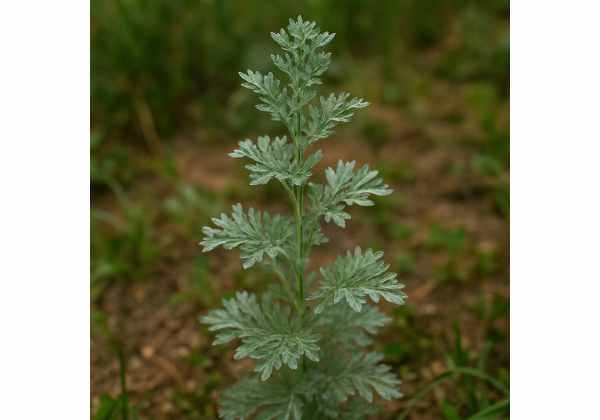
Wormwood is a silvery, intensely aromatic perennial in the Asteraceae family. It is not the same plant as sweet wormwood, Artemisia annua, the better-known source associated with artemisinin. Artemisia absinthium has its own distinct medicinal profile and has traditionally been used above all as a bitter digestive herb. The parts used medicinally are usually the leaves and leafy flowering tops, sometimes described in pharmacopoeias as wormwood herb.
Its medicinal character begins with bitterness. Wormwood is one of the classic examples of an aromatic bitter, and that taste is not cosmetic. Bitter herbs are often used before or around meals because they can stimulate digestive secretions, nudge appetite, and support the upper digestive tract when food feels heavy or unappealing. In this sense, wormwood belongs to the same broad traditional family of digestive bitters as gentian as a classic digestive bitter, though wormwood is much more pungent and requires more caution.
Chemically, wormwood is a layered herb. It contains volatile compounds in its essential oil, bitter sesquiterpene lactones, flavonoids, phenolic acids, tannins, and coumarins. Among the best-known constituents are:
- thujone, especially in the essential oil
- absinthin and related bitter sesquiterpene lactones
- chlorogenic and other caffeoylquinic acids
- flavonoids such as quercetin, isorhamnetin, and related derivatives
- tannins and minor coumarin-type compounds
This is why wormwood behaves like more than a single-compound herb. The bitter lactones help explain its traditional appetite and digestive use. The phenolic acids and flavonoids help explain why modern studies keep finding antioxidant and anti-inflammatory activity. The essential oil contributes aroma and antimicrobial potential, but also most of the plant’s toxicological concern, because thujone can become a problem at excessive exposure.
That mixed profile is important. Wormwood is neither a harmless tea herb nor a plant that should be reduced to “thujone equals danger.” It is an herb with real therapeutic tradition and real boundaries. Its best practical use usually comes from the whole herb in modest, short-term adult doses, not from aggressive concentrated oil use.
The plant also varies. Wild-grown and cultivated populations can differ in essential oil composition and total levels of active compounds. That means one wormwood product is not automatically interchangeable with another, especially when thujone content is not disclosed or controlled. This is one reason pharmacopoeial standards and reputable sourcing matter more with wormwood than with gentler herbs.
So, what makes wormwood active? The short answer is a combination of bitter principles, aromatic compounds, and polyphenols. The better answer is that wormwood is a strong medicinal bitter whose benefits and risks come from the same richness. That is exactly why it has lasted so long in medicine, and exactly why it needs respect.
Wormwood benefits and where the evidence is strongest
Wormwood has many claimed benefits, but they do not all stand on the same level of evidence. The strongest and most practical modern support is still for traditional digestive use, especially temporary loss of appetite and mild dyspeptic discomfort. Beyond that, the picture becomes more interesting but also less settled.
The clearest practical benefit is digestive stimulation. Wormwood’s intense bitterness makes it plausible as an appetite herb and digestive bitter, and this is exactly how official European herbal authorities still classify it. That does not make it a cure for serious digestive disease, but it does support short-term use when appetite is temporarily low or when mild upper digestive discomfort, flatulence, or a heavy feeling after meals is the main issue.
A second area of interest is mild dyspeptic and gastrointestinal support. Wormwood has a long reputation as a carminative, choleretic, and antispasmodic herb. In plain language, that means it has traditionally been used to help the stomach and upper digestive tract work more comfortably. For someone dealing with mild, temporary digestive sluggishness rather than severe disease, that is still the most realistic modern fit.
A third possible benefit is anti-inflammatory activity. Recent analytical work has shown that wormwood extracts can inhibit cyclooxygenase-2, 15-lipoxygenase, and nitric oxide release in experimental systems, with phenolic acids such as chlorogenic and isochlorogenic acids emerging as likely contributors. This supports the herb’s broader medicinal reputation, though it is still laboratory evidence rather than a fully developed clinical recommendation.
A fourth area is antimicrobial and antifungal activity. Recent studies on methanol extracts reported broad-spectrum activity against several bacteria and fungi, which fits wormwood’s long-standing reputation as a harsh, protective, aromatic plant. But laboratory antimicrobial success does not automatically justify using the herb as a self-directed anti-infective treatment. It does, however, help explain why wormwood has historically been used when digestive disturbances and possible microbial imbalance were part of the picture.
The most intriguing human signal beyond digestion comes from inflammatory bowel disease research. A small controlled clinical trial in Crohn’s disease found promising effects when dried powdered wormwood was used alongside baseline therapy. That deserves attention, but not overconfidence. It is a small, older study, and it is not enough to make wormwood a standard self-care herb for Crohn’s disease.
A realistic ranking of wormwood’s benefits looks like this:
- Best grounded: temporary loss of appetite and mild dyspeptic discomfort
- Plausible and promising: anti-inflammatory and antioxidant support
- Interesting but not established: Crohn’s disease adjunct use
- Traditional but insufficiently proven: parasite-related and broad anti-infective use
This ranking matters because wormwood is often marketed far beyond its best-supported lane. It is not a general detox cure. It is not a stand-alone antimicrobial. And it is not a casual anti-inflammatory herb for indefinite daily use. If someone wants a gentler herb for daily digestive comfort, artichoke for gentler digestive and bile support is often easier to justify.
So the true health benefits of wormwood are real, but strongest when kept narrow: bitter digestive support first, broader pharmacological interest second, and more speculative uses last.
Traditional uses and how they fit modern expectations
Traditional medicine gives wormwood a much broader résumé than modern evidence does. Historically, it has been used for digestive complaints, appetite loss, worms and other parasites, fever, difficult digestion, liver sluggishness, menstrual complaints, and even general exhaustion. Some of these uses still make sense today. Others belong more to herbal history than to everyday modern practice.
The most durable traditional role is as a digestive bitter. This is the one that still holds up best under modern scrutiny. When older systems described wormwood as warming the stomach, awakening appetite, or cutting through heaviness after meals, they were speaking in older terms about a genuine bitter-herb effect. This is why wormwood remains plausible for temporary appetite loss and mild dyspepsia even when stronger clinical evidence is limited.
A second traditional role is as an anthelmintic, or anti-worm herb. This use is so closely linked to the plant’s common name that many people assume it is its main medically proven property. In truth, it is better described as an old use than a modern validated indication. Wormwood was historically given when parasitic burden was suspected, especially in eras and settings where few better options existed. That history is real, but it does not mean the modern home user should self-treat suspected parasites without diagnosis.
A third traditional role is in biliary and sluggish digestive states. Bitter aromatic herbs were often used when the digestive system seemed stagnant, greasy foods were poorly tolerated, or the upper abdomen felt heavy. Modern readers will recognize this as the territory of bitters and digestive tonics rather than emergency treatment. That makes wormwood more understandable, but it also shows why it is usually a short-term corrective herb rather than a daily background supplement.
There is also an older reputation for fever, pain, and female complaints. These uses appear in historical herbals, but they are not the areas where wormwood now stands strongest. They help explain the plant’s prestige, not necessarily its best modern fit.
One useful modern translation of traditional wormwood use is this:
- a bitter before meals when appetite is poor
- a short-term digestive herb when heaviness, flatulence, or mild dyspepsia dominate
- a historically important but now secondary herb for parasite-related folklore
- a more symbolic than practical herb in some of its older broad medicinal claims
This translation matters because it keeps the plant in proportion. Traditional use often sounds broader than what modern self-care should attempt. The safest approach is to keep the uses that still align with plausible physiology and modern herbal oversight, and to leave the rest in the history section.
It also helps to compare wormwood with gentler herbs. For example, if the main issue is everyday bloating or mild digestive discomfort, peppermint for milder everyday digestive discomfort often makes more sense. Wormwood is the herb you choose when you specifically want bitterness and a stronger digestive nudge, not when you want a pleasant daily tea.
So traditional uses still matter, but mainly when read through a modern lens. Wormwood remains useful where bitterness is the point. Beyond that, many of its historical uses should be respected more as heritage than repeated as routine.
How to use wormwood wisely
Wormwood works best when it is used with a clear reason, the right form, and a short horizon. It is not a supplement to take absentmindedly for months. It is a purposeful herb: strong, bitter, and most appropriate when the goal is specific.
The gentlest traditional form is an infusion of the dried herb. This is the form recognized by European herbal guidance and remains the most practical way to use wormwood for temporary appetite loss or mild dyspeptic discomfort. Used as an infusion, the herb delivers bitterness and broader whole-herb chemistry without the much greater thujone concentration that comes with essential oil use.
Powdered herb and tincture are also traditional options, but they require more caution because they are easier to use repeatedly without noticing how much you are taking. Tinctures can be effective, but they also make it easier to slide from deliberate dosing into casual overuse. With wormwood, that is a poor habit to build.
The essential oil deserves a separate warning. Internal self-use of wormwood essential oil is not a wise home practice. Essential oils concentrate exactly the compounds that most often raise safety concerns, especially thujone. If someone is interested in wormwood because they assume the oil is stronger and therefore better, they are usually moving in the wrong direction.
A good practical use pattern looks like this:
- use the herb, not the essential oil, for traditional digestive purposes
- choose a modest adult dose in infusion or equivalent form
- take it when there is a reason, not as a daily background ritual
- stop once the short-term digestive issue settles
- reconsider the choice if symptoms persist beyond a brief window
Timing matters too. Wormwood is often best taken before meals when appetite is low, or after meals when mild dyspeptic discomfort is the main issue. The herb’s bitterness is part of the intervention, so its relationship to food is more important than with many other botanicals.
It is also worth being honest about tolerability. Wormwood tastes intensely bitter. That can be therapeutic, but it can also be a sign that it is not the right herb for everyone. Some people respond better to gentler bitter herbs or gentler carminatives. If wormwood feels too sharp, too drying, or too aversive, that may be useful feedback rather than something to fight through.
This is why modern herbal practice tends to reserve wormwood for specific situations rather than everyday digestive maintenance. For ongoing, softer digestive support, dandelion for a softer bitter-herb approach may be easier to live with. Wormwood remains the more forceful tool.
So how do you use wormwood wisely? By keeping it adult, short-term, whole-herb, and purpose-driven. The herb tends to reward precision and punish casualness.
Dosage, timing, and how long to use it
Wormwood dosage is one of the places where modern herbal guidance is surprisingly clear, but it still needs interpretation. The most useful adult range comes from the European monograph for traditional use. For herbal tea, the typical single dose is 1 to 1.5 g of comminuted dried wormwood herb infused in 150 mL of boiling water. The usual daily dose is 2 to 3 g. That gives a workable range without encouraging aggressive intake.
For powdered herb, the monograph lists a single dose of about 0.76 g and a daily dose of 2.28 g. For tincture, a single dose equivalent to 1 g with a daily dose of 3 g is recognized in the traditional-use framework. These are adult dosing patterns, not general population rules.
Timing depends on the complaint:
- for temporary loss of appetite, wormwood is best taken before meals
- for mild dyspeptic or stomach-gut discomfort, it is best taken after meals
- for both uses, it should be treated as a short-term herb rather than an open-ended tonic
This timing makes sense. Before meals, the bitterness helps prepare the digestive system. After meals, it may help when the problem is heaviness, mild cramping, flatulence, or sluggish upper digestion.
Duration matters just as much as dose. If symptoms last longer than 2 weeks, the European guidance recommends consulting a doctor or qualified healthcare practitioner. That is an important boundary because wormwood’s best-supported uses are temporary. Persistent appetite loss, ongoing heartburn, repeated abdominal pain, or chronic bloating deserve proper evaluation rather than months of bitter-herb self-treatment.
It is also important to distinguish traditional herb dosing from the Crohn’s disease trial dose that sometimes circulates online. That study used 750 mg dried powdered wormwood three times daily for 6 weeks alongside standard therapy. This is interesting research information, not a consumer self-care recommendation. Inflammatory bowel disease is too serious, too individual, and too medically complex for people to treat old trial doses as DIY guidance.
Another key point is thujone exposure. Even when using the herb in ordinary medicinal forms, official assessment work restricts thujone exposure from covered wormwood preparations to 6.0 mg per person per day. That is one reason concentrated essential oil products do not belong in casual internal use.
A practical adult dosing summary looks like this:
- infusion: 1 to 1.5 g in 150 mL boiling water
- daily total: usually 2 to 3 g of dried herb
- adults only
- short-term use
- stop and reassess if symptoms persist beyond 2 weeks
People who want the digestive “bitter” effect without wormwood’s sharper edge may find gentian and other classic bitters easier to position in a short structured digestive plan, though they still need thoughtful use.
The most important dosing lesson is simple: wormwood is not a “more is better” herb. Small, deliberate, adult, short-term use is where its traditional value lives. Once the use becomes prolonged, improvised, or concentrated, the risk-to-benefit ratio shifts in the wrong direction.
Safety, side effects, and who should avoid it
Wormwood’s safety profile is manageable when the herb is used correctly, but it has clear limits that should not be softened. The main safety concern is thujone, especially in essential oil-rich preparations. Thujone has neurotoxic potential at excessive doses and is one of the reasons wormwood should be used briefly and carefully rather than casually.
For ordinary adult traditional preparations covered by the European monograph, no specific side effects had been firmly established at the time of assessment. That sounds reassuring, but it should not be overread. “No side effects reported” is not the same thing as “risk free.” It means that traditional herbal medicines within the covered forms and dose ranges did not produce a well-documented pattern of expected harms. The safety boundaries still matter.
Who should avoid wormwood or use it only under professional guidance?
- children and adolescents under 18
- pregnant people
- breastfeeding people
- anyone allergic to Asteraceae plants
- people with bile duct obstruction, cholangitis, or liver disease
- people with gallstone-related or biliary problems unless advised otherwise
- people considering internal use of the essential oil
Pregnancy deserves special emphasis. Wormwood is not recommended during pregnancy or lactation, and thujone is one reason for that caution. It has been associated with uterine-stimulating activity, which makes the herb a poor choice in pregnancy even when someone assumes “natural” means mild.
Liver and biliary issues also deserve more attention than many casual herb articles give them. Wormwood’s traditional digestive uses do not mean it is broadly appropriate for all digestive complaints. If bile flow is obstructed or liver disease is present, the herb moves into a higher-risk category rather than a more useful one.
There is also a form problem. The herb and the essential oil are not equivalent in safety. Many of the frightening wormwood stories historically attached to absinthe or concentrated preparations involve high thujone exposure rather than sensible use of the herb in traditional adult quantities. That does not make the herb harmless, but it does mean product form matters enormously.
Possible problems from inappropriate use may include:
- nausea or digestive upset from excessive bitterness
- allergic reactions in sensitive people
- neurological effects if thujone exposure becomes too high
- worsening of risk in pregnancy or liver-related conditions
Another kind of safety issue is misuse by indication. If someone has persistent heartburn, ongoing abdominal pain, unexplained weight loss, or signs of inflammatory bowel disease, wormwood should not become a delay tactic. It may ease symptoms while the underlying problem goes untreated.
For people seeking pain or headache support and drifting toward wormwood because it sounds strong, there are better-matched plants. Something like white willow for a more established pain-support lane still requires caution, but it at least sits in a clearer therapeutic category.
So the safety verdict is balanced but firm: whole-herb wormwood can be reasonable for short-term adult digestive use, but it is not a casual daily herb, not a pediatric herb, not a pregnancy herb, and not a plant whose essential oil should be taken lightly.
What the research actually says
The research on wormwood is richer than many people assume, but it supports a narrower set of conclusions than the herb’s reputation suggests. This is a plant with good phytochemistry, useful laboratory activity, credible traditional use, and limited but interesting human clinical evidence. That combination makes it respectable, but not universal.
The strongest modern institutional conclusion remains conservative. European authorities recognize wormwood herb preparations for temporary loss of appetite and mild dyspeptic or stomach-gut disorders on the basis of traditional use, not on the basis of strong clinical trial evidence. That distinction is important. It means the herb’s use is considered plausible, established by long practice, and acceptable for short-term adult self-care, but not robustly proven in large modern trials.
The laboratory evidence is broader. Studies continue to identify anti-inflammatory, antioxidant, antimicrobial, and antifungal activity in extracts, along with likely active roles for chlorogenic acids, flavonoids, and related phenolics. This makes wormwood scientifically attractive, especially for quality control and future product development. It also helps explain why the plant maintained such a long medical life.
The most talked-about human study remains the Crohn’s disease trial. It reported suppression of tumor necrosis factor alpha and clinical improvement in a small number of patients receiving dried powdered wormwood in addition to baseline therapy. This is exactly the kind of finding that can create excitement and confusion at the same time. It is not meaningless, but it is not enough to standardize wormwood as a consumer herb for inflammatory bowel disease. The study is too small and too isolated to carry that weight.
There is also a chemistry and variability issue. Recent work on wormwood populations shows meaningful variation in essential oil composition and other active compounds. That matters because it partly explains why one extract or preparation can behave differently from another. Herbal products are not identical just because the label says Artemisia absinthium.
What does the research support fairly well?
- wormwood is a legitimate medicinal bitter herb
- it has credible traditional adult use for appetite loss and mild dyspepsia
- it has real anti-inflammatory and antimicrobial potential in experimental settings
- its chemistry is complex and commercially important
What does the research not justify?
- routine long-term use for everyone
- internal use of the essential oil
- self-treatment of Crohn’s disease or serious digestive illness
- treating wormwood as a harmless daily wellness tonic
This balanced reading matters because wormwood tends to attract two kinds of exaggeration. One side treats it as a mystical cure-all because of absinthe lore and its long history. The other treats it as too dangerous to discuss rationally because of thujone fear. The truth is narrower and more useful: wormwood is a valid short-term adult bitter herb with additional promising pharmacology, but its best role is still limited and disciplined.
If readers hold onto that middle path, they will understand the plant correctly. Wormwood has real medicinal value. It also has real reasons for restraint. The research supports both statements at once, which is exactly why the herb remains interesting.
References
- European Union herbal monograph on Artemisia absinthium L., herba 2020 (Monograph)
- Wormwood (Artemisia absinthium) suppresses tumour necrosis factor alpha and accelerates healing in patients with Crohn’s disease – A controlled clinical trial 2010 (RCT)
- Phytochemical Analysis, Antioxidant Potential, and Cytotoxicity Evaluation of Traditionally Used Artemisia absinthium L. (Wormwood) Growing in the Central Region of Saudi Arabia 2022 (Research article)
- New Evidence for Artemisia absinthium as an Alternative to Classical Antibiotics: Chemical Analysis of Phenolic Compounds, Screening for Antimicrobial Activity 2023 (Research article)
- Exploring anti-inflammatory and antioxidant-related quality markers of Artemisia absinthium L. based on spectrum-effect relationship 2024 (Research article)
Disclaimer
This article is for educational purposes only and is not medical advice. Wormwood can affect digestion, appetite, the nervous system, and thujone exposure, so it should not replace diagnosis, prescribed treatment, or urgent care. Speak with a qualified healthcare professional before using it if you have liver or biliary disease, are pregnant or breastfeeding, are under 18, or are considering use for inflammatory bowel disease or any long-term digestive problem.
If this article was helpful, please share it on Facebook, X, or another platform where careful, evidence-aware herbal information can reach more readers.