Wood betony, botanically known as Stachys officinalis and also often listed as Betonica officinalis, is one of the old European herbs that carried an almost legendary reputation in traditional medicine. It was once praised for “the head,” the nerves, the stomach, and the skin, and it still appears today in herbal teas, tinctures, and calming formulas. Its long history helps explain why so many people continue to ask about its health benefits and medicinal properties.
Modern interest in wood betony rests on a more precise foundation than folklore alone. Research on the plant and the wider Stachys genus shows that it contains tannins, flavonoids, phenolic acids, iridoids, and phenylethanoid glycosides, all of which help explain its antioxidant, astringent, and anti-inflammatory potential. At the same time, modern clinical evidence is still limited, so the herb is best understood as a traditional nervine and digestive herb with promising chemistry rather than a fully proven therapeutic.
A helpful article on wood betony needs both respect and restraint: respect for its long use, and restraint about claims that modern trials have not firmly confirmed.
Key Takeaways
- Wood betony may help support tension, head-focused discomfort, and mild digestive unease, especially when stress is part of the picture.
- Its tannins, phenolic acids, and phenylethanoid glycosides give it credible antioxidant, astringent, and anti-inflammatory potential.
- A common traditional tea range is 1 to 2 teaspoons of dried herb per cup, taken 1 to 3 times daily.
- Pregnant or breastfeeding people, children, and anyone using it instead of proper evaluation for persistent neurological or digestive symptoms should avoid self-treatment.
Table of Contents
- What Wood Betony Is and Why It Was Once So Famous
- Key Ingredients and Medicinal Properties
- Wood Betony Benefits and What Modern Evidence Actually Supports
- Traditional Uses for Tension Head Discomfort and Digestion
- Dosage Timing and Duration
- Wood Betony Safety Side Effects and Interactions
- When Wood Betony Makes Sense and When Another Herb May Fit Better
What Wood Betony Is and Why It Was Once So Famous
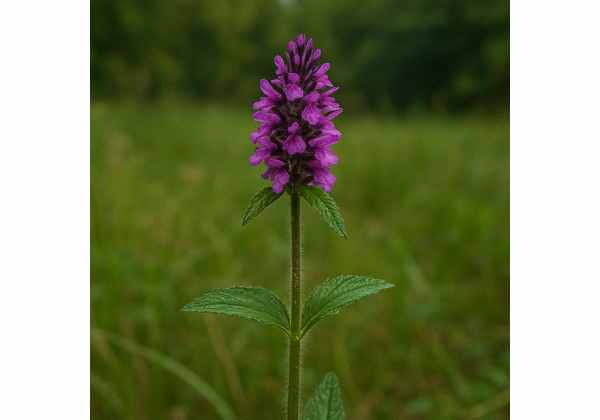
Wood betony is a perennial herb in the mint family, Lamiaceae. It grows with softly hairy stems, wrinkled leaves gathered near the base, and upright spikes of reddish-purple flowers. Native to Europe and parts of western Asia, it has long been associated with hedgerows, meadows, woodland margins, and old medicinal gardens. Even before modern phytochemistry, the plant built an extraordinary reputation. Classical and medieval herbals treated it as a plant for the head, the nerves, the stomach, the chest, and the skin, and in some periods it was regarded almost as a household cure-all.
That historic fame is useful, but it can also be misleading. A long-standing reputation does not automatically mean that every traditional claim has held up under modern study. In wood betony’s case, the old reputation is much broader than the present evidence base. Today, the herb is better described as a traditional nervine, astringent, and digestive-support herb with antioxidant and anti-inflammatory potential. That is still meaningful, but it is narrower and more realistic than the grand claims found in older texts.
Another reason wood betony can confuse readers is naming. Some sources place it in the genus Betonica, while others use Stachys officinalis. Both names appear in scientific and herbal literature, and they usually refer to the same plant. This botanical overlap can make research harder to track, especially when traditional texts, cosmetic sources, and modern journal articles use different names for the same herb.
In practical herbalism, wood betony is usually discussed for three broad areas. The first is nervous-system support, especially when stress is held in the neck, scalp, jaw, or stomach. The second is mild digestive support, especially where tension and sluggishness overlap. The third is external or astringent use, such as gargles or washes for irritated tissues. These themes are more plausible and more consistent than the idea that wood betony is a universally curative herb.
The modern phytochemical literature adds another reason for its continued popularity. Wood betony belongs to a genus that is rich in phenolic compounds, iridoids, flavonoids, and other plant metabolites with genuine biological relevance. That chemistry gives the herb a better scientific foundation than many people expect from an old-fashioned “nervine tea.”
Readers who know it only as a relaxation herb may find it useful to compare its role with scullcap. Both are often chosen for tension and nervous-system support, but wood betony tends to be framed more as a head-focused, grounding, and mildly astringent herb rather than a strongly sedating one.
Key Ingredients and Medicinal Properties
Wood betony’s medicinal profile begins with its polyphenols. Modern studies on Stachys officinalis and related Stachys species show that the herb contains a mixture of phenolic acids, flavonoids, tannins, iridoids, diterpenes, and phenylethanoid glycosides. These are not just background chemicals. They are the reason the herb repeatedly shows antioxidant, antimicrobial, and anti-inflammatory activity in laboratory research.
Among the most relevant constituents reported for Stachys officinalis are chlorogenic acid and other caffeic-acid derivatives, flavonoids, and phenylethanoid glycosides such as acteoside-related compounds. The species has also been associated with characteristic compounds known as betonyosides and with iridoids such as aucubin, catalpol, harpagide, and related molecules. This is the kind of chemistry that supports a traditional plant’s reputation without forcing it into the category of a modern pharmaceutical.
The astringent side of wood betony likely comes from its tannin content. Astringent herbs tend to tighten and tone tissues, which helps explain why wood betony has historically been used for diarrhea, irritated mucous membranes, mouth and throat gargles, and topical applications. This part of its profile is actually one of the easiest to understand. The plant is not mysterious here. It behaves like a tannin-rich herb.
Its antioxidant potential has been supported by multiple studies on Stachys officinalis and allied species. Wood betony extracts have shown strong radical-scavenging properties, and some papers point to chlorogenic acid and phenylethanoid glycosides as major contributors. In practical terms, that does not mean the herb is an “anti-aging cure.” It means the chemistry supports its reputation as a protective, calming, and inflammation-aware botanical.
Anti-inflammatory potential is another recurring theme. Polyphenol-rich extracts of Stachys officinalis have shown enzyme-related anti-inflammatory activity in laboratory studies, especially in work examining lipoxygenase and cyclooxygenase inhibition. That kind of evidence is interesting because it helps explain why traditional use often gathered around headaches, irritated tissues, soreness, and inflammatory discomfort. Still, laboratory activity is not identical to proven symptom relief in people.
Essential-oil and volatile-compound studies add another layer. In one species comparison, S. officinalis showed a volatile profile rich in sesquiterpenes such as germacrene D and notable amounts of compounds like beta-caryophyllene and limonene. These volatile fractions may contribute to some antimicrobial and aromatic qualities, although they are probably not the whole story.
If you compare wood betony with a more widely studied polyphenol-rich herb such as green tea, the difference becomes clear. Green tea has a stronger human evidence base. Wood betony has compelling chemistry and traditional logic, but it still leans more heavily on laboratory evidence and inherited herbal use.
So the best summary of its medicinal properties is this: wood betony appears antioxidant, mildly anti-inflammatory, astringent, and gently antimicrobial, with traditional grounding and nervine value. Those are real strengths, but they should be described as plausible and useful, not exaggerated into universal proof.
Wood Betony Benefits and What Modern Evidence Actually Supports
Wood betony’s claimed health benefits often sound broader than the evidence really allows. Traditional herbalists have used it for headaches, anxiety, neuralgic discomfort, mouth and throat irritation, digestive upset, and even menopausal complaints. Some of those uses may be sensible. The problem is not that the herb is empty. The problem is that modern human evidence remains thin, so the safest article is one that distinguishes between likely, possible, and proven.
The best-supported benefit area is antioxidant support. Several modern studies on Stachys officinalis or species sets that include it report high levels of total polyphenols and meaningful antioxidant activity. This matters because it confirms that wood betony is not simply a folklore herb resting on old reputation. It contains compounds that plausibly support tissue protection and may help explain why it has been used where irritation, soreness, or inflammatory stress are part of the picture.
A second credible benefit area is mild anti-inflammatory support. Polyphenol-rich extracts of S. officinalis have shown noteworthy activity in experimental models involving inflammatory enzymes. This does not mean that drinking a cup of tea will act like a pharmaceutical anti-inflammatory drug. It means the herb’s traditional use for tension, irritation, and inflammatory discomfort is not chemically arbitrary.
A third area is gentle antimicrobial relevance. Comparative studies on Stachys species, including S. officinalis, show that the extracts can inhibit some bacteria, especially gram-positive organisms. Again, this is helpful but limited. It suggests why betony was historically used in washes, gargles, and wound-related traditions, but it does not justify treating infection at home with the herb.
The traditional “nervine” benefit is more complicated. Wood betony is often recommended for a head that feels overfull, tense, frazzled, or disconnected from the body. This language is common among herbalists, and it has practical value because many people do experience herbs through patterns rather than isolated symptoms. But from a modern scientific perspective, that benefit remains more tradition-driven than clinically proven. It fits the herb’s reputation, yet it does not have robust trial support.
The same caution applies to digestive use. Traditional sources support wood betony for tension-linked digestion, mild diarrhea, and irritated mucous membranes. This is plausible given its tannins and astringency. Still, it should be described as a mild supportive herb, not a stand-alone treatment for persistent gastrointestinal disease.
This is where comparison helps. If the goal is clear digestive soothing with stronger everyday familiarity, chamomile is usually easier to recommend. Wood betony becomes more attractive when the problem involves a mixture of digestive unease, nervous tension, and “head-held” stress rather than digestion alone.
So what does modern evidence really support? It supports wood betony as a polyphenol-rich traditional herb with credible antioxidant and anti-inflammatory potential, modest antimicrobial relevance, and longstanding nervine and digestive uses that are still more traditional than clinically established. That is a respectable profile. It simply is not the same as a fully validated modern medical treatment.
Traditional Uses for Tension Head Discomfort and Digestion
Traditional use is where wood betony becomes most recognizable. For centuries it was considered a plant for the head and the nerves, especially when tension seemed to gather in the temples, scalp, neck, shoulders, or stomach. Old herbal practice often treated it less as a dramatic sedative and more as a herb that settled, grounded, and redirected excess upward tension. This is one reason it still appears in modern formulas for stress headaches, mental overwork, and nervous digestive discomfort.
One of the most common traditional patterns for wood betony is head discomfort linked with tightness rather than inflammation alone. People who reach for it often describe a clenched jaw, tight shoulders, pressure across the forehead, or a sense of scattered tension rather than a simple pain problem. The herb’s old reputation for “the head” probably survives best in this context. It is not usually framed as a knockout herb for insomnia. It is more often described as something that makes the whole system feel less congested and less wired.
Digestive use follows naturally from that pattern. In traditional practice, wood betony has been used where the stomach reflects stress: poor appetite, uneasy digestion, mild cramping, or bowels that become reactive under strain. Its mild bitterness, tannin content, and aromatic-herbal character make this plausible. It can act as a tea herb that feels both settling and slightly toning rather than merely soothing.
Astringent use is another older theme. Because the plant contains tannins, it has been used in gargles and mouth rinses and sometimes in applications for irritated skin or minor wound care. Here again, the logic is straightforward. A tannin-rich herb used on irritated tissue is a recognizable traditional pattern, even if modern clinical studies are limited.
A practical way to think about traditional wood betony use is through three main forms:
- Tea for stress-linked head and stomach discomfort
- Gargle for mouth or throat irritation
- Wash or external preparation for mildly irritated tissue
This is also the section where overstatement becomes tempting. Traditional use can sound very impressive, but it should not be inflated into proof that the herb reliably treats migraines, anxiety disorders, bowel disease, or neurological conditions. It is better understood as a useful support herb for mild, functional patterns rather than a treatment for serious pathology.
In real-world tea practice, some people combine wood betony with softer digestive or aromatic herbs. A pairing with peppermint makes sense when digestion and head tension overlap, because peppermint contributes a clearer digestive and sensory direction while wood betony brings grounding and astringent depth. That kind of combination reflects how traditional herbs often work best: not as isolated miracle agents, but as plants chosen for a specific pattern.
So the traditional value of wood betony remains real. It is simply best understood in the language of patterns, tension, and gentle support rather than in the language of strong clinical claims.
Dosage Timing and Duration
Wood betony dosing is guided much more by traditional herbal practice than by modern clinical trials. That means it is possible to describe common use patterns, but it is equally important to say that these are customary ranges rather than trial-validated therapeutic doses.
For tea, one of the most commonly cited traditional ranges is 1 to 2 teaspoons of the dried aerial parts in one cup of hot water, steeped for about 10 to 15 minutes. This is typically taken 1 to 3 times daily depending on purpose and tolerance. In rough gram terms, this usually works out to about 1 to 2 g per cup, though the actual weight depends on cut size and dryness. This is the most natural starting point because tea matches the herb’s traditional identity better than a concentrated extract does.
Tincture use is also common in modern herbalism. A frequently cited traditional range is about 2 to 6 mL of a 1:5 tincture up to three times per day. This is useful for people who do not enjoy the taste of the infusion or who want a more portable form. Still, tincture strength varies, so it is best not to transfer one product’s dosing directly onto another without checking the preparation details.
Timing depends on the goal. When wood betony is used for head tension or nervous overwork, people often take it in the late afternoon or evening, or during moments of accumulated mental strain. For digestive use, tea after meals often makes more sense, especially when stomach unease follows stress or irregular eating. A morning dose can also be helpful for people who wake already “tight” in the neck or scalp.
Duration is where caution matters. Wood betony is not usually thought of as a herb that must be taken continuously for months to show value. It fits better as a short-to-medium-term support herb or as an as-needed tea during stressful periods. A two- to four-week trial is a reasonable way to judge whether it suits the person and the pattern. If there is no meaningful benefit, increasing the dose endlessly is unlikely to solve the problem.
A few common dosing mistakes are worth avoiding:
- Taking large amounts in search of a sedative effect
- Using it instead of evaluating persistent headaches or neurological symptoms
- Treating the tannin-rich tea like a harmless all-day beverage in sensitive stomachs
- Assuming traditional dosing equals modern clinical proof
This is also where a comparison with more direct calming herbs can help. Someone seeking stronger evening calm or sleep support may do better with valerian, while wood betony is usually better for the tense, overworked, head-heavy person who does not necessarily need sedation.
So the best dosage summary is simple: tea remains the most traditional and practical form, moderate use is usually sufficient, and the herb is best judged by fit and response rather than by escalating amounts.
Wood Betony Safety Side Effects and Interactions
Wood betony is generally treated as a relatively gentle herb, especially in tea form, but “gentle” does not mean “nothing to consider.” The biggest safety issue is not dramatic toxicity. It is the mismatch between the herb’s comforting reputation and the possibility that people may use it in place of proper assessment for persistent symptoms.
The most likely side effects are mild. Because wood betony contains tannins, some people may notice stomach tightness, dry mouthfeel, nausea, or digestive discomfort if they drink it too strong or too often. This is especially true on an empty stomach. People sensitive to astringent herbs often do better starting with lighter infusions rather than dense decoction-style preparations.
Allergic reactions are possible with any herb, though they do not seem to be a major theme in the literature. Skin sensitivity can also occur with topical use, especially when a homemade preparation is used on already irritated tissue.
The more important safety limitation is lack of data in special populations. The LactMed database notes that, because of a general lack of safety data, betony should be avoided during breastfeeding. That does not prove harm, but it does mean the evidence is not strong enough to recommend routine use. Pregnancy is similar: absence of convincing safety evidence is reason for caution rather than casual endorsement. Children and adolescents are also not a well-studied group for regular wood betony use.
Interaction data are limited. No major, well-defined interactions are firmly established, but limited data should never be mistaken for impossible interactions. Caution makes sense with:
- Multiple sedative or calming herbs used together
- Prescription sedatives or anxiolytics
- People with chronic low blood pressure who are sensitive to relaxing herbs
- Long-term use alongside several tannin-rich herbal products
Another common safety mistake is using wood betony as though it were a definitive solution for recurrent headaches, dizziness, or persistent digestive pain. A mild support herb may make someone feel somewhat better without addressing the reason symptoms are happening. That can delay real care. Any severe, recurrent, or progressive neurological symptom should be evaluated properly rather than managed indefinitely with tea and tincture.
Topical use is likely lower risk than internal use, but even here it is wise to patch test first, especially in people with reactive skin. If the real goal is straightforward external astringent care, a better-known option such as witch hazel may be simpler and more predictable.
Overall, wood betony appears to have a relatively favorable safety profile when used moderately by healthy adults. But moderation, fit, and clinical judgment still matter. A traditional herb can be both gentle and limited at the same time.
When Wood Betony Makes Sense and When Another Herb May Fit Better
Wood betony makes the most sense when the person’s pattern fits the herb. That usually means stress held in the head, shoulders, neck, jaw, or stomach; mild digestive unease linked with tension; or a desire for a grounding, non-dramatic tea herb rather than a heavy sedative. It is also a good fit for people who appreciate traditional herbs that sit between nervine, astringent, and digestive categories rather than acting in only one obvious direction.
It also makes sense for readers who want a herb with genuine historical depth but are still willing to accept the limits of modern evidence. Wood betony is not empty folklore. Its chemistry is rich, its traditional uses are coherent, and modern studies do support antioxidant, antimicrobial, and anti-inflammatory potential. That gives it enough substance to justify use in thoughtful herbal practice.
Where it makes less sense is when someone actually needs something more specific. If the main issue is plain digestive discomfort without tension, other herbs are simpler. If the main issue is insomnia, wood betony may be too subtle. If the goal is acute migraine management, strong anxiety relief, or treatment of neurological disease, it is not the right tool. And if a person is mainly drawn to it because it sounds old and mystical, that is not yet a therapeutic match.
It may also be a poor fit for people who dislike astringent herbs or who already run dry and tight in the digestive tract. In those cases, the plant’s tannin character may be less comforting than expected.
A practical way to decide whether wood betony is a good match is to ask what kind of support is actually needed:
- For overthinking, tight neck, and stress held “upward,” wood betony may fit well.
- For stronger calming and emotional softness, lemon balm may fit better.
- For clear digestive soothing, chamomile or peppermint is often easier.
- For sleep-heavy formulations, valerian or passionflower may be more direct.
- For topical astringency, witch hazel or calendula may be simpler choices.
This is not a demotion of wood betony. It is a sign of good herbal thinking. The best herb is not the one with the longest list of claims. It is the one whose traditional pattern, chemistry, and safety profile best fit the person and the problem.
That is why wood betony still deserves attention. It offers a grounded middle path between folklore and modern phytotherapy: not dramatic, not empty, and especially useful when tension, digestion, and head-held strain overlap. In that role, it remains one of the more interesting traditional herbs still in modern use.
References
- Genus Stachys—Phytochemistry, Traditional Medicinal Uses, and Future Perspectives 2024. (Review)
- Stachys Species: Comparative Evaluation of Phenolic Profile and Antimicrobial and Antioxidant Potential 2023.
- Phytochemical Analysis and Biological Activity of Three Stachys Species (Lamiaceae) from Romania 2021.
- Betony – Drugs and Lactation Database (LactMed®) – NCBI Bookshelf 2024. (Safety Reference)
- Anti-inflammatory and antioxidant activities of the Impatiens noli-tangere and Stachys officinalis polyphenolic-rich extracts 2018.
Disclaimer
This article is for educational purposes only and does not replace medical advice, diagnosis, or treatment. Wood betony has a long traditional history, but modern clinical evidence for many of its uses is still limited. Do not use it as a substitute for evaluation of recurring headaches, neurological symptoms, significant digestive pain, or persistent anxiety. Avoid self-treatment during pregnancy or breastfeeding unless a qualified clinician advises otherwise, and speak with a healthcare professional if you take prescription medicines or have a chronic medical condition.
If you found this article useful, please share it on Facebook, X, or another platform you prefer so more readers can approach traditional herbs with both curiosity and good judgment.