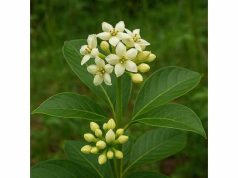
Valerian is one of the best-known herbal sleep remedies, but it is also one of the easiest to misunderstand. People often reach for it when they feel wired, restless, or unable to settle at night, hoping for a natural alternative to stronger sedatives. That interest makes sense: the underground parts of Valeriana officinalis have a long medicinal history, and modern official monographs still recognize valerian root for mild nervous tension and sleep-related complaints.
What makes valerian worth a closer look is not just whether it “works,” but how unevenly it works across different products, doses, and people. The root contains several notable compound groups, including valerenic acids, valepotriates, volatile oils, and lignans, and its effects seem to depend on the whole preparation rather than one magic ingredient alone. Used thoughtfully, valerian may help some adults fall asleep more easily, feel less tense in the evening, and build a calmer bedtime routine. Used casually, it can also disappoint, cause grogginess, or be combined unwisely with other sedatives.
Key Insights
- Valerian may modestly improve subjective sleep quality and reduce bedtime restlessness in some adults, but results are mixed across studies.
- The clearest traditional and official uses are mild nervous tension, mental stress, and sleep support.
- A common adult bedtime range is 400 to 600 mg dry extract, or 0.3 to 3 g dried root as tea, taken about 30 to 60 minutes before bed.
- Avoid valerian during pregnancy or breastfeeding, in children under 12, and with alcohol or other products that increase drowsiness.
Table of Contents
- What valerian is and why the root matters
- Key ingredients and how it may work
- Valerian benefits and what the research actually shows
- Common uses and best ways to take it
- Valerian dosage, timing, and how long to try it
- Safety, side effects, interactions, and who should avoid it
- How to choose a valerian product and use it well
What valerian is and why the root matters
Valerian is a perennial flowering plant native to Europe and Asia and now cultivated more widely for medicinal use. In practice, the relevant part is not the flower or leaf but the underground portion: the root and, in many products, the rhizome as well. Official monographs and product standards describe valerian medicines and natural health products as preparations made from these underground parts, whether as comminuted dried root for tea, powders, tinctures, or dry and liquid extracts.
That detail matters because people often speak of “valerian” as if all products were interchangeable. They are not. One product may be a simple dried-root tea, another a concentrated ethanolic extract, and a third a capsule standardized to valerenic acids. Some preparations have stronger regulatory recognition than others for mild nervous tension and sleep-related complaints, while broader traditional-use categories apply to other valerian forms. In other words, valerian is not one uniform intervention. It is a plant with multiple preparations, and the strength of the evidence changes with the form.
This is also why the root matters more than the name alone. Research reviews have pointed out that inconsistent trial results likely reflect differences in extraction methods and herbal quality, not just differences in patient response. That does not mean whole-root tea is always better than every extract. It means the label, extract solvent, dried-herb equivalent, and standardization profile deserve attention.
A practical takeaway is simple: when choosing valerian, think like a careful reader rather than a hopeful shopper. Look for Valeriana officinalis root or root and rhizome, not vague “calming herb blend” language. Check whether the product gives a dried-root equivalent, extract ratio, or standardization to valerenic acids. A plant with a long reputation can still be used carelessly, and valerian is a good example of why herbal medicine works best when the form matches the goal.
Key ingredients and how it may work
Valerian’s chemistry is richer than the usual “one active compound” story. Studies of common valerian root describe several important compound families: sesquiterpenic acids such as valerenic acid and related acids, volatile oil constituents such as valerenal and bornyl acetate, iridoid-type valepotriates such as valtrate and isovaltrate, plus lignans, phenolic acids, flavonoids, and smaller amounts of other constituents. These compounds are important enough for pharmacopoeial identification and quality control.
The compound most people hear about is valerenic acid, and for good reason. Experimental work has linked it to modulation of GABA-related signaling, which fits valerian’s long-standing reputation as a mild calming or sleep-supportive herb. Newer mechanistic work also suggests that valerian’s action may not be limited to GABA pathways. Some research points to positive modulation at the adenosine A1 receptor, offering another plausible route by which the herb could support sleep pressure and neural downshifting.
Even so, it would be a mistake to reduce valerian to valerenic acid alone. Official monographs note that the sleep-related effects of recommended-dose valerian preparations cannot be attributed with certainty to any one known constituent. That is an important corrective to supplement marketing. Herbs often work, when they work, through a profile rather than a single molecule. With valerian, the overall extract chemistry may matter more than chasing the highest possible valerenic-acid percentage.
In practical terms, these ingredients and mechanisms point to three useful ideas. First, valerian is better understood as a multi-component root medicine than as a “natural sleeping pill.” Second, standardized extracts can help improve repeatability, but standardization does not guarantee the same clinical effect across brands. Third, laboratory mechanisms are helpful but not final proof. A receptor interaction in vitro is part of the story, not the whole story. That is why good valerian guidance has to combine chemistry, official monographs, and actual human outcomes rather than leaning on any one of them too heavily.
Valerian benefits and what the research actually shows
The most realistic benefits of valerian cluster around mild nervous tension, evening restlessness, and sleep complaints that feel tied to stress rather than severe underlying disease. Official sources consistently frame valerian around these same themes: relief of mild nervous tension, mild symptoms of mental stress, and support for sleep. That alignment between traditional use and modern official guidance is meaningful. It suggests valerian’s best fit is not “any insomnia,” but the narrower pattern of trouble settling down.
Where things get more complicated is the research summary. Recent reviews suggest that valerian remains one of the most commonly used herbal sleep aids, but the overall evidence for insomnia is still mixed. Some reviewers find a generally good safety profile and some signal for subjective sleep-quality improvement, yet no convincing overall evidence that valerian reliably treats insomnia in every setting. That is a crucial distinction. Feeling that sleep is better and proving a clear insomnia treatment effect are not the same claim.
At the same time, not all the evidence is negative. Some broader reviews and meta-analyses suggest that valerian may safely promote sleep and reduce related symptoms, while also emphasizing that outcomes vary with extract quality and formulation. More recent randomized controlled work using standardized valerian extracts has shown improvements in sleep quality, sleep latency, sleep efficiency, total sleep time, anxiety scores, and daytime sleepiness in some participants.
The balanced view is that valerian probably helps some people, some of the time, especially when the complaint is mild and stress-linked. It is less convincing as a solution for severe chronic insomnia, nighttime symptoms caused by sleep apnea, pain, reflux, hyperthyroidism, heavy alcohol use, or major psychiatric illness. In those cases, valerian may still be soothing, but it should not delay proper evaluation. If your main interest is in gentle herbal sleep support rather than a knockout effect, valerian sits in the same broad conversation as passionflower for stress-related sleep support, though the evidence and product profiles are different.
This is why expectation-setting matters. A good valerian response usually looks like easier unwinding, less tossing, a shorter wait for sleep, or a calmer bedtime mood. A poor expectation is hoping it will overpower every cause of insomnia on the first night. Valerian can be a reasonable tool, but it is not a universal answer, and the research is strongest when claims stay modest.
Common uses and best ways to take it
Valerian is most commonly taken in four forms: capsules or tablets, tea made from dried root, tinctures or liquid extracts, and multi-herb sleep formulas. Official product standards describe valerian products as oral dry extracts, liquid extracts, tinctures, powders, infusions, and decoctions, with bath additives also appearing in some traditional-use frameworks. In everyday use, though, capsules, tablets, and teas are the main options.
Capsules and tablets are often the easiest starting point because they offer more repeatable dosing. This matters with valerian because formulation quality affects response. Tea can be appealing when you want a gentler, ritual-based approach: the warm drink, slower pace, and bedtime routine may all help. Tinctures are flexible for people who prefer drop-based dosing, but they are also easier to misjudge if the label is vague. A person who wants a calm bedtime routine may love tea. A person who wants consistency from night to night may do better with a standardized extract.
Combination formulas are common, especially for nighttime use. Valerian is often paired with other calming herbs in both traditional and commercial blends, and one of the classic partners is hops. Many bedtime formulas combine valerian with hops in traditional sleep blends, or with other calming herbs such as passionflower or lemon balm. That can be useful, but it also makes troubleshooting harder. If a blend works well, you may not know which ingredient is helping. If it causes grogginess, you may not know which ingredient is too much.
The best way to take valerian depends on your actual goal. For sleep onset trouble, a bedtime dose is usually the simplest strategy. For general evening tension, some people do better with an earlier dose during the evening and, if needed, another closer to bed. For occasional mild stress during the day, valerian is less ideal because even moderate doses can make some users sleepy or mentally dulled. That is one reason valerian works best as a nighttime herb first and a daytime calming herb second.
Valerian dosage, timing, and how long to try it
Valerian dosing is not one-size-fits-all because teas, powders, tinctures, and extracts are not equivalent. Still, official monographs provide useful adult ranges. A common single adult dose is 400 to 600 mg of dry extract. For herbal tea, a typical range is 0.3 to 3 g of comminuted valerian root in about 150 mL of boiling water. Some adult guidance across preparation types goes as high as 0.3 to 12 g of dried root or root and rhizome per day, depending on the product and form, without treating all of those forms as equivalent.
A practical adult guide looks like this:
- 400 to 600 mg dry extract as a single bedtime dose
- 0.3 to 3 g dried root as tea in about 150 mL hot water
- Up to 0.3 to 12 g dried root or root and rhizome per day across product types, depending on the preparation, without exceeding 3.6 g in one dose
Timing matters almost as much as dose. Valerian is usually taken 30 to 60 minutes before bedtime when the goal is sleep support. Some traditional and official guidance also allows an earlier evening dose if needed. That means valerian is usually a pre-bed herb, not something to swallow after you have already been lying awake for hours expecting instant rescue.
Duration is where people often get confused. Valerian may have a gradual onset of efficacy and is not always suited to acute interventional use. Some official guidance suggests that optimal effects may take 2 to 4 weeks of continued use. That does not mean nobody feels anything on the first night. Some do. It means a fair trial should usually last more than a night or two before you decide the herb has failed. If symptoms persist or worsen after a couple of weeks of continued use, it is wise to seek clinical advice. Chronic sleeplessness lasting more than 4 weeks deserves professional evaluation.
One more nuance is worth keeping in mind: doses used in positive clinical trials often apply to specific standardized extracts rather than to every valerian product on the market. That is encouraging, but it should not be treated as a universal dose for every brand or form. Label details still matter.
Safety, side effects, interactions, and who should avoid it
Valerian is generally described as having a good short-term safety profile, but “natural” does not mean risk-free. Official sources list gastrointestinal symptoms such as nausea and abdominal cramps among the known adverse effects. Valerian can also cause drowsiness, which means the most common real-world problem is not usually a dramatic reaction but next-morning heaviness, especially if the dose is too high or the product is combined with other sedatives.
The clearest interaction warning is overlap with other things that make you sleepy. That includes alcohol, sleep medications, sedating antihistamines, and other calming supplements or herbs. Even adding another gentle herb such as California poppy can push a formula from pleasantly calming to too sedating for some people. This is especially important for anyone who drives early in the morning, uses machinery, or already feels sensitive to relaxing products.
Pregnancy and breastfeeding are also important boundaries. Valerian is generally not recommended during pregnancy or breastfeeding without medical supervision because safety data are limited. Children under 12 are also a routine caution point in some official frameworks, and some monographs are written specifically for adults. These are not arbitrary restrictions. They reflect the fact that valerian’s real-world use may be broad, but the better-defined safety guidance is narrower.
Another practical safety point is not to let valerian mask a bigger problem. If sleeplessness is lasting more than a few weeks, or if it is paired with loud snoring, breathing pauses, chest pain, severe anxiety, depression, mania, heavy alcohol use, or medication changes, valerian should not be the main plan. A soothing herb can be part of care, but it should not replace diagnosis.
The safest way to think about valerian is this: reasonable for many adults in the short term, worth respecting like a real sedative-supportive product, and not something to combine casually with every other calming remedy in the cabinet. Used with that mindset, it is much more likely to help than to backfire.
How to choose a valerian product and use it well
A good valerian experience usually starts before the first dose. Choose a product that clearly states Valeriana officinalis, identifies root or root and rhizome, and gives enough detail to understand the preparation. A vague “proprietary calming blend” is harder to use intelligently than a product that lists extract ratio, dried-root equivalent, or standardization. This matters because formulation quality is one of the biggest reasons valerian studies disagree with one another.
It is also smart to start with one valerian product at a time. Keep the first trial simple. Use it for several nights, note when you took it, how long it took to fall asleep, whether you woke during the night, and how you felt the next morning. That kind of low-tech sleep diary is often more useful than trying three sedatives at once and guessing what happened. If your main issue is stress-linked evening overactivity, a gentler partner such as lemon balm for stress-linked restlessness may sometimes make more sense than simply pushing valerian higher and higher.
Two mistakes are especially common. The first is expecting valerian to solve every type of insomnia. The second is ignoring the rest of the bedtime picture. Valerian works best when it is part of an actual wind-down routine: dimmer light, less screen stimulation, fewer late heavy meals, and consistent timing. When the nervous system gets the same quieting signals from several directions, a modest herb has a better chance to feel useful.
The final practical rule is to stop pretending that “herbal” means you do not need a plan. Valerian is best used with a clear goal, a clear dose, and clear stopping points. If it helps, great. If it causes grogginess, stomach upset, or does nothing after a fair trial, move on rather than forcing it. That mindset is what turns valerian from a hopeful impulse purchase into a reasonable, evidence-aware sleep support option.
References
- Does valerian work for insomnia? An umbrella review of the evidence 2024 (Umbrella Review)
- Standardized Extract of Valeriana officinalis Improves Overall Sleep Quality in Human Subjects with Sleep Complaints: A Randomized, Double-Blind, Placebo-Controlled, Clinical Study 2024 (RCT)
- Valerian – VALERIANA OFFICINALIS 2024 (Official Monograph)
- European Union herbal monograph on Valeriana officinalis L., radix 2016 (Official Monograph)
- Valerenic Acid and Pinoresinol as Positive Allosteric Modulators: Unlocking the Sleep-Promoting Potential of Valerian Extract Ze 911 2025 (Mechanistic Study)
Disclaimer
This article is for educational purposes only and is not a diagnosis, treatment plan, or substitute for medical advice. Valerian products can differ substantially in strength, extract type, and quality, so the same herb name does not guarantee the same effect. Because sleep problems can also be caused by medication effects, depression, anxiety disorders, sleep apnea, pain, reflux, thyroid disease, or other medical conditions, persistent insomnia deserves proper clinical assessment. Speak with a qualified health professional before using valerian if you are pregnant, breastfeeding, taking sedatives, or managing a chronic health condition.
If this article was useful, please share it on Facebook, X, or your preferred platform so others can find it too.