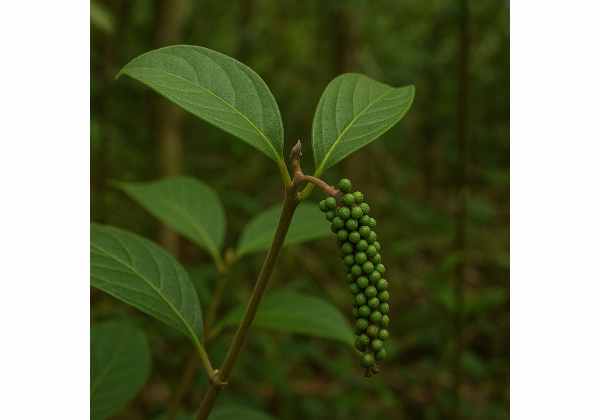
Voatsiperifery, usually identified as Piper borbonense, is a wild pepper from Madagascar and nearby Indian Ocean islands that has earned a reputation for its long-tailed berries, vivid aroma, and gentler heat compared with common black pepper. It is used first as a culinary spice, yet its chemistry has started to attract wider interest because it contains piperamides, volatile aromatic compounds, and phenolic substances associated with antioxidant and anti-inflammatory activity in the broader Piper family. That makes it an intriguing plant to discuss in a health context, but it also calls for restraint.
The most useful way to understand voatsiperifery is as a premium wild pepper with promising bioactive potential rather than as a proven medicinal treatment. Most evidence still comes from phytochemical analysis, food-quality studies, and research on related pepper compounds such as piperine. Human clinical trials specific to Piper borbonense remain scarce. Even so, it offers a meaningful story about flavor, traditional harvest, plant chemistry, and possible wellness value. The goal here is to separate what is likely, what is possible, and what is still too early to claim.
Core Points
- Voatsiperifery may provide mild antioxidant support through piperamides, terpenes, and other phenolic compounds.
- Its digestive and warming culinary effects are plausible, but direct human evidence is still limited.
- A practical culinary range is about 0.5 to 2 g of dried berries per day, roughly 10 to 30 peppercorns, depending on the grind and recipe.
- People with pepper allergies, active ulcers, or high sensitivity to spicy foods should avoid concentrated use.
- It is best treated as a food spice with functional promise, not as a substitute for medical care.
Table of Contents
- What voatsiperifery is and why it stands out
- Key ingredients and bioactive compounds
- Voatsiperifery health benefits and what is most likely
- Medicinal properties and how it may work
- Common uses in cooking, traditional practice, and wellness
- Dosage, preparation, and how much to use
- Safety, side effects, and who should be cautious
What voatsiperifery is and why it stands out
Voatsiperifery is one of those botanicals that reaches people through the kitchen long before it reaches them through a supplement shelf. It is a wild pepper, not a cultivated standard spice in the same sense as black pepper. The berries are usually harvested from climbing vines growing high in forest canopies, which helps explain both their rarity and their cost. The dried fruits are slender, dark, and often sold with a short stem or “tail,” giving them a distinctive appearance that immediately sets them apart from ordinary peppercorns.
Its flavor profile is the main reason chefs and spice merchants value it. Voatsiperifery is often described as woody, floral, citrusy, and lightly resinous, with a fresh peppery bite that feels more perfumed and less blunt than black pepper. That difference is not just culinary poetry. It reflects a distinct chemical profile, including variations in volatile compounds and pungent amides. In other words, the spice tastes different because it is chemically different.
This distinction matters for health discussions. Many people hear “pepper” and assume all peppers behave like black pepper, especially in relation to piperine. Voatsiperifery does contain pepper-related pungent compounds, but its balance of piperine, essential oil, and aroma molecules appears to differ from standard black pepper. Some studies have even suggested that its typicity lies in relatively high aromatic complexity with lower pungency. That makes it more than an exotic substitute. It is its own spice identity.
It is also tied to a larger ecological and economic story. Because voatsiperifery has often been harvested from the wild rather than cultivated at scale, its growing popularity raises questions about sustainability, forest pressure, and fair value for local harvesters. That does not directly change its chemistry, but it does affect how people should think about using it. A rare wild spice benefits from thoughtful sourcing, modest use, and realistic expectations.
From a health standpoint, this plant sits in an interesting middle ground. It is not a classic medicinal herb with well-established human dosing. It is not merely decorative either. Like many members of the Piper genus, it contains compounds with biologic activity that may influence oxidation, inflammation, sensory digestion, and absorption. But those actions are likely to be mild in everyday culinary use.
For readers already familiar with pepper-like spices, the easiest comparison is black pepper and its active compounds. That comparison helps, but it should not erase the fact that voatsiperifery has its own aroma, harvesting context, and research gaps. It is best approached as a wild gourmet pepper with functional promise, not as a direct replacement for common pepper in either cooking or health claims.
Key ingredients and bioactive compounds
The chemistry of voatsiperifery is the strongest reason to discuss it beyond taste alone. As a member of the Piper genus, it contains piperamides, aromatic volatiles, and other secondary metabolites that likely contribute to both its sensory quality and its biologic potential. Recent analytical work has shown that Piper borbonense contains a diverse mix of compounds, including monoterpenoids, sesquiterpenoids, monolignols, lignans, and piperamides. That is a richer picture than many people expect from a spice used in small amounts.
Piperamides are especially important because they are part of what gives pepper fruits their pungency and much of their pharmacologic interest. Piperine is the best-known example across the pepper world, and while voatsiperifery may not mirror black pepper exactly in piperine intensity, it appears to contain related amide chemistry that helps explain its warming and stimulating character. Piperamides are commonly associated with antioxidant, anti-inflammatory, digestive, and bioavailability-related effects in the broader literature on pepper compounds.
Its volatile compounds also matter. The fragrant impression of voatsiperifery is driven by essential-oil constituents and other aroma molecules that create its woody, citrus, floral, and lightly resinous profile. These volatiles do more than make the spice smell elegant. In aromatic plants, the volatile fraction often contributes to antimicrobial effects, sensory stimulation, and the overall experience of satiety and digestive readiness.
Some important compound groups include:
- piperamides, which likely shape pungency and many of the spice’s functional effects
- monoterpenes and sesquiterpenes, which contribute aroma and may play a role in antioxidant and antimicrobial behavior
- phenolic compounds and lignans, which may support antioxidant activity
- mineral content and trace constituents, which matter nutritionally but are not likely to be a primary reason for use
This chemistry helps explain why voatsiperifery can feel lively on the palate without becoming aggressively hot. It also explains why people sometimes overstate its potential. The presence of active compounds does not automatically mean a clinically meaningful dose is reached in ordinary cooking. A food can be chemically interesting without becoming a treatment.
Another practical point is that composition varies. Wild-harvested peppers differ by region, maturity, handling, drying method, and storage conditions. Studies on wild Piper peppers have shown that processing can influence essential-oil retention and microbial quality. So when someone asks, “What does voatsiperifery contain?” the honest answer is not a single fixed profile. It is a family resemblance shaped by growing and postharvest conditions.
That makes voatsiperifery closer to a nuanced spice like cardamom with its aromatic and digestive compounds than to a standardized supplement capsule. Its value lies in the full matrix of the dried berry, not in a single isolated ingredient alone.
Voatsiperifery health benefits and what is most likely
The most responsible way to discuss voatsiperifery’s health benefits is to divide them into likely, plausible, and unproven categories. That keeps the article useful without turning a rare spice into a miracle product.
The most likely benefit is antioxidant support. Studies on Piper borbonense chemistry and on related pepper compounds suggest that its phenolics, terpenes, and piperamides may help counter oxidative stress. In food terms, that does not mean a few pepper berries will transform health. It means voatsiperifery belongs to the category of spices whose small amounts may still contribute meaningful phytochemical value over time, especially in a diet already rich in plant foods.
A second likely benefit is digestive stimulation. Like many peppers and warming spices, voatsiperifery may encourage salivation, gastric readiness, and appetite. This effect is often felt more than measured. Many traditional spice systems rely on aromatic, warming botanicals before and during meals because they seem to make food easier to enjoy and digest. Voatsiperifery fits that pattern well, even though direct clinical trials are lacking.
A third plausible benefit is mild anti-inflammatory support. Piperamides and terpene-rich spice compounds are often studied for their ability to influence inflammatory pathways. It is reasonable to say voatsiperifery may share some of this family-level activity. It is not reasonable to state that it treats inflammatory disease. The first phrasing respects the evidence. The second oversells it.
Antimicrobial potential is also plausible, especially in extracts. Pepper-family plants often show some inhibitory activity against microbes in laboratory settings. But culinary use and lab extraction are not the same. Most people using voatsiperifery at the table should think of this as an interesting research signal rather than a direct health outcome.
There is also a broader metabolic question. Because piperine and related pepper constituents can affect digestion and bioavailability, some readers wonder whether voatsiperifery improves nutrient absorption or metabolic function. This is possible in theory, but there is not enough species-specific evidence to make a confident claim. It is better treated as a question still open.
A balanced summary looks like this:
- likely: antioxidant contribution and digestive stimulation
- plausible: mild anti-inflammatory and antimicrobial support
- possible but unproven: bioavailability and broader metabolic effects
- unsupported as a clinical claim: treatment of chronic disease
This perspective helps preserve what is genuinely appealing about the spice. Voatsiperifery may be one of those ingredients whose benefit comes from repeated low-dose culinary use, sensory pleasure, and dietary diversity rather than from a high-dose therapeutic effect. That is a valid kind of health contribution. Not every useful plant needs to behave like a drug.
For readers who enjoy building meals around functional spices, voatsiperifery pairs naturally with ginger for warming digestive support, though ginger has much deeper clinical study behind it. That comparison is useful because it shows where voatsiperifery is promising and where it is still emerging.
Medicinal properties and how it may work
Voatsiperifery’s medicinal properties are best understood as mechanisms that probably exist at a modest level rather than as dramatic therapeutic effects proven in patients. The chemistry of the Piper genus offers a clear starting point, especially through pungent amides and aromatic compounds.
The first likely mechanism is antioxidant action. Spices are often chemically dense, and pepper-family fruits are no exception. Their phenolic and amide-rich profiles can help quench reactive molecules and reduce oxidative stress in experimental settings. This helps explain why pepper-related plants keep appearing in research on tissue protection, inflammation, and aging biology.
The second mechanism is inflammatory modulation. Piperamides, including piperine-like compounds, have been studied for their ability to influence inflammatory signaling pathways. In plain terms, that means they may help reduce some of the biochemical signals associated with irritation and inflammatory stress. A culinary dose is unlikely to act like a medicine, but the pathway itself is real enough to mention.
The third mechanism is digestive activation. Warming spices often work through sensory stimulation in the mouth and gut. They can encourage saliva, enhance gastric awareness, and make meals feel more engaging. This may sound simple, but digestion begins with sensory cues. A spice that sharpens appetite and increases digestive readiness can have a subtle but meaningful role in how food is tolerated and enjoyed.
A fourth possible mechanism is bioavailability support. Piperine is widely discussed because it can alter the absorption and metabolism of some compounds. Voatsiperifery should not automatically be assumed to behave identically to black pepper, yet the possibility of some related effect deserves mention. This is also where caution becomes important, because improving absorption can be helpful with food compounds but problematic with certain drugs.
There may also be mild antimicrobial effects from the volatile fraction. In spices, this is often more relevant to food ecology and preservation than to treating infections in people. It is one reason aromatic spices have historically been valued in cuisines from warm climates, but it should not be turned into a medical promise.
A good working model is this:
- phenolic and amide chemistry may support antioxidant defenses
- pungent compounds may influence inflammatory signaling
- aroma and spice perception may support appetite and digestive readiness
- some compounds may alter absorption or metabolism in ways that require care
This layered profile is similar to what draws interest toward cinnamon as both a flavoring and a functional spice. In both cases, the food and the bioactivity overlap. The difference is that voatsiperifery is much less studied, so the article should stay narrower and more careful.
Used this way, “medicinal properties” does not mean voatsiperifery should be used as a treatment. It means the spice has biologically interesting traits that may support health when used as part of a thoughtful diet and, potentially in the future, through better-defined extracts.
Common uses in cooking, traditional practice, and wellness
Voatsiperifery is used most convincingly in cuisine. Its long-tailed berries are typically ground fresh or lightly crushed over food, where their aroma is easier to appreciate. It works especially well with roasted vegetables, fish, poultry, mushrooms, sauces, creamy preparations, fruit, and even chocolate. Because its fragrance is more layered and less blunt than black pepper, it often performs best in dishes where its aroma is allowed to stay visible rather than get buried under heavy heat or overpowering spice mixes.
In practical cooking, people use it in several ways:
- as a finishing pepper on eggs, vegetables, and meat
- in cream sauces, broths, and light gravies
- in fruit-forward preparations such as citrus, berries, and poached pears
- in sweet-savory pairings, especially chocolate and caramel
- in infused oils or broths for a subtler pepper note
Traditional and local uses are harder to summarize with certainty because wild pepper traditions vary and are not always recorded in the same formal way as major medicinal plants. Still, peppers in many food cultures are used not only for taste but also to warm the body, stimulate appetite, and enliven digestion. Voatsiperifery fits comfortably in that broad culinary-medicinal pattern.
In modern wellness contexts, the spice may appear in gourmet blends, infused vinegars, botanical condiments, and experimental tonics. That does not necessarily make it more therapeutic. Often it simply reflects interest in rare spices with both sensory and phytochemical appeal. Some people also use it in very small amounts in broth, tea-like infusions, or savory tonics, though its main role there remains culinary.
Because it is rare and aromatic, voatsiperifery is not usually a high-volume kitchen spice. It is better thought of as a finishing ingredient or specialty pepper. This is actually a strength. When a spice is used with intention, people tend to notice both its flavor and their tolerance more clearly.
One overlooked part of “use” is sourcing. Since voatsiperifery has a history of wild harvest, choosing responsibly traded material matters. Good-quality berries should smell vivid and clean, not dusty, flat, or moldy. They should also be reasonably intact and dry. Poor storage can erase much of the aroma and increase the risk of contamination, which is especially relevant for wild spices.
For readers who like aromatic pepper families, voatsiperifery also sits nicely beside allspice in sweet-savory cooking. They are not botanically close, but both reward restrained use and highlight how much fragrance can matter in perceived warmth and satisfaction.
The most useful modern application of voatsiperifery is simple: use it as a high-quality spice that may offer mild functional benefits through regular culinary inclusion, not as a capsule-worthy herb that needs heavy dosing.
Dosage, preparation, and how much to use
Voatsiperifery does not have an established medical dosage in the way a supplement or drug might. That point should be stated plainly. The practical question is not “How many milligrams treat a condition?” but “How much is sensible to use in food or gentle wellness practice?”
For culinary use, a practical daily range is about 0.5 to 2 g of dried berries, roughly 10 to 30 peppercorns depending on size and grind. This range is enough to flavor meals without becoming harsh. In many dishes, even less is sufficient, especially when the berries are freshly cracked and aromatic.
There are several useful ways to prepare it:
- Grind it fresh over food just before serving.
- Lightly crush whole berries and steep them in broth or cream.
- Combine a small amount with salt or other spices for finishing blends.
- Add it late in cooking when aroma matters more than deep heat extraction.
Fresh grinding is usually best. As with most peppers, the aromatic fraction fades once ground. If the goal is both flavor and any possible functional benefit, preserving volatile compounds makes sense. Whole berries stored in an airtight container away from light and heat will usually outperform pre-ground powder.
For infused uses, smaller amounts often work better than people expect. A few crushed berries in a sauce or broth may create more elegance than a heavy pepper load. This is especially true because voatsiperifery’s value lies partly in its fragrance. Too much can flatten the nuance and make it behave more like ordinary pepper.
A cautious personal-use approach might look like this:
- start with 4 to 6 crushed berries in one meal
- notice the aroma, pungency, and digestive response
- increase gradually to taste, not to chase a stronger “health effect”
- keep daily use moderate unless you know you tolerate pepper well
Concentrated extracts are a different matter. There is no well-established therapeutic dosage for Piper borbonense extracts, and ordinary consumers should not invent one based on black pepper or piperine supplements. A rare wild pepper used in food is not the same thing as isolated piperine in capsules.
If someone is mainly interested in the absorption-related effects that people associate with pepper alkaloids, a more studied ingredient such as standardized piperine extract is the clearer reference point. But that is precisely why voatsiperifery should stay in its own category. It is better used for whole-spice value than for improvised pharmacology.
The practical rule is simple: use enough to flavor, not enough to force a medicinal response. With a rare spice, that approach is both safer and truer to what makes it worthwhile.
Safety, side effects, and who should be cautious
In normal food amounts, voatsiperifery is likely low risk for most healthy adults, especially those who already tolerate pepper and warming spices well. The main safety concerns come from three areas: spice sensitivity, possible absorption-related interactions, and product quality.
The most common side effects are the familiar ones linked to peppery foods. These can include stomach irritation, burning, reflux, throat irritation, or loose stools in sensitive people. Anyone with active gastritis, peptic ulcer disease, poorly controlled reflux, or a very reactive digestive tract may find voatsiperifery too stimulating, especially when used heavily or on an empty stomach.
Allergy is uncommon but possible. A person with a known spice or pepper allergy should approach carefully or avoid it. Fragrant spices can also provoke symptoms in people with oral allergy tendencies or multiple food sensitivities. If you have ever reacted strongly to black pepper, long pepper, or complex spice blends, voatsiperifery deserves caution.
The second safety point is more subtle. Because pepper-family compounds may influence absorption and drug metabolism, concentrated or unusually heavy use could theoretically matter for certain medications. This is one reason it is unwise to treat a rare wild pepper like a self-made supplement. Food-level use is one thing. Repeated high-dose use with prescription drugs is another.
People who should be especially cautious include:
- those with active ulcers, severe reflux, or inflammatory gut flare-ups
- people with known spice allergies
- anyone using medications with narrow therapeutic ranges
- pregnant individuals using more than culinary amounts
- people giving strong pepper preparations to children
A third issue is microbial and storage safety. Wild-harvested spices can carry contamination risks if handling and drying are poor. Research on wild pepper processing has shown that postharvest methods matter for both quality and microbiological safety. This means buying from a reputable supplier is not just a flavor issue. It is a health issue.
Look for berries that are dry, aromatic, and free from visible mold or musty odor. Avoid product that smells stale, dusty, or damp. Store it as you would any high-quality spice: airtight, cool, dry, and away from direct light.
There is also a mindset issue worth noting. Because voatsiperifery is rare, expensive, and botanically interesting, people may assume it is automatically more medicinal than ordinary pepper. That is not a safe conclusion. Its value is real, but it is not proven as a treatment for chronic disease, infection, or major inflammation.
For readers seeking a gentler digestive herb rather than a stimulating spice, fennel for soothing digestion may be a better fit. Voatsiperifery is the opposite kind of plant: warming, activating, and best used with respect rather than in large amounts.
References
- Analytically Unsupervised Metabolomic Profile of the Premium Malgasy Pepper Voatsipérifery (Piper borbonense): Identification of Marker Components 2025
- Authenticating wild Piper species (peppers) originating from islands in the Indian Ocean on the basis of morphological, genetic and chemical characteristics 2021
- Effect of processing on microbial safety of wild pepper (Piper borbonense) from Reunion Island 2020
- Tsiperifery, the wild pepper from Madagascar, emerging on the international spice market whose exploitation is unchecked: current knowledge and future prospects 2017
- Piperine: Chemistry and Biology 2023 (Review)
Disclaimer
This article is for educational purposes only and is not medical advice. Voatsiperifery is primarily a culinary spice, and there is no established therapeutic dosage for treating disease. Most health-related claims are based on phytochemical studies, food science research, and evidence from related pepper compounds rather than direct human clinical trials on Piper borbonense. Speak with a qualified healthcare professional before using it in concentrated amounts if you have digestive disease, allergies, or take prescription medications.
If you found this article useful, please share it on Facebook, X, or your preferred platform.