Voacanga is a tropical African tree whose bark, roots, leaves, and especially seeds have drawn attention in both traditional medicine and modern phytochemistry. It is not a gentle kitchen herb. Instead, it is a potent alkaloid-rich medicinal plant associated with compounds such as voacangine, voacamine, tabersonine, and related indole alkaloids. Traditional uses have included pain, diarrhea, infections, convulsions, fatigue, and ritual or psychoactive purposes, while modern research has focused on antimicrobial, antiparasitic, sedative, neuroactive, and anticancer potential.
That sounds impressive, but it needs careful framing. Most of Voacanga africana’s apparent benefits come from laboratory, animal, and ethnomedicinal evidence rather than strong clinical trials in humans. The plant also sits close to the iboga-alkaloid world, which brings real safety concerns, especially around cardiac rhythm, neurotoxicity, hallucinations, and unpredictable alkaloid content. For that reason, Voacanga is best understood as a pharmacologically interesting traditional medicine and industrial alkaloid source, not as a casual self-care herb. Its strongest modern lesson may be that promising chemistry and safe home use are not the same thing.
Core Points
- Voacanga africana shows promising antimicrobial, antiparasitic, and neuroactive activity in preclinical research.
- Its seeds and bark are valued mainly for indole alkaloids such as voacangine, voacamine, and tabersonine.
- No standardized safe self-care oral dose has been established for seed or bark products.
- People with heart disease, psychiatric vulnerability, seizure risk, pregnancy, or prescription drug use should avoid unsupervised use.
Table of Contents
- What Voacanga is and why it draws attention
- Key alkaloids and medicinal properties
- Potential health benefits and what the evidence really supports
- Traditional and modern uses of Voacanga
- Forms, preparation, and why home use is problematic
- Dosage questions and the lack of a safe standard
- Safety, side effects, and who should avoid it
What Voacanga is and why it draws attention
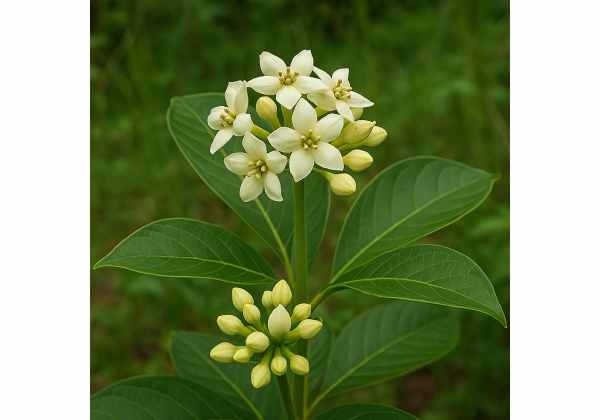
Voacanga africana is a small tropical tree in the Apocynaceae family, a plant family known for chemically active and sometimes dangerous species. It grows across parts of West and Central Africa and has a long ethnomedicinal history. Traditional healers have used different plant parts for a surprisingly broad range of purposes, including pain, diarrhea, skin problems, infections, swelling, convulsions, fatigue, and ritual practices. That broad use profile is one reason the plant continues to attract scientific interest.
The second reason is its chemistry. Voacanga is not just another bitter bark or seed. It is a rich source of indole alkaloids, especially in the bark and seeds. Those alkaloids make the plant valuable for natural-products research and, in some settings, as a source material for semisynthetic work involving iboga-related compounds. This is where the plant shifts from “traditional herb” to “high-interest medicinal raw material.”
That dual identity matters. Some herbs are widely used because they are gentle and broadly tolerated. Voacanga draws attention for almost the opposite reason: it appears powerful, complex, and pharmacologically active. That can make it appealing to people interested in nootropics, altered states, addiction research, or rare ethnobotanicals. It can also make it easy to misunderstand. A plant with potent alkaloids is not automatically a good candidate for self-experimentation.
In practical terms, Voacanga is best thought of as a plant with three overlapping identities:
- a traditional African medicinal tree
- a phytochemical source of bioactive indole alkaloids
- a safety-sensitive ethnobotanical with psychoactive and cardiotoxic concerns
That third point deserves emphasis. Public interest in Voacanga often rises because of its connection to voacangine and iboga-related chemistry, but the presence of interesting alkaloids is also the reason caution is essential. The gap between laboratory promise and safe home use is especially wide here.
For readers who know other alkaloid-rich plants, Voacanga belongs in the same caution-heavy conversation as other potent neuroactive ethnobotanicals. The difference is that its mainstream therapeutic use is even less established, and its safety profile is more uncertain when crude plant material is used outside controlled settings.
So what is Voacanga, really? It is not a routine wellness herb. It is a research-relevant medicinal plant with a serious traditional history, important alkaloid content, and a level of uncertainty that should lead to more restraint, not more enthusiasm. Understanding that tone is the foundation for the rest of the article.
Key alkaloids and medicinal properties
The medicinal interest in Voacanga africana comes mostly from its alkaloids. These are nitrogen-containing compounds that often have pronounced effects on the nervous system, cardiovascular system, or cell signaling pathways. In Voacanga, the key names that appear most often are voacangine, voacamine, tabersonine, and related monoterpene indole alkaloids. Depending on the plant part and extraction method, researchers also identify additional alkaloids and other smaller constituents, but the plant’s identity is clearly alkaloid-centered.
Voacangine is one of the most discussed compounds because it sits close to iboga-type chemistry. It has been studied as a precursor in semisynthetic work and is part of the reason Voacanga seeds and bark have economic as well as ethnobotanical value. Voacamine, another major alkaloid, has drawn attention for neuroactive, antiparasitic, and cell-based pharmacological effects. Tabersonine has also attracted interest for cytotoxic, neuroprotective, and amyloid-related laboratory findings.
Taken together, these compounds help explain the medicinal properties commonly attributed to Voacanga:
- Neuroactive effects, including sedative, anticonvulsant, or psychoactive potential in preclinical settings
- Antiparasitic activity, especially against filarial organisms in laboratory research
- Antimicrobial effects, though mostly shown outside human trials
- Potential anti-inflammatory and antioxidant actions
- Cytotoxic and anticancer-relevant effects in cell models
- Cardiovascular activity, which is important not as a benefit for self-care, but as a reason for caution
This last point is crucial. In many herbal articles, “medicinal properties” sounds comfortably positive. With Voacanga, the same chemistry that creates pharmacological promise can also produce harm. The plant’s alkaloids do not just suggest therapeutic interest; they also suggest narrow safety margins, variable potency, and a real chance of adverse reactions if used casually.
Another important nuance is that different plant parts are not interchangeable. Seed chemistry is not identical to bark chemistry, and crude powders are not the same as purified alkaloids. One of the easiest mistakes in herbal writing is treating the whole plant as though every form has the same strength and risk profile. With Voacanga, that shortcut becomes especially misleading.
Readers familiar with plants discussed through their active compounds rather than simple folklore will recognize the pattern here. The chemistry helps explain the plant, but it does not automatically justify self-use. In fact, the more pharmacologically active the alkaloids appear, the more careful the dosing and safety discussion has to become.
The bottom line is that Voacanga’s key ingredients are scientifically fascinating, but they make the plant more medically sensitive, not more casually useful. Its medicinal properties are real enough to warrant study, yet far too complex to support a cheerful “natural remedy” narrative.
Potential health benefits and what the evidence really supports
Voacanga africana has a long list of reported benefits, but the evidence behind those claims is uneven. The most honest way to assess the plant is to divide the evidence into ethnomedicinal use, laboratory findings, animal studies, and human data. When those categories are mixed together, the plant can sound much more proven than it really is.
The strongest modern evidence is still preclinical, not clinical. Several lines of research suggest that Voacanga alkaloids may have meaningful biological activity. Seed, bark, and isolated alkaloid preparations have shown antiparasitic effects, including activity against onchocercal targets in laboratory work. This is one of the more compelling traditional-to-modern bridges because it supports the idea that the plant’s historic use against certain parasitic diseases was not arbitrary.
There is also central nervous system activity. Animal studies and older pharmacological work suggest anticonvulsant, sedative, and behavior-modifying effects. This aligns with traditional uses for convulsions, agitation, or ritual psychoactivity. But it is also exactly the sort of benefit that becomes unsafe when translated into uncontrolled self-dosing.
A third area is cytotoxic and anticancer potential. Compounds such as tabersonine and voacamine have shown effects in cell models related to tumor biology, angiogenesis, apoptosis, and amyloid-associated pathways. These are important leads for drug discovery, but they are not evidence that crude Voacanga preparations treat cancer or neurodegeneration in people.
A fourth area is antimicrobial and anti-inflammatory activity. Extracts and alkaloids have shown some antibacterial and biological activity in experimental settings. This adds plausibility to traditional uses involving wounds, infections, and inflamed conditions, but again, it remains far from a clinically validated herbal treatment.
What is weak or missing? The answer is good human evidence. There are no well-established clinical trials showing that whole-plant Voacanga products safely and effectively treat common medical conditions in self-care settings. That absence is not a technical footnote. It is the main practical fact readers need to know.
So the benefits can be ranked like this:
- Best supported scientifically, but still preclinical: antiparasitic and alkaloid-based pharmacological activity
- Plausible but still not clinically established: sedative, anticonvulsant, antimicrobial, and anti-inflammatory effects
- Interesting for drug discovery, not self-treatment: anticancer and neuroprotective leads
- Not established for routine herbal use: safe, effective home treatment for depression, addiction, pain, or chronic disease
This is one reason Voacanga should not be casually placed beside gentler calming herbs such as California poppy in sleep and tension discussions. Both may have sedative associations, but their safety and evidence contexts are very different.
The right conclusion is that Voacanga africana has real biomedical interest, but its “benefits” are mainly research benefits at this stage. The plant may help scientists develop better medicines. That does not mean it is already a suitable medicine for unsupervised personal use.
Traditional and modern uses of Voacanga
Voacanga’s traditional uses are broad enough to be impressive and broad enough to demand skepticism. Across different regions, healers have reportedly used the bark, roots, leaves, fruits, or seeds for diarrhea, ulcers, edema, mental and neurological complaints, infections, tooth problems, fatigue, convulsions, and parasite-related illness. Some uses are straightforwardly medicinal, while others are ritual, psychoactive, or culturally specialized.
That range tells us something important. Traditional use can point researchers toward biologically active plants, but it does not tell us that every use is equally effective or safe. In Voacanga’s case, the traditional record is best seen as a map of pharmacological potential rather than proof of broad therapeutic reliability.
Modern uses fall into a few distinct categories.
The first is ethnomedical continuation, where traditional plant preparations are still used in local or regional practice. In these settings, knowledge is often contextual, plant-part specific, and embedded in systems of preparation that outsiders may oversimplify.
The second is phytochemical sourcing. Voacanga seeds and bark are of interest because they contain alkaloids with medicinal and semisynthetic relevance. This industrial or research-facing use is not the same as whole-herb wellness use.
The third is experimental or underground psychoactive interest. This is the most problematic modern use. Some consumers pursue Voacanga because of its relation to iboga alkaloids or claims about mood, introspection, dreams, libido, or addiction support. These uses are high-risk, weakly standardized, and often promoted in spaces where safety screening is poor.
The fourth is research use. Scientists study Voacanga extracts and isolated compounds for antiparasitic, neuroactive, anticancer, and anti-inflammatory properties. This is probably the most defensible modern use, because the plant’s chemistry does deserve study. It is also the use most people should mentally separate from self-experimentation.
In practical terms, the plant’s current uses are best described as:
- traditional medicine in specific cultural contexts
- raw material for alkaloid research and extraction
- a source of bioactive compounds with possible future medical applications
- an unsafe target for casual home experimentation
That last point matters because the internet often collapses the differences. It turns a research plant into a wellness product. That is a poor fit for Voacanga. A plant this alkaloid-rich deserves the same kind of caution readers would expect with controversial stimulant or libido-focused bark products, where the chemistry may be real but the margin for misuse is much too large for casual advice.
Voacanga’s traditional dignity should be respected, but respect does not require pretending that modern self-dosing is wise. The plant’s history is important. Its future may be in carefully studied alkaloids. Those are not the same thing.
Forms, preparation, and why home use is problematic
On paper, Voacanga can appear in many forms: bark powder, root bark, seeds, crude extracts, tinctures, and isolated alkaloids. In practice, that variety is exactly what makes home use risky. Unlike standardized herbal products with well-defined active ranges, Voacanga preparations can vary enormously in alkaloid content, plant part, extraction efficiency, and intended use.
Seeds and bark are the most discussed forms because they contain the alkaloids that attract commercial and research attention. But even this simple statement hides a lot of uncertainty. Two seed products may not have the same content. Two bark powders may not behave similarly. One extract may be enriched toward certain alkaloids while another remains chemically broad and unpredictable.
This creates several problems for ordinary users:
- Potency is unclear.
- Plant part may not be specified accurately.
- Adulteration or contamination is possible.
- Whole-plant products may differ sharply from purified-compound research.
- Traditional preparation methods may not translate safely outside their original context.
Some online discussions frame Voacanga as if the main task is simply choosing between seeds, bark, powder, or extract. That misses the deeper problem. The issue is not convenience. It is that no widely accepted self-care preparation standard exists for the forms most likely to cause harm.
Preparation adds another layer. A decoction, crude powder, and alkaloid-rich extract are not equivalent exposures. Heat, alcohol, acid-base extraction, and concentration all change what the body encounters. This is one reason drug-discovery research cannot be used as a shortcut for home herbal advice. When researchers isolate voacamine or tabersonine, they are not telling readers to swallow seed powder.
There is also a psychological trap with unusual plants: people assume that “traditional” means “self-limiting.” With Voacanga, that assumption is unsafe. Many traditional systems use potent plants in restricted, expert-guided, or highly contextual ways. Removing the plant from that framework often increases risk rather than preserving wisdom.
A good comparison is with other historically important but high-risk medicinal plants. The traditional significance can be real, but that does not make do-it-yourself preparation a good idea.
For most readers, the practical conclusion is simple. Voacanga is not a plant to buy casually in powder form and experiment with at home. The more concentrated the form, the more the risks rise. The less standardized the form, the less any claimed dose means. When a plant combines psychoactive potential, cardiotoxic concern, and variable alkaloid content, “start low and see” is not responsible advice.
Dosage questions and the lack of a safe standard
Dosage is where many herb articles become most useful. With Voacanga, dosage is where honesty matters most. There is no well-established safe self-care oral dose for Voacanga africana seeds, bark, or crude extracts that can be recommended with confidence for general readers. That is the single most important dosing fact.
Why is this so difficult? First, the plant is chemically variable. Second, the marketed forms are inconsistent. Third, most of the meaningful pharmacology comes from preclinical work, traditional knowledge, or isolated compounds rather than standardized human trials using whole-plant preparations. Fourth, the safety concerns are serious enough that a casual dosing framework would be misleading.
Some readers look for a number because they assume every medicinal plant should have one. But for Voacanga, the more responsible dosing guidance sounds like this:
- there is no validated daily oral range for routine self-treatment
- crude powders and seeds are especially poor candidates for unsupervised dosing
- extract strength cannot be assumed from label language alone
- research doses in animals do not translate directly into human herbal doses
- iboga-related chemistry makes casual experimentation unusually risky
This does not mean the plant has never been dosed by humans in traditional or informal settings. It means those practices do not provide a reliable modern safety standard for internet readers. A dose taken in ritual, regional, or underground contexts is not the same thing as an evidence-based herbal dose.
Even when ibogaine-related literature provides human numbers, those numbers belong to a separate and medically sensitive context. They do not justify home use of Voacanga products. In fact, the ibogaine literature points in the opposite direction: risk rises quickly when potent alkaloids are used without screening, cardiac evaluation, and skilled supervision.
If a reader insists on a practical takeaway, it is this:
- Do not treat Voacanga as a routine oral supplement.
- Do not assume seed count, spoon size, or capsule number corresponds to safety.
- Do not combine it with other psychoactive, stimulant, or QT-prolonging agents.
- Do not use it for “microdosing” or self-designed addiction treatment.
That may feel less satisfying than a neat milligram range, but it is far more accurate. In this sense, Voacanga differs sharply from more approachable nervine herbs such as passionflower for stress and sleep support, where ordinary self-care use is much better understood.
The absence of a standard dose is not a gap that readers should fill with experimentation. It is a warning signal. When a plant has potent alkaloids, weak standardization, and meaningful cardiotoxic concern, the right dose for casual self-care is usually none.
Safety, side effects, and who should avoid it
Safety is the central practical issue with Voacanga africana. Any balanced article on the plant should leave readers more cautious than when they arrived. That is not because the plant lacks interesting pharmacology. It is because the same alkaloids that make it scientifically important can also make it unpredictable and dangerous outside controlled settings.
The main concerns fall into four categories.
The first is cardiac risk. Iboga-related alkaloids are associated with QT prolongation and potentially life-threatening arrhythmias. Even though Voacanga is not identical to purified ibogaine, its alkaloid profile makes this concern highly relevant, especially for seed and bark products promoted for psychoactive or neuroactive use.
The second is neurological and psychiatric risk. Depending on dose and composition, Voacanga may produce agitation, sedation, tremor, ataxia, perceptual effects, confusion, or destabilization in vulnerable individuals. A plant with psychoactive potential is not a suitable self-care herb for people with anxiety disorders, bipolar-spectrum illness, psychosis risk, seizure vulnerability, or a history of unpredictable reactions to neuroactive substances.
The third is drug interaction risk. Any product that affects the heart, brain, or cytochrome metabolism deserves caution around prescription medicines. Antidepressants, antipsychotics, stimulants, opioids, sedatives, and QT-prolonging drugs are especially important categories. Even without a full interaction map, the risk is too plausible to dismiss.
The fourth is product-quality risk. The danger does not come only from the plant itself. It also comes from mislabeled powders, variable extracts, hidden alkaloid strength, contamination, and nonmedical marketing.
People who should clearly avoid unsupervised use include:
- anyone with heart disease, fainting history, arrhythmia risk, or electrolyte problems
- people taking QT-prolonging medications
- people with seizure disorders
- people with bipolar disorder, psychosis vulnerability, or severe anxiety
- pregnant or breastfeeding people
- children and adolescents
- people seeking addiction treatment outside medical care
Even among healthy adults, the prudent stance is avoidance rather than casual trial. The possibility of serious adverse effects is too important, and the evidence for safe routine benefit is too weak.
Readers may be tempted to compare Voacanga with other calming but safety-sensitive herbs. That comparison helps only up to a point. Voacanga sits in a more uncertain and more pharmacologically intense category. It is less standardized, less clinically established, and more tightly linked to high-concern alkaloid pharmacology.
The plain-language conclusion is this: Voacanga africana is a research plant and a traditional medicinal plant, but not a sensible first-line self-care herb. If a plant can plausibly affect mood, perception, cardiac rhythm, and neurochemistry all at once, respect means not experimenting with it casually.
References
- Investigation of Small-Molecule Constituents in Voacanga africana Seeds by LDI-FT-ICR-MS Imaging and Tandem Mass Spectrometry 2023
- Alkaloids with Anti-Onchocercal Activity from Voacanga africana Stapf (Apocynaceae): Identification and Molecular Modeling 2020
- Validation of anticonvulsant and sedative activity of six medicinal plants 2009
- The pharmacokinetics and pharmacodynamics of ibogaine in opioid use disorder patients 2024
- The Anti-Addiction Drug Ibogaine and the Heart: A Delicate Relation 2015 (Review)
Disclaimer
This article is for educational purposes only and should not be used as a substitute for professional medical advice, diagnosis, or treatment. Voacanga africana is an alkaloid-rich plant with meaningful safety concerns, including possible cardiac, neurological, and psychiatric risks. It is not appropriate for unsupervised self-treatment, psychoactive experimentation, or home-based addiction care.
If this article helped you, please share it on Facebook, X, or another platform you use.