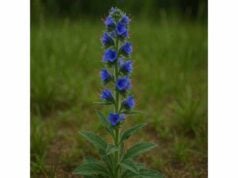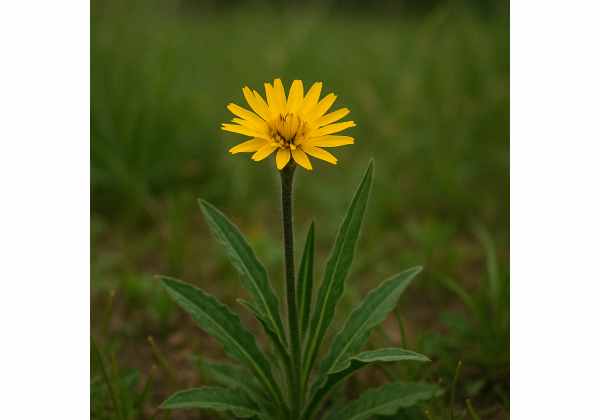
Viper’s Grass, botanically known as Scorzonera hispanica, is better known in kitchens and gardens as black salsify or Spanish salsify. It is a traditional European root vegetable with a long, dark skin and pale flesh, often valued for its mild, earthy flavor and its notable fiber content. Historically, it was not only eaten as food but also used in folk practice as a soothing root for coughs, lung complaints, sluggish appetite, and general weakness.
What makes this plant especially interesting today is the overlap between food and medicine. Viper’s Grass contains inulin, phenolic compounds, flavonoids, and other plant chemicals that help explain its reputation for digestive support, antioxidant activity, and gentle restorative use. At the same time, it is not a modern clinical herb with well-established medicinal dosing standards. Its strongest role remains nutritional, with medicinal potential supported mainly by phytochemical and preclinical research.
That makes Viper’s Grass worth understanding on its own terms: a functional edible root with traditional healing associations, promising plant compounds, and a generally food-first safety profile.
Key Insights
- Viper’s Grass is a rich natural source of inulin, which may support gut health and regularity.
- Its root and aerial parts contain phenolic compounds and flavonoids linked with antioxidant activity.
- A practical food-based intake is about 50 to 150 g cooked root per serving.
- People with inulin sensitivity, FODMAP intolerance, or ragweed-family allergies should start cautiously or avoid it.
Table of Contents
- What Viper’s Grass is and why it matters
- Key ingredients and nutritional profile
- Potential health benefits and medicinal properties
- Traditional uses and modern applications
- Dosage food forms and how to use it
- Safety side effects and who should avoid it
- Is Viper’s Grass worth using today
What Viper’s Grass is and why it matters
Viper’s Grass, Scorzonera hispanica, is a perennial plant in the daisy family, the same broad family that includes chicory, dandelion, artichoke, and many other edible or medicinal species. In everyday use, it is most often recognized by its edible taproot, which is long, slender, black-skinned, and pale inside. Once peeled and cooked, the root develops a delicate flavor often compared to oyster, asparagus, or artichoke. That is one reason it has maintained a modest but loyal place in traditional European cuisine.
Its common names tell part of its story. “Black salsify” points to its root’s dark exterior, while “Viper’s Grass” and “serpent root” reflect an older herbal tradition in which plants were often linked with symbolic healing roles. Historically, roots of Scorzonera hispanica were associated with treating colds, easing phlegm, stimulating appetite, and helping in respiratory discomfort. As with many older medicinal foods, the practical line between nourishment and therapy was not sharply drawn. A strengthening root eaten in soups, broths, or cooked dishes could also be regarded as healing.
Today, the plant matters for a different reason. It fits very well into modern interest in functional foods. Functional foods are ordinary foods that may offer more than calories and basic nutrients. In Viper’s Grass, that added value comes mainly from inulin, a fermentable fiber that can act as a prebiotic, along with phenolic compounds and other secondary metabolites that show antioxidant potential. This shifts the conversation from old folklore alone to a more useful modern question: can this traditional root support digestion, metabolic health, and general dietary quality in a practical way?
The answer is cautiously positive, but with limits. Viper’s Grass is not a miracle herb, and it is not backed by large human clinical trials proving major medicinal effects. Its strongest case lies in three areas:
- It is a real food, not merely a niche supplement.
- It contains meaningful plant compounds, especially inulin.
- It has a historical medicinal role that broadly fits its chemistry.
This combination makes it more grounded than many fashionable herbal claims. It is easier to trust a plant when the first recommendation is to eat it sensibly rather than to buy a highly concentrated capsule with exaggerated promises.
There is also an agricultural and culinary reason to pay attention. Black salsify is often overlooked in modern diets despite being a hardy, useful root vegetable. In the broader family of fiber-rich roots and bitter vegetables, it shares some functional appeal with other traditional digestive vegetables that bridge food and herbal practice.
So Viper’s Grass matters not because it is an exotic cure, but because it is a historically respected edible root with genuine nutritional and phytochemical interest. Its value is less about dramatic treatment claims and more about steady, credible support through food-based use.
Key ingredients and nutritional profile
The most important ingredient in Viper’s Grass is inulin. This is a storage carbohydrate found in many roots and tubers, but black salsify is especially notable for it. Inulin is not digested in the upper gut like ordinary starch. Instead, it reaches the colon, where it can be fermented by gut microbes. That makes it a prebiotic fiber rather than a fast source of blood sugar. This one characteristic explains much of the plant’s modern nutritional relevance.
In practical terms, inulin may help support bowel regularity, nourish beneficial gut bacteria, and contribute to a more favorable digestive environment. It also tends to make foods feel satisfying without sharply raising blood glucose. That does not make Viper’s Grass a diabetes treatment, but it does make it an appealing root for people who want a more fiber-rich, lower-starch alternative to some common root vegetables.
Beyond inulin, Scorzonera hispanica contains a range of phytochemicals identified in roots, aerial parts, and seeds. These include:
- Caffeic acid derivatives
- Flavonoids
- Phenolic compounds
- Lignans
- Sesquiterpenoids
- Phytosterols and fatty acids in seeds
These compounds matter because they give the plant a plausible biochemical basis for antioxidant and mild protective effects. Phenolic compounds in particular are often linked with free-radical scavenging and broad cell-protective activity in laboratory studies. That does not automatically translate into a major health outcome in humans, but it does support the idea that Viper’s Grass is more than a bland root crop.
Its nutritional appeal also includes the simple fact that it is a vegetable with low energy density and useful fiber. In food traditions, black salsify has been valued as a winter root because it stores well and brings variety to a diet otherwise dominated by starch-heavy tubers. It also contains minerals and general vegetable nutrients, though the standout feature is still its carbohydrate profile.
The plant’s seeds have drawn newer research interest as well. Investigators have identified fatty acids, beta-sitosterol, and other bioactive constituents in seed oil and fractions. This is scientifically interesting, though it is not yet the main way ordinary people use the plant. Most real-world benefits still center on the edible root.
It is also worth noting that the root’s composition changes with harvest timing and storage. Older work on scorzonera found that inulin levels can shift during maturation and storage, which means that not every root is chemically identical. That is normal for a food plant, but it helps explain why traditional vegetables sometimes vary in taste, texture, and digestive effect.
If you think of Viper’s Grass as a cross between a root vegetable and a gentle medicinal food, its profile becomes easier to understand. It offers fiber first, phytochemicals second, and stronger medicinal claims only at a distance. Readers interested in similar food-herb overlaps may see useful parallels in other fiber-rich traditional plants with digestive appeal.
Overall, the nutritional profile of Viper’s Grass is not flashy, but it is genuinely useful. Its key ingredient is not an exotic alkaloid or a rare essential oil. It is inulin, supported by a broader network of antioxidant plant compounds. That makes it practical, credible, and most valuable when eaten as food.
Potential health benefits and medicinal properties
Viper’s Grass sits in an interesting middle ground between vegetable and medicinal plant. Its health benefits are believable, but they should be described with care. This is not a root with dozens of proven clinical indications. Instead, it has several reasonable potential benefits supported by food chemistry, traditional use, and preclinical research.
The first and strongest benefit is digestive support. Because the root contains inulin, it may help feed beneficial gut bacteria and support stool regularity. For many people, that makes Viper’s Grass most relevant as a prebiotic food rather than a classic medicinal herb. A fiber-rich vegetable that improves diet quality can have real health value, even if it is not sold as a formal supplement.
The second likely benefit is antioxidant support. Research on Scorzonera species, including S. hispanica, has identified phenolic compounds, flavonoids, and caffeic acid derivatives that show antioxidant activity in laboratory settings. This does not mean eating black salsify will produce a measurable antioxidant miracle in the body, but it does suggest the plant contributes useful protective compounds within a varied diet.
A third area of interest is mild respiratory and restorative use in traditional medicine. Older European herbal practice used the root as a mucolytic, an appetite stimulator, and a root for colds or lung weakness. These uses are historically important because they show how the plant was understood before modern nutrition science. Even if the evidence today is limited, the traditional pattern is coherent. A gentle, nourishing, softening root could reasonably have been valued in convalescence and winter illness.
Other possible medicinal properties suggested in broader Scorzonera research include:
- Anti-inflammatory potential
- Mild antimicrobial relevance in some species
- Cytoprotective activity in experimental models
- Supportive value in skin-related or wound-focused product research
Here again, restraint matters. Much of this evidence comes from genus-level reviews, isolated compounds, or laboratory models. It is not strong proof that Viper’s Grass root, eaten in the kitchen, will act as a clinically meaningful anti-inflammatory treatment. Still, it adds weight to the idea that the plant has more to offer than bulk fiber alone.
One of the better ways to understand Viper’s Grass is through the concept of cumulative value. A food does not need to behave like a drug to be useful. If a root helps improve fiber intake, supports a healthier gut environment, adds polyphenols to the diet, and replaces less nutritious options, that alone can be a meaningful health contribution. This is especially true in modern diets that are often short on diverse plant fibers.
There is also a metabolic angle worth noting. Because inulin is fermented rather than rapidly absorbed, foods rich in it are often discussed in relation to satiety and glucose-friendly eating patterns. That does not make black salsify equivalent to a blood sugar remedy like better studied fiber-based support options, but it places it in a helpful dietary category.
So the main health benefits of Viper’s Grass are best summarized as digestive support, prebiotic value, antioxidant contribution, and traditional restorative use. Its medicinal properties are real enough to respect, but modest enough to keep in perspective. It works best as a food with benefits, not as a miracle cure with a vegetable attached.
Traditional uses and modern applications
Traditional uses of Viper’s Grass help explain why the plant still appears in medicinal plant literature even though most people now know it, if at all, as a vegetable. In European folk practice, the root was used as a warming, softening, and strengthening food-medicine. Older descriptions associate it with colds, lung complaints, phlegm, poor appetite, and general weakness. It was also sometimes linked symbolically to snakebite protection, which likely contributed to common names such as viper’s grass or serpent root, though such historical symbolism should not be mistaken for evidence-based treatment.
These older uses reflect how traditional medicine often worked. A root that was easy to store, mild in flavor, and somewhat soothing after cooking could naturally become part of broths or restorative dishes for sick or recovering people. In that setting, the line between nourishment and therapy was fluid. The medicinal role of Viper’s Grass was often practical and food-based rather than intensely pharmacological.
Its modern applications are somewhat different. Today, the root is most useful in three settings.
First, it can be used as a functional vegetable in a fiber-conscious diet. This is the most realistic everyday use. People interested in gut-friendly foods, seasonal roots, and greater plant diversity may benefit from including black salsify in soups, roasted dishes, purées, or steamed vegetable plates.
Second, it can be considered a culinary tool for improving dietary variety. Many people eat the same few vegetables repeatedly. Traditional roots like black salsify help widen the range of fibers and phytochemicals in the diet. That matters because dietary diversity itself is increasingly valued in nutrition.
Third, Viper’s Grass has research value in phytotherapy and functional food development. Its inulin content, phenolic profile, and historically medicinal identity make it a promising candidate for further study in digestive health and antioxidant-supportive food formulations.
In real life, modern applications often look like this:
- Added to soups for a mild earthy flavor and more fiber
- Boiled and mashed with olive oil or butter as a side dish
- Roasted as a winter root vegetable
- Included in mixed vegetable preparations where a gentle prebiotic root is desired
- Used occasionally rather than daily by people sensitive to fermentable fibers
There is also a niche interest in plant parts beyond the root, especially in research, but for ordinary readers the edible root remains the practical focus. Seeds, aerial parts, and extracts are mostly of scientific rather than home-use interest.
A useful way to think about modern application is to ask not “What condition should I treat with this?” but “Where does this fit in a health-supportive way of eating?” That question leads to better decisions. Viper’s Grass fits best among roots and vegetables used to support digestion, diversity, and gentle restoration rather than among concentrated herbal interventions. In that sense, it shares some culinary-medicinal logic with traditional edible herbs that also support digestion.
Traditional use gives Viper’s Grass depth and context. Modern application gives it realism. Together, they point toward a plant that is still worth using, but mainly through food, not through aggressive medicinal claims. That is a balanced and useful place for it in contemporary herbal nutrition.
Dosage food forms and how to use it
Because Viper’s Grass is primarily an edible root rather than a standardized herbal extract, dosage is best discussed in food terms. There is no widely accepted clinical monograph establishing a medicinal daily dose of Scorzonera hispanica root for specific conditions. That means the safest and most practical approach is to treat it as a functional vegetable with food-sized portions.
A reasonable serving for most adults is about 50 to 150 g of cooked root in a meal. For someone new to the plant, the lower end of that range makes sense, especially because its inulin content can cause bloating or gas in sensitive people. People already used to high-fiber or prebiotic foods may tolerate somewhat larger servings.
The root can be prepared in several ways:
- Boiled and served simply with oil, butter, or herbs
- Steamed and added to warm salads
- Roasted with other winter vegetables
- Puréed into soups
- Braised gently in broth
- Mixed into mash with other roots to soften its texture and flavor
Preparation matters. The raw root contains a milky latex that can make peeling messy and may lightly stain hands. Many cooks peel it under water or after a brief blanching step. Cooking also tends to make the root easier to digest and more pleasant in texture.
If you are using Viper’s Grass for health support rather than culinary curiosity, the following practical approach works well:
- Start small.
Begin with around 50 g cooked root. - Watch digestive response.
Notice gas, bloating, cramping, or changes in bowel habits. - Increase gradually.
Move toward a typical serving only if well tolerated. - Use it as part of a meal.
Combining it with protein, fat, and other vegetables usually makes more sense than eating a large portion alone. - Use consistently, not aggressively.
Functional vegetables usually work best through repeated inclusion in the diet rather than through large one-time servings.
There is little reason to pursue concentrated supplementation from this plant for self-care. The whole root already provides its main value. If someone is looking for a digestive fiber with more formal dose guidance, a better-studied option may be dedicated inulin use and dosing. Viper’s Grass is better approached as a natural food source of that fiber, not as a substitute for a standardized supplement.
Timing is flexible. Many people tolerate prebiotic roots better earlier in the day or at lunch than late at night, especially if they are prone to bloating. Hydration also matters, since fiber-rich foods generally work better when fluid intake is adequate.
So the simplest dosage advice is this: treat Viper’s Grass as a vegetable, start with a modest cooked portion, and increase only as digestion allows. It does not require medicinal-style cycling, loading, or precise timing. Its best results come from sensible, food-based use within a diverse plant-rich diet.
Safety side effects and who should avoid it
Viper’s Grass is generally much safer than many herbs discussed for medicinal use because its root is traditionally eaten as food. Still, “edible” does not mean “problem-free for everyone,” and the main safety issues are worth understanding clearly.
The most common side effects are digestive. Because Scorzonera hispanica root is rich in inulin, it may cause:
- Gas
- Bloating
- Abdominal discomfort
- Loose stools in some people
- Cramping if eaten in large amounts too quickly
These effects are more likely in people who are sensitive to fermentable carbohydrates, follow a low-FODMAP diet, or already react strongly to foods such as chicory, onions, garlic, Jerusalem artichokes, or large doses of prebiotic fiber. For these individuals, Viper’s Grass may be nutritious in theory but uncomfortable in practice.
There is also the possibility of allergy. Since the plant belongs to the Asteraceae family, anyone with known sensitivity to related plants should be more cautious. This does not mean every ragweed-sensitive person will react, but it is enough reason to start with a small amount. Rare contact irritation from the sticky sap or latex during peeling is also possible, especially in people with sensitive skin.
Who should be most cautious?
- People with irritable bowel syndrome who react to inulin-rich foods
- People on low-FODMAP diets
- Those with known Asteraceae plant allergies
- Anyone with a history of unexplained food-triggered bloating
- Children trying it for the first time in large portions
- People using highly experimental extracts rather than ordinary food preparations
Pregnancy and breastfeeding do not raise major concern when the root is eaten in normal food amounts, but concentrated medicinal use is not well studied. In those settings, food-level intake is the more sensible boundary.
Drug interactions are not a major known issue with ordinary culinary use. The bigger concern is indirect. A person who adds large amounts of fermentable fiber to their diet may notice changes in bowel pattern or in how well they tolerate other foods. As with many functional fibers, abrupt increase is a more common problem than the plant itself.
The plant is also easy to misunderstand because of its older medicinal reputation. Someone may assume that if the root has traditional benefits, then larger amounts must be better. That is not how food-medicines usually work. With Viper’s Grass, more can simply mean more gas and discomfort. The right dose is the amount your digestion can handle comfortably, not the largest amount you can force down.
For people seeking gentler digestive support, comparison with softer and more soothing herbal options can be useful, especially when the issue is irritation rather than lack of fiber.
The overall safety conclusion is reassuring but practical: Viper’s Grass is generally safe as a food for most adults, yet its inulin content can make it troublesome for sensitive digestion. Start small, cook it well, and do not treat a healthy vegetable as though it were a high-dose medicinal extract.
Is Viper’s Grass worth using today
Yes, Viper’s Grass is worth using today, but mainly for the right reasons. It is not worth using because it promises dramatic medicinal results. It is worth using because it is a useful traditional root vegetable with genuine functional value. In a world full of overstated herbal claims, that kind of modest credibility is refreshing.
Its strongest advantage is that it works well as a food first. The root offers inulin, useful plant compounds, culinary versatility, and a long record of human use as nourishment. That alone makes it more practical than many herbs that rely almost entirely on capsule culture. When a plant can contribute to health simply by becoming part of dinner, it already holds a meaningful place in natural health.
It is also worth using because it broadens the diet. Many people want better gut health, but they pursue it through powders and supplements while ignoring old vegetables that naturally provide prebiotic fiber. Black salsify is not the only answer, yet it is a smart and underused one. It supports the broader goal of eating more diverse plants, which is often more sustainable than chasing a single “superfood.”
Its medicinal story still has value too. Traditional uses for coughs, poor appetite, and weakness may not be proven in large modern trials, but they are not random. They reflect centuries of observation around a root that nourishes, softens, and restores. Even when modern medicine does not rely on those exact uses, the historical pattern helps us understand the plant’s place.
Still, a balanced verdict needs limits. Viper’s Grass is not ideal for everyone. People with inulin intolerance may find it uncomfortable. It is not a replacement for treatment when someone has significant digestive disease, respiratory illness, or metabolic problems. And it should not be marketed as though a bowl of black salsify can do the job of a drug.
The best modern role for Viper’s Grass is somewhere between vegetable and gentle medicinal food. It belongs in soups, roasted trays, purées, and seasonal cooking. It belongs in conversations about prebiotic eating and forgotten traditional roots. It belongs in the same wider food-herb space as other nourishing roots with both culinary and herbal history.
So is it worth using? For most people, yes. Not because it is rare, mystical, or dramatic, but because it is practical. Viper’s Grass offers a food-based path to fiber, plant diversity, and modest medicinal value without needing to be exaggerated. That is often the most useful kind of plant medicine: one that asks less of belief and more of daily use.
In the end, the case for Viper’s Grass is strongest when it stays close to the table. Eat it well, use it regularly if it agrees with you, and let its benefits build through nourishment rather than hype.
References
- The genus Scorzonera L. (Asteraceae): A comprehensive review on traditional uses, phytochemistry, pharmacology, toxicology, chemotaxonomy, and other applications 2024 (Review)
- Phytochemical Composition and Biological Activities of Scorzonera Species 2021 (Review)
- LC-PDA-MS and GC-MS Analysis of Scorzonera hispanica Seeds and Their Effects on Human Breast Cancer Cell Lines 2022
- Qualitative and quantitative analyses of secondary metabolites in aerial and subaerial of Scorzonera hispanica L. (black salsify) 2015
- Influence of variety, date of harvest and storage time on factors connected with the crystallisation on canned scorzonera (Scorzonera hispanica) 1990
Disclaimer
This article is for educational purposes only and does not replace medical advice, diagnosis, or treatment. Viper’s Grass is generally used as a food rather than a standardized medicinal herb, and its health effects are best understood as nutritional and supportive, not as a substitute for clinical care. If you have digestive disease, severe food intolerance, plant allergies, or ongoing symptoms that need medical evaluation, speak with a qualified healthcare professional before using it for health purposes.
If you found this article helpful, please share it on Facebook, X (formerly Twitter), or any other platform you prefer.