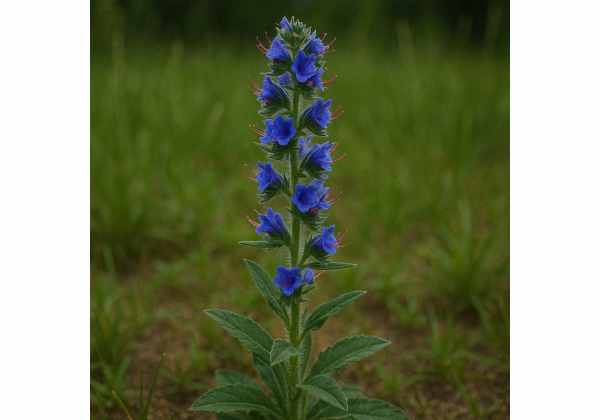
Viper’s Bugloss, or Echium vulgare, is a striking blue-flowered plant with a long folk-medicine history and a far more complicated safety profile than its beauty suggests. Traditional herbal sources describe it as a plant used for wounds, bruises, coughs, mild inflammation, and soothing external applications. Modern phytochemical research partly explains that reputation: the plant contains phenolic compounds, flavonoids, fatty acids, shikonin-type pigments, and other bioactive substances linked to antioxidant and anti-inflammatory effects.
But this is not a simple “healing herb” story. Echium vulgare also contains pyrrolizidine alkaloids, a group of compounds associated with liver toxicity and long-term safety concerns. That single fact changes how the plant should be discussed today. Its traditional uses remain interesting, and some topical or controlled-product applications may still be relevant, yet broad internal self-use is hard to recommend without caution. A helpful article on Viper’s Bugloss therefore has to do two things at once: explain its genuine medicinal history and potential, while being very clear about where the risks begin and why modern use should be more restrained than folklore sometimes suggests.
Core Points
- Viper’s Bugloss has a traditional reputation for wound care, mild respiratory support, and soothing irritated tissues.
- Its phenolics, flavonoids, seed fatty acids, and shikonin-related compounds help explain antioxidant and anti-inflammatory potential.
- Historical use includes flower decoctions taken at about 1 glass per day, but modern unsupervised oral use is difficult to justify.
- Avoid self-directed internal use during pregnancy or breastfeeding, in children, with liver disease, or when long-term use is being considered.
Table of Contents
- What Viper’s Bugloss is and why people confuse it with other herbs
- Key ingredients and medicinal properties of Echium vulgare
- Viper’s Bugloss benefits and what the evidence actually supports
- Traditional uses and common ways it was prepared
- Dosage, timing, and why modern oral use is hard to justify
- Safety, side effects, interactions, and who should avoid it
- How to use it realistically and when to choose another herb
What Viper’s Bugloss is and why people confuse it with other herbs
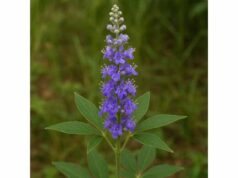
Viper’s Bugloss is a biennial or short-lived perennial in the Boraginaceae family, the same broad botanical family that includes borage, comfrey, and several rough-textured, blue-flowered medicinal plants. It is native to Europe and western Asia and has naturalized widely in other temperate regions. In the field, it is easy to recognize once flowering begins: upright stems, bristly leaves, and vivid pink-to-blue blossoms that open progressively along the flowering spike. In herbal history, those flowers were never its only point of interest. Folk medicine also used the aerial parts and root.
One reason the plant is often misunderstood is that “bugloss” has been used loosely in old herbals, and modern online searches frequently mix Echium vulgare with other species. Some readers confuse it with common borage, while others accidentally pull in information from Echium amoenum, a different species with a stronger reputation in Persian herbal use. That matters because the benefits, safety questions, and preparation traditions are not identical across these plants. A good example is the overlap with borage-family seed oils and GLA support. The family resemblance is real, but the plants should not be treated as interchangeable.
Traditional sources describe Viper’s Bugloss as a plant for wounds, bruises, muscle strain, coughs, feverish states, and mild urinary complaints. Some regions used the flowers and aerial parts internally in teas or decoctions, while others relied more on the root, often cooked into ointments or poultices for external use. That mixed history is important because it shows the plant was not used in one uniform way. Instead, it belonged to a wider folk practice in which the same herb might be taken as a tea in one region and used only on the skin in another.
From a modern standpoint, the plant’s identity matters as much as its reputation. Echium vulgare is not simply a charming wildflower with old medicinal stories attached to it. It is a chemically active plant with both promising and problematic traits. That dual identity explains why it still attracts research interest while also demanding caution. The right starting point is not asking whether it is “good” or “bad,” but understanding that it is a traditional medicinal plant whose value depends heavily on form, route, and safety context.
Key ingredients and medicinal properties of Echium vulgare
The chemistry of Echium vulgare helps explain why older herbal traditions gave it more than one role. The plant contains phenolic acids, flavonoids, tannins, fatty acids, naphthoquinone pigments such as shikonin-related compounds, and toxic pyrrolizidine alkaloids. Each group contributes to the herb’s profile in a different way, which is why Viper’s Bugloss has historically been described as soothing, anti-inflammatory, wound-oriented, and yet risky.
Phenolic acids and flavonoids are among the most useful starting points. Reviews of Echium species describe rosmarinic acid, caffeic acid, chlorogenic acid, and related compounds, along with flavonoids such as quercetin, luteolin, kaempferol, and rutin. These molecules are often connected with antioxidant and anti-inflammatory activity. In plain terms, they help explain why extracts from the plant may show free-radical scavenging, mild anti-inflammatory behavior, and broader protective activity in laboratory tests. They also help account for the plant’s long-standing topical reputation.
Seed lipids add another interesting layer. Echium vulgare seeds contain notable levels of polyunsaturated fatty acids, including alpha-linolenic acid, stearidonic acid, and gamma-linolenic acid. That makes the species biochemically interesting in the same general conversation as other Boraginaceae seed oils. From a dermatologic or nutritional perspective, that matters because these fatty acids are tied to skin barrier support and inflammatory signaling. Still, the presence of useful lipids does not erase the rest of the safety picture, and this is where many simplified herbal summaries go wrong.
The root and underground tissues also contain shikonin-type pigments and related quinones. These compounds are widely discussed for wound-healing, antimicrobial, and anti-inflammatory potential, and they likely contribute to why older traditions valued the plant for bruises, injuries, skin irritation, and tissue repair. At the same time, they are not purely gentle substances. Some quinone-rich constituents can be irritating or toxic in higher exposures, and their presence reminds us that potent plant chemistry is never purely one-sided.
Then there are the pyrrolizidine alkaloids, which are the compounds that most strongly shape modern safety advice. In Echium vulgare, these alkaloids include echimidine-related compounds and other PA structures concentrated across different plant parts, including aerial biomass and seeds. They are central to the plant’s toxicological concern because unsaturated pyrrolizidine alkaloids are associated with liver injury, genotoxicity, and long-term risk. This is the ingredient family that prevents Viper’s Bugloss from being treated like a routine herbal tea.
So what are the plant’s medicinal properties in balanced terms?
- antioxidant potential
- anti-inflammatory activity in preclinical studies
- traditional wound-soothing and tissue-supporting use
- historical emollient and respiratory use
- meaningful toxicological concern due to pyrrolizidine alkaloids
That last point is not an aside. It belongs in the same sentence as the benefits because it is part of the plant’s real medicinal identity.
Viper’s Bugloss benefits and what the evidence actually supports
The best way to talk about Viper’s Bugloss benefits is to separate traditional use, preclinical evidence, and modern practical value. If those three layers are blurred together, the plant ends up sounding either more proven or more dangerous than it really is.
Its strongest traditional reputation is topical. Ethnomedicinal sources describe the root of Echium vulgare as a wound herb used for bruises, pulled muscles, sprains, and injuries, especially in parts of Turkey and Germany. In those traditions, the plant was often applied externally rather than treated as a daily internal tonic. This is one of the most believable uses because it fits both the plant’s historical preparation methods and the presence of wound-associated compounds such as shikonin-type pigments.
Respiratory use also appears repeatedly in older accounts. Flowers, leaves, and aerial parts were used as cough remedies, diuretic teas, or mild emollient preparations. That does not mean Viper’s Bugloss is now a preferred respiratory herb. It means there is a longstanding folk pattern in which it was used for dry cough, chest discomfort, and mild febrile states. Today, someone exploring gentle lung-support herbs would usually find a clearer and safer fit in mullein for cough and throat support rather than in unsupervised Viper’s Bugloss tea.
Laboratory and animal studies add another layer of support, but they do not turn the herb into a clinically established medicine. Reviews of Echium species report antioxidant, antimicrobial, anti-inflammatory, anxiolytic, and even cytotoxic activities in extracts and isolated compounds. That is scientifically interesting and helps explain the old reputation for wound care, inflammation, and skin use. Still, most of this evidence remains preclinical. There is very little strong human trial data showing that Echium vulgare works reliably for specific conditions when used as an herbal medicine.
Seed oil research is perhaps the most modern-looking area of interest. Because Echium vulgare seeds contain stearidonic acid, gamma-linolenic acid, and other polyunsaturated fats, there is reasonable interest in cosmetic, dermatologic, and nutritional applications. This is not the same as saying the whole herb is broadly safe or proven for internal use. It is more accurate to say that a controlled seed-oil preparation may have a different practical value than a crude tea, decoction, or homemade tincture made from mixed plant material.
So what benefits are most realistic to mention?
- traditional external support for minor bruises, strains, and skin irritation
- historical use as a soothing, expectorant-style plant for mild coughs
- laboratory evidence for antioxidant and anti-inflammatory activity
- possible skin-barrier or formulation interest from controlled seed lipids
The key phrase is “most realistic.” Viper’s Bugloss has a meaningful medicinal history, but it does not have the kind of clinical evidence that justifies broad health claims. Its benefits are best understood as traditional and pharmacologically plausible, not fully validated in routine self-care.
Traditional uses and common ways it was prepared
Older medicinal use of Viper’s Bugloss was diverse, and that diversity is part of what makes the plant difficult to summarize cleanly. Depending on region and tradition, the flowers, aerial parts, or root were prepared as teas, decoctions, ointments, poultices, or compresses. This variation suggests the plant was valued more as a practical folk remedy than as a tightly standardized herbal drug.
The flower and aerial-part decoction is one of the best-documented historical forms. Ethnobotanical records describe flower decoctions taken by mouth, usually in small everyday volumes rather than in highly concentrated doses. These preparations were associated with diuretic, emollient, cough-soothing, or general medicinal use. In plain language, the herb was treated as something gentle enough to brew, but that traditional pattern needs to be interpreted carefully in modern safety terms. Folk use and modern toxicology do not always align.
The root has a more distinctly external history. One well-known traditional preparation involved cooking the root with butter to make an ointment-like application for injuries, bruises, strains, ligaments, and wound support. This is one of the most believable historical uses because it matches the plant’s wound-related reputation without requiring repeated oral exposure to pyrrolizidine alkaloids. In effect, the external route lets the traditional logic remain visible while reducing part of the modern concern.
Poultices, compresses, and skin-softening applications also appear in older descriptions. These uses fit with the plant’s emollient, anti-inflammatory, and wound-oriented identity. In a modern herbal framework, that places Viper’s Bugloss closer to the topical tradition represented by calendula for skin-soothing applications than to the category of everyday wellness teas. The difference matters because topical herbs and oral herbs should not be judged by the same safety assumptions.
Traditional internal use also included broader “depurative” or cleansing language. In old herbal systems, plants used for skin, fever, cough, and minor urinary complaints were often grouped under broad ideas like purification, heat-clearing, or body cleansing. Those frameworks made sense inside their own tradition, but they can mislead modern readers when taken too literally. A historical description that a plant “purifies the blood” should not be translated into a present-day promise of detoxification, liver therapy, or metabolic repair.
A practical summary of common historical preparations looks like this:
- flower decoction taken in modest amounts
- teas or infusions from aerial parts
- root cooked into an ointment base for external use
- poultices or compresses for injuries and irritated skin
- folk preparations for cough, feverish discomfort, or minor inflammation
The important point is not that every one of these methods should be revived. It is that the herb’s traditional uses were real, but mostly belonged to a different safety culture than the one we use now. Modern interpretation should respect the history without copying it blindly.
Dosage, timing, and why modern oral use is hard to justify
Dosage is the section where Viper’s Bugloss stops looking like a straightforward herb article and starts looking like a risk-management article. The reason is simple: there is no well-established, modern, evidence-based oral dose for routine self-care that can be confidently recommended for Echium vulgare as a whole herb. Traditional doses exist, but modern toxicology makes them harder to endorse.
One ethnobotanical record from the Southern Occitan Alps describes Echium vulgare flowers prepared as a decoction and taken as 1 glass per day. That is useful historically because it shows how the plant was actually used in one documented folk context. It does not automatically make that dose a modern recommendation. Historical frequency tells us how people used the herb, not whether long-term oral use is now a good idea.
That distinction matters even more because oral use is no longer judged only by tradition. It is judged against the presence of toxic unsaturated pyrrolizidine alkaloids. Modern regulatory guidance around PA-containing herbal medicinal products is built on keeping oral exposure extremely low. In practice, that shifts the dosage conversation away from “How much tea can I drink?” and toward “Is this an herb that should be used internally without expert oversight at all?”
A sensible modern answer is cautious:
- there is no broadly accepted self-care oral dose for crude Viper’s Bugloss herb
- historical use exists, but it should not be treated as proof of safety
- repeated internal use is hard to justify because the plant contains PAs
- topical traditions make more sense than routine oral use in modern herbal practice
Timing adds little benefit unless the route is appropriate in the first place. For a historical flower decoction, use would likely have followed the symptom pattern, such as cough, mild feverish states, or general folk-medicine routines. For topical applications, timing was usually situational, tied to wound care or bruising. None of that changes the central point: route matters more than clock time with this plant.
There is also a temptation to rescue the herb by shifting attention to seed oil. That is partly reasonable, because seed lipids in the broader Echium discussion are relevant for skin and inflammatory balance. But even here, quality control matters. If someone is interested specifically in fatty-acid-rich Boraginaceae oils, the safer and clearer comparison point is usually borage-family oil use and PA-aware product choice, where purification and product testing are already part of the conversation.
The most honest dosage guidance, then, is not a heroic recommendation. It is a boundary: traditional oral doses were modest, but modern unsupervised oral use is difficult to recommend. If the plant is considered at all, external and limited use makes more sense than treating it like an everyday tea herb.
Safety, side effects, interactions, and who should avoid it
Safety is the defining modern issue for Viper’s Bugloss. The plant contains unsaturated pyrrolizidine alkaloids, and those compounds are not a theoretical concern. They are associated with hepatotoxicity, genotoxicity, and long-term toxicological risk. In Echium vulgare, echimidine and related alkaloids are especially important. This is why the plant cannot be discussed the same way as a harmless wildflower tea.
The first safety point is route. Oral exposure is the main concern. Regulatory guidance for PA-containing herbal medicinal products emphasizes keeping exposure as low as practically achievable, and the European Medicines Agency has used an intake limit equivalent to 1.0 microgram per day for adults for oral exposure to toxic unsaturated pyrrolizidine alkaloids in this context. That does not mean home-prepared Viper’s Bugloss tea is automatically “safe if small.” It means the margin for careless intake is much tighter than most casual herb users assume.
Topical use is not automatically concern-free either. The EMA guidance discusses cutaneous exposure too and restricts use to intact skin when PA content is relevant. That is important because people often assume that external herbs are harmless by default. With Viper’s Bugloss, broken skin, prolonged exposure, or poorly controlled homemade preparations deserve more caution than the old folklore language would suggest.
Possible side effects from crude or poorly controlled use include digestive upset, irritation, and the more serious concern of cumulative liver burden. The risk becomes more relevant with repeated use, mixed formulas, contaminated products, or simultaneous exposure from other PA-containing plants and foods. It is also possible for users to underestimate exposure when the plant is taken as a wildcrafted tea, mixed into “detox” formulas, or used in products with vague labeling.
Who should avoid it altogether in self-care?
- pregnant or breastfeeding people
- children
- anyone with liver disease or a history of liver injury
- people who use other potentially hepatotoxic medicines or herbs
- anyone considering long-term internal use
- people with unexplained fatigue, jaundice, abdominal pain, or other signs that should prompt medical evaluation
Interaction data are not as rich as the toxicity data, but a few principles still make sense. Any plant with meaningful liver-toxicity potential deserves caution with alcohol, hepatotoxic medications, and multi-herb formulas that already strain risk assessment. This is also one reason Viper’s Bugloss belongs in the same cautionary family discussion as comfrey and other PA-sensitive topical herbs. They may have traditional value, but they are not plants to use casually or indefinitely.
The safest summary is blunt but fair: Viper’s Bugloss may have legitimate ethnomedicinal value, but its pyrrolizidine alkaloids fundamentally limit its role in modern self-care. Safety is not a small footnote to this herb. It is one of the main reasons most people should be cautious with it.
How to use it realistically and when to choose another herb
A realistic modern approach to Viper’s Bugloss begins with not forcing the herb into jobs that safer plants already do better. The plant’s traditional story is valuable, but that does not mean it should be the first choice for coughs, minor skin irritation, or everyday wellness. In many cases, the wisest use of Echium vulgare is limited, historical, or professional rather than casual and routine.
If your main interest is topical soothing for small, uncomplicated skin irritation, there are usually cleaner options. Gentle vulnerary herbs with a stronger modern safety comfort level often make better sense. For example, someone seeking a mild leaf-and-skin tradition might be better served by plantain for everyday skin-soothing support or calendula than by a PA-containing plant. The same principle applies to coughs. A plant with a respiratory history is not automatically the best present-day respiratory herb.
A practical decision guide helps:
- Choose Viper’s Bugloss only if there is a clear reason to do so.
- Favor historical understanding and limited external context over routine oral use.
- Avoid homemade internal preparations unless there is knowledgeable professional supervision.
- Do not use it as a vague “detox,” tonic, or daily tea herb.
- Treat any product quality issue as a major issue, not a minor detail.
This also means understanding when another herb simply fits better. If the goal is cough comfort, mullein may be the more straightforward choice. If the goal is skin calming, calendula or plantain usually make more sense. If the goal is essential fatty acid support, a tested and properly manufactured seed oil product from a better-characterized source is usually easier to evaluate than crude Echium vulgare herb.
There is also a broader lesson here. Some herbs are attractive precisely because they sit on the border between folk remedy and toxic plant. That tension can make them seem more powerful or more mysterious than they really are. Viper’s Bugloss does not need mystique. It needs good judgment. Its most credible role today is as a historically important medicinal species with selective topical interest, phytochemical importance, and significant safety boundaries.
Finally, this is a plant that should never be used to delay care when symptoms are serious. Persistent cough, breathing difficulty, infected wounds, unexplained swelling, jaundice, severe fatigue, or ongoing abdominal pain deserve clinical assessment. No traditional herb, especially one with known toxic alkaloids, should become an excuse to postpone that step.
Viper’s Bugloss remains worth knowing, but mostly because it teaches a careful herbal lesson: a plant can be medicinal, beautiful, culturally important, and still unsuited to casual internal use. Respecting all four truths at once is the most honest way to use what we know about it.
References
- Comparative analysis of the main medicinal substances and applications of Echium vulgare L. and Echium plantagineum L.: A review 2022 (Review)
- A Review of the Main Biologically Active Compounds of the Genus Echium L., Naturally Distributed in Bulgaria, and Their Pharmacological Potential 2025 (Review)
- Shifting Herbal Knowledge: The Ecological and Cultural Dynamics Behind Plant Use Changes in the Southern Occitan Alps 2025 (Ethnobotanical Study)
- Public statement on the use of herbal medicinal products containing toxic, unsaturated pyrrolizidine alkaloids (PAs) including recommendations regarding contamination of herbal medicinal products with pyrrolizidine alkaloids 2021 (Scientific Guideline)
- Evaluating Echimidine Impact on Food Safety and the Health of Living Organisms 2025 (Review)
Disclaimer
This article is for educational purposes only and is not a diagnosis, treatment plan, or substitute for medical advice. Viper’s Bugloss contains pyrrolizidine alkaloids, and that safety issue changes how the herb should be approached in modern self-care. Traditional use does not guarantee that a preparation is safe for routine internal use, especially over time or in vulnerable groups. Speak with a qualified healthcare professional before using this plant if you are pregnant, breastfeeding, have liver concerns, take prescription medicines, or are considering any oral preparation.
If you found this article useful, please share it on Facebook, X, or your preferred platform so others can benefit from it as well.