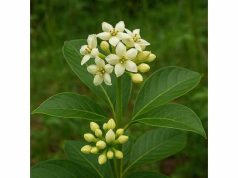
Voodoo lily, in this context referring to Amorphophallus konjac, is better known in food and supplement circles as konjac. Although the plant is striking in appearance, its health interest lies mainly in the corm, which is processed to produce konjac flour and glucomannan, a highly absorbent soluble fiber. That fiber is the real reason the plant appears in discussions about digestion, appetite control, cholesterol, metabolic health, and weight management.
What makes konjac worth a closer look is not herbal mystique, but function. Glucomannan can absorb large amounts of water, swell into a viscous gel, and change the way food moves through the digestive tract. In the right setting, that may help support bowel regularity, modest cholesterol improvement, and limited weight-loss support when paired with an energy-restricted diet. At the same time, konjac is one of those plants that must be used carefully. Dry tablets, poor hydration, swallowing difficulty, and unprocessed plant material can all create avoidable problems. The most useful way to understand voodoo lily is to focus on what processed konjac fiber can realistically do, and where its limits clearly begin.
Key Takeaways
- Konjac glucomannan may help improve bowel regularity when fluid intake is adequate.
- It has the strongest evidence for modest LDL cholesterol support and small weight-loss support in calorie-controlled diets.
- A common adult range is 1 to 1.5 g of glucomannan, 3 times daily, taken with plenty of water.
- Avoid it if you have swallowing problems, bowel narrowing, or trouble drinking enough liquid with each dose.
Table of Contents
- What Is Voodoo Lily and What Part Is Actually Used
- Key Ingredients and Medicinal Properties of Amorphophallus konjac
- Health Benefits With the Best Support
- Where the Evidence Is Promising but Not Settled
- How Voodoo Lily Is Used in Food and Supplements
- Dosage, Timing, and Practical Use
- Safety, Side Effects, Interactions, and Who Should Avoid It
What Is Voodoo Lily and What Part Is Actually Used
The name “voodoo lily” can refer to more than one dramatic-looking plant, which is why botanical precision matters here. For health purposes, Amorphophallus konjac is the relevant species. It is also called konjac, devil’s tongue, elephant yam in some contexts, or konnyaku in Japanese food traditions. The part of interest is the underground corm, not the ornamental flower spike that makes the plant so visually memorable.
That distinction matters because most of the health conversation is really about processed konjac corm and especially glucomannan, the plant’s signature soluble fiber. This is not a case where every part of the plant is casually brewed as a household herb. Raw or poorly processed corm can be irritating, and the plant is not best understood as a simple tea herb. It becomes useful only after suitable processing turns the corm into food-grade flour, noodles, jellies, or fiber supplements.
The processed corm has a long history in East Asian food systems, where it is valued less for calories than for texture, satiety, and fiber content. Konjac noodles and konjac jelly are familiar examples. In supplements, the same fiber is more commonly sold as capsules, powders, or blends marketed for appetite, digestion, cholesterol, or bowel support.
A good way to think about Amorphophallus konjac is to separate three different things that people often mix together:
- the ornamental plant,
- the edible processed corm,
- and the extracted or concentrated fiber, glucomannan.
These are related, but not interchangeable. The ornamental plant may catch attention, yet the health benefits people search for usually belong to the processed corm fiber rather than the raw plant itself. That is why articles that present voodoo lily as a broad medicinal herb often become misleading. Konjac’s public health role is mainly nutritional and functional, centered on fiber behavior in the gut.
This also explains why konjac is often grouped with other bulk-forming fibers used for regularity and metabolic support. Like psyllium, it works primarily through water absorption, viscosity, and stool-bulking effects. But konjac is especially notable for how powerfully it swells, which is one reason it can be helpful and risky at the same time.
So, what is voodoo lily in practical health terms? It is not best understood as a general herbal remedy. It is a fiber-rich corm plant whose processed glucomannan has become the real medicinal and nutritional focus. Once that is clear, its benefits, uses, dosage, and safety all make much more sense.
Key Ingredients and Medicinal Properties of Amorphophallus konjac
The most important active component in Amorphophallus konjac is konjac glucomannan, often shortened to KGM. This is a soluble, highly viscous polysaccharide made largely of glucose and mannose units. In practical terms, it is an absorbent fiber that swells when mixed with water and forms a gel-like mass in the digestive tract. That swelling behavior is the foundation for nearly all of konjac’s most credible health uses.
Unlike plants whose activity comes mainly from alkaloids, volatile oils, or bitter compounds, konjac’s medicinal character is mostly mechanical and metabolic. Its fiber can influence fullness, bowel movement, stool texture, and nutrient absorption patterns. That makes it less like a classic botanical stimulant and more like a functional fiber ingredient with plant origin.
The processed corm may also contain smaller amounts of starch, minerals, proteins, and minor bioactive compounds, but these are not the main reason people use konjac. The star ingredient is glucomannan, and it explains most of the following properties associated with the plant:
- high water-binding capacity,
- bulk-forming and stool-softening support,
- delayed gastric emptying and increased satiety,
- viscosity-related effects on glucose absorption,
- and bile-acid binding that may help improve cholesterol handling.
These properties are important because they keep expectations realistic. Konjac is not thought to act by “detoxifying” the body or stimulating metabolism in the dramatic way some supplement marketing suggests. Its value is quieter and more physical. It changes the texture and movement of material in the gut. That can lead to practical downstream effects on appetite, bowel regularity, and blood lipid markers.
This is why konjac often appears beside other functional fibers used for digestive and metabolic support, though the texture and swelling behavior of glucomannan are more pronounced than many fibers people use casually. It is also why form matters so much. A hydrated noodle, a powder mixed with water, and a dry capsule do not feel identical in the body, even if the ingredient list points back to glucomannan.
Another key point is that the fresh corm contains needle-like calcium oxalate crystals and other irritating structures, which is one reason proper processing matters. The plant becomes useful when converted into safe food or supplement forms, not when treated as a raw kitchen experiment.
The most accurate medicinal description of Amorphophallus konjac is this: it is a processed fiber plant with bulk-forming, satiety-promoting, and lipid-supporting properties driven mainly by glucomannan. Once that is understood, the strongest benefit claims become clearer, and weaker claims become easier to filter out.
Health Benefits With the Best Support
When people ask about the health benefits of voodoo lily, the answer is really about glucomannan from konjac, and the strongest support clusters around three areas: bowel regularity, cholesterol support, and modest weight-loss assistance when paired with calorie control.
The first well-supported area is bowel function. Glucomannan is a classic bulk-forming fiber. When taken with enough water, it can increase stool bulk, soften stool texture, and support easier bowel movements. This makes it most relevant for people with mild constipation or irregularity, especially when low fiber intake is part of the picture. The fiber effect is mechanical and predictable: more water held in the gut, more bulk, and better movement through the bowel.
The second area is cholesterol. Konjac glucomannan has some of the clearest official support here. The fiber may help lower LDL cholesterol by binding bile acids and increasing their excretion, which can shift cholesterol handling in a favorable direction. This is not a substitute for medical care or for statins when they are needed, but it is a credible supportive tool in adults trying to improve diet quality and lipid markers.
The third area is weight management, though this needs the most careful framing. Glucomannan can increase fullness and may help reduce calorie intake, but the effect is usually modest. It is best understood as an aid to an energy-restricted diet, not as a stand-alone fat-loss solution. People expecting dramatic weight loss from konjac alone are likely to be disappointed.
A realistic summary of its best-supported benefits looks like this:
- supports more regular bowel movements,
- may modestly lower LDL cholesterol,
- may modestly support weight loss in calorie-controlled diets,
- and may improve meal-related fullness.
These benefits come with an important condition: konjac works best when used correctly. It needs sufficient water, sensible timing, and realistic expectations. It is not the sort of supplement that overcomes a poor diet by itself.
It is also worth noticing what makes konjac distinctive compared with pectin and other gentler soluble fibers. Konjac tends to be more viscous and more dramatic in its swelling capacity. That can make it more effective for fullness and bowel bulk, but it also explains the stronger safety warnings around choking and obstruction if it is taken improperly.
The most reliable way to present konjac’s benefits is not to call it a miracle fiber, but to call it a high-function soluble fiber with focused uses. For people trying to improve regularity, support cholesterol, or make a calorie-restricted diet a little easier to follow, that is already a meaningful role.
Where the Evidence Is Promising but Not Settled
Beyond bowel function, cholesterol, and modest weight support, konjac is often discussed in much broader terms. Some of these ideas are promising, but they are not equally established. This is where it helps to separate “interesting” from “ready for confident consumer claims.”
One promising area is blood sugar management. Because glucomannan is a viscous soluble fiber, it can slow gastric emptying and reduce the speed of carbohydrate absorption. In theory and in some studies, that may help blunt post-meal glucose rises or modestly improve glycemic markers. That is biologically plausible, and some research is encouraging. Still, it does not mean konjac should be framed as a treatment for diabetes. At present, it is more accurate to call it a useful adjunct fiber than a stand-alone glucose tool.
Another area is gut microbiota support. Like other fermentable fibers, konjac may act as a prebiotic substrate and help support beneficial microbes. That could partly explain its digestive and metabolic effects. Yet this field moves faster than certainty. Changes in microbiota composition are intriguing, but consumers often hear more confidence than the evidence really supports.
A third area is broader metabolic syndrome support, including triglycerides, blood pressure, and appetite regulation. Some reviews describe these effects positively, and they may be real in certain groups. But the evidence is mixed in size and consistency, and it does not justify sweeping claims such as “konjac fixes metabolic syndrome” or “reverses insulin resistance.”
Potential but less-settled applications include:
- support for post-meal glucose control,
- prebiotic and microbiome effects,
- possible triglyceride improvement,
- and broader metabolic support in overweight adults.
This is also the place to push back against overreach. Konjac is not a detox cure, not a cancer remedy, and not a replacement for standard treatment of diabetes, obesity, or cardiovascular disease. Much of the excitement around it comes from the logic of fiber physiology, which is useful, but not the same as strong clinical proof for every marketed promise.
Readers interested in metabolic support sometimes compare konjac with beta-glucan for cholesterol and glucose-oriented fiber support. That comparison makes sense because both are functional fibers with cardiometabolic interest. The difference is that konjac’s extreme water absorption creates a sharper safety profile, even when its metabolic benefits may look attractive.
A balanced reading, then, is this: konjac has a strong enough evidence base to be more than hype, but not strong enough to justify exaggerated claims. Its established role is still relatively focused. The rest of the picture remains promising, especially for glycemic and microbiome questions, but it should be described with restraint.
How Voodoo Lily Is Used in Food and Supplements
The safest and most practical way to use Amorphophallus konjac is in a processed food or supplement form, not as a raw plant. In real life, this usually means konjac flour, konjac noodles, konjac jelly, glucomannan powder, or capsules. Each form has slightly different strengths and weaknesses.
As a food, konjac is popular because it is low in calories and high in water-absorbing fiber. Konjac noodles, for example, are often used in weight-management diets because they add volume to meals without adding much energy. This can help some people feel fuller while reducing calorie intake. Still, the effect depends on the rest of the meal. A fiber noodle does not automatically make a high-calorie sauce or oversized portion “healthy.”
As a supplement, glucomannan is usually sold in:
- powders mixed with water,
- capsules,
- blended fiber formulas,
- and occasionally sachets or meal-support products.
Powder has one practical advantage: it forces hydration. Because the fiber must be mixed into liquid, it is easier to take enough water with it. Capsules are convenient, but they can tempt people to swallow fiber too quickly or with too little fluid, which is exactly what increases risk.
Konjac also appears in products aimed at constipation relief. In that setting, it functions much like other bulk-forming fibers and should be approached with the same basic rules: start low, increase fluid, and do not assume “more is better.”
A few practical guidelines help:
- Use only properly processed food or supplement products.
- Take fiber with generous liquid.
- Do not swallow dry powder.
- Do not use it right before lying down.
- Stop if swallowing feels difficult or chest discomfort appears.
This is one of the reasons konjac differs from swelling fibers people often add casually to meals. Chia also absorbs water, but glucomannan is potent enough that dosage, texture, and fluid intake deserve more deliberate handling.
The best use of voodoo lily is therefore not botanical experimentation. It is structured use of processed konjac products in ways that fit a clear goal: meal satiety, bowel support, or a modest cardiometabolic assist. In food form, it can be quite practical. In supplement form, it can be useful but requires more discipline than many people expect.
Dosage, Timing, and Practical Use
Konjac dosage depends on the goal, the product form, and how well a person tolerates fiber. The most useful principle is not to chase the highest number, but to choose a form that can be taken correctly and consistently with enough fluid.
For cholesterol support, a common adult range is 1 to 1.5 g of glucomannan, 3 times daily. For weight-loss support, the same general pattern is often used, typically taken before meals as part of an energy-restricted diet. For bowel regularity, products may use broader daily amounts, but dosing varies more across powders, blends, and laxative-oriented products.
A sensible practical framework is:
- Start low if you are not used to fiber.
- Take each dose with at least 250 mL of water, and often more.
- Use it 30 to 60 minutes before meals when the goal is fullness or weight support.
- Separate it from medicines by a few hours when possible.
- Increase gradually, not abruptly.
That hydration point is not optional. Konjac’s benefits come from absorbing water, and that same property explains why insufficient liquid can create choking or obstruction risk. A dose taken dry or with only a sip of water is poor practice, even if the amount seems small.
Duration also matters. For cholesterol or weight-support products, people often use glucomannan for several weeks, but if there is no clear benefit after a fair trial, it makes more sense to reassess than to keep increasing the amount. For constipation support, response may begin within a day, but fuller regularity effects can take a bit longer as total fiber intake becomes more consistent.
One practical mistake is using konjac without adjusting the rest of the diet. The fiber works best when paired with adequate water, reasonable meal structure, and enough overall nutrition. Another mistake is taking it right before bed, which is unnecessary and may be less comfortable than daytime use.
People comparing it with psyllium dosing strategies for regular use will notice some similarities, but konjac demands even more attention to fluid and swallowing safety.
Good konjac dosing is therefore less about the number alone and more about method. The right amount, taken the wrong way, can still be a bad idea. With this plant, practical use and safe use are almost the same thing.
Safety, Side Effects, Interactions, and Who Should Avoid It
Konjac is often marketed as a natural fiber, which can make it sound gentler than it really is. In many people it is well tolerated, but it also has one of the clearest practical safety warnings in the fiber category: it can swell enough to create choking or blockage problems if it is taken incorrectly.
The people most clearly suited to avoiding konjac supplements are those with:
- difficulty swallowing,
- a history of esophageal narrowing,
- bowel obstruction or significant bowel narrowing,
- severe gastrointestinal disease without medical guidance,
- or poor ability to drink enough fluid with each dose.
These warnings matter more with capsules, dry powders, and dense tablets than with hydrated food products, but the basic principle is the same. Konjac must have room and liquid to expand safely.
Common side effects are usually gastrointestinal and often reflect its fiber nature:
- gas,
- bloating,
- abdominal fullness,
- loose stool or changed stool pattern,
- and occasional cramping during dose adjustment.
These effects are often temporary and can be reduced by starting with lower amounts. Even so, persistent discomfort is a reason to stop.
Interaction concerns are practical as well as chemical. Because konjac forms a viscous gel, it may interfere with the absorption of some medications or supplements if taken at the same time. That is why separating it by a few hours is a prudent habit. People taking medicines for diabetes should also be cautious, because any fiber that improves glycemic handling could slightly change blood sugar response in some contexts.
Pregnancy and breastfeeding are not automatic contraindications for dietary fiber, but supplement use should still be discussed with a clinician, especially if constipation, nausea, medication timing, or swallowing issues are involved. Children should not be given concentrated konjac products casually, particularly products with choking risk.
There is also an important food-safety angle. Konjac jelly products have, at times, been associated with choking hazards because of their texture and firmness. That is different from supplement use, but it reinforces the same message: this ingredient is safe when used properly, yet not forgiving when used carelessly.
A helpful comparison is magnesium citrate for a very different constipation strategy. Magnesium citrate works osmotically, while konjac works as a swelling fiber. Both can help, but the risks and best-fit users are not the same.
The cleanest safety summary is this: konjac can be useful, but only when taken with enough water, in the right form, by the right person. Anyone with swallowing difficulty, narrowing of the gut, severe digestive symptoms, or medication complexity should get professional advice before using it.
References
- Konjac glucomannan: A comprehensive review of its extraction, health benefits, and pharmaceutical applications 2024 (Review)
- The effect of glucomannan supplementation on lipid profile in adults: a GRADE-assessed systematic review and meta-analysis 2024 (Systematic Review)
- Amorphophallus konjac: traditional uses, bioactive potential, and emerging health applications 2025 (Review)
- Scientific Opinion on the substantiation of health claims related to glucomannan and maintenance of normal blood cholesterol concentrations (ID 836, 1560) pursuant to Article 13(1) of Regulation (EC) No 1924/2006 2009 (Official Opinion)
- GLUCOMANNAN 2024 (Official Monograph)
Disclaimer
This article is for educational purposes only and does not replace medical advice, diagnosis, or treatment. Voodoo lily health products are usually based on processed konjac glucomannan fiber, not on casual use of the raw plant. While glucomannan may support bowel regularity, cholesterol management, and modest weight-loss efforts, it can also cause choking or obstruction if taken without enough liquid or by people with swallowing or gastrointestinal narrowing problems. Speak with a qualified healthcare professional before using it if you take prescription medicines, have diabetes, bowel disease, trouble swallowing, or are pregnant or breastfeeding.
If this article helped you, please share it on Facebook, X, or any platform where thoughtful, evidence-aware plant and supplement information is useful.