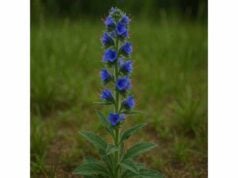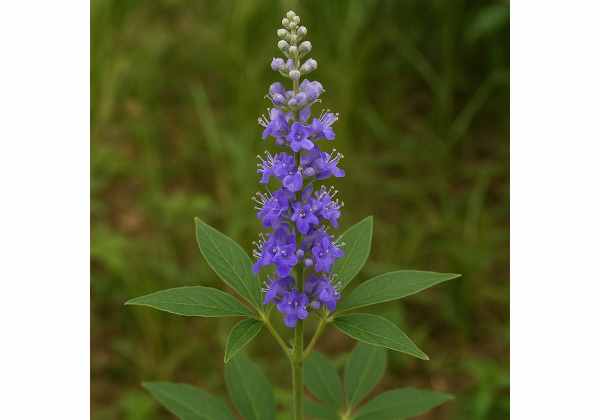
Vitex agnus-castus, often called vitex or chaste tree, is one of the most widely discussed herbs for premenstrual symptoms, cyclical breast tenderness, and hormone-related menstrual discomfort. The medicinal part is the dried fruit, which has a peppery, slightly bitter taste and a long history in European herbal medicine. What keeps vitex relevant today is that it sits in an unusual middle ground: it is a traditional herb, but it also has better clinical support than many botanicals used for menstrual symptoms.
Its reputation centers on premenstrual syndrome, especially mood changes, irritability, breast fullness, and cyclical discomfort. Researchers believe part of its activity may involve dopaminergic effects and changes in prolactin signaling, though the full mechanism is still not settled. That makes vitex a targeted herb rather than a general tonic. It is not right for every hormonal complaint, and it is not meant for pregnancy or casual long-term self-treatment. Used appropriately, though, it may be one of the more practical herbal options for adult women with recurring PMS-type symptoms.
Key Insights
- Vitex has its strongest evidence for premenstrual syndrome, especially irritability, mood changes, breast tenderness, and cycle-related discomfort.
- It may also help some people with cyclical breast pain and mild prolactin-related symptoms, though evidence is less consistent there.
- A commonly used evidence-based range is 20 mg of a standardized dry extract once daily for up to 3 months.
- People who are pregnant, breastfeeding, have pituitary disorders, or use dopamine-related or hormone-related medicines should avoid self-prescribing vitex.
Table of Contents
- What Vitex Is and Why It Is Used for Hormonal Support
- Key Ingredients and Medicinal Properties of Vitex
- Health Benefits With the Best Human Evidence
- Where Vitex May Help and Where It Is Often Overstated
- How Vitex Is Used in Real Life
- Dosage, Timing, and How Long to Take Vitex
- Safety, Side Effects, and Who Should Avoid It
What Vitex Is and Why It Is Used for Hormonal Support
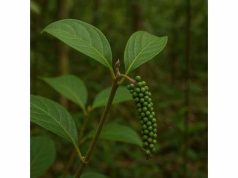
Vitex agnus-castus is a shrub native to the Mediterranean region and parts of western Asia. The plant produces small dark fruits that look somewhat like peppercorns, and these fruits are the medicinal material used in teas, tinctures, capsules, and standardized extracts. In older European traditions, vitex was associated with women’s reproductive health, menstrual comfort, and cyclical breast pain. Modern use still follows that same pattern, but with a stronger focus on PMS and standardized products.
A key point that often gets lost is that vitex is not a general “female balance” herb in the vague marketing sense. It is better understood as a herb that may influence the hypothalamic-pituitary axis and prolactin-related signaling. That is important because it explains both its usefulness and its limitations. Vitex is most relevant when symptoms are cyclical and seem tied to the luteal phase, such as irritability before a period, breast tenderness, mood swings, bloating, or a sense that the second half of the cycle is consistently worse.
This also means vitex is not automatically appropriate for every hormonal concern. It is not a cure-all for infertility, perimenopause, endometriosis, polycystic ovary syndrome, or absent periods. Some of those areas have been explored, but the evidence is far more limited or mixed than the evidence for PMS. The herb works best when expectations are specific and realistic.
Another reason vitex draws attention is that it is one of the few herbal options formally recognized in European herbal regulation for premenstrual syndrome. That gives it a different status from many botanical products that rely almost entirely on traditional reputation. Even so, clinicians and careful users still need to respect the distinction between one standardized extract studied in trials and the wider commercial market, where quality and preparation vary considerably.
In practice, vitex is usually chosen for three main reasons:
- recurring PMS symptoms that return month after month
- cyclic breast tenderness or fullness
- symptoms that suggest a prolactin-related component, though this remains a more specialized area
It is less often chosen when the main issue is immediate pain relief, severe menstrual cramps, or night sweats associated with menopause. In those situations, other herbs or conventional treatments may fit better. For example, some people looking for broader cycle support may compare options such as yarrow for menstrual support, but vitex is more specifically associated with premenstrual and prolactin-linked patterns.
The best way to think about vitex is as a cycle-pattern herb. It is not usually dramatic in the first few days. It tends to be used steadily over time, with the goal of improving the pattern of symptoms across several cycles. That slower, regulatory feel is part of why it helps some people and disappoints others. It is not a rescue herb. It is a structured, symptom-targeted herbal intervention that asks for patience and careful monitoring.
Key Ingredients and Medicinal Properties of Vitex
The medicinal properties of vitex come from a chemically complex fruit rather than from one single standout compound. Researchers usually focus on several classes of constituents: diterpenes, flavonoids, iridoid glycosides, and essential-oil-related fractions. The most frequently discussed named compounds include casticin, agnuside, aucubin, and several diterpenes that may interact with dopamine receptors.
That last point matters most. One of the leading theories is that certain vitex constituents have dopaminergic activity, especially at dopamine D2 receptors. This is important because dopamine can influence prolactin release. Since elevated prolactin has been linked to cyclical breast pain and some premenstrual symptoms, a prolactin-modulating mechanism gives vitex a plausible pharmacologic identity. It also helps explain why the herb is more targeted than many products sold for “hormone balance.”
Vitex also contains flavonoids, including casticin, which are often discussed for antioxidant and anti-inflammatory properties. Those properties probably contribute to the herb’s broader biologic profile, but they are not the main reason most people take it. If someone is using vitex, it is usually not because they want a generic antioxidant herb. They want help with cyclical symptoms.
Iridoid glycosides such as agnuside and aucubin add another layer. These compounds are common in medicinal plants with regulatory or protective effects, though they are not specific enough to tell the whole story by themselves. In vitex, they are often used as marker compounds in extracts and quality control.
The medicinal properties most often attributed to vitex include:
- dopaminergic or dopamine-like activity
- possible prolactin-lowering effects in selected contexts
- neuroendocrine modulation related to the menstrual cycle
- mild anti-inflammatory and antioxidant support
- indirect help with cyclical breast discomfort and mood symptoms
It is tempting to turn that list into stronger claims about estrogen, progesterone, or “resetting hormones,” but that is where many articles become misleading. Vitex does not simply raise progesterone in a straightforward, universal way, and it should not be described as if it were a natural hormone replacement. Its endocrine effects appear more indirect and more dependent on the clinical context.
That is also why preparation matters. A standardized dry extract used in research is not the same as a loose tea or an unstandardized tincture. The active chemistry is there in both, but the strength and reproducibility are not equal. The most clinically meaningful dosing guidance usually comes from standardized fruit extracts, not from casual home preparations.
In herbal comparison, vitex stands apart from herbs that work more directly on mood or tension. A person could compare it with ashwagandha for stress-related symptoms, but the intended use is different. Ashwagandha is usually chosen for broader stress support, while vitex is usually chosen because symptoms follow a menstrual pattern and repeat predictably.
This targeted chemistry is what makes vitex useful but also sensitive. An herb that may affect dopaminergic pathways and prolactin is not something to take casually during pregnancy, during lactation, or alongside certain medicines without thought. Its medicinal properties are real enough to matter, which is exactly why safety and fit are so important.
Health Benefits With the Best Human Evidence
If vitex has one major strength, it is that the human evidence is better defined than it is for many herbs used for reproductive health. The strongest support is for premenstrual syndrome, especially when symptoms include irritability, mood changes, headache, breast fullness, and general cycle-related discomfort. Several trials and meta-analyses suggest that women taking vitex are more likely to report meaningful symptom improvement than those taking placebo.
That does not mean every product works equally well or that every PMS symptom responds the same way. The better-supported data tend to involve specific dry extracts used once daily over a period of about three months. Improvements are usually described across several symptoms rather than in just one isolated measure. That fits the real-world pattern of PMS, which often affects mood, body, energy, and breasts at the same time.
The second area with meaningful evidence is cyclical mastalgia, also called cyclic breast pain. Reviews suggest vitex may reduce breast pain intensity in women of reproductive age, particularly when symptoms worsen in the premenstrual window. This makes biologic sense given the herb’s proposed prolactin-related activity. For people whose most troublesome PMS symptom is breast tenderness or fullness, vitex may be especially relevant. Some readers also compare supportive options such as evening primrose for cyclical breast discomfort, but vitex has a more specific endocrine rationale.
A third area of interest is mild hyperprolactinemia. This is more specialized and should not be self-managed casually, but some recent review work suggests vitex may have a role in selected patients who want a phytotherapeutic option. The key phrase there is selected patients. The evidence is still limited, and larger, high-quality trials are needed. This is not a reason to skip endocrine evaluation when prolactin is high or symptoms suggest a pituitary issue.
Benefits with the clearest support include:
- PMS relief across mood and physical symptoms
- reduced cyclic breast tenderness in some users
- possible benefit in selected mild prolactin-related situations
Benefits that are less firmly established include:
- irregular cycles in general
- fertility support
- perimenopausal symptom relief
- acne caused by hormonal fluctuation
- broad “hormone balancing” claims
This distinction matters because vitex is often marketed too broadly. A woman with classic PMS may be a good candidate. A woman with unexplained missed periods, new heavy bleeding, or infertility without a diagnosis needs proper evaluation first.
It is also worth noting that vitex is not an instant herb. Most studies and official monographs assume sustained use across multiple cycles. That timing is not a flaw; it is part of the therapy model. The question is not “did I feel better this afternoon?” but “did my next two or three cycles become easier to live with?” For the right person, that can make vitex feel unusually practical. For the wrong person, it can feel irrelevant.
The strongest, most honest claim is simple: vitex is one of the better-supported herbs for PMS, with the best case for cyclical mood and breast symptoms rather than for every hormonal complaint under the sun.
Where Vitex May Help and Where It Is Often Overstated
Vitex becomes much more useful when it is matched to the right symptom pattern. It may help when symptoms clearly cluster before menstruation, improve after bleeding begins, and then return the next month in roughly the same form. That kind of repetition is exactly where structured herbal treatment can make sense.
A good fit might look like this:
- recurrent irritability or emotional lability in the luteal phase
- breast swelling, tenderness, or fullness before menstruation
- premenstrual headaches
- a recurring sense of bloating, heaviness, or mood strain before a period
- mild cycle irregularity when PMS-type symptoms are also present
A poorer fit might look like this:
- sudden new menstrual symptoms in midlife without assessment
- absent periods with no diagnosis
- severe depression or severe PMDD needing formal care
- infertility being treated without medical evaluation
- chronic pelvic pain that could reflect endometriosis or another disorder
- symptoms during pregnancy or breastfeeding
One of the biggest problems in wellness marketing is the phrase “balances hormones.” It sounds useful, but it tells the reader almost nothing. Vitex may affect neuroendocrine signaling, especially prolactin-related pathways, yet that is not the same as balancing every hormone in every body. It may help one pattern while being inappropriate for another.
It is also often overstated in fertility discussions. Some people take vitex because they have heard it “supports progesterone” or “improves ovulation.” There may be niche contexts where it helps, but the evidence is not strong enough to treat it as a universal fertility herb. When fertility is the goal, especially if cycles are irregular or there is known endocrine disease, medical guidance matters more than generalized supplement advice.
The same caution applies to menopause and perimenopause. Although some studies and products explore vitex in this setting, the core evidence still points more strongly toward PMS than toward hot flashes or late reproductive transition symptoms. Herbs chosen for menopause are often different in intent, such as black cohosh for menopausal complaints, while vitex remains more cycle-centered.
Another common misunderstanding is expecting immediate pain relief. Vitex is not like taking a single-dose analgesic. It is more like a regulatory intervention. That means it requires:
- the right symptom pattern
- the right product type
- enough duration to judge response
- a willingness to stop if the pattern does not improve
This is where many people go wrong. They take it for a week, combine it with five other supplements, change brands twice, and then either declare it miraculous or useless. Neither conclusion is very reliable. Vitex works best when used alone or in a very simple regimen and evaluated across real cycles.
In other words, vitex may genuinely help a subset of women with cyclical premenstrual complaints. It is much less convincing when sold as a broad hormone optimizer, fertility enhancer, menopause fix, or catch-all reproductive herb. The difference between thoughtful use and overstatement is not small. It is the difference between a clinically plausible herb and a vague promise.
How Vitex Is Used in Real Life
In practice, vitex is most often taken as a standardized fruit extract in capsules or tablets. This is the form that aligns most closely with clinical evidence and with the European monograph. While tinctures and teas exist, they are less commonly tied to the better-known dosing data, so product selection matters more here than it does with some simple culinary herbs.
The real-life rhythm of use is usually steady and consistent. Vitex is taken daily rather than only during the days of symptoms. That sometimes surprises people who assume they should use it only before a period. Daily dosing is more common because the goal is to influence the overall cycle pattern, not just blunt one bad day.
Users often track several endpoints rather than just one. Helpful markers include:
- breast tenderness severity
- irritability or mood shifts before menstruation
- headache frequency in the premenstrual week
- cycle timing and predictability
- overall sense of how manageable the second half of the cycle feels
This tracking matters because vitex can be subtle. If a person only relies on memory, it is easy to miss whether the herb is doing anything. A simple monthly note or symptom score is often enough to make the response clearer.
Vitex is also sometimes combined with other interventions, but that should be done carefully. Combining it with multiple hormone-oriented supplements can make it impossible to tell what is helping or causing side effects. In contrast, it may be reasonable to pair it with supportive lifestyle measures such as improved sleep, more regular meals, or stress management. A person with significant premenstrual sleep disruption might also look at broader rest strategies or compare with options such as valerian for sleep support, though vitex itself is not primarily a sedative.
Some practical habits improve the chances of a fair trial:
- choose a reputable standardized product
- take it at the same time each day
- use it for at least 2 to 3 cycles before judging
- track symptoms simply and consistently
- avoid layering multiple new hormone-focused products at once
Vitex is not usually the best herb for self-made tea routines. The fruit is not especially pleasant, and the evidence base is centered more on extracts than on household infusions. That makes it a more “supplement-like” herb than many leafy teas.
Real-life use also means knowing when not to continue. If symptoms worsen, cycles become more confusing, acne flares significantly, headaches intensify, or there are signs of intolerance, the right move is not to push through indefinitely. Likewise, if there is no meaningful improvement after a structured trial, it is reasonable to stop.
This practical, measured style of use suits vitex well. It is not the kind of herb that rewards guesswork. It tends to work best when used more like a carefully chosen therapeutic product than a casual wellness accessory.
Dosage, Timing, and How Long to Take Vitex
Dosage with vitex is one of the areas where precision matters. The best-supported dose from the European monograph is 20 mg once daily of a specific dry extract for premenstrual syndrome. That recommendation reflects a well-established-use preparation rather than all products on the market. Other traditional-use preparations also exist, but they are not directly interchangeable.
Because products differ, the safest practical advice is to follow the product label when using a reputable standardized extract, unless a clinician directs otherwise. Still, several broad patterns are worth knowing.
Common clinically relevant approaches include:
- 20 mg once daily of a standardized dry extract used for PMS
- traditional monograph-listed preparations that differ in milligram strength depending on extract ratio and solvent
- consistent daily use rather than on-and-off use around symptom days
Timing is flexible, but once-daily morning use is common. The more important issue is consistency. Taking it at roughly the same time each day makes it easier to maintain a stable routine and judge effects.
Duration is also central. Vitex is not usually judged after one week. Official guidance and clinical use commonly assume a trial of about 3 months. That duration makes sense because menstrual symptoms unfold across cycles, not hours. Many women notice some improvement earlier, but the fairest assessment often comes after two or three cycles.
A good trial usually looks like this:
- Start with one standardized product, not several.
- Take it daily and consistently.
- Track symptoms for 8 to 12 weeks.
- Reassess whether the pattern is clearly improving.
That is also why this herb is poorly suited to impulse use. If someone wants immediate relief for cramps or a same-day mood lift, vitex is unlikely to meet that need. It is a cumulative herb.
A few important dosage cautions:
- more is not necessarily better
- switching between products can change the effective dose
- fruit powder, tincture, and extract are not equivalent
- using it longer than three months without reassessment is not ideal
If symptoms persist after about three months of proper use, it is wise to consult a clinician rather than simply continue indefinitely. Persistence may mean the herb is not the right fit, the diagnosis is incomplete, or the symptoms are more severe than self-care alone should manage.
Vitex should also not be used as a workaround for delayed evaluation. Heavy bleeding, missed periods, galactorrhea, marked mood disturbance, new breast symptoms, or infertility deserve proper assessment before or alongside any supplement trial.
In the best case, vitex dosing is simple: once daily, same product, same routine, enough time to judge. That simplicity is part of its appeal. But it only works when the person respects the fact that dosage with vitex is extract-specific and effect-specific, not something to improvise from vague internet claims.
Safety, Side Effects, and Who Should Avoid It
Vitex is often described as well tolerated, and for many adult women that is true. Still, it is an active herbal medicine, not a harmless wellness flavoring. The same qualities that make it useful also create real precautions.
The clearest groups who should avoid self-use are:
- pregnant women
- breastfeeding women
- children and adolescents under 18
- people with pituitary disorders
- people with prolactin-secreting tumors
- people with a history of estrogen-sensitive cancers unless cleared by a clinician
- people using dopamine agonists, dopamine antagonists, estrogens, or antiestrogens
These cautions are not theoretical. Regulatory guidance specifically warns that vitex may act on the pituitary-hypothalamic axis and that interactions with dopamine-related and hormone-related medicines cannot be excluded. That alone makes careless self-prescribing a poor idea.
Potential side effects include:
- nausea
- abdominal pain
- headache
- dizziness
- acne
- rash or urticaria
- menstrual changes
- allergic reactions
Severe allergic reactions appear uncommon, but they have been reported. Any swelling of the face, difficulty swallowing, breathing difficulty, or rapid skin reaction requires urgent medical attention.
There are also some subtler safety issues. Because vitex can affect cycle-related symptoms, it may mask rather than solve an underlying problem. A person with high prolactin due to a pituitary cause, for example, should not use the herb as a substitute for proper diagnosis. Likewise, someone with worsening mood symptoms should not assume an herb is enough if they may be dealing with PMDD, major depression, or another condition that needs formal treatment.
Pregnancy and lactation deserve special emphasis. Vitex is not recommended during pregnancy, and lactation is also discouraged because it may affect milk production and because infant risk cannot be excluded. This is one of the easiest safety rules in the whole topic: if you are pregnant or breastfeeding, skip self-treatment with vitex.
It is also not a casual “stack” herb. Combining vitex with several endocrine-active supplements, medications for mood or fertility, or hormone therapy increases uncertainty quickly. One reason people run into trouble with supplements is not that one product is inherently dangerous, but that the overall mix becomes biologically noisy and hard to interpret.
A sensible safety checklist is:
- Confirm the symptom pattern fits PMS-like use.
- Avoid use during pregnancy and lactation.
- Review medicines before starting.
- Stop if side effects are meaningful or symptoms worsen.
- Seek evaluation if there is no improvement after a structured trial.
The broad conclusion is reassuring but not casual: vitex appears reasonably safe for many adult women when used appropriately for PMS-type symptoms, yet it should still be treated as a hormonally relevant herbal medicine with real contraindications and interaction questions.
References
- Final European Union herbal monograph on Vitex agnus-castus L., fructus – Revision 1 2018. (Guideline)
- Vitex agnus-castus in premenstrual syndrome: A meta-analysis of double-blind randomised controlled trials 2019. (Meta-analysis)
- Vitex Agnus-Castus for the Treatment of Cyclic Mastalgia: A Systematic Review and Meta-Analysis 2020. (Systematic Review)
- Vitex agnus castus effects on hyperprolactinaemia 2023. (Review)
- Vitex agnus castus Extract Ze 440: Diterpene and Triterpene’s Interactions with Dopamine D2 Receptor 2024.
Disclaimer
This article is for educational purposes only and is not a substitute for medical advice, diagnosis, or treatment. Vitex may be appropriate for some adult women with premenstrual symptoms, but it is not suitable for every hormonal or menstrual concern. Do not use vitex during pregnancy or breastfeeding, and do not rely on it to self-treat infertility, missed periods, new breast symptoms, high prolactin, severe mood changes, or heavy abnormal bleeding without medical evaluation. Because vitex may interact with hormone-related and dopamine-related medicines, speak with a qualified healthcare professional before using it medicinally.
If you found this article helpful, please share it on Facebook, X, or another platform you prefer.