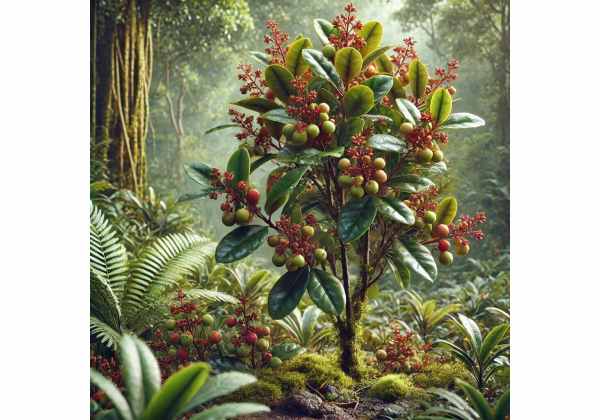
Kelat Samak, identified here as Syzygium incarnatum, is a tropical tree from the myrtle family that grows in lowland forests, swampy areas, and riverine habitats across parts of Southeast Asia. It is not one of the widely commercialized medicinal herbs, which is exactly why it deserves a careful, evidence-first explanation. Readers searching for Kelat Samak often expect a familiar herb profile with clear benefits and dosage rules, but this species is better understood as a plant with edible-fruit use, possible polyphenol-rich chemistry, and very limited species-specific medicinal research.
That limited evidence does not make the plant unimportant. It makes accuracy more important. In practice, the biggest questions around Kelat Samak are not only what it might do, but whether the plant has been identified correctly, whether claims are being borrowed from other Syzygium species, and whether a food plant is being presented as a proven remedy without enough support. This guide looks at what is known, what is only plausible, how Kelat Samak may be used, why dosage remains uncertain, and where safety should come before enthusiasm.
Essential Insights
- Kelat Samak fruit is used as a local edible food, but species-specific medicinal evidence for Syzygium incarnatum is still very limited.
- The plant may contain useful polyphenol and tannin-like compounds, which makes antioxidant potential plausible but not clinically proven.
- No evidence-based medicinal dosage range in g or mg has been established for Syzygium incarnatum.
- Avoid self-treating chronic disease with Kelat Samak, especially when common-name confusion may lead to using the wrong Syzygium species.
Table of Contents
- What is Kelat Samak and why identification matters
- What compounds may matter
- What health benefits are plausible
- Kelat Samak as food and folk use
- How to use it without guessing
- Is there a standard dosage
- Side effects and who should avoid it
- What the evidence actually shows
What is Kelat Samak and why identification matters
Kelat Samak is a regional common name attached to more than one plant in the Syzygium group, and that detail changes almost everything about how readers should interpret health claims. In this article, the plant is Syzygium incarnatum, a medium-to-large tropical tree in the Myrtaceae family. It is native to parts of Malaysia, Singapore, Brunei, and Indonesia, and it typically grows in tropical forest habitats, including swamp forest and riverine settings. It has leathery leaves, a dense crown, berry-like fruits, and the general appearance many people associate with wild forest Syzygium species.
The first practical problem is that common names do not behave like scientific names. In some regional databases and plant references, “Kelat Samak” is also used for Syzygium polyanthum, a much better known species with culinary and medicinal traditions. That overlap creates a serious risk: benefits, dosage advice, and safety claims from Syzygium polyanthum can easily be copied onto Syzygium incarnatum even when the underlying evidence does not belong to the same plant.
For readers, this means correct identification is not a minor botanical concern. It is the starting point for any safe use. If the species is wrong, then the following can all become unreliable:
- Expected active compounds
- Traditional uses
- Edibility assumptions
- Safety profile
- Dosage range
- Interaction risk
That matters even more because Syzygium is a large genus. Some species are valued for edible fruit. Some are used as spices. Some have rich ethnomedicinal records. Others are scarcely studied beyond botanical description. Syzygium incarnatum falls closer to that last group. It is known as a real species with local food and forest value, but it does not have the same depth of medicinal documentation as the better-known members of the genus.
A second point worth understanding is that Kelat Samak is better described as a food-and-forest plant with possible medicinal interest than as a classic pharmacy herb. The fruit has been described as edible. The wood has practical value. The species also matters ecologically in wet tropical habitats. Those uses tell you something important: this is a plant with local significance, but not necessarily one that has gone through the modern pipeline of extraction, standardization, and clinical validation.
This is why the article cannot honestly treat Kelat Samak like a mainstream supplement. The most responsible approach is to begin with three questions:
- Is the plant definitely Syzygium incarnatum?
- Is the intended use food-based or medicinal?
- Is the claim species-specific, or borrowed from another Syzygium?
That caution may sound slow, but it is actually practical. It prevents readers from turning a regional plant name into a bundle of copied claims. In herbal writing, the biggest errors often start with plant identity. Kelat Samak is one of those plants where getting the name right is the first real safety step.
What compounds may matter
Because species-specific phytochemical mapping for Syzygium incarnatum is still limited, the most accurate way to discuss its key ingredients is to separate what is directly known from what is reasonable to infer from the broader Syzygium genus. That distinction keeps the article useful without pretending the plant has been chemically characterized in the same way as better-studied medicinal species.
Across the Syzygium genus, researchers frequently report classes of compounds such as:
- Polyphenols
- Flavonoids
- Tannins
- Phenolic acids
- Terpenoid-related constituents
- Pigment-linked antioxidant compounds in some fruits and leaves
These groups matter because they often shape how a plant behaves in the body. Polyphenols and flavonoids are commonly associated with antioxidant activity. Tannins contribute to the dry, puckering feel known as astringency, which is one reason tannin-rich plants are often discussed in relation to digestive tone, surface irritation, and traditional topical uses. In edible fruits, these compounds may also contribute to color, taste, and plant defense.
For Syzygium incarnatum itself, the most cautious assumption is not that it contains one famous active ingredient, but that it likely follows the general Syzygium pattern of being chemically complex and at least partly polyphenol-driven. That makes antioxidant potential plausible, but it does not guarantee a meaningful medicinal effect in humans. A plant can be rich in interesting chemistry and still remain poorly validated as a therapeutic agent.
This is an important point for readers who are used to herb articles built around a single hero compound. Kelat Samak does not currently fit that model. There is no equivalent here to curcumin in turmeric or menthol in peppermint. Instead, the plant is better understood as a likely whole-matrix botanical, where any value would probably come from combined phytochemicals rather than a single standardized molecule.
That whole-matrix view also explains why people sometimes overstate plants like this one. Once a fruit or leaf is described as “rich in phenolics,” articles quickly start using terms like anti-aging, immune boosting, or anti-inflammatory without enough evidence. The chemistry may justify research interest, but not automatic health claims. Even a well-known antioxidant profile does not prove disease treatment.
A more grounded interpretation is that Kelat Samak may belong in the same broad conversation as other polyphenol-rich plant foods and herbs, including polyphenol-focused antioxidant plants. But similarity in compound classes does not mean equal strength, equal safety, or equal evidence. Readers should resist the temptation to translate genus-level chemistry into species-level promises.
In practical terms, the likely “key ingredients” story for Kelat Samak is this:
- It probably contains polyphenol-rich plant compounds typical of Syzygium species.
- Tannin-like astringent chemistry is plausible.
- These compounds may support antioxidant potential.
- None of that establishes a proven medicinal effect or standardized extract profile.
That is a less dramatic answer than many herb pages give, but it is more honest. The real value of discussing Kelat Samak’s compounds is not to advertise a miracle ingredient. It is to show why the species is scientifically interesting while making it clear that chemistry alone is not the same thing as clinical benefit.
What health benefits are plausible
When the direct research on a species is thin, the right question is not “What benefits does it definitely have?” but “Which benefits are plausible, and which ones are being overstated?” That question fits Kelat Samak much better than a typical supplement-style list of bold promises.
The most plausible benefit is antioxidant support at the whole-food level. Since Syzygium species commonly contain phenolic and flavonoid compounds, it is reasonable to think that Syzygium incarnatum fruit or leaves may also carry some antioxidant potential. That does not mean Kelat Samak is a superior antioxidant herb or a clinically proven protector against oxidative stress. It means the plant belongs in a family where that kind of chemistry is common, and its edible fruit use makes modest nutritional interest reasonable.
A second plausible benefit is gentle astringent activity if tannin-rich plant parts are involved. Astringent plants can feel tightening or drying, which is why many tannin-containing species have been used traditionally for surface tissues or mild digestive contexts. But in Kelat Samak, that remains more of a botanical possibility than a confirmed medicinal effect. Without good species-specific data, strong claims about diarrhea relief, mouth care, or wound use should be treated as tentative at best.
A third possible benefit is general plant-food diversity. This may sound less dramatic than disease treatment, but it is often more realistic. In many under-documented species, the most defensible benefit is not “this herb cures,” but “this correctly identified edible plant may contribute useful phytochemical diversity as part of a broader diet.” That kind of benefit is smaller, but it is also far more credible.
What is not plausible at this stage are strong, disease-level claims such as:
- Proven blood sugar control
- Reliable cholesterol lowering
- Clinically meaningful anti-inflammatory therapy
- Anticancer treatment
- Standard treatment for diarrhea or skin disease
- Evidence-based immune enhancement
Those claims are common online because they are common across the Syzygium genus. But that is the problem. A species can inherit the reputation of its relatives without inheriting the evidence. Kelat Samak is especially vulnerable to that kind of inflation because readers may unknowingly confuse it with Syzygium polyanthum or other better-studied species.
A useful reality check is to compare Kelat Samak with other antioxidant-rich fruit foods. Foods in that category may contribute plant pigments, polyphenols, and dietary variety, but that does not automatically turn them into medicines. Kelat Samak probably belongs closer to that conversation than to the conversation around standardized therapeutic extracts.
So the most balanced answer is this:
- Plausible as an edible, phytochemical-containing forest fruit
- Plausible as a source of antioxidant-type compounds
- Possibly of future medicinal interest
- Not yet supported as a clinically proven herb for specific health conditions
That may feel less exciting than a long benefits list, but it is exactly the kind of clarity readers need. A plant can be promising without being proven, and useful without being medicinal in the strict clinical sense. Kelat Samak seems to fit that middle space.
Kelat Samak as food and folk use
For Syzygium incarnatum, the most practical use described in accessible references is food, not a standardized medicinal protocol. The fruit is reported as edible, and that single detail changes how the plant should be understood. Instead of beginning with capsules, extracts, or disease claims, the more grounded starting point is a locally used wild fruit tree with possible secondary health interest.
That matters because the food frame is usually safer than the supplement frame when species-specific research is limited. Once a plant becomes a “herb,” people start asking how much powder, how many capsules, and how long to take it. But with Kelat Samak, that is not where the evidence is strongest. The better-supported story is that it is a correctly identified tree with edible fruit and local value, not a well-established medicinal product.
There is also an important difference between folk use and formal medicinal use. A plant can have local familiarity without having a strong written ethnomedical record. In the case of Kelat Samak, species-specific medicinal traditions are much less clearly documented than for some other Syzygium plants. That gap should not be filled with assumptions. It should be respected.
In practical terms, Kelat Samak may be approached in three ways:
- As a botanical species of interest
- As a local edible fruit source
- As a plant that may deserve future phytochemical and medicinal research
That third category is where many herb articles go wrong. They treat “deserves research” as if it means “already works.” Those are not the same thing. A plant can be interesting because it belongs to a medicinally active genus, without already earning the same use pattern as its relatives.
Readers also need to know that food use does not automatically equal medicinal usefulness. Plenty of edible tropical fruits contain tannins, pigments, and plant acids without being standardized remedies. Kelat Samak appears better suited to the whole-food end of that spectrum. In that sense, it belongs more naturally beside tropical fruit profiles with phytochemical interest than beside heavily marketed herbal extracts.
A practical reader should ask:
- Is the fruit ripe and correctly identified?
- Is the use dietary rather than therapeutic?
- Is the expectation modest and food-based?
If the answer to those questions is yes, Kelat Samak makes more sense. If the expectation becomes “I want to use this plant to treat a chronic condition,” then the evidence base becomes too weak too quickly.
This section also highlights a more useful truth about lesser-known plants. Sometimes the wisest use is not to turn them into medicine before the evidence exists. Sometimes it is enough to understand them as part of local biodiversity, food culture, and future research potential. Kelat Samak fits that idea well. Its best-supported role today is closer to cautious food interest than to established herbal therapy.
How to use it without guessing
If you are going to use Kelat Samak at all, the safest principle is to keep the use simpler than the marketing language. For this species, that usually means starting from identification and food use rather than from extracts and disease claims. In other words, use it in the way the evidence can actually support.
A careful approach looks like this:
- Confirm the species. Do not rely on a local name alone.
- Separate food use from medicinal use.
- Avoid powdered or concentrated products with vague labels.
- Do not copy dosage advice from other Syzygium species.
- Keep expectations modest.
That first step deserves emphasis. Because “Kelat Samak” can overlap with other Syzygium plants, the most important use decision is often botanical, not nutritional. If a product seller cannot confirm the species, the plant part, and the form of preparation, that is already a good reason to stop.
For most readers, the only clearly defensible use is as a correctly identified edible fruit in a normal food context. That means it belongs with fruits and other whole plant foods, not with strong therapeutic extracts. Once the plant is concentrated, dried, powdered, or heavily processed, the lack of species-specific evidence becomes a much bigger problem.
It is also worth avoiding homemade medicinal experiments. Leaves, bark, or fruit extracts may sound traditional, but the gap between “this plant belongs to a useful genus” and “this preparation is safe and effective” is large. Without good species-specific guidance, home extraction often creates more uncertainty than value.
Readers who enjoy underused plant foods may find Kelat Samak interesting for the same reason they explore other regional species: flavor, biodiversity, and plant variety. That is a reasonable lane. But readers hoping for a medicinal shortcut should slow down. If the desired effect is inflammation relief, digestive support, or astringent topical care, there are better described options, including better-known astringent botanicals with clearer use patterns.
Three common mistakes are worth avoiding:
- Treating the plant as medicinal because the genus is medicinal
- Assuming edible fruit means safe extract use
- Copying recipes or doses from social media without species confirmation
A good rule of thumb is that the less data a plant has, the more conservative the use should be. Kelat Samak is not a plant that rewards improvisation. It rewards restraint. When people use lesser-known species carefully, they protect both their health and the credibility of traditional plant knowledge. When they guess, they usually blur the line between curiosity and avoidable risk.
So the best answer to “how do I use it?” is surprisingly simple: use only what you can identify, use food forms before medicinal forms, and do not turn uncertainty into confidence just because the plant name sounds familiar.
Is there a standard dosage
No standard medicinal dosage has been established for Syzygium incarnatum. That is the clearest and most important answer in the article’s dosage section.
Many herb profiles try to offer a neat number in teaspoons, grams, or capsules because readers understandably want a direct answer. With Kelat Samak, giving a confident dose would create a false sense of precision. There is no well-established human clinical dosage for this species as a medicinal herb, and there is no commonly accepted standardized extract profile that would let one brand or preparation be compared meaningfully with another.
This is exactly where species confusion becomes dangerous. If someone searches “Kelat Samak dosage,” they may find information that actually belongs to Syzygium polyanthum or another medicinally discussed Syzygium plant. That borrowed dosage is not a small error. It can completely change what someone thinks they are taking.
The only relatively safe dosing framework is food-based, not therapeutic. In practical terms, that means:
- Ripe fruit may be used as food, not as a drug
- Normal food portions are different from medicinal dosing
- There is no evidence-based range in grams or milligrams for therapeutic use of Syzygium incarnatum
That distinction matters because food use and herb use answer different questions. Food use asks whether a plant is eaten locally and tolerated as part of a meal. Medicinal use asks whether a defined amount produces a reliable therapeutic effect with acceptable safety. Kelat Samak has a clearer footing in the first category than in the second.
If someone still wants a practical dosage answer, the most honest version is this:
- As food: use modest, normal portions of correctly identified ripe fruit
- As an extract: no evidence-based dose is established
- As a daily medicinal herb: not enough data
- For children, pregnancy, chronic disease, and drug use: avoid improvised dosing
This can feel unsatisfying, but it is better than forcing precision where none exists. In herbal practice, a missing dose is often a research signal, not a writing problem. It tells you the plant has not yet earned confident therapeutic instructions.
A helpful comparison is with better-studied supplements that have actual dose ranges, response windows, and interaction data. Kelat Samak does not yet belong in that category. Treating it as if it does would be misleading.
So the dosage section ends where it should: with caution, not with invented numbers. A plant can still be interesting even when the honest dosage advice is “no medicinal standard has been established.” In fact, that honesty is what keeps the article useful. It steers the reader away from guesswork and back toward the more defensible use pattern, which is food-first and evidence-aware.
Side effects and who should avoid it
Because Syzygium incarnatum does not have a well-developed clinical literature, the safety discussion has to be framed differently from the way it would be for a common supplement. The main issue is not that dramatic side effects are clearly documented. The main issue is that too little species-specific medicinal safety data exists to support confident therapeutic use.
That means the safest position is one of uncertainty managed with restraint. In practical terms, the likely risk profile depends heavily on form:
- Correctly identified ripe fruit used as food is one category
- Concentrated extracts, powders, barks, or leaf preparations are another
- Mixed products labeled only as “Kelat Samak” are the most uncertain of all
Potential side effects are difficult to define precisely because the medicinal use record for this species is thin. Still, a few reasonable safety principles apply.
First, any unfamiliar fruit or plant material can trigger digestive upset, especially when eaten unripe, in large quantity, or by people with sensitive digestion. Second, tannin-rich plant materials may feel harsh or irritating in some people when used in concentrated form. Third, species confusion creates a hidden safety problem: if the plant is not actually Syzygium incarnatum, then the safety discussion changes immediately.
People who should avoid medicinal self-use include:
- Pregnant people
- Breastfeeding people
- Children
- People with major liver or kidney disease
- People managing diabetes, blood pressure, or chronic inflammatory disease with medication
- Anyone prone to food allergy or unexplained plant reactions
- Anyone unsure which Syzygium species they have
Interaction data are also limited, which means “no known interactions” would be the wrong conclusion. The more accurate conclusion is “interactions have not been adequately described for routine medicinal use.” That matters because polyphenol-rich and tannin-rich plants can sometimes affect absorption, tolerance, or how people interpret symptom changes, even when strong drug interaction studies do not exist.
Another safety point is quality control. A properly identified fruit eaten fresh is one thing. A powder sold online under a local plant name is something else. Once the plant is dried, ground, or blended, the reader loses the visual clues that help confirm identity. With Kelat Samak, that is a real problem because common-name confusion is already built into the marketplace.
The safest rule set is simple:
- Food use is lower risk than extract use.
- Correct identity matters more than enthusiasm.
- Avoid medicinal use in vulnerable groups.
- Do not treat the lack of published warnings as proof of safety.
Readers sometimes assume that a lesser-known plant must be gentle because it is not famous. In reality, lesser-known plants can be riskier precisely because the literature is thinner and misidentification is easier. Kelat Samak fits that pattern. Its safest profile is not “highly dangerous,” but “not sufficiently defined for confident medicinal self-use.”
What the evidence actually shows
The evidence for Kelat Samak, meaning Syzygium incarnatum, is best described as botanical, nutritional, and inferential rather than clinical. That one sentence captures the gap between what readers often want and what the literature can actually support.
What is reasonably supported:
- Syzygium incarnatum is a recognized tropical Syzygium species with a defined native range and habitat profile.
- The fruit is described as edible.
- The plant belongs to a genus known for polyphenols, flavonoids, tannins, and diverse traditional uses.
- Common-name overlap with Syzygium polyanthum is real and matters.
What is not well supported yet:
- A clinically proven medicinal role specific to Syzygium incarnatum
- Standard human dosing for extracts, leaves, bark, or powders
- Human trial evidence for specific health outcomes
- A clear interaction profile
- Long-term medicinal safety data
This is where the article needs its clearest distinction. There is evidence for the genus. There is evidence for the species as a plant. There is not much evidence for the species as a validated medicinal herb. Those three statements are not interchangeable, and good herbal guidance depends on keeping them separate.
In practice, many articles blur these levels. They take the known medicinal literature on Syzygium polyanthum, Syzygium cumini, or other better studied species and let that reputation drift onto lesser-known plants. That is exactly what readers should resist here. Kelat Samak may eventually prove more useful than current data suggests, but the present evidence does not justify strong therapeutic claims.
The most honest evidence-based conclusion is:
- As a plant species, it is well recognized.
- As an edible fruit source, it has local value.
- As a medicinal herb, it remains underdocumented.
- As a future research candidate, it is genuinely interesting.
That last point matters. An under-researched plant is not the same as a worthless plant. In fact, many useful botanicals spend years in that middle zone where taxonomy and local use are clear, but chemistry and clinical testing lag behind. Kelat Samak appears to be in that stage now.
For readers deciding what to do with the information, the practical takeaway is straightforward. Use Kelat Samak as a lesson in evidence quality. It shows why species names matter, why food use and medicinal use are different, and why honesty about uncertainty is better than filling gaps with borrowed claims. If your goal is a better-studied anti-inflammatory or astringent herb, there are options such as better-researched inflammation herbs that provide far clearer therapeutic guidance.
Kelat Samak may one day deserve a stronger medicinal profile. At the moment, though, its best-supported role is modest: a correctly identified edible forest fruit and a plant of phytochemical interest, not a proven remedy with a settled dosage guide. That conclusion is not less helpful because it is cautious. It is more helpful because it is true.
References
- Traditional uses, pharmacological activities, and phytochemical constituents of the genus Syzygium: A review 2022 (Review)
- Syzygium incarnatum – Singapore 2024 (Government Species Profile)
- Syzygium polyanthum 2022 (Government Species Profile)
- Edible Syzygium Fruit 2018
- Syzygium incarnatum – Useful Tropical Plants 2024
Disclaimer
This article is for educational purposes only and does not replace medical advice, diagnosis, or treatment. Kelat Samak, identified here as Syzygium incarnatum, does not have a well-established clinical record as a medicinal herb, and common-name confusion can lead to mixing it up with other Syzygium species that have different uses and evidence. Do not use this plant to self-treat chronic disease, digestive problems, inflammation, or other medical conditions without qualified guidance and correct botanical identification.
If you found this article useful, please share it on Facebook, X, or any other platform where it may help readers make better-informed decisions.