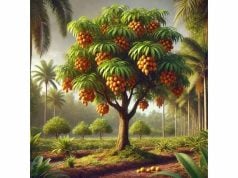
Keruing Belimbing, Dipterocarpus grandiflorus, is a large resinous tree from Southeast Asia, known in some regions as apitong. Unlike familiar kitchen herbs or standardized wellness supplements, it belongs to a more complex category of medicinal plants: forest trees valued for aromatic oleoresin, durable timber, and region-specific traditional uses rather than for a simple capsule-style health routine. That difference matters. When people search for its benefits, they often expect clear clinical dosing and well-defined human outcomes, but the real evidence is more limited and more interesting than that.
The species is best known for its fragrant oleoresin and for stem compounds called grandiphenols, which belong to the broader family of resveratrol-related oligomers. Early research suggests potential anti-inflammatory relevance, aromatic use, and topical interest, but these signals come mainly from chemistry, formulation studies, and exploratory preclinical work. Human clinical evidence remains thin. So the most helpful guide is one that respects both the promise and the limits: what keruing belimbing is, which parts matter, how it is used, where it may help, and why careful safety boundaries are essential.
Essential Insights
- Keruing belimbing is most promising as an aromatic resin source and a chemically active tree rather than as a proven daily medicinal herb.
- Its stem contains grandiphenols and other resveratrol-related compounds that support interest in antioxidant and anti-inflammatory pathways.
- Experimental aromatherapy products have used about 2.5% to 10% oleoresin, but no validated oral dose has been established.
- Topical and aromatic use is more defensible than internal self-treatment.
- Pregnant or breastfeeding adults, children, and people with respiratory sensitivity or multiple medicines should avoid self-directed use.
Table of Contents
- What is keruing belimbing and what is in it
- Which parts of the tree are used
- Does it help inflammation and pain
- Can it support skin and aroma use
- How to use keruing belimbing
- How much keruing belimbing per day
- Keruing belimbing safety and who should avoid it
- What the research actually shows
What is keruing belimbing and what is in it
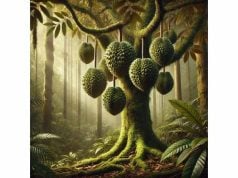
Keruing belimbing is a tall tropical dipterocarp tree native across a broad Southeast Asian range. In the Philippines it is widely known as apitong, while in Malay contexts the name keruing belimbing is commonly used. Botanically, it belongs to a family famous for towering forest trees, winged fruits, and aromatic resins. That family identity already tells you something useful: this is not primarily a leaf tea herb or a fruit remedy. It is a resin-bearing forest tree whose medicinal interest sits mostly in the stem chemistry and oleoresin.
The tree is especially notable for two chemical tracks. The first is its oleoresin, often referred to under regional names such as balau or keruing oil. This resin has a distinctive fragrance and is rich in volatile constituents that make it useful in varnish, coating, and aromatic applications. The second track is its stilbenoid chemistry, especially a group of compounds called grandiphenols. These are resveratrol-related oligomers isolated from the stem and studied because they show structurally unusual polyphenol chemistry.
The most important compounds or compound classes to know are:
- Grandiphenols A and B, isolated as unusual stilbene tetramers.
- Grandiphenols C and D, later identified as novel resveratrol trimers.
- Other resveratrol oligomers, which place the species within a chemically interesting part of the dipterocarp family.
- Aromatic oleoresin constituents, which help explain its scent, coating properties, and interest in candles or topical products.
For readers used to wellness marketing, this chemistry can sound more advanced than it is clinically useful. A plant may contain fascinating compounds without having proven therapeutic value in humans. That is exactly the case here. Keruing belimbing is chemically rich, but that richness has been explored more by phytochemists than by clinical researchers.
A helpful comparison is frankincense as a better-known medicinal resin. Frankincense is also a resin-bearing tree with long cultural use and a stronger modern wellness profile. Keruing belimbing lives in a similar botanical neighborhood of aromatic resins, but it has a much thinner human evidence base and a much more limited consumer tradition.
One more point matters in practice: different parts of the tree are not interchangeable. Stem chemistry papers, oleoresin studies, and aromatic candle formulations are all talking about different materials. A statement about the stem does not automatically apply to the bark, and a statement about the resin does not automatically apply to internal use. That distinction is essential for reading this plant honestly. Most misuse begins when people flatten every part of a chemically complex tree into one vague idea of “the herb.”
Which parts of the tree are used
Keruing belimbing is best understood as a multi-part plant, but not in the way many traditional household herbs are. With some plants, leaves, bark, and roots all have long, fairly stable medicinal roles. With Dipterocarpus grandiflorus, the modern evidence and practical uses cluster around two areas: oleoresin and stem-derived phytochemicals. That makes the use pattern narrower than people often expect.
The oleoresin is the part most often discussed in household, craft, or aromatic contexts. It is a thick, fragrant material produced by the tree and traditionally valued far more for practical uses than for well-documented internal medicine. It has been used for varnish-like coatings, water resistance, and torch or illumination applications. In modern product experiments, it has also been tested in aromatherapy candles because of its distinctive smell and volatile profile.
The stem is where the more specialized phytochemistry comes in. The stem has yielded grandiphenols and related stilbenoid compounds that make the species interesting in natural-products research. This does not mean people are traditionally chewing the stem or brewing it into a daily tonic. It means the plant attracts scientific attention because the stem contains unusual molecules with potential biological relevance.
What about the bark? Regional medicinal compilations and institutional plant pages sometimes mention bark-based folk use or general traditional medicine links in the broader dipterocarp group, but the documentation for Dipterocarpus grandiflorus itself is far less robust than for the better-known resin uses. That is why any responsible article should be careful here. It is fine to say the species sits near a tradition of resinous tree remedies. It is not fine to act as if its bark has a modern, standardized herbal monograph.
A practical way to divide the plant looks like this:
- Oleoresin: aromatic, topical, coating, and experimental candle use.
- Stem: source of grandiphenols and other resveratrol-related oligomers in phytochemical studies.
- Timber and wood products: economically important, but not medicinal in the health sense.
- Bark or other parts: not well standardized for modern wellness use.
This distinction helps prevent a common mistake: assuming that because a tree yields a resin, that resin should be treated like an essential oil. Keruing belimbing oleoresin is not the same thing as a purified, food-safe, or clinically validated essential oil. It is more complex, often heavier, and usually closer to a technical oleoresin than to something you would use casually in a diffuser.
This is also why comparisons matter. Some readers may think of resinous preparations in the same category as copaiba resin preparations, but keruing belimbing is less standardized, less commercialized for health use, and not supported by the same degree of consumer-facing guidance. In other words, the tree has real medicinal interest, but its usable parts are narrower and more context-dependent than online summaries often suggest.
Does it help inflammation and pain
This is the section where keruing belimbing needs the most careful wording. There is a plausible reason to think it may have anti-inflammatory relevance, but current evidence does not justify strong treatment claims. Most of that plausibility comes from the plant’s stilbenoid profile, including resveratrol-related oligomers, and from newer computational work on keruing genus secondary metabolites. That creates scientific interest, not clinical certainty.
Why does the anti-inflammatory angle even come up? Because resveratrol-like compounds and related oligostilbenes often appear in research on oxidative stress, inflammation signaling, and cell-level protective effects. The grandiphenols identified from Dipterocarpus grandiflorus belong to that broader chemical universe. On paper, that is meaningful. In practice, it means the species has molecules worth testing, not that the tree itself is a validated anti-inflammatory remedy.
A 2024 molecular docking paper on keruing genus metabolites adds to this interest. It suggests that some oligomeric resveratrol-type compounds may interact with cyclooxygenase-2, or COX-2, which is a familiar target in inflammation research. That sounds promising, but it is still early-stage work. Docking studies are useful screening tools, not proof of therapeutic action in the body. They help answer the question, “Is this worth studying further?” rather than “Does this work in patients?”
So where does that leave everyday readers?
The most realistic potential benefit areas are:
- mild inflammation-related interest at the molecular level,
- future relevance in resin-based or polyphenol-focused product development,
- possible support for topical comfort rather than strong internal pain relief,
- aromatic use that may feel calming or grounding even when not pharmacologically strong.
What keruing belimbing does not currently support is the idea that it reliably treats arthritis, chronic pain, tendon problems, or inflammatory disease. There are no meaningful human trials showing that. This is one reason it helps to compare it with boswellia for better-studied inflammation support. Boswellia has a much clearer clinical conversation around inflammation. Keruing belimbing does not. It is still mostly a tree of chemical promise.
Pain relief is even more speculative. Some people assume that any aromatic resin with anti-inflammatory potential should also be analgesic. Sometimes that turns out partly true, especially in topical or aromatic traditions. But keruing belimbing is not established enough to promise that outcome. At best, its resinous, fragrant character may support comfort-oriented uses rather than direct pain treatment.
The practical takeaway is simple: keruing belimbing sits closer to “interesting anti-inflammatory lead” than to “ready-to-use pain herb.” That may sound restrained, but it is a better guide. Readers interested in experimental natural products may find the chemistry exciting. Readers looking for a dependable inflammation remedy should set expectations lower and safety standards higher.
Can it support skin and aroma use
This is probably the most practical use area for keruing belimbing because it matches what the resin actually does better than broad internal health claims do. Aromatic oleoresins often shine in three roles: they smell distinctive, they coat surfaces well, and they can be adapted into comfort-oriented topical or scent-based products. Keruing belimbing fits that pattern more naturally than it fits the model of a swallowed daily herb.
The 2024 formulation study on keruing oleoresin aromatherapy candles is useful here, not because it proves a medical benefit, but because it shows how the resin is being explored in real product development. The resin’s fragrance profile is strong enough to influence candle aroma and organoleptic performance. In simple terms, the oleoresin behaves like something people want to smell, not just something they want to analyze in a lab.
That matters because scent can shape how a plant is used even when the direct health effect is small. A resin may feel calming, warming, grounding, or comforting without needing to be a potent pharmacological agent. This is one reason aromatic plants are often used in rituals, environments, and body care products long before they are clinically studied.
Possible real-world uses include:
- aromatic candles or scent-oriented products,
- topical preparations where the resin is heavily diluted,
- non-medicated comfort rituals,
- specialty natural products where fragrance and botanical identity matter.
Still, this is where caution matters. A resin that works well in a candle is not automatically a skin-friendly ingredient. Oleoresins can be sticky, concentrated, and irritating if applied too directly. They are not the same as mild hydrosols or gentle infused oils. That is why the skin conversation must stay conservative.
If someone is interested in topical use, the best frame is “possible support for mild external comfort,” not “natural treatment.” The resin may be suitable in highly diluted formulations, but patch testing is essential, and direct application to broken, inflamed, or highly reactive skin is a poor idea.
A useful comparison is witch hazel for familiar topical astringency. Witch hazel is widely used on skin, but even it can sting or irritate depending on the formula and the skin barrier. Keruing belimbing is much less standardized for personal care use, so the need for caution is even greater.
A final point is worth making because it adds honesty to the article. A 2024 mouse study on keruing oleoresin candle aromatherapy did not show a clear between-group antidepressant effect, even though some within-group changes were seen. That is helpful because it keeps the aroma story grounded. Keruing belimbing may be pleasant and interesting in scent-based use, but it is not established as a reliable mood treatment. For now, aroma use is best seen as sensory support, not evidence-based psychiatric care.
How to use keruing belimbing
The best way to use keruing belimbing is the least dramatic one: treat it as a specialized aromatic resin material, not as a general wellness supplement. That single choice eliminates most of the mistakes people make with under-studied tree medicines.
A sensible use hierarchy looks like this:
- Prefer non-ingestive use over internal self-treatment.
- Choose finished products over raw resin unless you know exactly what you are handling.
- Use diluted preparations rather than concentrated direct application.
- Treat the plant as experimental in personal care, not routine.
For most readers, this means keruing belimbing fits best in one of three categories:
- an aromatic candle or resin-containing fragrance product,
- a carefully diluted external-use preparation,
- a research-interest botanical rather than a home-remedy staple.
What should you avoid? The short answer is improvisation. Do not assume the oleoresin can be used like a kitchen herb. Do not assume the stem chemistry means you should ingest bark or powdered wood. Do not assume a product labeled “keruing” is automatically species-verified or safe for skin.
If you do explore a commercial product, look for:
- the full botanical name, Dipterocarpus grandiflorus,
- whether the material is oleoresin, stem extract, or another plant part,
- clear external-use or aromatic-use labeling,
- absence of exaggerated disease claims,
- simple formulation details rather than vague marketing language.
This last point is important. Under-studied botanicals are easy to oversell. If a product claims that keruing belimbing supports joints, mood, immunity, circulation, detoxification, and sleep all at once, that is a red flag. The evidence simply does not support that range.
A more grounded comparison is tea tree in topical aromatic use. Tea tree has a clearer place in external care and a much better-known safety conversation. Keruing belimbing is not as familiar, not as standardized, and not as well mapped. That means even when the format looks similar, the confidence level should be lower.
One of the most helpful ways to think about the plant is this: keruing belimbing may be useful when the goal is scent, atmosphere, or cautious topical experimentation, but it is not yet a plant to build a self-treatment protocol around. The strongest uses are modest, external, and clearly defined. The weakest uses are ambitious, internal, and based on extrapolation. When evidence is thin, good herbal practice means staying on the modest side.
How much keruing belimbing per day
This is the section where clarity matters most: there is no validated medicinal oral dose for keruing belimbing. Not a low dose, not a high dose, not a short-term therapeutic range. That is the honest answer.
What does exist are product concentrations in experimental aromatic preparations. In the 2024 candle formulation paper, keruing oleoresin was tested at 2.5%, 5%, 7.5%, and 10%. Those are formulation strengths, not doses for swallowing, but they are still useful because they show the scale at which the resin is currently being explored in real products.
That leads to a simple rule:
- Use concentration is known only for experimental aromatic products.
- Medicinal oral dosing is not established.
This distinction matters because people often try to convert anything measurable into a “per day” supplement range. That would be a mistake here. A 5% resin concentration in a candle tells you nothing about how much of the raw oleoresin should be taken by mouth.
So what can be said responsibly?
For aromatic products:
Follow the product’s own directions and keep use occasional until you know how your body responds to the scent.
For topical products:
Use only heavily diluted formulas or finished products intended for external use. Start with a patch test on a very small area.
For oral use:
Do not self-dose. There is no clinically established oral regimen.
That may sound unsatisfying, but it is the safest answer and the most evidence-based one. In under-studied plant resins, the biggest dosing problem is not only toxicity. It is false precision. Once people see complex chemistry or a promising docking paper, they start behaving as if a therapeutic dose must exist. Sometimes it simply does not.
The best practical “dose” advice for keruing belimbing is therefore a boundary, not a number:
- do not ingest raw oleoresin casually,
- do not extrapolate from candle concentrations to internal use,
- do not assume more resin creates more benefit,
- do not use repeated daily exposure as a substitute for evidence.
Readers who are used to better-developed herbal monographs may find this frustrating. But in truth, this is what responsible dosing guidance looks like when a plant has interesting chemistry and weak clinical standardization. The evidence has not matured enough to justify confident internal dosing. Until it does, external aromatic use remains the most defensible path.
Keruing belimbing safety and who should avoid it
Keruing belimbing safety depends almost entirely on how it is used. External aromatic use is one category. Direct skin exposure is another. Internal use is a third and much riskier category because it lacks a validated dosing framework.
The first safety point is that oleoresins can irritate. Even when a resin smells pleasant, it may still be harsh on the skin or respiratory system if used too directly. A concentrated aromatic resin is not automatically gentle. That is why patch testing and ventilation matter more here than they do with milder herbal preparations.
Possible unwanted effects include:
- skin irritation,
- redness or stinging,
- scent-triggered headache,
- nausea from strong fragrance exposure,
- respiratory discomfort in sensitive people,
- uncertainty around internal use because dose and safety data are insufficient.
The groups most likely to need extra caution are:
- pregnant adults,
- breastfeeding adults,
- children,
- people with asthma or strong fragrance sensitivity,
- people with highly reactive skin,
- people taking multiple medicines,
- anyone considering oral use of the resin or extract.
Pregnancy and breastfeeding deserve a special note. When a plant lacks a proper human medicinal record, it should not be treated as harmless in these settings. The absence of clear harm is not the same as proof of safety.
People sometimes assume that because the tree has traditional and household uses, it must be safe in any form. That is not how resinous plants work. The format changes the risk. A tree oil used to make varnish or aromatic candles is not something you should automatically view as a food-like ingredient.
Another good rule is to respect the difference between fragrance and therapy. A scented product can be calming, familiar, or pleasant without being appropriate for prolonged, repeated exposure. This is especially true in enclosed spaces or in people who already react badly to smoke, incense, strong oils, or candles.
If readers want a mental comparison, keruing belimbing should be handled more cautiously than frankincense in common resin use. Frankincense already has a broader history in incense, essential oil, and topical wellness products. Keruing belimbing is less standardized, less studied, and less forgiving.
The simplest safety conclusion is the best one: external aromatic use may be reasonable in limited, well-formulated products, but self-directed internal use is not well supported. When evidence is sparse, restraint is not pessimism. It is good practice.
What the research actually shows
Keruing belimbing has a real scientific story, but it is not the story most supplement readers expect. The evidence is strongest for botanical identity, resin chemistry, stem stilbenoids, and exploratory product development. It is much weaker for direct human health outcomes.
The strongest things we can say with confidence are:
- Dipterocarpus grandiflorus is a clearly accepted species with a broad Southeast Asian range.
- It is a resinous tree whose oil or oleoresin has established technical and aromatic uses.
- Its stem contains unusual resveratrol-related oligomers, including grandiphenols.
- It is being explored in early anti-inflammatory and aromatherapy research.
- It does not yet have a clinically validated oral therapeutic profile.
That is a meaningful evidence base, but it is also a narrow one.
The chemistry papers matter because they show the species is not just another timber tree. It has unique polyphenolic structures that place it in serious phytochemical research. The oleoresin work matters because it confirms that the resin has distinctive aromatic and compositional features. The 2024 candle formulation study matters because it shows the resin can be used in a modern product format. The 2024 mouse aromatherapy paper matters because it prevents overclaiming by showing that interesting fragrance does not automatically become strong mood evidence.
This is the kind of species that is easy to misread in two opposite ways. One mistake is dismissal: “It is only a varnish tree.” That ignores the real chemistry. The other mistake is inflation: “It is a proven medicinal resin.” That goes far beyond the data.
The honest middle position is more useful:
- keruing belimbing is chemically significant,
- it has plausible anti-inflammatory relevance,
- it is more credible in aromatic and external contexts than in internal therapeutic ones,
- it deserves more research before strong health claims are made.
That final point is especially important for readers who equate novelty with potency. Unusual compounds do not automatically mean useful medicine. They mean the species is worth studying. Sometimes that study later confirms strong value. Sometimes it narrows the use to one specific format or one isolated compound. Keruing belimbing is still in that earlier stage.
So the bottom line is this: keruing belimbing is not a fake medicinal plant, but it is not a settled one either. It is a resin-bearing tree with real phytochemical interest, limited modern health evidence, and a better case for cautious aromatic or topical exploration than for confident oral use. For readers, that balanced view is far more helpful than hype.
References
- Dipterocarpus grandiflorus (Blanco) Blanco | Plants of the World Online | Kew Science 2024
- NParks | Dipterocarpus grandiflorus 2024
- Resveratrol oligomer structure in Dipterocarpaceaeous plants 2020 (Review)
- Formulation of Keruing (Dipterocarpus grandiflorus) Oleoresin Aromatherapy Candles 2024
- Antidepressant Activity Study of Keruing (Dipterocarpus grandiflorus) Oleoresin Candle Aromatherapy on Male Mice (Mus musculus) Balb/C Strain 2024
Disclaimer
This article is for educational purposes only and is not medical advice. Keruing belimbing is a resinous tree with interesting phytochemistry, but it does not have a clinically established oral dosing framework or strong human trial support for therapeutic use. It should not replace professional care for pain, inflammatory disease, mood disorders, or skin problems. If you are pregnant, breastfeeding, taking medicines, or considering resin-based products beyond normal aromatic use, speak with a qualified healthcare professional first.
If you found this guide useful, please share it on Facebook, X, or another platform where it may help someone make a more careful and informed decision.