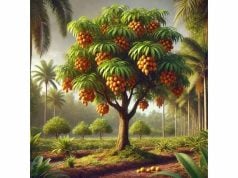
Keruing Kerut, identified botanically as Dipterocarpus sublamellatus, is a towering rainforest tree from the dipterocarp family rather than a familiar kitchen herb or common supplement. In Malaysia and nearby parts of Malesia, it is better known for timber and resin than for everyday medicinal use. That alone makes it unusual: readers searching for its health benefits are often looking for a standard herb guide, yet the real story is narrower and more cautious. The species does have a recorded ethnomedical use in Johor for tuberculosis-related care, and one early extract study suggests antimycobacterial activity. Its resin is also part of the wider keruing tradition, where dipterocarp oleoresins have long been valued for practical and sometimes topical uses.
Still, Keruing Kerut is not a clinically established medicinal plant. There is no standard oral dose, no meaningful human trial record, and no clear proof that the species works safely as a modern herbal remedy. This guide explains what the plant is, what compounds may matter, what uses are plausible, and why careful restraint matters more here than hype.
Quick Summary
- Keruing Kerut has a recorded traditional use for tuberculosis-related care in Johor, but it is not a proven clinical treatment.
- A species-specific hexane extract has shown early antimycobacterial activity in laboratory testing.
- Experimental extract activity has been reported around 0.78 to 3.13 mg/mL, but this is not a human dosing guide.
- Avoid self-treating chronic cough, suspected tuberculosis, pregnancy, or serious illness with this plant.
Table of Contents
- What is Keruing Kerut and whats in it
- What health benefits are plausible
- Traditional uses and resin applications
- How to use Keruing Kerut
- Is there a standard dosage
- Side effects and who should avoid it
- What the evidence actually shows
What is Keruing Kerut and whats in it
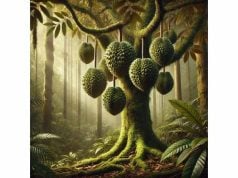
Keruing Kerut is a large emergent rainforest tree in the Dipterocarpaceae family. Its scientific name is Dipterocarpus sublamellatus, and it is native to western Malesia, including Malaysia, Indonesia, and Singapore. In Singapore’s official flora records, it is described as a tall tree of lowland rainforests with reddish bark, folded-looking leaf margins, and the winged fruit typical of dipterocarps. It is also an endangered native in Singapore. Those details matter because they immediately place the plant in a different category from the average “medicinal herb.” This is a forest tree first, and only secondarily a plant with limited ethnomedical interest.
The name “keruing” is also useful context. It refers broadly to several Dipterocarpus trees valued for commercial timber. That means Keruing Kerut has historically been associated more with wood and resin than with standardized therapeutic preparations. Official species records note that its wood is used in general construction and that the resin is almost colourless. This is not the language of a mainstream botanical medicine. It is the language of a multipurpose forest resource that may also have specific local healing uses.
The “key ingredients” question is harder than it looks because species-specific phytochemical mapping for Dipterocarpus sublamellatus is sparse. What we can say with reasonable confidence is that the wider Dipterocarpus genus is known for oleoresins, dammar-like materials, and polyphenolic constituents, including resveratrol-type oligomers in some species. That does not mean Keruing Kerut has been fully profiled in the same way. It means the genus gives us a plausible chemical background: a resin-bearing tree with compounds that may support antimicrobial, anti-inflammatory, or protective activity.
There is one more specific clue. A 2020 species-level extract study investigated a hexane extract of Dipterocarpus sublamellatus and reported antimycobacterial activity alongside phytochemical profiling. Even without a widely used commercial standard, that tells us the plant is not chemically empty. It has enough active material to justify laboratory screening.
A grounded way to think about its possible constituents is:
- Oleoresin-type compounds typical of keruing trees
- Lipophilic compounds that appear in hexane extraction
- Broader dipterocarp polyphenol and resin chemistry
- Species-specific phytochemicals that remain underdescribed
That last point is the most important. Keruing Kerut is not a “single hero compound” plant. It is a poorly standardized medicinal candidate. Compared with better-known resins such as frankincense for resin-based traditional use, Keruing Kerut is far less characterized and far less studied in people. That does not make it useless. It makes precision and caution essential.
What health benefits are plausible
When evidence is limited, the right question is not “What benefits does this plant definitely have?” but “Which benefits are plausible, and which ones are being overstated?” Keruing Kerut belongs firmly in that category. The species is not supported by a broad clinical literature, so the benefits discussion has to stay narrow and evidence-aware.
The most plausible benefit is antimycobacterial potential. This idea comes from two connected facts. First, an ethnomedical study in Johor recorded Dipterocarpus sublamellatus for the first time as a plant used by the Jakun community for tuberculosis-related care. Second, a later laboratory study reported that a hexane extract of the species showed antimycobacterial activity against Mycobacterium smegmatis, a rapid screening model often used as a TB-related proxy in early research. That does not prove the plant treats tuberculosis in humans. But it does mean the traditional use and the early lab signal point in the same direction, which is often the first sign that a plant deserves more serious study.
A second plausible benefit is topical support, though this is more inferential than direct. Dipterocarp trees produce oleoresin, and resin-bearing trees are often used in external preparations for irritated skin, massage oils, or wound-related folk applications. In Keruing Kerut, however, the evidence is mostly contextual. The official species record confirms resin production, but it does not establish a validated medical indication. So any topical benefit should be treated as a cautious possibility, not a settled claim.
A third plausible category is symptom support rather than disease treatment. Traditional plant use for tuberculosis does not always mean “cures the infection.” It can also mean support for cough, weakness, chest discomfort, or general illness. That distinction matters. A plant may help soothe or accompany recovery without directly replacing antimicrobial therapy.
What is not plausible at this stage are bold claims like these:
- Proven treatment for tuberculosis
- Clinically established antimicrobial herb
- Standard anti-inflammatory supplement
- Reliable respiratory tonic for chronic lung disease
- Evidence-based cancer or immune therapy
That boundary matters because a tree with one ethnomedical report can easily be turned into an internet “miracle herb” if readers ignore the evidence level. Keruing Kerut does not deserve that treatment.
A helpful way to frame it is this:
- Best case: a forest tree with one documented traditional medicinal role and one interesting laboratory signal
- Middle case: a plant worth further pharmacological investigation
- Worst case: a species whose limited data get inflated into unsupported health promises
If readers want a comparison point, Keruing Kerut is nowhere near the evidence base of better known topical or antimicrobial plants such as tea tree for topical antimicrobial use. It may one day prove useful in a specific niche, but at present its most credible benefit is not certainty. It is promise.
Traditional uses and resin applications
The traditional-use story for Keruing Kerut is narrow but important. In a 2016 ethnomedical paper documenting plants used by the Jakun community in Johor for tuberculosis and related symptoms, Dipterocarpus sublamellatus was reported for the first time with ethnomedical use. That is a meaningful finding because it gives the species a recorded place in local healing practice rather than leaving it as a purely botanical or commercial tree.
What makes the record especially useful is that secondary summaries of the same tradition describe the plant part and method more clearly. The stem and bark were used, with preparation by decoction in water and in oil. Administration was not limited to one route: the preparation could be consumed as a drink, and it could also be used in massage oil or bathing. This suggests the plant’s role was not purely internal. It may have been part of a broader care pattern that included oral and external support.
That mixed use tells us something about how traditional communities may have understood the plant. Instead of treating it like a single-purpose pharmaceutical, they may have seen it as a supportive tree medicine suited to whole-body care during chronic illness. That is a common pattern in ethnomedicine. A plant used in relation to tuberculosis may be intended to address cough, weakness, chest discomfort, body aches, or purification rituals rather than only direct antimicrobial action.
Resin also matters here. The wider keruing group is known for resin production, and resin-bearing trees often occupy a special place in traditional practice because they can be used in oils, balms, external applications, or smoke-related household uses. In Keruing Kerut, the official species record simply notes that the resin is almost colourless. That sounds minor, but it reinforces that the plant belongs to a resin-producing lineage, not just a timber lineage. Resin trees often sit at the edge between material culture and medicinal culture.
Even so, the main caution is this: most resin knowledge in dipterocarps is broader than this one species. It is easy to assume that if a resinous tree exists, it must have the same healing uses as other celebrated resins. That would be a mistake. A better way to read Keruing Kerut is as a plant with one clear ethnomedical record, one resin context, and limited modern follow-through. It is not the same as a highly characterized medicinal resin like dragon’s blood in resin-based traditions, where the identity and historical uses are much more widely discussed.
So the traditional-use picture is meaningful, but modest:
- Bark and stem appear most relevant
- Decoction and oil-based preparations are part of the record
- Oral and external use were both described
- The main traditional context was tuberculosis-related care
- Modern readers should treat this as ethnomedical documentation, not as proof of efficacy
That balance is what makes the traditional record useful instead of misleading.
How to use Keruing Kerut
The most responsible answer to “how do you use Keruing Kerut?” is that this is not a casual self-care herb. It is a forest tree with limited medicinal documentation, and the way it has been used traditionally is much more specific than the way most modern readers imagine using a supplement.
Traditional use points to three forms:
- Decoction of stem or bark in water
- Preparation in oil
- External use through massage or bathing, alongside oral use in some cases
That may sound straightforward, but none of those forms should be treated as easy do-it-yourself instructions. The species is not widely standardized, the bark-to-resin balance is unclear, and no validated household formula exists for modern use. If someone is thinking of Keruing Kerut as a home remedy for a persistent cough, the biggest risk is not just side effects. It is delay in diagnosis. A tree associated with tuberculosis-related folk care should never be used as a substitute for medical evaluation when symptoms include chronic cough, fever, weight loss, night sweats, or coughing blood.
In practical terms, the safest use hierarchy looks like this:
- Learn the plant accurately before thinking about any medicinal use.
- Distinguish ethnomedical documentation from evidence-based treatment.
- Avoid internal self-use unless working within a knowledgeable traditional context.
- Treat topical use as low-confidence and still potentially irritating.
- Do not use it at all for serious infectious symptoms without clinical care.
This tree also does not fit the “food herb” model. Unlike ginger, turmeric, or kencur, Keruing Kerut is not commonly discussed as a spice or culinary plant. That matters because food exposure often offers a safer entry point into traditional botanicals. Here, there is no such obvious entry route.
The oil-based record is interesting, though. Massage oils and bath preparations suggest that traditional users may have valued the plant for external comfort, body warming, or symptom relief during illness. That makes cultural sense. Many traditional systems combine internal and external therapies when respiratory disease or chronic weakness is present. But that does not make every oil infusion safe or sensible for home experimentation.
If readers want a simpler and better documented respiratory-support plant, something like eucalyptus in respiratory traditions is a far clearer example of a plant with established inhalation and external-use patterns. Keruing Kerut is much more obscure and much less standardized.
So the best modern guidance is actually conservative:
- Do not assume the tree is meant for routine herbal use
- Do not improvise with bark or resin
- Do not turn a traditional decoction into a modern supplement protocol
- Use the ethnomedical record as information, not as permission
That answer may feel restrictive, but it is the most useful kind of herbal advice. Good plant knowledge is not only about what can be used. It is also about what should not be used casually.
Is there a standard dosage
No standard human dosage has been established for Keruing Kerut. That single sentence is the most important part of the dosage section.
Readers often expect a herb article to provide a daily range in grams, capsules, or drops. With Dipterocarpus sublamellatus, that would be misleading. There is no accepted pharmacopoeial oral dose, no well-described commercial extract standard, and no validated duration schedule for regular internal use. Traditional use records tell us that the bark or stem may be decocted, but they do not provide a clinically reliable modern dosing guide.
The only clear numeric range that shows up in the current evidence is from laboratory testing rather than human use. In the species-specific antimycobacterial study, the hexane extract reportedly showed a minimum inhibitory concentration of 0.78 mg/mL and a minimum bactericidal concentration of 3.13 mg/mL against Mycobacterium smegmatis. These numbers are scientifically useful because they suggest the extract has measurable activity. But they are not a human dose. Converting lab potency into oral or topical self-dosing would be a serious mistake.
This is why the dosage discussion has to stay honest:
- Traditional use exists, but exact oral quantities are not standardized
- Experimental extract concentrations exist, but they are not consumer instructions
- No safe daily dose in g or mg has been established for human medicinal use
- No long-term dosing schedule is supported by clinical data
If someone insists on translating the evidence into practical language, the most accurate framework is this:
- Traditional context: decoction of bark or stem, sometimes combined with oil use
- Experimental context: 0.78 to 3.13 mg/mL activity range in lab testing
- Clinical context: no validated human medicinal dose
- Safety context: enough uncertainty to avoid self-prescribing
That uncertainty is not a flaw in the article. It is the truth about the plant. Many under-researched medicinal species do not fail because they have no activity. They fail because people try to use them like standardized supplements before the basic work has been done. Keruing Kerut is exactly the kind of species that needs more pharmacognosy, toxicology, and formulation research before any serious dosage guide could be written responsibly.
A useful rule is that the less a species is studied, the less room there is for casual dose escalation. With this plant, “more” would not mean “more effective.” It would mostly mean “more guesswork.”
That is why the strongest dosing advice here is negative but practical: do not invent a regimen from folk summaries, do not translate lab concentrations into home recipes, and do not treat the absence of a dose as a trivial omission. In herbal medicine, a missing dose is often a warning sign that the evidence has not caught up with the interest.
Side effects and who should avoid it
Because Keruing Kerut does not have a modern clinical safety profile, the most honest safety discussion is based on uncertainty, plant form, and context rather than on a long list of well-documented adverse events. That may sound less satisfying than a neat list of side effects, but it is more useful.
Possible concerns include:
- Digestive irritation from bark or resin-based preparations
- Skin irritation from topical oil or resin contact
- Allergic or contact reactions in sensitive individuals
- Unpredictable tolerance because plant chemistry is not standardized
- Delayed medical treatment if the plant is used instead of proper care
The biggest danger is probably not toxicity in the narrow sense. It is misapplication. A plant linked to tuberculosis-related folk care can become actively dangerous if it leads someone to postpone diagnosis or antibiotic treatment. Tuberculosis, chronic pneumonia, severe bronchitis, and other lung infections are not conditions for improvised tree-medicine experiments.
Who should avoid medicinal self-use:
- Pregnant people
- Breastfeeding people
- Children
- Anyone with chronic cough, fever, or weight loss who has not been medically evaluated
- People with liver or kidney disease
- People taking multiple prescription medicines
- People with known resin or plant-contact allergies
- Anyone uncertain about botanical identification
There is also a sourcing issue. Keruing Kerut is an endangered native in Singapore and part of a threatened dipterocarp context more broadly. That means unsupervised bark stripping, resin collection, or wild harvesting is not just a personal safety concern. It can become an ecological one. A medicinal article should not encourage damaging collection practices for a poorly studied tree.
Interaction data are basically absent. But “absent” does not mean “safe.” It means we do not know enough. That is especially relevant if the plant is prepared in oil, mixed with other herbs, or taken alongside respiratory medicines, antibiotics, sedatives, or long-term disease treatments.
A grounded way to think about safety is this:
- Clinical uncertainty is high.
- Species identification matters.
- Serious respiratory symptoms always outrank herbal experimentation.
- External use is not automatically safe.
- Conservation concerns strengthen the case for restraint.
For readers who are drawn to plant-based topical support, there are much better described options, including witch hazel for topical applications and other plants with clearer safety traditions. Keruing Kerut may have ethnomedical value, but it is not a forgiving beginner plant.
The right tone for safety here is not alarmist. It is disciplined. This is not a plant to fear casually, but it is definitely a plant to respect.
What the evidence actually shows
The evidence for Keruing Kerut is much thinner than the article title might lead a casual reader to expect. That is the central fact that should shape every decision around this species.
What the evidence does support:
- Dipterocarpus sublamellatus is a real, well-described dipterocarp tree native to western Malesia.
- It is known locally as Keruing Kerut.
- It produces timber and resin, with the official Singapore flora record noting almost colourless resin.
- It has a documented ethnomedical use in Johor for tuberculosis-related care.
- A species-specific hexane extract has shown early antimycobacterial activity in laboratory testing.
What the evidence does not support well:
- A clinically proven medicinal use in humans
- Standardized oral dosing
- Reliable topical formulations
- Long-term safety
- Broad claims for inflammation, immunity, wound healing, or respiratory cure
That balance leads to an important insight. Keruing Kerut is not unsupported folklore, but it is also not validated herbal medicine in the modern clinical sense. It sits in the middle space where ethnobotany and early pharmacology overlap. That is often the stage where interesting medicinal plants are first recognized. It is also the stage where internet summaries tend to exaggerate them.
One reason the evidence is easy to misread is that the Dipterocarpus genus has a wider medicinal and phytochemical literature than this one species. Some dipterocarps have been studied for antioxidant, anti-inflammatory, wound-related, or cytotoxic effects. But those findings do not automatically transfer to Keruing Kerut. Species-level accuracy matters. If an article quietly shifts from “this genus has activity” to “this tree has proven benefits,” it becomes misleading.
The most defensible conclusion is:
- As a medicinal plant, Keruing Kerut is promising but under-researched
- As an ethnomedical plant, it has a meaningful recorded role
- As a modern herbal remedy, it remains unstandardized
- As a clinical treatment, it is not established
This is where comparison can help. A better-studied resin-related plant such as boswellia for inflammation research has a much clearer pharmacologic and clinical profile. Keruing Kerut does not yet meet that standard. That does not diminish its interest. It simply defines its current place more accurately.
So if a reader wants the clearest final answer, it is this: Keruing Kerut is a conservation-sensitive rainforest tree with one documented traditional medicinal role and one encouraging laboratory signal. That is enough to justify future research. It is not enough to justify confident self-treatment. The most useful reading of the evidence is not that the plant has no value. It is that the value is still being mapped.
References
- Ethnomedical Knowledge of Plants Used for the Treatment of Tuberculosis in Johor, Malaysia 2016
- Dipterocarpus sublamellatus Foxw. 2022
- Dipterocarpus sublamellatus Foxw. | Plants of the World Online | Kew Science 2025
- Holdings: A study on antimycobacterial activity and phytochemical constituents of Dipterocarpus sublamellatus foxw. hexane extract (DSHE) :: Library Catalog 2020
Disclaimer
This article is for educational purposes only and does not replace medical advice, diagnosis, or treatment. Keruing Kerut is not an established clinical herb, and the current evidence for medicinal use is limited to ethnomedical documentation and early laboratory research. Do not use it to self-treat chronic cough, suspected tuberculosis, infections, or any serious illness. Seek prompt medical care for persistent respiratory symptoms, fever, unexplained weight loss, or worsening weakness.
If you found this article useful, please consider sharing it on Facebook, X, or another platform where it may help someone make a safer and more informed decision.